
We are reader supported. When you purchase through links on our site, we may earn an affiliate commission. Also, as an Amazon affiliate, we earn from qualifying purchases.
Setting up your first aquarium is exciting, but choosing between marine and freshwater shapes everything that follows. Budget, time, equipment, livestock, and your learning curve all depend on this decision. This guide breaks it down step by step so you can pick a path that fits your space, goals, and routine without guesswork.
What Changes Most Between Marine and Freshwater
Both systems are glass boxes of water with life inside, but they behave very differently. Marine setups use saltwater and often house corals and invertebrates with stricter requirements. Freshwater setups use tap water treated with conditioner and host fish and plants that tolerate wider swings. Your choice controls cost, complexity, and success rate.
Budget Reality Check
Startup Costs
Freshwater is usually cheaper to start. A beginner friendly freshwater setup with a 20 to 40 gallon tank, filter, heater, lights, substrate, hardscape, test kit, and basic tools often lands at a modest budget depending on quality and region. Marine asks more upfront. Even a fish only with live rock system needs a tank, salt mix, refractometer or hydrometer, strong filtration, a protein skimmer if you stock heavier, a powerhead for flow, reef safe rock or media, and often an RO or RO DI water source. Lighting for fish only can be modest, but reef lighting adds a large cost jump. Expect marine startup to be significantly higher than freshwater at the same tank size.
Monthly Costs
Freshwater ongoing costs include water conditioner, fish food, plant fertilizer if you keep plants, filter media replacements, and electricity for lights and heater. Marine adds ongoing salt mix, higher electricity for stronger flow and lighting, RO or RO DI filters, and possible dosing for reef systems. Marine livestock also tends to cost more per animal. If you want the lowest predictable monthly spend, freshwater wins.
Equipment Complexity
Freshwater Essentials
A filter, a heater, a light, a thermometer, and a test kit form the core. Many successful tanks run on hang on back or internal filters. Canister filters are an upgrade for heavier stocking. Aquascaping is easy with inert gravel or sand and rock or wood. If you keep live plants, add a better light and simple liquid fertilizer. CO2 injection is optional for advanced plant growth but not required for a beginner friendly tank.
Marine Essentials
Marine needs stable salinity and strong biological filtration. You will use a refractometer or hydrometer to set and check salinity. A powerhead provides flow. Live rock or high surface area media drives biofiltration. A protein skimmer helps remove dissolved organics, especially as your fish load grows. Many marine hobbyists use an RO or RO DI unit to produce pure water for mixing salt and topping off, which prevents nuisance algae fueled by tap water minerals. Reef tanks need strong, spectrum correct lighting and more flow than fish only tanks.
Water Chemistry and Stability
Freshwater Targets
Freshwater care focuses on ammonia, nitrite, nitrate, pH, and temperature. Hardness and alkalinity matter but most beginner fish adapt if you choose species that match your tap water. Dechlorinator makes tap water safe. Weekly or biweekly water changes reset nutrients and keep nitrate under control. Testing is simple and forgiving.
Marine Targets
Marine care adds salinity, alkalinity, calcium, and magnesium to the usual nitrogen cycle. Fish only setups focus on salinity, temperature, and nitrogen waste. Reef systems add coral needs and require tighter control of alkalinity and nutrients. Evaporation raises salinity, so daily freshwater top off is essential. Using RO or RO DI water improves stability and reduces nuisance algae risk. Marine systems work best when you test more often and make smaller, frequent adjustments.
Livestock Options and Hardiness
Freshwater Choices
Freshwater offers hardy community fish that suit beginners. Many species accept a range of pH and hardness, eat readily available foods, and tolerate small mistakes. Invertebrates like shrimp and snails add interest but need stable parameters and copper free water. Live plants are accessible and provide a natural look while improving water quality.
Marine Choices
Marine fish are striking, and many have bold behavior. However, some are territorial, some nip corals, and compatibility planning matters. Hardy beginner friendly marine fish exist, like certain clownfish, gobies, and grammas. Invertebrates are common cleanup crew members and corals are achievable after you stabilize the system. Marine animals often cost more and tolerate less error, so stocking must be slower and more deliberate.
Maintenance Time and Routine
Freshwater Schedule
Most freshwater tanks thrive on a simple routine. Feed lightly daily, observe fish for health, and change 25 to 40 percent of the water weekly or every two weeks depending on stocking and plants. Clean filter media in tank water when flow slows. Test weekly until stable, then as needed. Algae control relies on nutrient balance and light management.
Marine Schedule
Marine tanks require more frequent checks and tighter discipline. Top off evaporated water daily to hold salinity steady. Perform regular water changes to export nutrients and replenish trace elements. Test salinity, temperature, and nitrogen waste routinely. If keeping corals, test alkalinity and adjust as needed. Clean protein skimmers and pumps to keep performance high. The time burden is manageable with habits, but expect more attention than a comparable freshwater tank.
Risk Tolerance and Learning Curve
Freshwater forgives beginner mistakes more often. Water parameters drift slowly, hardy fish adapt, and repairs are cheap. Marine punishes neglect or rushed changes. Swinging salinity or alkalinity can stress fish and inverts fast. If you enjoy testing, note taking, and steady routines, marine can be very rewarding. If you want a simpler path with wider safety margins, freshwater is safer.
Space and Tank Size
Why Bigger Helps
Water volume buffers change. Both marine and freshwater are easier in tanks at least 20 gallons. Smaller tanks swing faster in temperature and chemistry. Nano marine tanks are beautiful but not beginner friendly unless you accept a steeper learning curve and daily attention. Freshwater nanos are possible with careful feeding and frequent small water changes, but a larger tank still helps you succeed.
Matching Size to Setup
For a first freshwater tank, 20 to 40 gallons is a comfortable range. For a first marine tank, 30 to 55 gallons for fish only with live rock is a stable, manageable start. If you must go smaller, simplify stocking and increase testing and maintenance frequency.
Aesthetics and Goals
What You Want to See
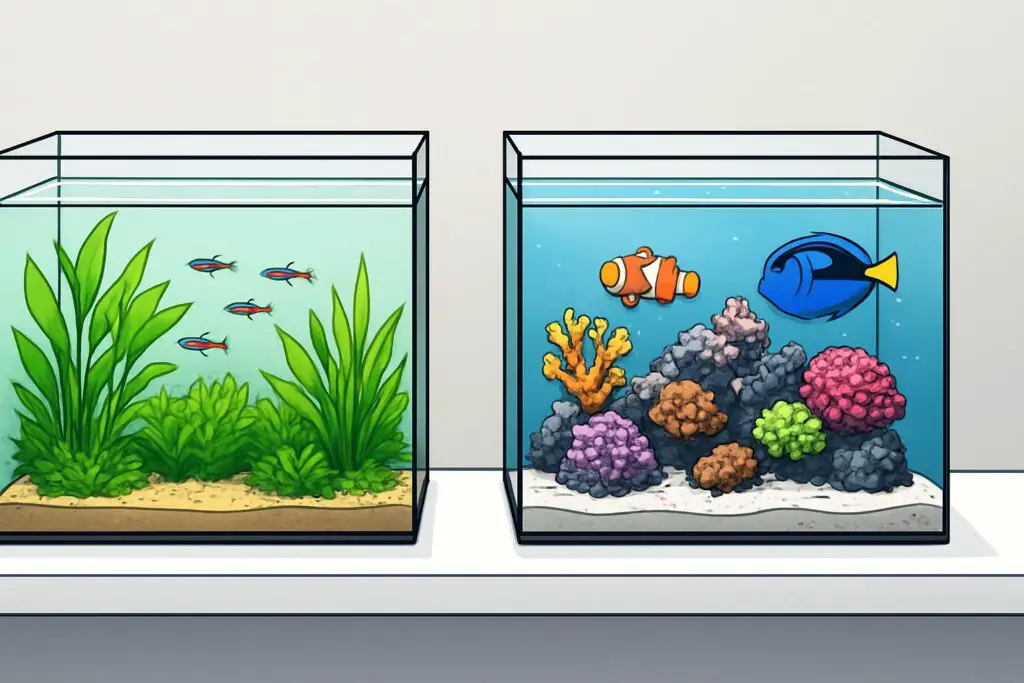
If you love lush greenery, calm schooling fish, and fine control of aquascape design, freshwater with live plants delivers. If you want dramatic colors, unique invertebrates, and the option to grow corals later, marine delivers a different kind of depth. Decide what look keeps you excited to maintain the tank week after week.
Noise and Visuals
Freshwater filters can be nearly silent and compact. Marine setups with skimmers, sumps, and multiple pumps can add hum and splash. If your space demands quiet, plan equipment choices carefully or lean toward a simpler freshwater build.
Local Support and Supply
Check what your local stores stock. Freshwater fish, plants, and foods are widely available in most regions. Marine livestock availability varies and prices change with supply. Salt mix, RO or RO DI filters, test kits, and reef lights are specialized items. If access to marine supplies is limited or shipping is expensive, freshwater may be more practical.
Upgrade Path and Flexibility
Freshwater offers many substyles, from low tech planted to high tech aquascapes. You can start simple and add better lights or pressurized CO2 later. Marine also scales, but upgrades often involve bigger jumps, like adding a skimmer, a sump, or reef capable lighting. Many hobbyists start with freshwater to build routine, then move to marine when ready for more complexity.
Cycling and Patience
Freshwater Cycling
Cycle the tank before adding fish. Feed the bacteria with a pinch of fish food or bottled ammonia, or use a starter bacteria product. Test until ammonia and nitrite read zero and nitrate appears. Add fish slowly and keep up with water changes. The process is straightforward and well supported by starter kits.
Marine Cycling
Marine cycling follows the same nitrogen principles with added variables. Use live rock or seeded media for a robust bacteria base. Keep the system running with correct salinity and temperature. Test ammonia and nitrite until they drop to zero, then add hardy fish slowly. Algae blooms are common early on. Do not rush to corals until nutrient and salinity stability improve.
Beginner Safe Stocking Concepts
Freshwater Stocking
Choose fish that match your tap water and stay within a light to moderate bioload. Build a community of peaceful species. Add only a few fish at a time and wait a week or more between additions. Feed lightly to avoid ammonia spikes. Provide hides and plants for security.
Marine Stocking
Start with hardy, peaceful fish and add them slowly. Use a quarantine system if possible to reduce disease risk. Introduce a cleanup crew of snails or hermits once you see algae growth and parameters are stable. Consider corals only after several weeks or months of stable nutrients and salinity. Research compatibility to prevent aggression.
Realistic Starter Builds
Freshwater Starter Example
A 29 gallon tank with a reliable hang on back filter, a 100 watt heater, a basic LED light, inert sand or small gravel, and a few pieces of rock or driftwood is a strong start. Plant easy species if you like, use dechlorinated tap water, and aim for a weekly 30 percent water change. Test weekly for the first month. Choose a small, peaceful community and stock slowly.
Marine Starter Example
A 40 gallon breeder tank with saltwater mixed from RO or RO DI water, a refractometer, a heater, a powerhead for flow, a quality hang on back filter or small sump, live rock or ceramic media, and a small protein skimmer if you intend moderate stocking is a stable base. Start fish only with live rock. Keep salinity consistent with daily freshwater top off. Perform regular water changes and test often. Add hardy fish slowly. Consider soft corals only after the system proves stable.
Common Pitfalls and How to Avoid Them
Rushing the Cycle
Adding fish before ammonia and nitrite reach zero caused many first failures. Test and wait. Your patience pays back with lower stress and fewer losses.
Overstocking and Overfeeding
Too many fish or too much food creates waste faster than your filter can handle. Underfeed slightly and add livestock slowly. Watch nitrate and adjust water change frequency.
Skipping Top Off in Marine
Evaporation raises salinity and stresses fish and inverts. Top off daily with freshwater to hold salinity steady.
Inadequate Testing
Guessing invites swings. Use a basic test kit regularly. Write down results. Small corrections beat big fixes.
Choosing the Wrong Light for Coral
If you go reef, use a light intended for corals. Underpowered lights lead to poor growth and algae. Plan lighting before buying corals.
Decision Framework You Can Use Today
Choose Freshwater If
You want lower startup and monthly costs. You prefer simpler equipment and less testing. You want hardy fish and easy plants. You have limited local access to marine salt and gear. You want a quieter setup.
Choose Marine If
You are comfortable with routine testing and daily top off. Your budget can support higher startup and running costs. You want marine fish and invertebrates and may add corals later. You have access to salt mix, RO or RO DI water, and marine grade equipment. You enjoy planning compatibility and fine tuning parameters.
Conclusion
Freshwater and marine both deliver a rewarding aquarium, but they ask different things from you. Freshwater offers a wider safety margin, lower costs, and simple gear, making it ideal for a first tank. Marine demands tighter control and a higher budget but opens the door to unique fish, invertebrates, and eventually corals. Match the system to your routine, your local supply chain, and the look that will keep you engaged. Start with a stable tank size, stock slowly, test consistently, and build skills step by step. With clear expectations and steady habits, either path can succeed.
FAQ
Q: Is freshwater or marine cheaper to start and maintain
A: Freshwater is cheaper to start and usually cheaper to maintain. Marine adds salt mix, stronger equipment, RO or RO DI water, and often higher livestock costs.
Q: Which is easier for a complete beginner
A: Freshwater is easier for a complete beginner. It is more forgiving, requires less testing, and has simpler equipment.
Q: What tank size should I pick for my first setup
A: Aim for at least 20 gallons for freshwater and 30 to 55 gallons for marine fish only with live rock. Larger volumes are more stable.
Q: Do I need RO or RO DI water for marine
A: It is strongly recommended for marine. RO or RO DI water improves stability and reduces nuisance algae risk compared to untreated tap water.
Q: When can I add corals to a new marine tank
A: Add corals only after several weeks or months of stable nutrients and salinity, and after you are comfortable with testing and maintenance.