
We are reader supported. When you purchase through links on our site, we may earn an affiliate commission. Also, as an Amazon affiliate, we earn from qualifying purchases.
A peaceful community tank is not luck. It is planning. When you know how to match fish by water needs, temperament, and space, problems fade. Your fish act natural. Feeding is calm. Colors look better. This guide gives you a clear path from empty tank to a stable community you can enjoy and grow with confidence.
Core principles of compatibility
Start with water parameters
Fish do best when water matches their natural needs. Focus on temperature, pH, and hardness. For most tropical community fish, a stable 24 to 26 C or 75 to 79 F works well. Aim for pH 6.8 to 7.6 and moderate hardness. If your tap water is very hard or very soft, choose species that match it. Stability beats chasing a perfect number. Sudden swings cause more stress than a slightly off target.
Learn the nitrogen cycle before adding fish. Ammonia and nitrite must stay at 0. Nitrate should stay under 20 to 30 ppm. Use a liquid test kit. Test weekly at first. Healthy water is the base of peaceful behavior.
Temperament and activity levels
Pair calm with calm. Avoid mixing high energy fish with slow, long fin fish. Fin nippers target flowing fins. Many barbs and some tetras will nip if kept in small groups or in cramped tanks. Bettas do not belong with fast nippers or other male bettas. Territorial fish want space, hides, and clear boundaries so they can claim a small area without constant fights. If you match activity levels and provide cover, aggression stays low.
Adult size and bioload
Plan for adult size, not store size. Many fish sold at 2 to 3 cm will reach 6 to 10 cm. Some plecos get huge. More size means more waste and more space needed. Ignore the inch per gallon myth. Instead, choose a reasonable community, start at 50 to 60 percent of what the tank can likely handle, and add slowly. Watch your test results and fish behavior. Let the system grow into its capacity over months, not days.
Social needs and ratios
Schooling fish want groups of at least 6 to 10. Small groups can act nippy or shy. For livebearers like guppies and platies, keep more females to each male to reduce stress. For dwarf cichlids and gouramis, avoid multiple males unless the tank is large with strong territory breaks. When you meet social needs, fish relax and show natural behavior.
Set up the tank for peace
Tank size and footprint
Length matters more than height for most community fish. A 75 cm long tank gives swimming room and clear zones. Larger footprints reduce stress because fish can pass each other without contact. Choose the biggest tank you can maintain. Extra water volume keeps parameters stable and gives you more stocking options.
Filtration and flow
Use a filter that turns the tank volume 5 to 7 times per hour. Combine mechanical, biological, and gentle flow. Avoid blasts that tire small fish. A spray bar or baffled output spreads flow. Rinse filter media in removed tank water, not tap water, to protect beneficial bacteria. Replace media only when it breaks down, not on a fixed schedule.
Aquascaping for line of sight breaks
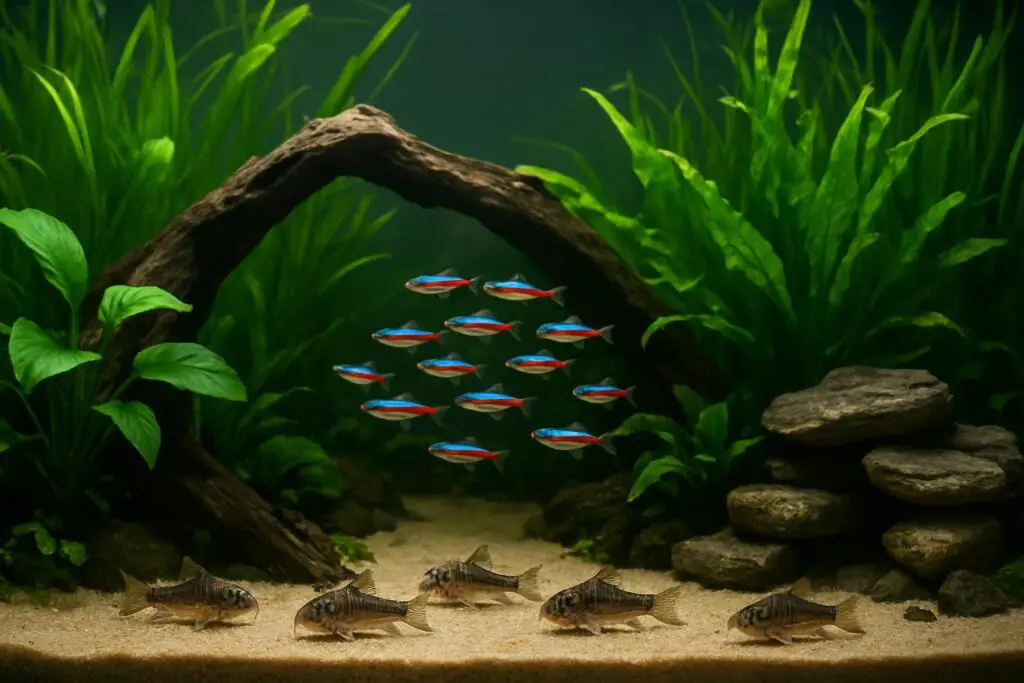
Peaceful tanks have structure. Use hardscape and plants to break lines of sight. Create several small territories, not one open bowl. Stack rock and wood into arches and caves. Add dense plant groups along the back and sides. Leave open swimming space in the center. Territorial fish settle into their chosen spots. Shy fish gain confidence with cover. Better structure equals fewer chases.
Lighting and plants
Moderate light with hardy plants builds a calm environment. Use easy species like Java fern, Anubias, Vallisneria, Amazon sword, and floating plants. Plants absorb nitrate, offer cover, and disperse aggression. Keep lighting 8 to 9 hours per day to limit algae while supporting plant growth.
Build a safe stocking plan
Step 1 Choose a temperature and parameter theme
Pick a group of fish that share temperature and water ranges. Decide on tropical community, cooler water community, or a soft water theme. This single choice makes every later decision easier and prevents conflict that comes from mismatch.
Step 2 Pick a calm midwater school
Choose one main schooling species for the midwater. Good options for beginners include neon, ember, or black neon tetras, harlequin or lambchop rasboras, and pristella tetras. Keep at least 8 to 12. A larger school spreads any occasional chasing across the group and reduces stress on any one fish.
Step 3 Add bottom dwellers
Add peaceful bottom species to balance the tank. Corydoras catfish are ideal. Keep at least 6 to 8 of the same species. For algae and leftover control, consider a bristlenose pleco for tanks 110 liters or larger. Avoid common plecos that outgrow most home tanks.
Step 4 Add a centerpiece fish carefully
One calm centerpiece fish can add character without chaos. Honey gourami is a safer choice than dwarf gourami for beginners. A single male betta can work in a calm community with no nippers and plenty of cover, but never with another male betta. Avoid combining multiple territorial centerpiece species in small tanks.
Step 5 Consider invertebrates and algae control
Amano shrimp and nerite snails are reliable cleaners and less likely to be eaten. Many small fish will eat baby shrimp. If you want a shrimp colony, choose nano fish only and provide heavy cover. Do not rely on any animal to fix algae alone. Balance feeding, light, and maintenance instead.
Step 6 Add slowly with quarantine
Quarantine new fish for 2 to 4 weeks. Watch for signs of disease and confirm normal eating. Add one species at a time, then wait, test, and observe before adding the next. This gives your biofilter time to adjust and lets you spot any aggression early.
Beginner friendly community combinations
75 liters 20 gallons
Keep it simple and calm. Choose one midwater school of 10 ember tetras or 10 harlequin rasboras. Add 8 panda or trilineatus corydoras. For a centerpiece, pick one honey gourami. If you prefer a betta, skip the gourami and ensure no fin nippers. Consider 3 to 4 nerite snails or 6 Amano shrimp for cleanup. This mix stays active but peaceful within a modest tank size.
110 liters 29 gallons
Build a fuller community with room to breathe. Choose 12 black neon tetras or 12 rummynose tetras. Add 8 to 10 corydoras. Add 1 bristlenose pleco. Choose either 1 honey gourami or a trio of platies with a higher female ratio. Use plants and wood to create clear territories and dense cover on the sides.
200 liters 55 gallons
Go for a robust yet calm setup. Choose 15 to 20 rasboras or tetras. Add 10 to 12 corydoras. Add 1 to 2 bristlenose plecos. Add a pair of peaceful dwarf cichlids like Apistogramma only if you have strong territory breaks and a sand area. Otherwise choose a single honey gourami or a small group of platies with a mild male to female ratio. Use multiple feeding spots and deep planting to reduce traffic jams.
Daily and weekly routines that prevent conflict
Feeding strategy
Feed small amounts two times per day. Offer what fish finish in 30 to 60 seconds. Use floating foods for top feeders, slow sinking for midwater fish, and sinking wafers for bottom dwellers. Rotate diet across quality flakes, micro pellets, frozen or live foods like daphnia and brine shrimp, and algae wafers for bottom fish. Drop bottom foods after lights out if midwater fish steal them. Consistent, well targeted feeding reduces competition and chasing.
Maintenance and testing
Change 25 to 35 percent of water weekly. Vacuum areas with waste buildup but leave plant roots undisturbed. Dechlorinate new water and match temperature. Test ammonia, nitrite, nitrate, and pH weekly for the first two months, then at least twice per month. Rinse filter media in old tank water monthly or when flow drops. Trim plants and thin floating cover to keep good gas exchange.
Observation checklist
Look for signs of stress. Clamped fins, hiding all day, gasping at the surface, frayed fins, and pale color are warnings. Watch interactions during feeding and at lights on and off. Short chasing without biting is normal. Persistent targeting of one fish is not. Early action prevents long term issues.
Troubleshooting common issues
Fin nipping
Increase the school of the nipping species to spread attention. Add more cover and break lines of sight. Increase open space for fast swimmers. Avoid long fin tank mates with known nippers. If a single fish is a serial nipper, rehome it. Stable structure and correct group sizes solve most nipping.
Territorial aggression
Add or rearrange hardscape to split territories. Create more caves and plant clusters. Reduce line of sight across the tank length. Feed smaller amounts more often to reduce competition peaks. If two centerpiece fish clash, remove one. Some pairs will never accept each other in a small tank.
Shrimp predation
If fish pick off shrimp, increase plant density and moss cover. Use larger Amano shrimp instead of small cherry shrimp. Accept that many fish view small shrimp as food. A shrimp only tank is the safest path if you want a thriving colony.
Cloudy water and stress
Cloudiness often comes from new tank bacteria blooms or overfeeding. Reduce food, increase water changes, and maintain filter flow. Test ammonia and nitrite. If either is above zero, pause new additions and increase water changes until stable. Clear water and stable chemistry lower aggression.
When to rehome
Rehome a fish if it is consistently attacked or is the persistent aggressor. Remove fish that outgrow the tank or that need different parameters. Rehoming protects the group and prevents slow losses. Keep a list of local stores, clubs, or hobby groups for this purpose.
Safe acclimation and quarantine
Quarantine plan
Use a bare bottom 20 to 40 liter tank with a sponge filter and simple hides. Keep temperature and pH similar to the main tank. Observe new fish for 2 to 4 weeks. Confirm steady appetite, normal swimming, and clear fins and eyes. Quarantine limits disease spread and lets timid fish recover before facing the community.
Acclimation method
Float the bag to match temperature for 15 to 20 minutes. Then add small amounts of tank water to the bag every 5 minutes for 20 to 30 minutes. Net fish into the tank and discard bag water. Dim the lights for a few hours to reduce stress. Feed lightly the first day and observe.
Ethical and practical considerations
Avoid risky mixes
Avoid mixing very small fish with known predators. Skip combinations that put slow long fin fish with active nippers. Do not keep two male bettas together. Avoid large common plecos in small tanks. Do not add fish that need different temperatures or pH. If a combination is a gamble, do not make the fish pay for it.
Have an exit plan
Make a plan before problems start. Keep a quarantine tank ready as a temporary refuge. Know where you can rehome a fish if needed. Keep spare hardscape and plants to add cover fast. Quick, calm actions prevent injuries and losses.
Putting it all together
Building a peaceful community is simple when you follow a clear order. Match water first. Choose calm species that share a temperature and pH range. Plan for adult size and social needs. Structure the tank with plants and hardscape to break lines of sight. Add fish slowly with quarantine. Feed targeted amounts and keep up with weekly water changes and testing. Observe, adjust, and step in early at any sign of trouble. When you apply these habits, your tank stays steady and your fish behave well.
Conclusion
Peace in a community tank comes from fit. Fit between fish and water, fish and space, fish and fish, and fish and your routine. Start with a clear theme and a patient pace. Let the tank mature. Build structure that supports calm behavior. Feed and maintain consistently. Remove the rare fish that refuses to cooperate. If you hold to these principles, you will enjoy a colorful, active, and low stress community that grows more stable and enjoyable over time.
FAQ
Q: What is the easiest way to choose compatible fish
A: Pick a group of fish that share temperature and water ranges, then choose one calm midwater school, add peaceful bottom dwellers, and finish with one careful centerpiece. Match activity levels, plan for adult size, and add slowly with quarantine.
Q: How many fish should I add at once
A: Add one species at a time after 2 to 4 weeks of quarantine, then wait, test, and observe before adding the next. Start at 50 to 60 percent of your likely capacity and grow the stock over months.
Q: What are good beginner community fish
A: Good options include neon, ember, and black neon tetras, harlequin rasboras, corydoras catfish, platies, guppies, honey gourami, Amano shrimp, nerite snails, and bristlenose pleco.
Q: What water parameters should I aim for in a tropical community tank
A: A stable 24 to 26 C or 75 to 79 F, pH 6.8 to 7.6, and moderate hardness. Keep ammonia and nitrite at 0, and nitrate under 20 to 30 ppm. Stability matters more than chasing a perfect number.
Q: How do I stop fin nipping
A: Increase the school of the nipping species, add more cover and line of sight breaks, increase open space for fast swimmers, avoid long fin tank mates with known nippers, and rehome a serial nipper if needed.