
We are reader supported. When you purchase through links on our site, we may earn an affiliate commission. Also, as an Amazon affiliate, we earn from qualifying purchases.
Summer can make a pond thrive or struggle. Warm water speeds up everything. Fish metabolism rises, plants grow fast, and algae takes every chance. If you prepare now, you keep water clear, oxygen high, and fish safe. This guide gives you a clear plan with simple steps, practical checks, and time saving routines. Start with a quick plan, stabilize water, lock in oxygen, balance plants, and build habits that hold through heat waves.
Introduction
New pond keepers often wait for problems before making changes. That creates more work and costs more. A summer ready pond is built on small actions done early and repeated often. You will test, clean, and adjust in short sessions. You will aim for stable numbers, not perfect numbers. You will watch your fish and plants, and let them guide your next step. Keep reading to see which tasks matter most and how to do them without guesswork.
Plan your summer approach
Set clear goals and a simple schedule
Decide what success looks like. Stable water quality, clear enough to see fish, steady oxygen, and healthy plant growth. Write a short schedule you can keep. Ten minutes most days beats one long session after problems start. Test key parameters weekly in early summer. Empty skimmers and rinse prefilters every few days. Do small, regular water changes. Feed on a steady plan adjusted for temperature. This rhythm prevents swings that stress fish.
Gather the right tools before heat arrives
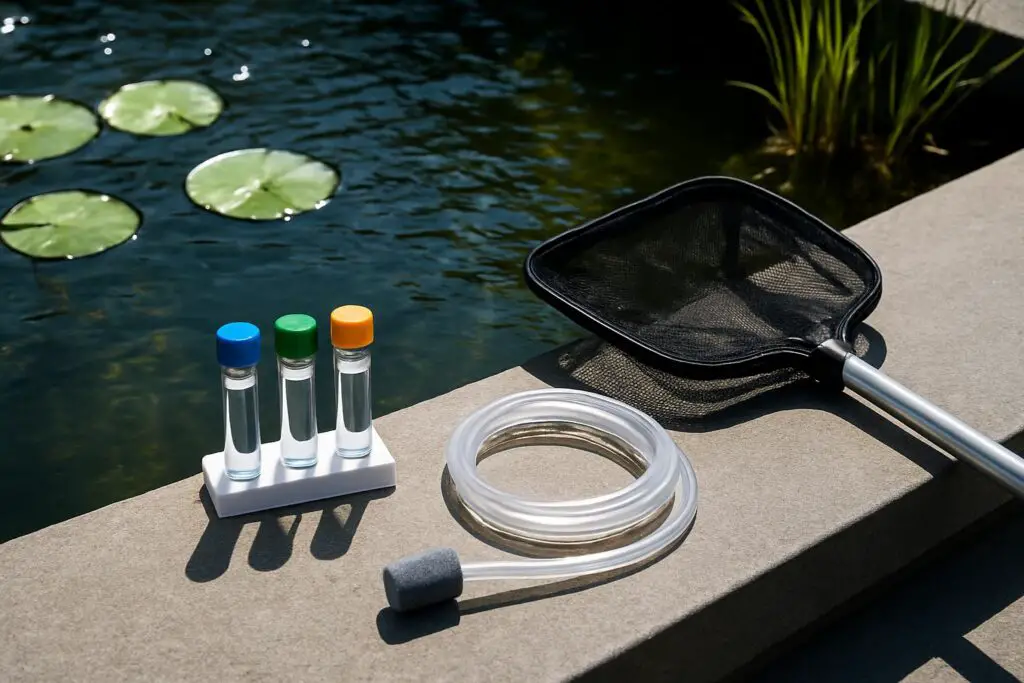
Have these ready. Fresh liquid test kits for ammonia, nitrite, nitrate, pH, and KH. A reliable dechlorinator that also binds chloramine. A sturdy pond net, a dedicated bucket for rinsing filter media, and a hose with a spray head. Spare pump parts like an impeller and gasket. An air pump with stones and tubing for extra oxygen. Shade options such as floating plants or shade cloth. A bacterial starter suited for warm water. A UV clarifier bulb if yours is past a year of use. A KH buffer you trust.
Inspect and clean infrastructure
Check liner, edges, and water level
Walk the perimeter and look for damp soil that hints at a slow leak. Smooth folds that trap debris. Confirm the water level is stable over several days. Some evaporation is normal in heat, but daily drops can signal a hidden issue. Fix small problems now so they do not expand under summer load.
Test pump performance and plumbing
Strong circulation is the backbone of summer care. Confirm the pump is running at its intended flow. If the waterfall looks weak or the filter return has less push, clean the intake, check hoses for kinks, and flush any debris. Inspect unions and valves for drips. Replace worn gaskets. A pump running below target reduces filtration and oxygen when you need them most.
Maintain filters without resetting biology
Mechanical prefilters and skimmer pads clog faster in summer. Rinse them in a bucket of pond water until the flow recovers. Leave biological media mostly alone. If flow drops, swish the media gently in pond water, never in tap water. Do not replace all media at once. Beneficial bacteria support your biofilter, and they are sensitive to chlorine and harsh cleaning.
Manage skimmers, bottom drains, and sludge
Empty leaf baskets before they overflow. Clean skimmer mats often so they do not starve the pump. If you have a bottom drain or dedicated intake near the base, confirm it is not blocked. For sludge on the bottom, remove a portion at a time with a pond vacuum. Spreading the job over several weeks avoids a sudden nutrient dump into the water column.
Water quality fundamentals
Know your targets and track trends
Set these starting targets. Ammonia at zero. Nitrite at zero. Nitrate as low as your system allows while keeping plants growing, often under 40 ppm. pH stable between 7.0 and 8.5. KH strong and steady between 80 and 150 ppm. Record readings weekly in early summer. Trend lines show you what is changing before fish show stress.
Build pH stability with KH
KH buffers pH against daily swings from photosynthesis and respiration. Warm weather and heavy plant growth can drive bigger swings. If KH is low, raise it slowly using a trusted buffer. Crushed coral in a filter bag or measured additions of a safe buffer can lift KH. Increase in small steps, test often, and aim for stability over a few days. A steady KH protects fish more than chasing a perfect pH number.
Water changes that protect fish
Do small, regular water changes through summer. Change 10 to 20 percent every one to two weeks. Always dechlorinate new water and treat for chloramine if your city uses it. Match temperature as closely as practical. Avoid large midday changes during heat, as they can shock fish and crash oxygen. Top offs from evaporation do not remove nutrients. They only replace water. Keep real water changes on the schedule.
Test after storms and heavy feeding
Rain can dilute KH and shift pH. Test KH and pH after big storms. Add buffer if levels slip. Heavy feeding spikes ammonia and nitrite if the filter lags. If ammonia or nitrite register, reduce feeding and increase aeration until they return to zero.
Temperature and oxygen in heat
Watch temperature and oxygen together
Warm water holds less oxygen. Fish breathe faster as temperatures rise. The risk climbs when both move in the wrong direction. Use a pond thermometer and check at the same time each day. Try to keep water below 28 C. Above 30 C is stressful for koi and goldfish. If fish gulp near the surface at dawn, oxygen is low. Move fast to add aeration and reduce feeding.
Increase aeration where it matters
Run waterfalls, streams, and returns with strong surface movement. Add an air pump with stones placed in the lower half of the pond. Run aeration day and night in heat. Night is critical because plants and algae consume oxygen in the dark. Aim at least one point of vigorous surface agitation near the deepest zone, and a second point near the return to spread oxygen across the pond.
Use shade and gentle cooling
Shade lowers temperature and slows algae. Cover 50 to 70 percent of the surface with a mix of lilies and floating plants if your layout allows it. Add shade cloth or sails during heat waves. In small ponds, sealed ice bottles can blunt peak heat, but avoid rapid drops. Keep temperature changes slow and steady. Focus on airflow over the surface and strong circulation rather than sudden cooling.
Feed with the heat curve in mind
Feed in the morning when oxygen is higher and water is cooler. Offer smaller meals your fish finish in a few minutes. During heat waves, cut portions. If ammonia or nitrite are not zero, pause feeding until levels recover. Choose a summer feed that digests well. Uneaten food becomes fuel for algae and bacteria that steal oxygen at night.
Plants and algae balance
Build a plant mix that works for summer
Combine surface, midwater, and marginal plants. Lilies or lotus for shade. Submerged oxygenators for nutrient uptake. Marginals around shelves for cover and filtration. Floating plants like hyacinth or frogbit to add quick shade where lilies are thin. Aim for balanced growth rather than a single plant type. Healthy plants compete with algae for nutrients and stabilize pH swings.
Keep plants tidy and fed
Repot crowded plants into baskets with fresh aquatic soil. Push slow release aquatic fertilizer tabs into pots for heavy feeders like lilies. Trim yellow leaves and spent blooms so they do not rot in the water. Quarantine new plants for a short period to reduce pests and hitchhikers before adding them to the main pond.
Control algae with layers of prevention
Start with manual removal of string algae using a brush or net. Reduce excess nutrients by staying on your water change plan. Keep KH steady to prevent pH swings that stress fish and encourage blooms. Use shade from plants and fabrics to limit sun exposure. A UV clarifier is effective for persistent green water caused by free floating algae. It does not remove string algae. Match the flow to the unit rating, clean the quartz sleeve, and replace the bulb yearly. Avoid harsh algaecides during heat since they can crash oxygen and harm fish.
Dial in your UV clarifier for results
Check that your pump is not pushing water too fast through the UV unit. If flow is too high, contact time drops and performance falls. Inspect and clean the quartz sleeve so the light can pass fully into the water. Replace the bulb each year even if it still glows, because UV output fades long before visible light dims. Expect clearer water within one to two weeks when the setup is correct.
Fish health check
Stocking, space, and habitat
Overcrowding amplifies every summer risk. Keep your fish load in line with your filtration and pond volume. Add hiding places such as rock caves and dense plant groups. Provide a deep zone where fish can retreat during midday heat. Space and structure lower stress and reduce conflict.
Watch behavior and act on signals
Healthy fish swim smoothly, patrol the pond, and come to feed. Warning signs include clamped fins, flashing against surfaces, gasping at the surface, red streaks in fins, or sudden isolation. Test water first. Correct any ammonia, nitrite, pH, or KH issues before you assume disease. Many symptoms resolve when water quality stabilizes.
Quarantine new fish before summer crowds the system
Hold new fish in a separate, filtered tub or tank for 3 to 4 weeks. Feed lightly and observe daily. Treat only if you confirm a problem. Moving healthy, stable fish into the pond protects the biofilter and the existing stock when the system is already working hard.
Treat with care and avoid pond wide medication
Use treatments only when you have a clear diagnosis and can support oxygen during treatment. Salt is not a routine tonic for planted ponds. Reserve it for specific cases in quarantine where plants will not be harmed. After any treatment, add fresh activated carbon only if the medication label calls for it and only after the course is complete.
Predators and safety
Keep fish out of sight and predators out of reach
Provide fish with plant cover and hard refuges. Use netting or perimeter lines where herons hunt. Motion sprinklers can break a predator routine. Avoid shallow shelves that let birds wade far into the pond. A deeper drop off near the edge helps fish escape.
Control mosquitoes without harming fish
Strong circulation and fish that eat larvae are your first line. If larvae persist, use BTI mosquito dunks as directed. They target larvae and are safe for fish and plants when used correctly. Do not use oils on the water surface. They block oxygen exchange and harm gills.
Protect children, pets, and equipment
Secure electrical connections above splash level with drip loops. Keep paths stable and non slippery. Anchor air pumps and keep cords tidy. A tidy setup prevents accidents during quick maintenance in hot weather.
Storms and summer rain
Prepare for dilution and runoff
Heavy rain lowers KH and can wash nutrients into the pond. Extend downspouts and use edging to keep soil and mulch out of the water. After a storm, test KH and pH, clear debris from skimmers, and restore your normal surface agitation. Add buffer if KH slipped below your target range.
Manage debris before it smothers flow
Leaves and small sticks collect fast in summer storms. Empty baskets and rinse mats as soon as practical. Debris that reaches the pump reduces flow, oxygen, and filtration. A clean intake keeps your system stable when conditions change quickly.
Weekly and monthly routine
Your weekly checklist
Test ammonia, nitrite, nitrate, pH, and KH. Observe fish at feeding and for five quiet minutes later in the day. Empty skimmer baskets and rinse prefilters in pond water. Net out visible debris. Change 10 to 20 percent of the water with dechlorination. Clean the UV quartz sleeve if you see a film. Adjust feeding to temperature and water test results.
Your monthly checklist
Check pump flow, hoses, and waterfall leaks. Inspect air stones and replace clogged ones. Prune plants and repot if needed. Vacuum a section of the bottom to thin sludge without stirring the whole pond. Review your spare parts and replace anything worn.
Heat wave plan you can deploy fast
Keep a backup air pump and stones ready. Have a spare water pump or at least an impeller on hand. Set up shade cloth anchors so you can add cover in minutes. If your power grid is unstable, store a battery air pump for emergencies. Feed lightly or pause until temperatures fall and oxygen recovers.
Common mistakes to avoid
Overcleaning filters and resetting the cycle
Do not scrub bio media or rinse it in tap water. Preserve bacteria by rinsing media gently in pond water and staggering any replacements.
Large water changes during peak heat
Big changes swing temperature and pH. Stick to small, regular changes with dechlorination and temperature matching.
Feeding hard when oxygen is low
Heavy feeding in heat fuels ammonia and robs oxygen at night. Cut portions, feed in the morning, and pause if ammonia or nitrite appear.
Reaching for chemicals before fixing basics
Stabilize KH, increase aeration, reduce nutrients, and add shade before you add treatments. Many problems fade when the base is solid.
Ignoring KH until pH crashes
KH is your pH safety net in summer. Test it often and adjust slowly to keep pH steady.
Conclusion
A pond that rides through summer with clear water and active, healthy fish is built on simple habits. Hold KH steady. Keep oxygen high. Move water with purpose. Feed with the season, test on a schedule, and use plants as partners. Fix small issues before they scale. When heat arrives, your system will already be stable, and your pond will reward you with fewer surprises and more time to enjoy it.
FAQ
Q: How often should I change pond water in summer?
A: Change 10 to 20 percent every one to two weeks. Always dechlorinate, match temperature as closely as practical, and avoid large midday changes during heat.
Q: What is a good KH range for a summer pond?
A: Aim for 80 to 150 ppm and raise KH slowly. Stable KH protects pH from swings.
Q: Do I need a UV clarifier to control algae in summer?
A: Use a UV clarifier for persistent green water. It clears free floating algae, not string algae. Match the flow to the unit, clean the quartz sleeve, and replace the bulb yearly.
Q: When should I feed fish during hot weather?
A: Feed small meals in the morning, reduce portions during heat waves, and pause feeding if ammonia or nitrite are not zero.
Q: Can I clean my pond filter with tap water?
A: No, rinse filter media in a bucket of pond water to protect beneficial bacteria, and never replace all media at once.