
We are reader supported. When you purchase through links on our site, we may earn an affiliate commission. Also, as an Amazon affiliate, we earn from qualifying purchases.
Pond fry are easy targets. Insects strike from below. Birds scan from above. Even your pump can turn into a hazard. A plan that blends barriers, cover, and routines will raise your survival rate fast. This guide shows how to block predators, stabilize the nursery, and feed fry safely in a simple, stepwise way.
Introduction
Protecting pond fry starts before spawning and continues until the juvenile fish are strong and fast. The key is to reduce contact between fry and predators without starving the fry or damaging water quality. You will use three tools. Physical exclusion that stops access. Habitat that hides and cushions. Daily habits that catch small problems early. Build these layers and your fry will make it through the risky weeks.
Know your enemies
Insect predators in ponds
Dragonfly nymphs ambush from plants and substrate and can swallow large fry. Backswimmers and water boatmen stab and suck small fry in open water. Diving beetle adults and larvae are fast and relentless. Water scorpions and giant water bugs are uncommon but dangerous. Water striders hunt at the surface where newborn fry linger. Hydra cling to plants and can sting and immobilize tiny fry. These predators often hitchhike on new plants and explode after warm spells. If your pond is calm, shallow, and full of emergent stems, expect insects to move in.
Vertebrate predators
Adult fish eat eggs and fry as a routine snack. Frogs, newts, and salamanders hunt fry whenever they can. Wading birds see everything in clear, open ponds. Snakes, turtles, and raccoons take advantage of easy access, especially in low, uncovered ponds. It is not bad luck. It is normal behavior you need to manage.
Hidden threats from equipment
Unprotected pumps and skimmers pull fry into intakes. Gaps in overflows trap fry. Strong currents push fry to the surface where striders and birds are waiting. Your first defense is to soften flow and screen every intake.
Plan a safe nursery zone
Choose the right spot
Pick a corner or side with morning sun and afternoon shade. Aim for gentle circulation rather than direct pump output. Avoid the main path of birds and pets. The spot should be easy for you to check several times a day.
Build a fry pen or basket
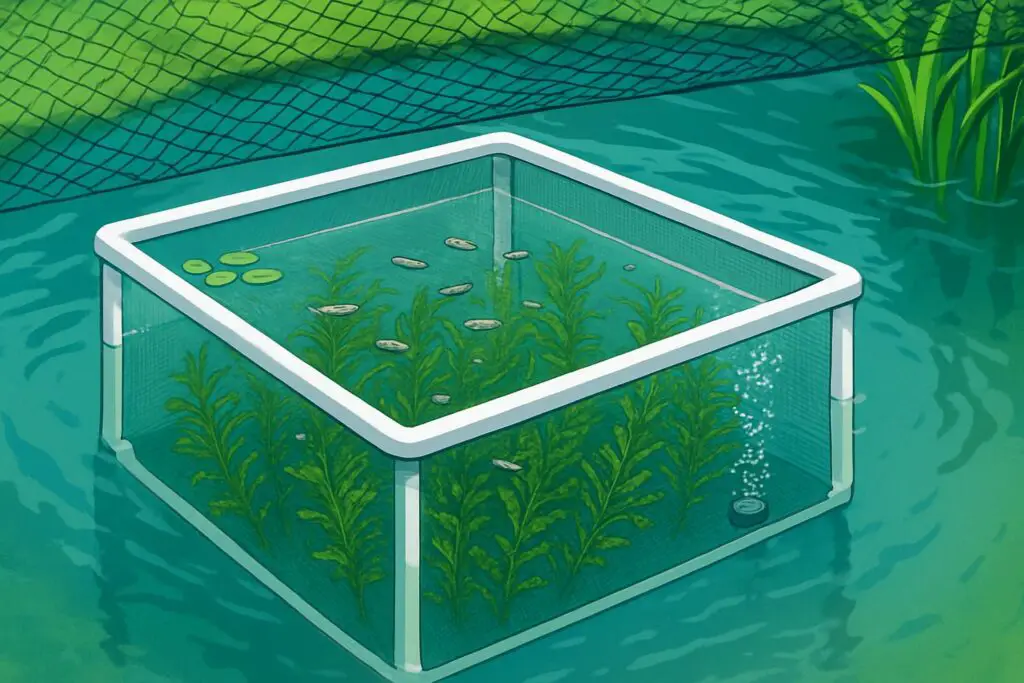
A pen keeps fry in and predators out while letting water flow through. Use a rigid frame such as a crate or PVC rectangle and wrap it with fine mesh. Use 300 to 600 micron mesh for a fry pen or basket to exclude water boatmen, backswimmers, and diving beetle larvae. Keep seams tight and secure. Make the pen at least 60 by 60 centimeters and 30 to 40 centimeters deep so fry can choose layers. Add a floating rim or a buoyant frame so the top stays above water. Place the pen where it gets dappled light and is easy to lift for cleaning.
Use gentle flow and safe filtration
Give the pen a small air stone or a sponge filter for oxygen without harsh current. Cover every pump and skimmer intake in the pond with a snug prefilter sponge in the 20 to 30 ppi range. If you use a skimmer, add a secondary fine mesh sleeve around the weir during the fry phase. The rule is simple. No opening larger than the fry head anywhere water is being pulled.
Mesh and cover strategy for birds and insects
Use two layers. Over the whole pond, install a raised predator net that sits on a frame at least 20 to 30 centimeters above the water. Keep it taut so birds cannot sag it down. Over the nursery pen, keep the fine mesh wrapped tight and add a solid lid or shade cloth on top to block strikes from above. This mix lets wind and light in while cutting access from both directions.
Provide dense cover that works
Plant choices for shelter
Layered vegetation breaks lines of attack and gives fry feeding zones. Dense submersed plants like hornwort, elodea, and water sprite are ideal for midwater hides and egg scattering. Floating mats like duckweed or water lettuce cast shade and protect the surface layer. Combine at least one dense submersed plant and one floating plant so fry can move between layers as they grow. Check local rules before adding any plant that can be invasive in your area.
Structural hides
Plants alone are not enough in the first week. Add compact structures that predators cannot enter. Bundle nylon yarn into floating spawning mops and anchor some near the surface and some midwater. Fill a plastic crate with coarse filter media or coconut fiber and wrap it with fine mesh to create a big porous block. Insert a few short lengths of perforated PVC to give narrow passages. These hides are easy to lift and rinse and give fry instant refuge.
Depth and shade management
Shallow margins warm fast, which helps fry grow, but also expose them to birds and striders. Build the nursery pen so fry can access 20 to 40 centimeters of depth with shade over part of the top. This gives warmth, cover, and an escape path. Avoid uniform open water near the surface. Avoid harsh midday sun on the pen during heat waves.
Keep predatory insects out
Quarantine and dip new plants
Most insect predators arrive on plants. Quarantine new plants in a separate tub for a week so eggs can hatch where you can see them. Rinse plants under running water and inspect daily. Before moving into the pond or nursery pen, use a safe dip. Prepare a potassium permanganate bath at a light pink color for 15 to 20 minutes, then rinse well, or use an alum soak at one tablespoon per gallon for 24 to 48 hours, then rinse. These simple steps remove many eggs, nymphs, snails, and hydra without hurting your pond.
Nightly inspection and removal
Insect hunters are active at dusk. Use a fine dip net to sweep plants and the nursery pen edges each evening. Remove any backswimmers, water boatmen, diving beetles, or dragonfly nymphs you find. Check under floating leaves for water striders. Look for hydra on plant stems and crate walls and wipe them off. Ten calm minutes each evening prevents a wave of losses overnight.
Surface management during the nursery phase
Water striders prefer still surfaces. Add small surface agitation with an air stone near the pen to disrupt their hunting. Reduce emergent stems and vertical stakes right next to the nursery pen during the fry window because dragonflies lay eggs on or near these structures. Once fry are larger, you can restore the look you prefer.
Control vertebrate predators
Bird control
Birds hunt by sight. Install a raised predator net over the pond to block landings. Add shade to break line of sight with a pergola, shade sail, or clustered floating plants near the nursery. Keep the net above the water so birds cannot spear through it. If a bird starts visiting, move fry into the covered nursery pen until the visits stop.
Amphibians and reptiles
Frogs, newts, and salamanders will enter any open edge. Keep the nursery pen fine mesh intact and do not leave gaps at corners. Remove amphibian adults from inside the pen when you see them. Skim out egg strings from the pen. In open ponds, a low temporary fence around the nursery corner helps direct movement away from fry during the first few weeks.
Mammals and pets
Raccoons and cats test edges at night. A raised rim or edge cap on the pond reduces pawing. Bring movable fry pens closer to the house and light that area. Motion activated sprinklers on the perimeter deter night visitors without stress to fish. Keep lids clipped on nursery pens so they cannot be tipped.
Feed fry without feeding predators
Food types and schedule
Newborn fry need constant small food and safe places to graze. A green water bloom inside the nursery pen is perfect in sunlight because it supplies micro food and visual cover. Supplement with powdered commercial fry food or finely crushed flakes. For the first week, feed tiny amounts 3 to 6 times daily so fry do not need to roam.
Feeding method to reduce risk
Feed inside the nursery pen only. Pre soak dry food so it sinks slowly through the cover layer instead of floating at the surface. Target feed by swirling food near plant clumps or the crate so fry can eat under cover. Avoid spotlighting the area at night because lights attract insects.
Maintain water quality while feeding
Overfeeding invites pests and fouls the pen. Adjust the amount so almost all food is gone in a few minutes. Siphon debris from the bottom of the pen every day or two with a small hose. Keep gentle aeration on at all times. If water turns cloudy and smells, cut feeding in half for a day and do a partial swap of water through the mesh with clean pond water.
Seasonal timing and stocking choices
Plan the spawn window
Predatory insects and birds peak in warm, clear months. If your climate allows, aim for early season spawning when predator pressure is lower. Set the nursery pen and cover structure before the first eggs appear. Keeping a calm schedule reduces surprises.
Separate adults from fry
Most adult fish will eat eggs and fry. If you want high survival, either spawn adults in the pen and remove them after eggs are laid or let adults spawn in the main pond and move eggs and mops into the pen. Do not rely on adult behavior to spare fry. It will not.
Avoid stocking fish that hunt fry
Some fish are specialized fry hunters. Do not add mosquito fish if you want to raise fry in the same water because they will focus on small fish. Keep game fish out of fry ponds. Simpler communities are easier to manage.
Daily and weekly routine
Daily ten minute checklist
Morning, confirm the nursery pen mesh is intact and the lid is closed. Check the air stone and flow. Look for any trapped fry near intakes and move them back. Feed a small meal inside cover. Evening, sweep with a fine net for backswimmers, boatmen, beetles, and dragonfly nymphs. Wipe off any hydra you see. Feed lightly again. Count roughly. If you see a sudden drop, hunt for the cause before night.
Weekly maintenance
Rinse the pen walls and crate hides with pond water to clear algae without stripping biofilm. Trim plants to keep a dense but navigable maze. Clean prefilter sponges on pumps and skimmers in a bucket of pond water. Test that the predator net over the pond is taut. Review shade coverage as sun angle changes.
Signs of trouble and quick fixes
Fry hugging the surface and gasping means low oxygen or prey pressure from below. Increase aeration and add a floating shade over that area. Sudden missing fry with slick, still water usually means insect predators. Intensify nightly sweeps and tighten fine mesh. Fry caught near the skimmer means intakes need finer prefilter and lower pull. Birds landing means you need to raise the over pond net and add shade immediately.
Simple emergency actions
If a swarm of backswimmers arrives
Pause feeding for one cycle. Perform repeated net sweeps along surfaces and plant edges. Move fry into the nursery pen if they are not already inside. Tighten the fine mesh wrap. Add gentle surface agitation inside the pen to deter striders and surface hunters.
If a bird finds the pond
Install or raise a predator net over the pond the same day. Add a solid lid or shade over the nursery pen. Delay any release of fry to open water. Increase human presence near the pond during peak bird hours for a few days.
If fry crowd the skimmer or pump
Turn down flow. Add or upgrade prefilter sponges. Place a barrier baffle in front of the intake to diffuse pull. Guide fry back to the pen and feed there so they settle. Recheck after dark to confirm the fix worked.
Putting it together
Protecting pond fry is not about one gadget. It is about layers that cut risk from all angles. Use a fine mesh nursery pen to control the fry space. Wrap every intake with safe prefilters. Shade and cover the pond to defeat birds. Stack plants and structures to break sight lines and create safe feeding zones. Keep new plants in quarantine and sweep for insects at dusk. Feed small, frequent meals inside cover and keep the pen clean. With this routine, fry losses go from mysterious and constant to rare and expected. Survival climbs, and the process becomes repeatable.
Conclusion
Fry survival is predictable when you control access, cover, and habits. Start with a secure nursery pen built from 300 to 600 micron mesh. Add layered plants and compact hides. Shield the pond from birds with a raised predator net and shade. Quarantine and dip plants and sweep for insect predators daily. Feed often in small amounts inside shelter and keep the water gentle and oxygen rich. These simple steps stack up to a system that works every season. Build the layers now, and your next spawn will grow into a strong, visible cohort instead of a memory.
FAQ
Q: What mesh size keeps insect predators out of a pond nursery
A: Use 300 to 600 micron mesh for a fry pen or basket to exclude water boatmen, backswimmers, and diving beetle larvae.
Q: Which plants give the best cover for pond fry
A: Dense submersed plants like hornwort, elodea, and water sprite, plus floating mats of duckweed or water lettuce, create layers of shelter and shade.
Q: How do I stop dragonfly nymphs from eating fry
A: Quarantine and dip new plants, reduce emergent stems during the nursery period, sweep with a fine net at dusk, and keep the nursery pen wrapped in fine mesh.
Q: How should I feed pond fry without attracting predators
A: Feed small amounts 3 to 6 times daily inside the nursery pen, use powdered or finely crushed food that sinks slowly, and support green water so fry graze under cover.
Q: What should I do if birds find my pond
A: Install a raised predator net over the pond, add shade to break line of sight, and move fry into a covered nursery pen until the birds stop visiting.