
We are reader supported. When you purchase through links on our site, we may earn an affiliate commission. Also, as an Amazon affiliate, we earn from qualifying purchases.
New fry are small, slow, and easy targets. In ponds, insects, birds, and even your adult fish can wipe out a spawn in days. The good news is that you can prevent most losses with simple preparation, smart habitat design, and steady daily habits. This guide shows you clear steps that work for beginners and experienced keepers alike, so your fry survive and grow.
Introduction
Protecting pond fry is about control. Control who can reach them, where they can hide, and how stable the water stays while they grow. You do not need expensive gear. You need a plan that blocks predators, supports food and oxygen, and keeps the system stable through the most vulnerable weeks. Follow the sections below in order. Each step builds on the last so you can act fast and see results.
Know the Threats
Insect predators
Backswimmers, water boatmen, diving beetles, and dragonfly nymphs are the top insect threats. They spear, grab, or ambush fry, especially in still water near edges and under floating leaves. Mosquito larvae are less dangerous to fry directly, but standing water that breeds mosquitoes also attracts larger aquatic insects that will eat fry.
Birds and mammals
Herons, kingfishers, raccoons, and neighborhood cats can decimate fry and even adults. They focus on shallow, open zones with clear sightlines. Night visits are common, so daytime checks alone are not enough.
Adult fish and amphibians
Goldfish, koi, and other adult fish will eat eggs and small fry if they can reach them. Frogs and newts also patrol the margins and will take fry when available. Any mouth big enough to fit a fry is a risk.
Plan Before Spawning
Choose a safe pond layout
Create a layered pond with shallow plant shelves, mid-depth zones, and deeper refuge. Fry survive best when they can move through dense plant roots and fine-leaf stems that adults and large insects avoid. Plan at least one side of the pond with a protected shelf that has surface cover and vertical stems for hiding.
Pre-clean and reset predator levels
Before breeding season, remove leaves, sludge, and tangled debris that shelter insect predators. Rinse out filter pads with pond water. Vacuum easy-to-reach muck. This breaks the overwintered population of dragonfly nymphs and beetles that would hunt fry. Do not sterilize the pond. Keep biofilm and beneficial bacteria intact.
Time your spawn
Many insect predators surge in mid to late summer. Spawning earlier in spring, when water stabilizes at your species-safe temperature, often reduces insect pressure. Avoid spawning right before a forecasted heat wave, cold snap, or stormy week that would stress fry and push them into open water.
Build Physical Protection
Netting and covers
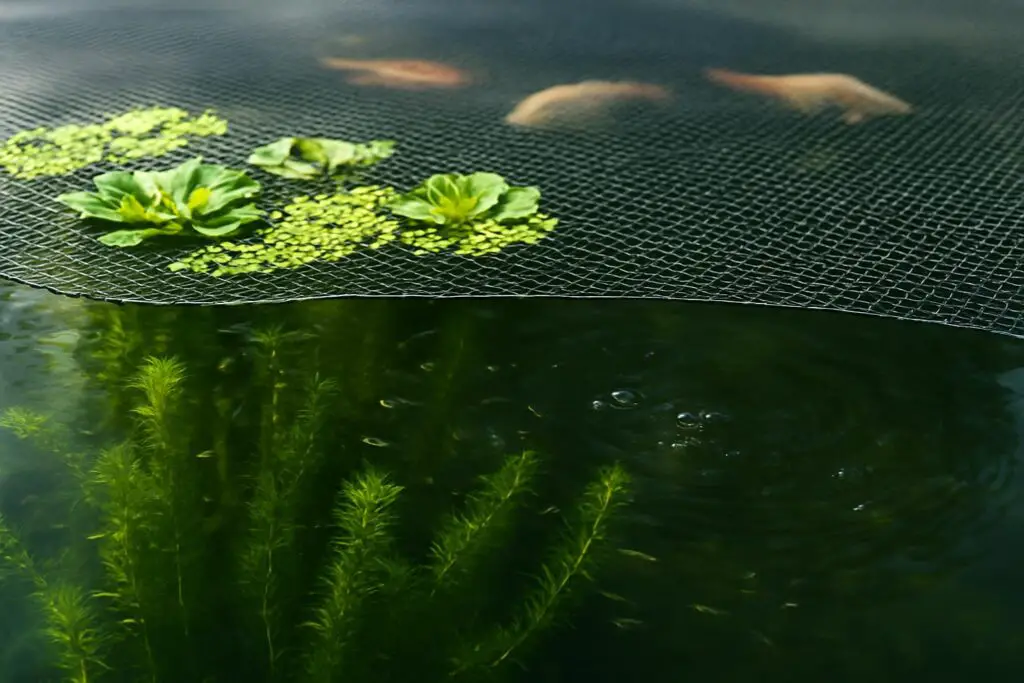
Use fine mesh pond netting over the surface to block birds and reduce insect landings. Anchor the net tight and keep it elevated over the water so predators cannot press it down. Choose mesh small enough to keep out dragonflies and diving beetles but large enough to allow airflow and light. At night, covers stop many flying hunters from skimming the surface where fry rest.
Fry refuges and hides
Fry need dense cover with fine structure. Add bundles of plastic spawning mops, stacks of fine brush, or weighted mats of yarn to create instant shelter. Mix in live plants that grow fast and offer thread-like cover. Good options are hornwort, water sprite, elodea, and rooted clusters of water lettuce with long hanging roots. Duckweed also adds a surface canopy that breaks sightlines from above.
Partitioning and fry boxes
Separate the smallest fry from adult fish during the first weeks. Use a floating fry box, a net breeder cage, or a rigid mesh partition that creates a quiet nursery zone. Aim for mesh around 0.5 to 1 mm for the first days, then increase as fry grow. The box should have gentle flow, shade, and constant access to microfoods. If you breed for yield, keep the first wave of fry apart and only reunite after they reach a safe size.
Shallows and flow management
Keep a shallow shelf with 10 to 20 cm of water under dense plants and mops. Adults rarely push deep into tight stems. Set your waterfall or aeration so the fry area has ripple but not strong current. Predatory insects prefer calm water for ambush. Gentle surface movement makes their attacks harder.
Control Insects Humanely
Break surface hunting
Many insect predators hunt at the surface or hang just below it. Use air stones or a small fountain to ripple the top. Position flow near nursery zones but keep it gentle enough for fry. A light chop at the surface reduces successful strikes by backswimmers and boatmen.
Manage dragonflies and diving beetles
Daily skimming and hand removal make a real difference. Use a fine net to lift out dragonfly nymphs, diving beetles, and backswimmers. Check plant rafts, skimmer boxes, and shallow shelves each morning and evening. Remove spent egg casings from dragonflies on sticks and emergent stems near the pond. Trim or cluster emergent plants so they do not create ideal launch pads right over fry zones.
Mosquito control without harming fry
Use BTI mosquito dunks or granules to prevent mosquito larvae without harming fry. BTI targets mosquito larvae and is safe for fish and fry when used as directed. Place a piece of dunk in your filter basket or in a floating ring so it does not get lost. Replace per label frequency. Do not use broad pesticides or oils on pond water.
Water Quality and Stability
Filtration and prefiltering
Fry die fast in poor water. Keep your filter running but protect fry from the intake. Wrap the intake with fine sponge or a mesh prefilter so tiny fish are not sucked in. Rinse the prefilter in pond water every few days to keep flow stable. Keep mechanical pads clean enough to avoid bypass while preserving bio media bacteria.
Gentle aeration and oxygen
Add at least one air stone in or near the nursery zone. Oxygen supports fast fry metabolism and speeds biofilter function. In hot weather, raise aeration and create small shaded areas with floating plants or a canopy so heat stress does not push fry into open, risky water.
Test and maintain parameters
Check ammonia, nitrite, nitrate, pH, and temperature. Keep ammonia and nitrite at zero. Do small partial water changes if nitrates climb or debris builds. Match temperature and dechlorinate replacement water. Stability reduces frantic swimming and surface gulping that expose fry to predators.
Feed to Reduce Predation
First foods for fry
Start with tiny foods that drift slowly where fry hide. Use infusoria, green water, freshly hatched baby brine shrimp, powdered fry food, or finely crushed flakes. Feed near cover so fry do not need to cross open water. Keep a light dusting of microfood through the day during the first weeks.
Feeding schedule and stations
Small meals keep fry full and less exposed. Tiny amounts 4 to 6 times per day at first, enough to be consumed in a few minutes, then transition to larger particle feeds as they grow. Set feeding spots inside the nursery zone and among plant roots. Remove uneaten food after 10 to 15 minutes to protect water quality.
Distraction feeding for adults and beetles
Feed adults well, away from fry areas, at the same times each day. This builds a habit that moves large mouths to the far side of the pond during fry meals. Evening feeding can also pull nocturnal insects to that zone. Use floating pellets for adults while you dust microfood inside the nursery.
Daily Monitoring and Rapid Response
Know the signs of trouble
Watch for darting fry at the surface, sudden vanishings from a shelter, or shiny air bubbles and slicks that collect insects at a corner. These cues point to predators or poor water. Count fry roughly at the same time each day. A sharp drop needs action.
Remove intruders fast
Use a headlamp at night and a white tray to spot backswimmers, beetles, and dragonfly nymphs. Scoop them out. Check under floating plants. Inspect the skimmer basket and prefilters daily. If you find multiple predators in a row, add more surface ripple, increase plant density in the nursery, and step up manual removal.
Seasonal Adjustments
Spring and early summer
This is prime spawning time for many pond fish. Set up covers and nursery zones before eggs are laid. Keep water changes small and regular. As insects emerge, skim daily and use BTI early to prevent surges of mosquito larvae that attract hunters.
Mid to late summer
Heat and insect activity rise. Increase shade, add aeration, and thin plants just enough to keep flow. Check for dragonfly nymph skins on stems and remove them. Keep netting secure when afternoon winds pick up. Feed in shorter intervals that match warm metabolism.
Autumn and winter
Fry that are still small need stable temperature and calm cover. As plants die back, add artificial mops or brush bundles so shelter does not vanish. Reduce feeding as water cools. Keep a hole in any ice with an aerator to preserve gas exchange, but do not disturb the nursery area with strong flow.
Common Mistakes to Avoid
Do not leave the pond surface wide open. Do not rely on plants alone without density and structure. Do not run a strong pump intake near fry without a prefilter. Do not overfeed and let food rot. Do not skip daily skimming during peak insect months. Do not use chemical pesticides or oils in the pond.
Step-by-Step Quick Plan
One week before spawning, clean debris, prune plants, and set up netting. Add dense floating plants and fine-leaf stems. Install a fry box or mesh partition in a quiet, shallow zone and add an airstone. Fit a sponge prefilter over the pump intake.
On spawning day, move eggs or mops into the nursery zone. Start gentle aeration near them. Begin tiny feedings once fry are free swimming. Keep adult feeding far from the nursery.
Each day, skim the surface, inspect covers, and remove any insects you find. Check the nursery mesh for gaps. Test water for ammonia and nitrite. Adjust aeration to keep a light ripple over fry areas.
Each evening, spot-check with a flashlight. Look for hunting backswimmers and remove them. Replace BTI per label if you use it. Keep the routine steady until fry are too large for insects to handle.
Putting It All Together
Habitat first
Dense cover and tight structure stop line-of-sight hunting and slow bigger mouths. Build this before eggs hatch. Add both live plants and artificial mops for consistent density.
Barrier second
Netting, partitions, and prefilters block direct access and suction risks. Keep all screens clean enough to maintain flow.
Stability always
Steady oxygen, clean water, and small frequent feedings keep fry calm and near cover. Calm fry survive better. Calm water chemistry supports biofilter strength and reduces stress.
Conclusion
Fry survival is not luck. It is a system you build with layers of protection. Start with dense cover and a defined nursery. Add netting and prefilters. Keep mild surface movement to disrupt insect attacks. Feed small and often inside shelter. Skim and inspect daily. Use BTI for mosquitoes and remove larger insect predators by hand. With this routine, your pond will shift from frequent losses to reliable growth, season after season.
FAQ
Q: What is the fastest way to protect newly hatched pond fry?
A: Move them into a net breeder or a partitioned fry zone with dense floating plants, cover the pond with fine mesh netting, add a prefilter to any pump intake, and start small, frequent feedings in the nursery.
Q: How do I keep backswimmers and water boatmen from eating fry?
A: Skim them out daily, set a small floating LED light trap at night, keep fine mesh netting over the pond, break the surface with gentle aeration near the nursery, and reduce emergent insect habitat right over fry zones.
Q: Are BTI mosquito dunks safe for fry?
A: BTI targets mosquito larvae and is safe for fish and fry when used as directed. Place a piece in a filter basket or floating ring and replace per label.
Q: What plants give the best cover for fry outdoors?
A: Hornwort, water sprite, elodea, and floating water lettuce with long roots are excellent, and duckweed adds a helpful surface canopy.
Q: How much should I feed pond fry?
A: Tiny amounts 4 to 6 times per day at first, enough to be consumed in a few minutes, then transition to larger particle feeds as they grow, and remove uneaten food to keep water clean.