
We are reader supported. When you purchase through links on our site, we may earn an affiliate commission. Also, as an Amazon affiliate, we earn from qualifying purchases.
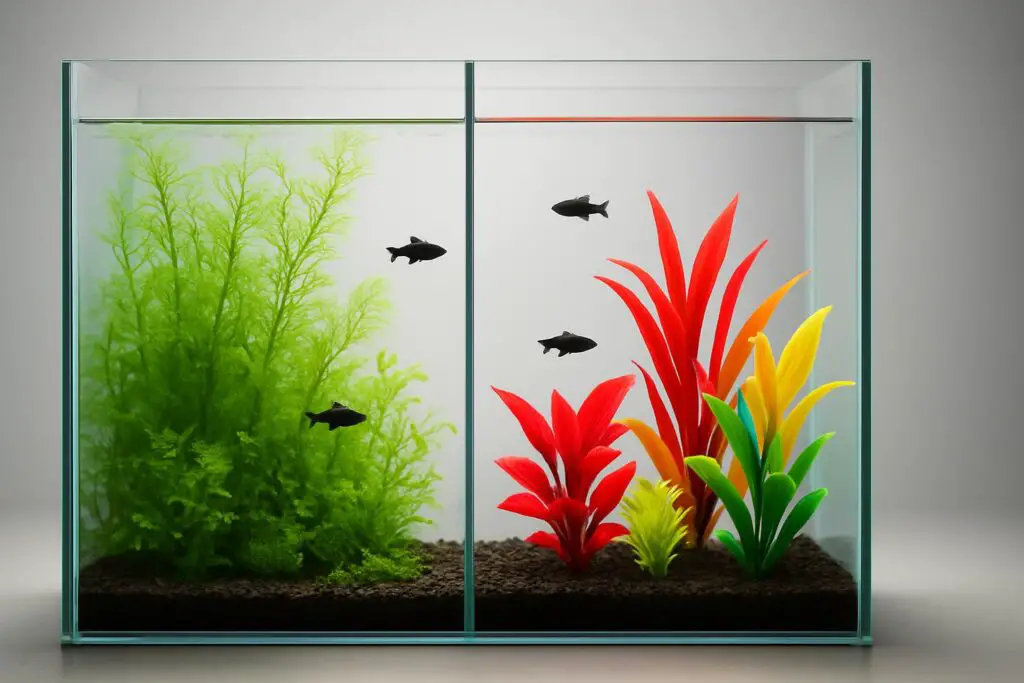
Choosing between real and plastic aquarium plants shapes how your tank looks, how stable your water stays, and how much time you spend on care. New aquarists often ask which is best. The short answer is that both can work well when used with intention. The long answer is where you gain control and confidence. This guide gives you a clear, practical path to decide, set up, and maintain the option that fits your fish, your budget, and your schedule.
Why plants matter in a fish tank
Plants are not only decor. They change how fish behave, how waste is processed, and how algae grows. Good plant choices lower stress, offer cover, and help you keep stable water without chasing problems. Strong planting also makes your aquarium look balanced through different growth stages and fish activity levels.
Fish use plants for shelter and territory. Shy species settle faster with dense cover. Active swimmers relax when they can move between open water and planted areas. Reduced stress helps immunity and color expression. That is a direct benefit even before discussing filtration and algae management.
Real aquarium plants at a glance
Positive impact on water
Live plants change water chemistry in helpful ways. They take in nitrogen waste and minerals and store them in leaves and roots. During the light period, they produce oxygen that benefits fish and bacteria. Their surfaces host biofilm that supports a stable cycle.
Are real aquarium plants better for water quality than plastic plants
Real plants actively absorb ammonia, nitrite, and nitrate, release oxygen during the photoperiod, and provide natural biofilm surfaces; plastic plants do none of these tasks.
Natural behavior and looks
Live plants sway with flow, grow into open gaps, and soften hard lines. Fish interact with them more often. Grazers pick at biofilm. Egg scatterers use fine leaves for spawning sites. Day by day, the tank looks more natural as stems and roots settle.
Flexibility for aquascaping
Real plants let you shape height, depth, and texture. You can trim, replant tops, and fill space over time. Slow growers hold a layout steady. Fast growers fix nutrient spikes and new tank instability. You can evolve the layout without buying new decor each time.
Common hurdles
Real plants ask for light, nutrients, and patience. If any of these are off, leaves can melt, algae can cover surfaces, or growth can stall. Some species demand rich substrate or added carbon dioxide. Rapid changes in temperature, GH, KH, or pH can shock them. Snails or fish may eat soft leaves. New plants may carry pests if you skip a rinse or quarantine.
Maintenance routine
Plan a weekly rhythm. Remove decaying leaves before they break down. Trim fast growers to keep shade under control and to stop them from hogging flow. Vacuum debris lightly around root zones but avoid deep disruption. Dose a complete fertilizer in low doses two to three times per week if you see pale growth or slow recovery after trims. Reset the light schedule if algae flares.
Cost overview
Initial cost can be modest or high depending on species and quantity. Low tech tanks use affordable hardy plants and a simple LED. Long term, a thriving plant bed reduces the need for frequent chemical media or algae cures. Real growth can be propagated to expand the layout at no extra cost.
Plastic aquarium plants at a glance
Benefits
Plastic plants offer instant coverage and color with no biological demands. They do not die, melt, or need fertilizer. They keep shape under strong flow and with boisterous fish. They are easy to clean during a water change. For a busy schedule or a tank with plant-eating fish, they provide structure without risk of being destroyed in a week.
Risks and how to avoid
Sharp edges can injure fins. Avoid rough or hard plastic with pointed tips. Choose soft silk or flexible plastic that bends in water. Inspect every leaf with your fingers before placing it in the tank. Stiff or sharp plastic leaves can tear fins, especially on bettas, fancy guppies, and long fin tetras; choose soft silk or flexible plastic and test with a drag on a cotton pad.
Plastic surfaces can trap debris and grow algae if not cleaned. Detritus buildup under a dense plastic bush can sour a small area. Rinse and swish plants in removed tank water during routine maintenance to keep flow pathways open.
Maintenance routine
Each water change, lift the plant gently and shake it in a bucket of tank water to release trapped waste. If algae sets in, a soft toothbrush can remove it. Avoid harsh chemicals. If needed, a short soak in a mild diluted bleach solution followed by a strong dechlorinator rinse is an option, but only when plants are out of the tank and fully dried after treatment. Rinse again before reintroducing to the aquarium.
Cost overview
Upfront cost is predictable and often lower for a complete layout. There is little to no ongoing cost for fertilizer or specialized lights. Replacement happens only if color fades, algae stains set in, or you change the theme.
Impact on fish health and behavior
Cover reduces aggression and chasing. Real plants add microfood through biofilm and small organisms, which benefits fry and shy feeders. Plastic plants offer cover without food value. Long fin species need soft surfaces to prevent snags. Bottom dwellers appreciate shaded zones and roots to explore, which real plants provide naturally.
Water quality links to stress and disease risk. As already stated, real plants help process waste. Plastic plants keep stable geometry but rely on your filter and water changes to handle nutrients. If you run a plastic layout, match your filtration and maintenance to your stocking level with little buffer for errors.
Algae and clarity control
Do live plants help control algae growth
Yes, fast growing real plants outcompete algae for nutrients and shade the glass and substrate; neglected plants, however, shed leaves that feed algae.
Plastic plants neither help nor hurt nutrients by themselves, but algae will colonize their surfaces if light and nutrients are unbalanced. Consistent cleaning limits this. Strong flow across leaves reduces dead zones where algae starts.
Lighting and nutrients explained simply
Keep targets simple at first. Use a reliable full spectrum LED with a dimmer if possible. Avoid window glare. Set a fixed timer and resist manual toggling.
What lighting schedule should beginners use for a low tech planted tank
Aim for 6 to 8 hours of light per day, avoid direct sunlight, and increase by 30 minutes per week only if plants are healthy and algae is stable.
For nutrients, a complete all in one fertilizer supports most low tech tanks. Dose lightly at first, then adjust based on plant color and growth. Dark green combined with slow growth can mean low CO2 from poor surface agitation balance. Very pale new leaves can suggest a shortage of iron or overall nutrients. In sand or inert gravel, root tabs help heavy root feeders.
Safety checks before placing any plant
Rinse all plants before use. For live plants, remove rock wool and trim damaged roots. Inspect for snails and eggs. A short quarantine in a separate container helps keep pests out. For plastic plants, run a finger along edges and over tips. If it scratches your skin or snags fabric, do not use it with long fin fish. Check bases for exposed metal and cover or discard if present. Anchor softly with plant weights or bury the base without crushing nearby root zones.
Matching plants to your tank size and fish list
Nano tanks need fine textures that do not crowd swimming space. Mid sized community tanks can mix background stems with midground rosettes. Large tanks benefit from hardy species that scale well and tolerate flow. If you keep goldfish or many cichlids, assume they will dig or nip. Real plants can still work with tough species and secure planting, but plastic may hold shape better in high traffic spots.
A simple hybrid layout that works
Can I mix real and plastic plants in the same tank
Yes, a hybrid layout works well when you place hardy live plants where light and flow are steady and keep plastic decor in high traffic zones or around diggers.
This approach lets you gain water quality benefits where plants can thrive, while keeping the scape intact where fish are most active. Use real plants to frame the background and midground. Add a few plastic accents near caves, open sand, or near filter outputs that would uproot soft stems.
Step by step setup plans
For a real plant starter tank
Start with a stable substrate and a moderate LED. Plant hardy species that tolerate a range of water parameters. Space plants to allow growth. Set the timer for eight hours. Begin with a low dose fertilizer two to three times per week. Keep flow gentle but not stagnant. Perform weekly water changes of 30 to 50 percent while the tank matures. Trim as soon as stems reach the surface to prevent shading. Monitor for melt in the first two weeks and remove decaying parts promptly.
For a plastic plant low maintenance tank
Rinse all plants in warm water. Round any sharp edges by hand and remove loose flashing. Place taller pieces at the back for depth and short ones near the front. Leave open swim space. Keep bases accessible for easy lifting during cleaning. Sync cleaning with your water change. Shake each plant in a bucket of removed tank water to release debris. Wipe leaves if needed. Keep your filter media on a regular rinse schedule since plastic plants do not assist with nutrient uptake.
Troubleshooting quick guide
If live leaves melt, check temperature swings, hardness shifts, or a big drop in light intensity. Do not panic. New growth often returns once roots settle. If algae blooms, shorten the photoperiod and increase plant mass with fast growers, then trim and rebalance flow. If fish nip plants, add extra feeding variety and use tougher species or move those plants to protected zones. If plastic plants collect detritus, increase gentle flow across them and clean more often until the bio load and maintenance match.
Decision guide based on goals
Choose real plants if you want natural behavior, improved water stability, and a scape that evolves. You accept routine trimming and some learning on light and nutrients. This path rewards consistency and offers strong long term balance.
Choose plastic plants if you want predictable shape, minimal time investment, and a layout resistant to digging or grazing. You agree to handle all nutrient control through filtration and water changes. This path favors busy schedules and rough housing species.
Choose a hybrid if your fish list or room layout makes some zones unsuitable for living roots. You get many of the benefits of both with fewer compromises.
Cost and time comparisons
A basic live plant setup costs more at the start if you buy many pots and a better light. Over time, cuttings and divisions reduce costs. Fertilizer is a small monthly expense. Time goes to trimming and observation. A plastic setup costs less at the start for a full scape and almost nothing later, with time spent mainly on cleaning during water changes. Filters and water changes bear the full load of nutrient export in the plastic route.
Beginner mistakes to avoid
Do not blast a new planted tank with long light hours. Avoid switching fertilizers or schedules every few days. Do not bury crowns or rhizomes that should sit above the substrate. Avoid sharp plastic with delicate finnage. Do not skip rinsing or quarantine for new live plants. Avoid overcrowding the tank on day one, because more plants can help but only if you can keep them alive under your current light and routine.
Simple metrics to track
Track your light hours, nitrate level, and trimming dates. Note any algae type and where it appears. Record how fish interact with different plant zones. These notes help you adjust before problems spread.
Conclusion
Both real and plastic aquarium plants can deliver a beautiful, functional tank when used with intent. Real plants bring biological support, natural movement, and long term stability when you meet their basic needs. Plastic plants deliver instant structure with low care demands and strong durability around rough fish or busy schedules. A hybrid layout often blends the strengths of both. Decide based on your fish, your time, and your comfort with plant care. Start simple, watch your tank closely, and make small, steady adjustments.
FAQ
Q: Are real aquarium plants better for water quality than plastic plants
A: Real plants actively absorb ammonia, nitrite, and nitrate, release oxygen during the photoperiod, and provide natural biofilm surfaces; plastic plants do none of these tasks.
Q: Can plastic plants harm fish fins
A: Stiff or sharp plastic leaves can tear fins, especially on bettas, fancy guppies, and long fin tetras; choose soft silk or flexible plastic and test with a drag on a cotton pad.
Q: Do live plants help control algae growth
A: Yes, fast growing real plants outcompete algae for nutrients and shade the glass and substrate; neglected plants, however, shed leaves that feed algae.
Q: Can I mix real and plastic plants in the same tank
A: Yes, a hybrid layout works well when you place hardy live plants where light and flow are steady and keep plastic decor in high traffic zones or around diggers.
Q: What lighting schedule should beginners use for a low tech planted tank
A: Aim for 6 to 8 hours of light per day, avoid direct sunlight, and increase by 30 minutes per week only if plants are healthy and algae is stable.