
We are reader supported. When you purchase through links on our site, we may earn an affiliate commission. Also, as an Amazon affiliate, we earn from qualifying purchases.
Choosing between real and plastic plants shapes how your aquarium looks, how healthy it stays, and how much work you will do each week. Both options can succeed. Both can fail if set up poorly. The right choice depends on your fish, your schedule, your budget, and your goals. This guide breaks down the trade-offs in plain language, gives setup steps for each route, and ends with a clear decision framework so you can move forward with confidence.
What Your Aquarium Actually Needs
Every healthy aquarium provides cover, stable water quality, and a calm environment for fish. Plants, real or plastic, help with cover. Only real plants help with nutrient uptake and biological stability. Plastic plants are predictable and simple, but they do not process waste. Knowing this difference is the key to your choice.
Cover and Security
Fish feel safe when they can break lines of sight and rest without harassment. Tall stems, midground bushes, and low groundcover all serve this purpose. Both real and plastic plants can create these zones. Skittish species calm down when cover is available. Aggressive species behave better when they cannot see each other across the tank.
Water Quality and Stability
Ammonia and nitrite must be zero. Nitrate must stay in a reasonable range. Real plants consume ammonia and nitrate, lowering the load on your filter and reducing algae pressure. Plastic plants do not consume nutrients, so water changes and filter maintenance carry the full load. If you want the lowest possible nitrate and a buffer against mistakes, real plants help. If you prefer predictable routines with no plant care, plastic is simpler.
Real Plants: Why Many Aquarists Choose Them
Benefits You Will Notice
Real plants use nutrients, helping to keep nitrate and phosphate in check. They compete with algae for light and nutrients. They produce oxygen during the day, which benefits fish and beneficial bacteria. They provide natural surfaces for biofilm that shrimp and fry graze on. They sway with the water current and create a natural look that evolves over time.
Many fish display better colors and more relaxed behavior in planted tanks. Shy species explore more. Livebearer fry have hiding spaces and higher survival rates. Shrimp flourish among moss and fine leaves. For many aquarists, the living aspect is the appeal. You get a mini ecosystem that grows and stabilizes with time.
Challenges to Expect
Plants have needs. They want adequate light, consistent nutrients, and in some cases carbon dioxide supplementation. Without these, leaves may yellow, melt, or attract algae. Some species are sensitive to hard water or require warmer temperatures. Others grow too fast and need weekly trimming. You must choose plants that fit your light and water, not the other way around, unless you are ready to upgrade equipment.
New tanks can bring a learning curve. You may see initial algae while the biology balances. Fertilizers must be dosed correctly. Poor circulation can trap debris on leaves. Once you understand the basics, maintenance becomes steady and predictable. But that learning phase is real and worth acknowledging.
Plastic Plants: Why They Remain Popular
Advantages You Can Rely On
Plastic plants do not need light, fertilizer, or carbon dioxide. They keep their shape and color. They will not melt after a water change. They are durable under rambunctious fish that uproot or nibble live plants. They work in brackish systems where many live plants struggle. They are useful in quarantine tanks because you can disinfect them easily.
If you want a display that looks finished on day one and stays stable with minimal attention, plastic plants deliver. They suit busy owners who prefer a basic water change and filter cleaning routine. They avoid the complexity of nutrient dosing and light management.
Limitations You Must Manage
Plastic plants do not process waste. Nitrate will only drop through water changes, denitrifying media, or specialized filtration. Plastic leaves can develop algae and biofilm and will need scrubbing. Some hard plastic products have sharp edges that can tear fins. Silk plants are softer and safer for fish like bettas and long-finned species.
Plastic plants are static. Some fish remain timid because the environment feels artificial. Grazers like otocinclus and shrimp find less natural food. If you want water polishing from plants, you will not get it with plastic.
Water Quality, Gas Exchange, and Algae
How Real Plants Help
Plants uptake ammonia, ammonium, and nitrate. Fast growers such as hornwort, water sprite, and floating plants can pull down nitrate between water changes. This reduces algae fuel. During the photoperiod, plants release oxygen. At night, plants consume oxygen, so ensure surface agitation. A gentle ripple from your filter output keeps oxygen stable and avoids nighttime dips.
If you run a planted tank well, you often see clearer water, less algae over time, and more stable pH because plants and hardscape buffer swings. Consistent maintenance is still needed, but plants share the workload.
What to Expect With Plastic
Plastic setups rely on filtration and water changes. You will likely run a stronger filter or change water more often to control nitrate and dissolved organic compounds. Algae grows on any lit surface, including plastic leaves. With plastic plants, algae control hinges on controlling light duration, stocking levels, feeding amounts, and filter hygiene.
Lighting and Equipment
Requirements for Real Plants
Match light intensity to plant choice. Low light plants such as anubias, java fern, bolbitis, bucephalandra, crypts, and mosses do well under simple LED lights and do not need CO2. Medium to high light species like carpeting plants, red stems, and many fast growers need stronger light, regular fertilization, and sometimes pressurized CO2 for best results.
Keep the photoperiod consistent, usually 6 to 8 hours for new setups, then adjust slowly based on growth and algae response. Combine a timed light schedule with regular fertilization and water changes, and you can achieve steady plant health.
Requirements for Plastic Plants
Plastic plants need only enough light for you to view the tank. Keep the light moderate to reduce algae. Use a timer and avoid long photoperiods. Equipment is simpler because you do not need plant-specific gear. A good filter, heater if needed, and a reliable light for viewing are enough.
Maintenance Workload
With Real Plants
Weekly tasks include trimming, replanting tops of stem plants, removing decaying leaves, cleaning the filter intake, and dosing fertilizers. Monthly or biweekly water changes reset nutrients and remove organics. Many aquarists find this routine relaxing. It does require consistency.
With Plastic Plants
Weekly tasks include water changes, vacuuming the substrate, and cleaning plastic leaves when they collect algae. Deep cleaning may require removing the plants and scrubbing with a soft brush in tank water. Rinse well to avoid residues. The focus is on cleanliness rather than growth management.
Cost Comparison
Startup Costs
Real plants can be affordable if you choose low light species and a basic LED. Costs rise if you add CO2 and high output lighting. Substrate can be simple sand or gravel for epiphytes, or a nutrient-rich soil for rooted plants. Plastic plants have a clear upfront cost per piece. High quality silk plants can cost more than basic live plants. The rest of the system stays simple.
Ongoing Costs
Real plants need fertilizers and possibly CO2 refills. Trimming tools and spare plant weights help. Plastic plants need cleaning tools and maybe replacements over time if algae stains or plastic degrades. Water change costs are similar for both, though planted tanks sometimes allow reduced frequency once mature.
Fish, Shrimp, and Snail Compatibility
Species That Prefer Real Plants
Small community fish, rasboras, tetras, dwarf gouramis, and most livebearers thrive in planted tanks. Shrimp need biofilm and moss to graze. Otocinclus and many small plecos benefit from stable, plant-rich water. Egg scatterers and fry use dense plants as cover.
Species That Often Do Better With Plastic
Large cichlids, many goldfish, silver dollars, and some barbs shred or uproot live plants. Fast, rough fish can break delicate stems. In those cases, sturdy plastic or silk plants anchored to rocks keep the scape intact. For brackish setups, many common live plants struggle, so plastic decor offers flexibility.
Safety Notes
Choose soft silk plants for bettas and long-finned fish. Inspect plastic edges and trim rough parts. Avoid copper-based chemicals in planted shrimp tanks. Rinse both real and plastic plants before use to avoid dust and residues.
Aesthetics and Aquascaping
Movement and Texture
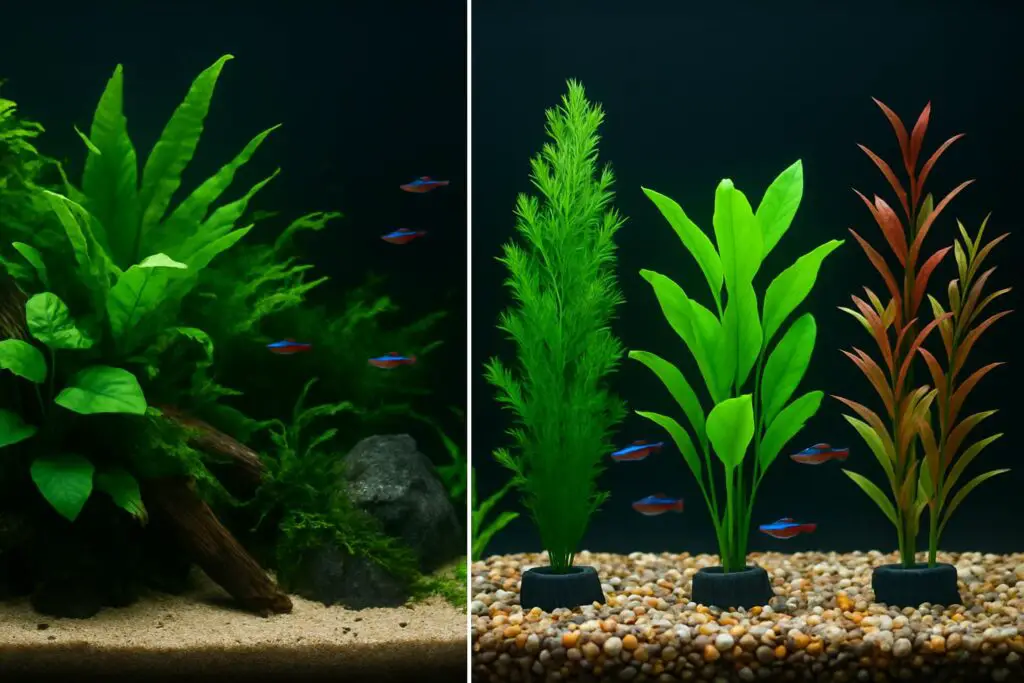
Real plants move with the current and develop varied textures and growth patterns. This creates depth and a natural feel. Plastic plants remain static. You can still create depth with height layering and color variation, but the scene does not evolve on its own. Decide whether you want a living scape that changes or a fixed design that stays the same.
Color and Realism
Real green tones are difficult to match with plastic. Some high-end silk options look convincing, especially at a distance. Avoid neon colors unless you want a stylized look. Focus on scale and proportion. Use taller plants to frame the back, medium plants in the middle, and small ones in front to create perspective.
Common Myths to Avoid
Myth: Live plants are always hard
Many plants are easy. Java fern, anubias, moss, and crypts work in tap water and moderate light. Start with these and avoid high-demand species until you are ready.
Myth: Plastic plants are maintenance-free
Plastic plants still collect algae and debris. Without nutrient uptake, you depend on water changes and filtration. The work shifts from trimming to cleaning, but it does not disappear.
Myth: Plants bring parasites
Healthy plants from reputable sources are safe when rinsed and inspected. Quarantine if you are cautious. Dip protocols exist, but they can harm delicate species. Always research before dipping.
Myth: Plants always raise pH
Plants do not raise pH by default. They can influence CO2 levels during the day and night, but your water hardness and buffering capacity govern pH more strongly.
The Hybrid Approach
Why Mixing Can Work
You can combine tough silk plants with select live species. Use real plants where they are most effective, such as moss and anubias on hardscape, and fill open areas with silk to control maintenance. This approach reduces risk while offering many benefits of live foliage.
Where to Place Each
Attach simple epiphytes to driftwood and rocks. Use silk stems for height where rooted plants would be uprooted by fish. Float real plant species to provide shade and nutrient uptake. Keep plastic pieces in areas with easy access for cleaning.
Setup Guide: Real Plant Tank
Plan the Plant List
For beginners, pick low light species. Anubias, java fern, bucephalandra, bolbitis, crypts, vallisneria, and mosses are reliable. Choose three to five species to avoid clutter. Group each species in clusters for a clean layout.
Substrate and Hardscape
If using mainly epiphytes, standard sand or gravel is fine. For rooted plants like crypts or vallisneria, consider a nutrient-rich soil or add root tabs near the roots. Add driftwood and rock to create structure and mounting points.
Light and Fertilizer
Use a quality LED with a timer. Start at 6 to 7 hours per day. Dose a comprehensive liquid fertilizer at half the recommended dose for the first few weeks. Increase only if you see slow growth and pale leaves. Keep good surface agitation for oxygen stability.
Planting and Early Care
Do not bury rhizomes of anubias or java fern. Tie or glue them to hardscape. Plant crypts and vallisneria gently, covering roots without smashing the crown. Expect some melt as plants adapt. Stick with the plan for three to four weeks before making big changes. Trim any algae leaves early to prevent spread.
Setup Guide: Plastic Plant Tank
Choose Quality Materials
Pick silk plants for soft leaves, especially with bettas and long-finned fish. Select a range of heights for depth. Use natural colors and realistic shapes. Test each piece for sharp spots and trim if needed.
Layout and Anchoring
Place tall plants along the back and sides. Use medium plants to create midground coverage and pathways. Anchor bases with gravel or small stones. Leave open swimming space in the center. Add caves, wood, or rock to break sight lines and reduce stress.
Lighting and Cleaning Plan
Use moderate light for 6 to 8 hours to limit algae. Rinse plants in tank water during maintenance to remove detritus. If algae builds up, remove and scrub with a soft brush. Avoid harsh chemicals that can leave residue.
Troubleshooting
Live Plant Problems
Yellow leaves often mean nutrient deficiency or too little light. Increase fertilizer slowly and check your photoperiod. Melting crypts are common after planting; leave roots in place and wait for regrowth. Black beard algae points to unstable CO2 or excess light. Shorten the photoperiod, improve flow, and keep nutrients steady.
Plastic Plant Problems
Persistent algae means too much light or nutrients from feeding. Reduce the photoperiod, feed less, and increase water changes. Torn fins indicate sharp edges. Replace hard plastic or switch to silk. Cloudy water signals excess waste; clean the filter, vacuum the substrate, and review stocking levels.
Recommendations by Goal
Lowest Maintenance with Natural Benefits
Choose low light live plants. Use an LED with a timer, a simple fertilizer routine, and root tabs for rooted species. Pick hardy fish and moderate stocking. This gives you stability and light weekly tasks.
Fast, Predictable Setup for Busy Schedules
Choose silk plants and simple decor. Moderate light, reliable filtration, and a firm water change schedule. Great for hardy fish, beginners, and office tanks where plant trimming is not practical.
Breeding or Shrimp Focus
Go live plants. Add moss, subwassertang, and fine-leaved stems. Keep surfaces clean and stable. Shrimp and fry graze on biofilm that plastic cannot provide.
Rough Fish or Brackish Systems
Choose plastic. Anchor well and use robust pieces. Add rockwork for structure. These setups benefit from predictable decor that will not be uprooted or eaten.
Real Plant Starter List
Easy Epiphytes
Anubias, java fern, bolbitis, and bucephalandra attach to wood and rock. They tolerate low light and do not need special substrate. Do not bury the rhizome.
Easy Rooted Plants
Cryptocoryne species, vallisneria, and dwarf sagittaria are good in sand or soil with root tabs. They fill space without demanding high light or CO2.
Floating Options
Salvinia, frogbit, and water lettuce shade the tank and absorb excess nutrients. Keep them thinned to avoid blocking all light below.
Cleaning and Safety Protocols
For Live Plants
Rinse new plants. Remove rock wool from pots. Inspect for snails if you want to avoid them. Quarantine when possible. Avoid harsh dips unless you understand species sensitivity. Keep scissors and tweezers clean to prevent cross-contamination.
For Plastic Plants
Rinse before use. Inspect and sand any rough edges. Clean with a soft brush in removed tank water. If you need deeper cleaning, soak in a mild solution of dechlorinated water and then rinse thoroughly. Do not introduce soaps or detergents into the tank.
How to Decide: A Simple Framework
Ask These Questions
How much weekly time can you commit. If less than 20 minutes, consider plastic or very low maintenance plants. Do you want a living system that grows and changes. If yes, choose live plants. Are your fish plant-safe. If no, use plastic or a hybrid. Is your budget flexible for lights and possibly CO2. If yes, you can try a broader range of live plants. Do you need a quarantine or brackish setup. Plastic wins for simplicity.
Match the Choice to Your Goals
If your top priority is water quality resilience and a natural look, live plants are the better long-term investment. If your top priority is predictability and low complexity, plastic plants keep things simple. If you want benefits of both, mix hardy live species with silk decor.
Conclusion
Real plants turn your aquarium into a living system that supports fish health, stabilizes water quality, and delivers a natural look. They need correct light, steady nutrients, and basic care, but the payoff is strong. Plastic plants give instant layout control, low complexity, and durability in setups that are tough on live foliage. They still require cleaning and water change discipline, but they keep your routine simple.
Start with your fish and your schedule. Choose the option that you can maintain consistently. Begin with easy plants or high quality silk, build a stable routine, and adjust as you learn. A well-kept tank with either approach will reward you with healthy fish, clear water, and a display you enjoy every day.