
We are reader supported. When you purchase through links on our site, we may earn an affiliate commission. Also, as an Amazon affiliate, we earn from qualifying purchases.
Surface skim, protein film, and oily sheens on aquarium water look bad and harm gas exchange. The good news is that you can remove the film quickly and stop it from coming back with simple steps. This guide explains why it happens, how to diagnose your tank, and the exact actions that fix and prevent it in freshwater, planted, betta, and marine systems.
Introduction
That smooth, glassy water you want is not just for looks. A clean surface lets oxygen enter and carbon dioxide leave. A protein film blocks this exchange, stresses fish, and can even lower pH stability. If you see a rainbow sheen, hazy slick, or dust-like layer, act now. You will learn fast fixes you can do in minutes and long-term changes that keep the surface clear.
What Surface Film Is and Why It Matters
Surface film is a thin layer of organic compounds, oils, and microbes that collect at the air water interface. In aquariums, it often comes from proteins in food, plant sap, bacterial biofilms, dust, and skin oils. When flow is weak, these floaters settle on top and form a sheet.
Why it matters:
- It reduces oxygen transfer and can cause fish to breathe faster or hang near the surface.
- It traps fine debris and can look cloudy, milky, or rainbow colored.
- It can shade light in planted tanks and slightly reduce photosynthesis near the surface.
- It signals extra organic waste, which can lead to unstable water quality.
Common Causes
Overfeeding and Oily Foods
Excess food and fatty feeds leave proteins and oils that drift upward. Frozen foods that are not rinsed add juices that feed surface bacteria and film.
New Tank Bacterial Blooms
New systems or recently deep cleaned filters often have unstable bacteria. Rapid microbial growth can release compounds that collect at the surface as a soft, hazy film.
Weak Surface Agitation
If your filter outlet sits below the surface without a ripple, the surface becomes stagnant. A calm top lets proteins and dust build up and join into a continuous layer.
Dirty Filters and Clogged Intakes
Clogged media and gummed-up impellers reduce total flow. Lower flow means less mixing at the surface and more buildup.
Dust, Aerosols, and Skin Oils
Room dust lands on open tanks. Lotions and cooking oils can transfer from hands and tools. These float and spread out as a film.
Water Conditioners and Additives
Some conditioners and slime-coat products contain polymers that can leave a short-lived film when overdosed or poured in one spot. Pouring into a high-flow area reduces this effect.
Diagnose Your Film
Look Closely at the Surface
- Rainbow sheen that breaks into patches when disturbed often points to proteins and oils.
- Milky, soft, or stringy mats at the rim suggest bacterial biofilm.
- Fine dots or dust-like specks can be simple airborne dust stuck to a still surface.
Simple Paper Towel Test
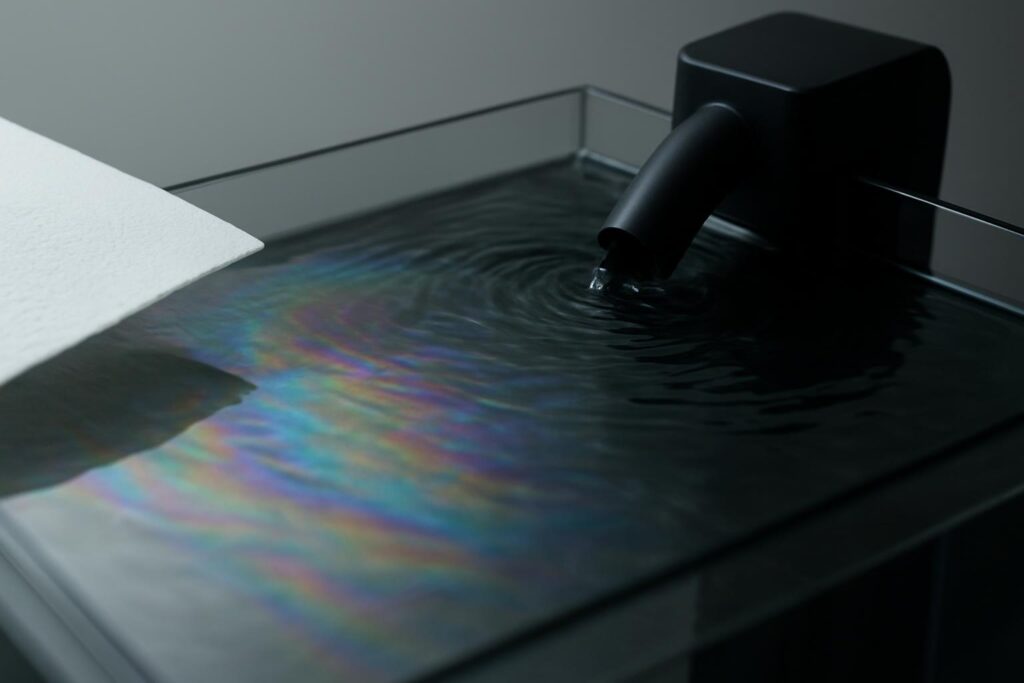
Lay a clean piece of paper towel flat on the surface for one second, then lift. If the top clears and the towel shows an oily mark, you have an organic film. This is a quick way to remove it before you fix the cause.
Watch Your Fish
Rapid gill movement, hanging near the top, or gasping at the surface means poor gas exchange. Do not wait to add surface movement if you see this behavior.
Quick Fixes You Can Do Today
Blot the Film
Use a clean paper towel or thin cloth. Lay it flat on the surface and lift. Repeat once or twice. This clears the film fast and buys time for real fixes.
Make Ripples Right Away
- Angle your filter outlet or spray bar slightly upward so you see steady ripples across most of the surface.
- Lower the water level a little to restore a gentle waterfall from hang-on-back filters.
- Add an airstone or sponge filter temporarily to break the surface and raise oxygen.
Wipe the Inner Rim
Biofilm clings to the waterline. Use a clean aquarium-safe pad or paper towel to wipe the rim. Do not use soap.
Rinse Frozen Foods
Thaw and rinse frozen foods in a fine net with tap water. This removes juices that feed film-forming bacteria and proteins.
Hands and Tools
Rinse hands and tools with plain water before they touch the tank. Avoid lotions before tank work.
Long-Term Solutions That Keep the Surface Clear
Improve Surface Agitation With Intent
Set a steady, even ripple across the top. You want constant breaking of the boundary layer without violent splashing. Practical ways:
- Slightly tilt spray bars upward to push water toward the surface.
- Use a lily pipe outlet placed near the surface to pull and roll the top layer.
- A small powerhead or wavemaker aimed to skim the top inch can prevent dead spots.
For most community freshwater tanks, reliable ripples are enough to prevent film. In very calm setups, combine gentle ripples with a periodic film removal method.
Add a Surface Skimmer
A surface skimmer continuously pulls the topmost layer into your filter. It is a simple and effective permanent fix.
- Hang-on-back skimmers or intake attachments fit many filters and draw from the surface.
- Canister skimmer inlets or lily pipe skimmers sit at the top and auto-adjust to water level.
- Standalone in-tank skimmers act like small skimming boxes with their own pump.
Setup tips:
- Adjust flow so the skimmer draws a thin sheet of water without creating a vortex that pulls air.
- Add a prefilter sponge on the intake to protect small fish and shrimp.
- Clean the skimmer slots and sponge weekly to keep performance steady.
Strengthen Filtration and Maintenance
Organic load fuels films. Improve mechanical and chemical filtration to remove it before it reaches the surface.
- Use a layer of fine filter floss and replace it weekly. This traps micro debris and proteins.
- Rinse sponges and coarse media in old tank water weekly or biweekly to restore flow.
- Clean impellers and hoses monthly to recover lost circulation.
- Add activated carbon or a similar adsorbent to capture dissolved organics that form films.
Do regular water changes. A consistent schedule removes dissolved organics and stabilizes the system. Match temperature and dechlorinate properly.
Feed Smarter
Feed small portions the fish can clear in about two minutes. Remove leftovers. Rinse frozen foods. Use a feeding ring to keep food from spreading to the surface film zone. Reduce or avoid rich, oily feeds if you see recurring sheen.
Reduce External Contamination
Keep a lid or cover glass if dust is heavy. Avoid using aerosols near the tank. Rinse hands well before maintenance and wait after applying lotions.
Balance Bacteria and Avoid Overcleaning
Stable biofiltration breaks down organics before they hit the surface. Do not replace all filter media at once. Rinse media gently instead of scrubbing it sterile. Avoid deep substrate disturbance in one session if the tank is old and dirty. Spread big cleanups over several weeks to prevent blooms.
Use Water Conditioners Carefully
If your conditioner includes slime coat polymers, pre-dissolve the dose in a bucket of new water and pour it into a high-flow area. Avoid overdosing. This reduces temporary films after water changes.
Special Cases and Species Notes
Planted Tanks With CO2
Surface agitation can drive off CO2. Do not let film build to protect CO2, because film harms gas exchange. Use a surface skimmer to remove film without strong turbulence, or run stronger surface agitation at lights off when plants are not using CO2. Aim for gentle ripples during the photoperiod and more oxygenation at night.
Bettas and Other Calm-Water Fish
These fish prefer mild flow. Keep a gentle ripple, not heavy waves. Use a small surface skimmer with a prefilter sponge, or use the paper towel method daily until the root cause is fixed. A lowered hang-on-back outlet that creates a soft waterfall often works well for betta tanks.
Saltwater and Reef Systems
Marine tanks benefit from continuous surface overflow to a weir or sump. This skims the surface 24 or 7. A properly tuned protein skimmer removes dissolved organics before they form a film. Clean the skimmer cup and neck often and change filter socks frequently. Keep return nozzles near the top to maintain surface movement. Rinse foods and keep hands free of oils before tank work.
Troubleshooting Checklist
If film returns, run through this list:
- Do you see steady ripples across most of the surface
- Is the filter flowing at normal rate and not clogged
- Have you rinsed sponges and replaced floss this week
- Are you feeding small amounts and rinsing frozen foods
- Do you use a skimmer or airstone to break the boundary layer
- Are hands and tools free of oils before they touch the water
- Is a lid or cover in place if room dust is heavy
Preventive Routine
Daily in 5 Minutes
- Check for a clean surface and adjust outlet angle if ripples weaken.
- Remove uneaten food promptly.
- Wipe the inner waterline if you see buildup.
Weekly in 15 to 30 Minutes
- Replace filter floss.
- Rinse sponges and prefilters in old tank water.
- Perform a water change and dose conditioner into a high-flow area.
- Clean surface skimmer parts and check for smooth draw.
Monthly
- Clean impellers, hoses, and spray bars to restore full flow.
- Refresh activated carbon or similar media if you use it.
Putting It All Together: A Simple Action Plan
Start with quick removal. Blot the film and make ripples right now. Stabilize flow. Clean filters, set outlets to crease the surface, add airstone or a small powerhead if needed. Remove sources. Feed less, rinse frozen foods, keep hands clean, and avoid aerosols. Lock in the fix. Add a surface skimmer if film returns, maintain filter media weekly, and keep a steady water change routine. This sequence solves most film problems and keeps the surface clear.
Conclusion
Surface film forms when organics and weak flow meet. You can clear it fast and prevent it with good surface movement, smart feeding, clean filtration, and a skimmer when needed. Keep the top gently rippling, remove excess waste before it reaches the surface, and maintain stable bacteria. Your fish breathe easier, plants grow better, and the tank looks crisp every day.
FAQ
Q: What causes the rainbow sheen on my aquarium surface
A: Rainbow sheen usually comes from proteins and oils from foods, plant sap, dust, and skin oils, often combined with weak surface agitation and reduced filter flow.
Q: How do I remove surface film fast
A: Blot it with a clean paper towel, angle your filter outlet to create steady ripples, add an airstone, lower the water level to restore a gentle waterfall from hang-on-back filters, and wipe the inner rim.
Q: Do I need a surface skimmer
A: Not always, but a surface skimmer is a simple and effective permanent fix that continuously pulls the top layer into your filter; if you keep steady ripples and clean filters, you may not need one.
Q: Will more surface agitation drive off CO2 in a planted tank
A: Yes, so use gentle ripples during the photoperiod and stronger oxygenation at night, or use a surface skimmer to remove film without strong turbulence.
Q: How often should I clean filter media to prevent film
A: Replace fine filter floss weekly, rinse sponges and coarse media weekly or biweekly in old tank water, and clean impellers and hoses monthly.