
We are reader supported. When you purchase through links on our site, we may earn an affiliate commission. Also, as an Amazon affiliate, we earn from qualifying purchases.
Clear water is easy to love, but a greasy-looking surface film can ruin the view and limit gas exchange. The good news is that you can stop it fast and keep it from coming back. This guide explains what surface film is, why it forms, how to diagnose the root cause, and step-by-step fixes for freshwater and saltwater tanks. You will learn simple habits that prevent it for good, with options for every budget and setup.
Introduction: Why Surface Film Happens and Why It Matters
Surface film is a layer of organic material, bacteria, dust, and oils that collects where water meets air. It shows up as a rainbow sheen, milky haze, or sticky patches. Film is common in new tanks, low-flow systems, overfed tanks, and tanks with lots of plant or coral foods.
Left alone, film slows oxygen in and carbon dioxide out. Fish may gulp near the surface. Corals and beneficial bacteria may struggle. Light penetration drops. The tank can smell earthy or stale. Film is a symptom. Fix the cause and add the right mechanical help.
Spotting the Type of Film You Have
Protein and organic film
Looks oily, rainbow-like, or hazy. Usually linked to feeding, plant decay, bacterial growth, or additives like vitamins and conditioners.
Dust and airborne debris
Fine specks that gather in quiet corners. Common in rooms with open windows, smoke, or lots of household dust.
Algal slick or cyanobacteria at the surface
Greenish tint or patchy mats that trap bubbles. Often tied to excess nutrients and too much light with weak flow.
New tank cycle film
White or translucent biofilm common in the first weeks. It often fades as the biofilter stabilizes, but you still need surface movement.
First Things First: A Quick, Safe Reset
Paper towel lift
If you need a fast cosmetic fix, gently lay a clean, unscented paper towel flat on the water. Let it soak the film, then lift and discard. Repeat once or twice. This is not the long-term solution. It buys time while you set up proper flow.
Increase surface ripples now
Point any filter outflow, powerhead, or wavemaker toward the surface to create visible ripples. Aim for a gentle, even shimmer across most of the tank.
Do a partial water change
Replace 20 to 30 percent with conditioned water of matching temperature. Vacuum debris and remove any rotting plant leaves. This lowers dissolved organics that feed film.
The Core Fix: Improve Surface Agitation and Skimming
Target constant soft ripples, not splashing
Ripples break surface tension and move film to your filter. Too much splashing is noisy and can drive off CO2 in planted tanks. Aim for steady movement across the top.
Position your outflow correctly
Canister output or HOB return should sit near the surface at a shallow angle. Start around 30 to 45 degrees upward. Adjust until you see an even ripple. In large tanks, add a small powerhead to push flow along the top toward the filter intake.
Use a spray bar or lily pipe
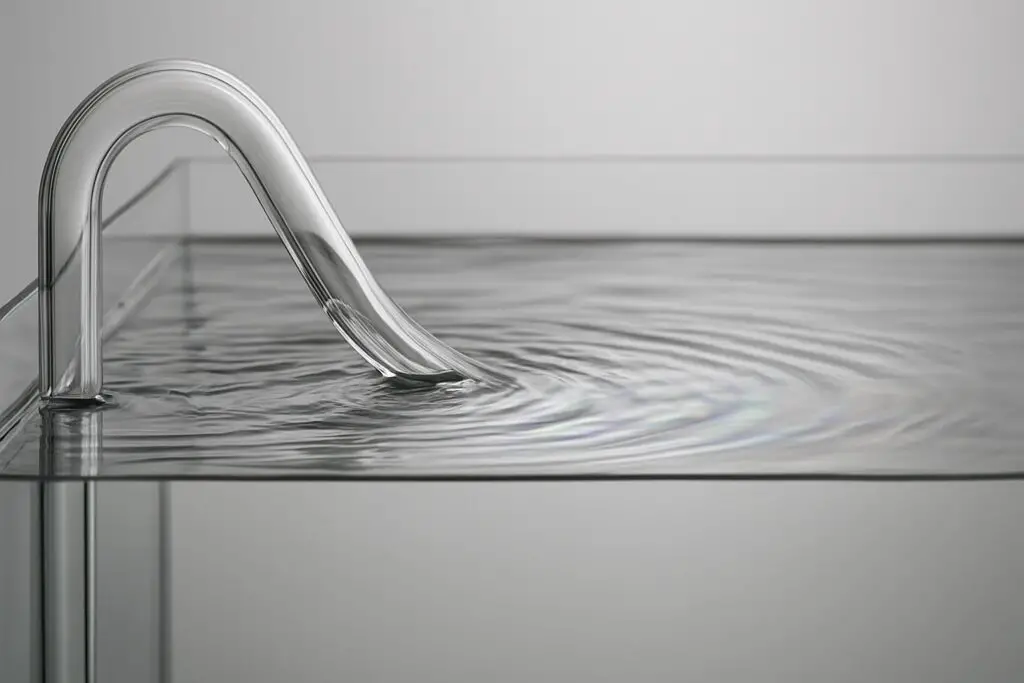
A spray bar along the back glass, holes slightly up, spreads gentle turbulence. A glass lily pipe breaks surface tension and pulls film into the filter when set high enough. Either spreads flow and reduces dead zones.
Add a dedicated surface skimmer
Freshwater: A small motorized skimmer or a canister intake with a floating weir continuously pulls film into filter media. This is the most reliable fix for persistent film in planted or low-flow tanks.
Saltwater: Protein skimmers perform constant foam fractionation to remove dissolved organics before they form film. Ensure your overflow or weir is adjusted so a thin surface layer spills evenly to the sump.
Filter Tuning That Actually Works
Match flow to tank volume
For most freshwater tanks, aim for 5 to 10 times the tank volume per hour in total turnover from filters and pumps. Heavily planted tanks can use the lower end with good distribution. Saltwater systems often run more total circulation, especially in reef tanks, but surface turnover must still be steady and even.
Upgrade mechanical media
Use fine filter floss or a polishing pad in your filter to catch the film you break up. Rinse or replace often to avoid clogging and bypass. Dirty media recirculates organics back into the tank.
Clean the intake and impeller
Gunk on intake screens, hoses, and impellers reduces flow and lets film collect. Clean them monthly or as needed. If the outflow looks weak, maintenance is due.
Feeding Habits That Prevent Film
Feed less, observe more
Only feed what tank residents finish in about a minute for fish or within planned timeframes for corals. Remove uneaten food. Overfeeding is the fastest way to build surface organics.
Rinse frozen foods
Thaw and strain frozen foods to discard the nutrient-rich juice that drives film and algae. This simple step often makes a big difference.
Go easy on oily foods and additives
Some pellets, gels, and vitamin boosters contain emulsifiers and oils that migrate to the surface. Use only what you need and watch how the surface responds.
Hands, Tools, and Household Sources
Keep hands oil free
Skin oils, lotions, and soap residues create instant film. Rinse hands with plain water before tank work. Use dedicated aquascaping tools for planting and trimming.
Cover wisely
Use a lid or mesh cover to block dust without trapping too much heat. If you use a solid lid, ensure there is airflow or a small gap, and keep condensation trays clean.
Mind aerosols
Room sprays, hair products, and cooking aerosols can drift into tanks and cause film. Keep the tank away from kitchens and avoid spraying near it.
Water Changes and Routine Care
Set a water change schedule
Regular changes dilute dissolved organics. Weekly changes of 20 to 30 percent are a safe default for most community tanks. Heavier bioloads may need more. Consistency beats occasional big changes.
Gravel vacuum and prune plants
Remove decaying leaves and waste. Trim melting or shaded plant growth. Decomposition feeds bacteria that add to surface film.
Clean glass and rim
Biofilm builds up on glass edges and can wick to the surface. Wipe the rim and inside glass with a clean aquarium sponge during maintenance.
Plants, Floating Leaves, and Livestock
Floating plants and surface coverage
Floating plants can look great, but thick mats trap film and block flow. Thin them to allow circulation lanes and maintain your ripples.
Surface pickers are a bonus, not the fix
Some fish and snails will graze biofilm, but do not rely on them. Film control needs flow, filtration, and feeding discipline.
Light, Nutrients, and Film
Balance light and nutrients
Excess light with high nutrients grows algae and microfilm. Match light duration to plant or coral needs and avoid harsh photoperiods on new tanks. Build up slowly.
Do not chase numbers blindly
Stable, clean water with steady maintenance beats constant chemical tweaking. If you use fertilizers or coral foods, dose based on actual uptake and test results.
Water Chemistry Notes
Hard water and surface tension
Very hard water can increase surface tension and make film stubborn. Stronger agitation or a surface skimmer helps break it. If you already use RO or RO/DI water, keep remineralization stable to avoid swings.
Conditioners and clarifiers
Some conditioners and bacterial starters can briefly cloud or film the surface. Run extra mechanical filtration and keep ripples up for a day or two when dosing.
Planted Tanks and CO2: Keep the Balance
Protect your CO2 while clearing film
Planted tanks need stable CO2. Too much surface agitation wastes gas and causes pH swings. Aim for gentle, consistent ripples that just break the surface tension without whitewater. If film builds overnight, run a small surface skimmer or an airstone only at night on a timer, then turn it off during the day when CO2 is on.
Circulate along the top and bottom
Use one outlet to push along the surface and a second to sweep detritus off the substrate. This creates a loop that carries organics to the filter without blasting plants.
Saltwater and Reef-Specific Tips
Skimmer and overflow tune-up
Make sure your overflow weir pulls a thin, even sheet from the surface. Set your protein skimmer for a stable, dry to medium foam. Clean the skimmer neck often for steady performance.
Flow patterns matter
Use wavemakers to create alternating surface movement that prevents dead spots. Keep return nozzles near the surface to maintain ripples, and let powerheads handle the high internal circulation for corals.
Filter socks and floss
Replace or rinse filter socks and floss frequently. Saturated mechanical media dumps dissolved organics back into the system and encourages film.
Troubleshooting by Symptom
Rainbow sheen that returns daily
Reduce feeding, rinse frozen food, and confirm even ripples across the top. Add a surface skimmer if agitation alone does not hold the line within a week.
Milky top layer after dosing
Run fine floss and increase surface movement for 24 to 48 hours. It usually clears as the filter captures the residue. Avoid stacking multiple additives at once.
Fish gasping at the surface
Increase surface agitation immediately and test water. Check for ammonia and nitrite. Do a partial water change and add aeration. Address film only after oxygen needs are secure.
Film worse in the morning
Common in planted tanks and reefs. Lights off means plants and algae respire and oxygen drops. Run a small skimmer or gentle airstone at night and maintain daytime ripples.
The Step-by-Step Plan for Beginners
Step 1: Fix the flow
Angle your filter outflow to create visible, even ripples. Add a powerhead near the surface if needed. Recheck daily until consistent.
Step 2: Add mechanical help
Install a surface skimmer attachment or a small standalone skimmer. Add fine floss or a polishing pad to your filter and replace or rinse it often.
Step 3: Clean and reset
Do a 20 to 30 percent water change. Vacuum debris. Clean intake screens, impellers, and hoses. Wipe the rim and inside glass.
Step 4: Tighten feeding and handling
Feed smaller portions. Rinse frozen foods. Keep hands oil free before tank work. Reduce oily additives unless needed.
Step 5: Monitor and adjust
Watch the surface daily for one to two weeks. Fine-tune outflow angle and pump placement. If film persists, increase skimming time or upgrade flow distribution.
Common Mistakes That Keep Film Coming Back
Chasing gadgets without fixing habits
A skimmer helps, but overfeeding and poor maintenance will beat it. Address root causes first.
Too much or too little surface action
No ripples invite film. Violent splashing can stress livestock or waste CO2. Seek a steady middle ground.
Dirty mechanical media
Clogged floss just diverts water around gunk. Replace or rinse before it collapses or browns fully.
Ignoring the rim and canopy
Film loves places that never get cleaned. Wipe the lid, trim, and braces during every water change.
Maintenance Schedule That Works
Every day
Check that you see soft surface ripples. Skim out floating debris. Feed measured amounts and observe fish behavior.
Weekly
Change 20 to 30 percent of the water. Vacuum the substrate lightly. Replace or rinse floss or polishing pads. Trim decaying plant matter. Wipe glass and rim.
Monthly
Deep clean filter intakes, impellers, hoses, and spray bars. Inspect wavemakers and powerheads. Verify that outflows still hit the surface correctly.
When to Consider Equipment Upgrades
Persistent film despite good habits
If you have balanced feeding and solid maintenance but film returns, add a dedicated surface skimmer or upgrade to a filter with better flow distribution.
Large tanks and complex aquascapes
Scapes with wood, rocks, and dense plants create dead zones. Multiple outlets, a spray bar, or a small additional powerhead near the surface can solve it.
CO2-sensitive setups
Use a surface skimmer on a timer or a controllable pump to manage nighttime film without sacrificing daytime CO2 stability.
Conclusion: Keep the Top Moving and the System Clean
Surface film tells you the top is too still or organics are too high. Fix the cause and the film goes away. Keep a steady ripple across the surface. Use mechanical help to remove what collects. Clean and feed with intention. If your tank is new, give the biology time while you maintain good flow. With those habits in place, your water will stay clear, your fish and corals will breathe easier, and the view will look like it should.
FAQ
Q: What causes surface film in aquariums?
A: Surface film comes from organic waste, bacteria, dust, and oils that collect where water meets air. It is linked to low surface movement, overfeeding, dosing additives, plant decay, and household aerosols.
Q: Is surface film harmful to fish?
A: Yes, film slows oxygen in and carbon dioxide out, which can stress fish and other animals. Clear it with steady surface ripples and mechanical removal.
Q: How do I get rid of surface film fast?
A: Angle your outflow to create even ripples, do a 20 to 30 percent water change, and use a clean paper towel to lift the film as a temporary step. Add fine floss and consider a surface skimmer for lasting control.
Q: Should I run a surface skimmer all the time?
A: If film returns often, continuous skimming is effective. In planted tanks with CO2, you can run a skimmer or gentle airstone at night and rely on steady ripples during the day.
Q: Will more surface agitation waste CO2 in a planted tank?
A: Excessive splashing can waste CO2, but gentle, consistent ripples are enough to prevent film while keeping CO2 stable. Aim for movement that breaks surface tension without whitewater.