
We are reader supported. When you purchase through links on our site, we may earn an affiliate commission. Also, as an Amazon affiliate, we earn from qualifying purchases.
Pest snails can appear in any planted tank, even when you are careful. They come in on new plants, hardscape, filter media, or fish bags, and once inside they can multiply quickly. The good news is that you can identify which snails you have, understand why they are thriving, and remove them without tearing down your aquascape. This guide walks you through simple steps that work, explains what not to do, and gives you a plan you can repeat any time snails try to take over.
Why Pest Snails Show Up and Multiply
Snails arrive as hitchhikers on leaves, in egg clutches stuck to plastic, or in a bit of store water. They thrive when there is abundant food. Extra fish food, decaying plant leaves, algae, and mulm in the substrate all feed a growing snail population. If you reduce excess nutrients, snails slow down. If you feed heavy and rarely prune or vacuum, snails take advantage.
What Counts as Excess Food
Uneaten pellets trapped under wood, wafer crumbs in the corners, and a layer of fish waste and leaf melt under the plants all feed snails. Even a little extra each day adds up. Algae blooms are also food. The fastest control lever is to remove what they eat and stop adding more than your fish consume.
Identify the Common Pest Snails
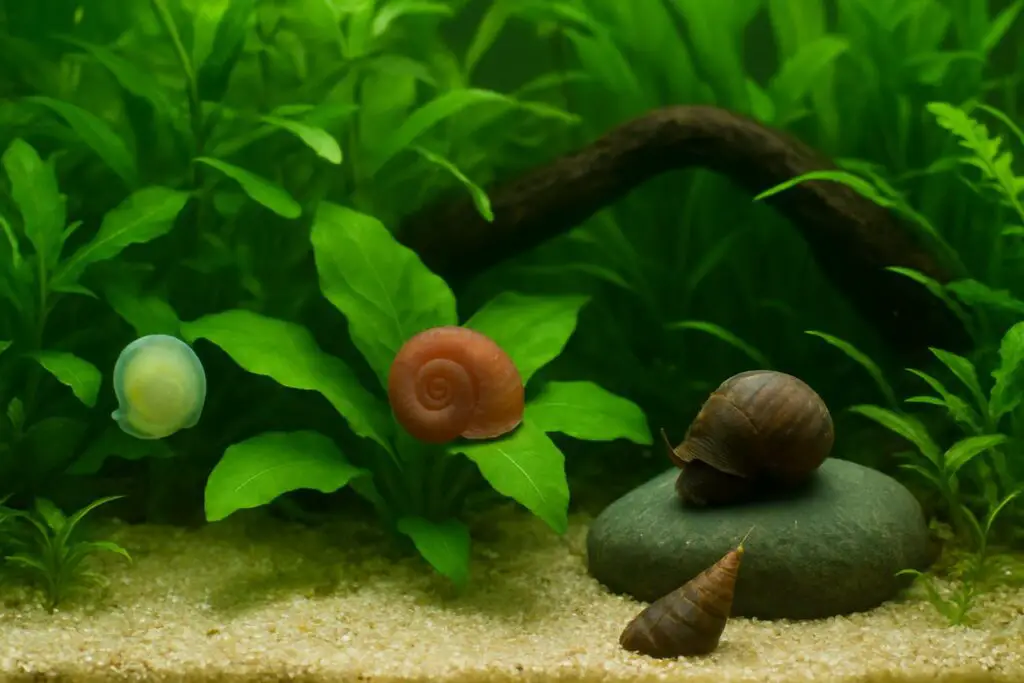
Correct identification helps you choose the right removal method. Some lay eggs; others give birth to live young. Some stay on glass; others burrow in substrate. Look closely under white light, and use a small flashlight after lights out.
Bladder snail
Small, usually brown or translucent, with a thin shell and pointed spire that leans left. Fast climbers on glass. They lay clear jelly egg clutches on hard surfaces. Bladder snails eat algae, film, and soft detritus and multiply quickly when food is abundant.
Ramshorn snail
Flat, coiled shell shaped like a disc. Colors range from brown to red. They lay egg clusters in clear gel on glass and leaves. Ramshorns are strong grazers of diatoms and biofilm. Populations can spike in tanks with consistent overfeeding.
Pond snail
Oval shell with a taller spire, usually brown. They lay egg sacs similar to bladder snails. Pond snails are generalist scavengers and will graze decaying leaves and leftover food.
Malaysian trumpet snail
Conical shell, usually tan with darker bands. They burrow in substrate during the day and come out at night. They are livebearers, so you will not see egg clutches. Trumpets help aerate sand but can explode in number if overfed or if the substrate collects mulm.
Egg Clutches
Bladder, ramshorn, and pond snails lay small, clear, jelly-like sacs that stick to glass, leaves, and filter parts. Each sac can contain many embryos. Trumpet snails do not lay visible egg sacs.
Are Snails Bad for Planted Tanks
Most pest snails do not eat healthy plants. They prefer soft, dying leaves, algae, biofilm, and leftover fish food. Holes in healthy leaves are more often caused by nutrient issues, fish nips, or melting, not snails. Large snail populations are still a problem because they are unsightly, add to bioload when they die, can clog prefilters, and can irritate shrimp or fish during heavy grazing. Manage numbers, not just presence. A few snails can be helpful; a swarm is a sign of extra nutrients.
Set a Clear Goal
Decide whether you want total removal or control. Total removal is hard without chemicals and often unnecessary. Control is reachable with steady habits and simple tools. If you keep nerites, rabbit snails, or mystery snails, focus on removing only pest species and their eggs.
Immediate Control Steps That Work
You can cut a pest snail population by half within a week using manual removal, baited trapping, and feeding discipline. Start today and repeat daily for five to seven days, then taper to a maintenance routine.
1. Reduce feeding right now
Feed only what fish finish in under two minutes. For wafers and pellets, use feeding dishes or place food on a smooth stone so you can remove leftovers easily. Skip one feeding day per week. This single change slows snail reproduction fast.
2. Manual removal
Each evening, scrape visible snails from glass with a card and siphon them out. Lift wood and stones to check undersides. Gently rub egg sacs off leaves and glass. A soft paintbrush or toothbrush works well for delicate areas. Focus on the front and side panes, plant bases, and equipment surfaces.
3. Night siphon pass
Use a thin airline or small siphon tube an hour after lights out. Trumpet snails and many juveniles emerge then. Skim along the substrate, around hardscape, and along the glass rim. Collect a container of snails and discard responsibly.
4. Baited bottle traps
Make a simple trap from a small plastic bottle. Cut off the top third, invert it into the base like a funnel, and poke small entry holes near the bottom. Add a blanched slice of zucchini or cucumber and a small stone for weight. Place the trap at lights out and remove it before morning. Repeat nightly for the first week, then every other night. Reset food each time.
5. Prune and vacuum
Trim melting or damaged leaves every week. During water changes, lightly vacuum open substrate areas and the tank rim where mulm collects. In densely planted areas, hover the siphon above the substrate to lift debris without uprooting plants. For sand beds with trumpets, disturb a small section each week rather than the whole bed at once.
Quarantine and Dips to Stop New Hitchhikers
Prevention saves more time than any cure. Never add new plants or decor without inspection and treatment. Tissue culture plants are the safest option because they are grown sterile, but still rinse them to be sure.
Inspection steps
Under strong light, check both sides of each leaf and stem for snails and egg sacs. Remove what you see by hand. Rinse under running water while gently rubbing leaves and stems. Pay attention to plant crowns and crevices in rhizomes.
Alum dip for most plants
Mix 1 tablespoon of alum per 1 gallon of dechlorinated water. Submerge plants for 12 to 24 hours with gentle aeration. Rinse well in dechlorinated water before planting. Alum is generally safe for most stems and rosettes. Test sensitive mosses or liverworts with a short dip first.
Bleach dip for tough plants
Use unscented household bleach at a 1 to 19 ratio with water. Dip hardy plants for up to 2 minutes. Immediately rinse and neutralize in dechlorinated water. Do not bleach mosses, ferns, vallisneria, or other delicate species. If unsure, skip bleach and use alum instead.
Hydrogen peroxide dip as an alternative
Use 3 percent hydrogen peroxide diluted 1 to 1 with water to make 1.5 percent. Dip for 2 to 3 minutes, then rinse in dechlorinated water. This can stress mosses and liverworts, so test on a small portion first.
Quarantine holding
Place dipped plants in a separate container or bucket with a small filter or airstone for 7 days. Change water daily. Inspect for surviving snails or new egg sacs. Repeat the dip if needed. Only then add to the display tank.
Biological Controls and Their Limits
Some animals eat snails, but each option has tradeoffs. Match the solution to your tank size, livestock, and long term plan.
Assassin snails
Assassin snails target other snails, including pest species. Add a small group and give them time. They are plant safe and compatible with most fish. They may prey on tiny shrimp. They reproduce slowly, so they will not explode in number. When pest snails run out, assassins need occasional target feeding or rehoming.
Loaches
Many loaches eat snails, but they need larger tanks, soft substrate, groups, and strong filtration. If your setup already suits loaches, they can help. Do not add them just for snails if your tank is small or heavily planted with fine carpets that can be uprooted.
Puffers and other predators
Dwarf puffers and some cichlids eat snails but are often not community safe. They may nip fins, stress tankmates, and overhunt shrimp. Avoid predator fish solely for snail control in peaceful planted communities.
Chemical Treatments: When and Why to Avoid
Copper-based snail killers and similar medications work fast but carry real risks. They are lethal to shrimp and most snails you may want to keep. A mass die off of pest snails can cause an ammonia spike, foul the water, and harm fish and bacteria. Chemicals should be a last resort when other methods fail and only in tanks without shrimp or desirable snails.
If you must use chemicals
Remove shrimp and desired snails to a separate cycled tank. Dose per instructions. During treatment, manually remove as many dead snails as possible. Run fresh carbon and perform large water changes over several days. Monitor ammonia and nitrite closely. Resume normal maintenance only after parameters remain stable.
Targeted Strategies by Snail Type
For bladder, ramshorn, and pond snails
Focus on finding and removing egg sacs daily. Scrape glass and leaves with gentle tools. Use nightly traps and cut feeding. These species crash quickly when food scarcity and egg removal happen together.
For Malaysian trumpet snails
Trap at night and siphon the substrate edges slowly. Break the cycle by cleaning small substrate sections weekly, not the entire base at once. Trumpets are livebearers, so egg removal does not apply. Keep sand lightly stirred, but do not uproot plants. Reduce wafer and pellet fragments that fall into the sand.
Maintenance Habits That Keep Snails Low
Disciplined feeding
Feed once daily or every other day for low bioload tanks. Use a feeding dish so you can remove leftovers within minutes. For shrimp tanks, feed tiny amounts and target feed in a single location.
Regular pruning and filter care
Prune weekly to remove dying leaves. Rinse prefilters or sponges in tank water during water changes. Egg sacs often hide in filter intakes and on lily pipes; wipe them off.
Water change routine
Change 30 to 50 percent weekly in growing tanks. Siphon debris from open zones and along hardscape seams. Keep a thin film of mulm for plant health, but do not let waste pile up.
Quarantine discipline
Never pour store water into your tank. Rinse plants and decor. Use dips and a holding bucket. Clean nets and tools between tanks. Small steps here prevent future outbreaks.
A Simple 30 Day Plan
Days 1 to 7
Reduce feeding to only what is eaten in under two minutes. Set baited traps each night and remove them in the morning. Scrape and siphon snails and egg sacs daily. Prune melting leaves. Perform a 40 percent water change midweek and vacuum open areas.
Days 8 to 14
Trap every other night. Continue egg sac removal and light siphoning. Keep feeding tight. If snails persist in high numbers, add a few assassin snails appropriate to tank size.
Days 15 to 30
Trap two or three nights per week as needed. Maintain pruning and filter cleaning. Track progress by counting snails on the front glass at the same time each day. When counts stay low for a week, shift to maintenance only.
Troubleshooting Common Problems
Snail numbers rebound after a week
Look for hidden food sources. Check under wood, inside caves, and in the filter. Reduce feeding further and resume nightly traps for several days. Remove new egg sacs you may have missed.
Plants look chewed
Snails target soft, dying, or algae covered tissue. Improve plant health with balanced light and fertilization. Remove damaged leaves. Keep the glass and plant surfaces clean so snails do not congregate on stressed areas.
Trumpet snails keep appearing
Focus on nighttime siphoning and light substrate disturbance weekly. Over months, lower food and regular traps will thin the buried population. Patience is key with livebearers.
Shrimp tank conflicts
Avoid copper and harsh chemicals. Use manual removal, traps, egg scraping, and plant dips before adding to the shrimp tank. If you add assassin snails, monitor around baby shrimp.
Myths to Ignore
Snails are not proof your tank is dirty; they are proof there is food available. Snails do not usually kill healthy plants. A few snails do not crash a cycle. The real risk is a mass die off after chemical treatment that releases waste all at once.
When to Be Aggressive
Act fast when you see multiple egg clutches daily on glass, juvenile snails covering the front pane, or large piles of snails on food within minutes. Combine all immediate controls for at least a week. Only consider chemicals if you cannot stabilize numbers and only in tanks without shrimp or desired snails.
Conclusion
Pest snails are manageable with simple steps done consistently. Identify what you have, cut the food supply, remove adults and eggs, and prevent new hitchhikers with dips and quarantine. Use assassin snails if you want a gentle biological helper, but skip predator fish and chemicals unless your setup fits them and you accept the tradeoffs. Keep your routine steady and your planted tank will stay balanced, clean, and nearly free of pest snails.
FAQ
Q: How do I tell which pest snails I have
A: Bladder snails have a thin shell with a left leaning spire and lay clear jelly egg clutches. Ramshorns have flat disc like shells and lay gel sacs on glass and leaves. Pond snails have taller oval shells and also lay egg sacs. Malaysian trumpet snails have conical shells, burrow in substrate, and are livebearers with no visible eggs.
Q: What is the fastest nonchemical way to reduce snail numbers
A: Combine reduced feeding, nightly baited bottle traps, manual scraping and siphoning, and daily removal of egg sacs. This cuts populations quickly without harming plants or shrimp.
Q: Are pest snails eating my healthy plants
A: Usually not. Most pest snails prefer dying leaves, algae, biofilm, and leftover food. They may rasp very soft new leaves if underfed, but holes in healthy leaves are more often from nutrient issues or fish nips.
Q: What dip can I use to keep new plants snail free
A: Use an alum dip at 1 tablespoon per gallon for 12 to 24 hours, then rinse well. For hardy plants, a bleach dip at 1 to 19 for up to 2 minutes followed by dechlorination works. Hydrogen peroxide at 1.5 percent for 2 to 3 minutes is another option for many plants.
Q: Are chemical snail killers safe in planted community tanks
A: Copper based treatments kill snails and shrimp and can cause an ammonia spike from mass die off. Use chemicals only as a last resort and only in tanks without shrimp or desired snails, and remove dead snails promptly with large water changes.