
We are reader supported. When you purchase through links on our site, we may earn an affiliate commission. Also, as an Amazon affiliate, we earn from qualifying purchases.
Blanket weed can smother a pond fast, starve fish of oxygen, clog pumps, and ruin the view. The good news is you can clear it quickly without risking your fish or plants, then lock in long-term balance so it does not return. This guide shows you the exact steps, why they work, and how to keep blanket weed under control for good.
What Blanket Weed Is and Why It Explodes
What you are fighting
Blanket weed, also called string or hair algae, is a filamentous algae that forms long strands. It wraps around plants, pumps, and rocks, then mats on the surface. It thrives in sunlit, nutrient-rich, slow-moving water.
Why it takes over
Common triggers include high phosphate and nitrate, strong sunlight, warm water, light fish load with heavy feeding, low plant competition, and weak circulation. New ponds are also prone because the biology is not mature yet.
The Fast, Safe Answer in One Glance
If you want the quick win that is still safe for fish:
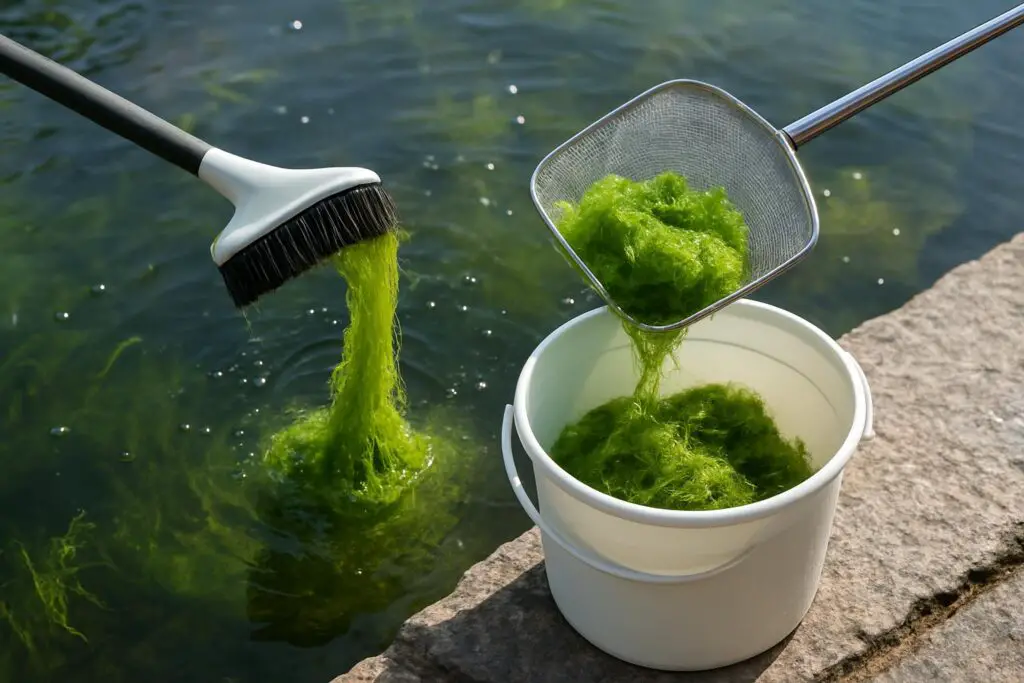
- Manually remove as much as you can with a brush or twirling stick and a fine net. Lift mats gently and collect all fragments.
- Spot-treat remaining algae with an oxygen-based granular algaecide such as sodium percarbonate under strong aeration.
- Treat in sections across several days if growth is heavy, and net out dead algae the same day.
- Add barley straw extract as a gentle follow-up and prevention boost.
- Do a partial water change with dechlorinated water, clean filters, and improve circulation.
- Add shade and fast-growing plants so algae loses access to light and nutrients.
Step-by-Step: Remove Blanket Weed Fast and Safely
1. Prepare for success
Do these checks before you start:
- Test water for pH, KH, ammonia, nitrite, nitrate, and phosphate. Note the temperature.
- Increase aeration with an air pump or by running a waterfall stronger. Oxygen is vital during treatment.
- Set a plan to treat a third or a quarter of the pond at a time if algae is thick.
- Backwash or rinse mechanical filter media to improve flow.
- Have tools ready: pond gloves, a soft brush or clean toilet brush on a pole, a fine net, a bucket or tub, and a container for algae disposal.
2. Manual removal the right way
Manual removal gives instant relief and reduces the load on your filter and fish.
- Twirl the brush slowly through strands so they coil around the bristles. Lift the entire clump out in one go.
- Skim loose fragments with a fine net. Fragments can regrow, so keep after them.
- Do not tear at the liner or pull rooted plants out by mistake.
- Do not leave algae piles on the pond edge. Rinse them in a bucket so trapped critters and pond water return to the pond, then compost the algae away from drains and streams.
3. Use oxygen-based granular algaecide
Oxygen-based products such as sodium percarbonate work fast on contact. They break down to oxygen and soda ash, so they are safer than copper when used as directed.
- Run strong aeration before, during, and after treatment.
- Pre-wet the algae mats. Sprinkle the granules directly on the algae in the area you are treating.
- Expect fizzing and bleaching. Within 15 to 30 minutes the algae loosens.
- Net out the dead and loosened algae the same day.
- If the pond is heavily infested, treat 25 to 33 percent of the pond at a time, spacing treatments 3 to 5 days apart.
4. Safety rules you must follow
- Aerate well to maintain oxygen. Dead algae consumes oxygen as it decays.
- Do not dose at night. Treat in the morning when plants and algae will photosynthesize later.
- Avoid treatment during heat waves. Pause if water exceeds about 28 C and resume when it cools.
- Avoid copper-based algaecides in ponds with fish, snails, or shrimp. Choose oxygen-based products instead.
- Watch your fish. If they gasp at the surface, boost aeration at once and do an immediate partial water change with dechlorinated water.
5. Add barley straw extract
Barley straw extract supports clearer water by making conditions less friendly to algae as it oxidizes. It is gentle on fish and plants. Start early in spring and dose regularly. It is not an instant kill, but it helps maintain control after you clear the bulk of the growth.
6. UV clarifier reality check
UV clarifiers clear green water by clumping single-celled algae, but they do not kill blanket weed that is attached to surfaces. Keep UV for clarity and filtration health, and handle blanket weed with manual removal and spot treatment.
7. Same-day aftercare
- Remove as much dead algae as possible. This prevents nutrient release back into the water.
- Backwash filters to eject trapped debris.
- Do a 10 to 25 percent water change with dechlorinated water to dilute nutrients.
- Restore normal pump flow and aeration settings once oxygen is stable and fish look calm.
Fix the Cause: Nutrients and Light
Feed less, feed smarter
Overfeeding is the fastest way to raise phosphate and nitrate. Feed what fish eat in 30 to 60 seconds, once or twice per day in warm months. In cooler water, reduce feeding or stop for cold-hardy species. Use quality food with lower ash and phosphorus.
Right stocking and filtration
Heavy fish loads create continuous nutrient input. Size your filtration to at least match your fish biomass and feeding rate. Aim for a pump turnover of the full pond volume 1 to 2 times per hour through mechanical and biological filtration.
Plant your way out of algae
Plants outcompete algae for light and nutrients. Add fast growers and aim for 50 to 70 percent surface coverage in summer.
- Submerged oxygenators such as hornwort and anacharis help absorb nutrients.
- Marginal plants such as iris, rush, and pickerelweed pull nutrients from the water column.
- Floating plants add instant shade and nutrient uptake. Use them where permitted and manage coverage.
- Watercress in moving water grows fast and strips nutrients effectively.
Bind nutrients in the filter
If phosphate tests high or algae rebounds quickly, add a phosphate-removing media in a filter bag where water flows strongly. Beneficial bacteria products can help stabilize biofiltration, especially in spring and in new ponds. Replace or regenerate media as instructed by the manufacturer.
Reduce sunlight
Blanket weed loves light. Add lilies or floaters for shade. Install a shade sail or pergola for midday sun. Pond dye is another option to cut light penetration, but go light if you keep many plants that need sun. Keep at least part of the surface open for gas exchange.
Improve circulation and aeration
Dead zones let debris and nutrients settle. Adjust pump outlets so every area has gentle movement. Add bottom aeration in deeper ponds to lift low-oxygen water and keep the whole pond mixed. Strong flow across rocks and waterfalls also cuts filament attachment.
Seasonal Plan for Lasting Control
Spring start
- Net out old leaves and sludge before water warms.
- Check and restart UV clarifiers with a fresh bulb if needed.
- Begin barley straw extract early.
- Divide and repot lilies and marginals into fresh media to fuel growth.
- Seed filters with beneficial bacteria if your biofilter is immature.
Summer routine
- Skim string algae weekly and spot-treat early patches.
- Keep surface shade near 50 to 70 percent with plants or covers.
- Test nitrate and phosphate monthly or after any algae flare.
- Top off evaporated water with dechlorinated water, not untreated tap.
- Run extra aeration during hot nights when oxygen drops.
Autumn wrap-up
- Net the pond to catch falling leaves.
- Cut back dying plant growth so it does not rot in the water.
- Do a final light spot treatment if needed, and remove all dead algae.
- Reduce feeding as water cools and fish metabolism slows.
Winter care
- Keep a small opening in ice with an aerator or de-icer to vent gases.
- Do not shock the system with heavy chemical treatments in very cold water.
- Maintain gentle circulation to prevent stagnant zones if your climate allows.
Water Source and Runoff Control
Know your tap water
Some tap water carries measurable phosphate. If algae rebounds after water changes, test your source water. If phosphate is high, use a phosphate binder after changes or pre-filter the new water through phosphate-removal media.
Stop nutrient runoff
Keep lawn fertilizer, soil, and compost away from pond edges. Divert roof or lawn runoff so it does not wash nutrients into the pond. A border of gravel or plants around the pond helps trap debris.
Waterfall and Rock Zones
Targeted cleaning
Blanket weed often anchors on waterfalls and shallow shelves.
- Turn off the pump. Manually remove strands from rocks and ledges.
- Spot-sprinkle oxygen-based granules on wet algae, wait for fizzing to slow, then rinse and net out debris.
- Restart the pump and check for improved flow. Repeat in sections to avoid oxygen dips.
Troubleshooting Common Problems
Algae returns within days
Focus on nutrients and light. Test phosphate. Add phosphate remover. Increase shade. Add more fast-growing plants. Check feeding and stocking. Improve circulation where debris collects. If source water carries phosphate, bind it after water changes.
Fish show stress
If fish gasp or hang near waterfalls after treatment, pause further dosing. Add more aeration at once. Do a partial water change with dechlorinated water. Resume only when fish are active and oxygen is stable.
Green water but little blanket weed
Run or repair a UV clarifier to clear green water. Continue plant additions and nutrient control to prevent a later shift toward filamentous algae.
New pond syndrome
Young ponds lack stable biology. Be patient, plant heavily from the start, use beneficial bacteria, avoid overfeeding, and use small, frequent maintenance rather than big shocks.
Tools and Supplies Checklist
- Pond gloves and a soft brush or twirling stick
- Fine net and sturdy bucket or tub
- Aeration pump or air stones
- Water test kit for pH, KH, ammonia, nitrite, nitrate, phosphate
- Dechlorinator for water changes
- Oxygen-based granular algaecide such as sodium percarbonate
- Barley straw extract
- Phosphate-removing media for the filter
- Fast-growing plants and planting baskets or media
Putting It All Together
Fast removal gives you breathing room. Manual twirling and netting plus oxygen-based spot treatments clear the mess without harming fish when you aerate well and work in sections. Long-term prevention locks in the win. Feed less. Plant more. Bind phosphate. Increase shade and circulation. With these steps, your pond stays clear, healthy, and low maintenance.
FAQ
Q: What removes blanket weed fast without harming fish
A: Manual twirling plus oxygen-based granular algaecide, with strong aeration and section-by-section treatment, then net out dead algae the same day.
Q: Does a UV clarifier get rid of blanket weed
A: No, UV clears green water but not filamentous algae; it can improve clarity while you use other methods.
Q: How do I stop blanket weed coming back
A: Reduce nutrients and sunlight, feed less, add many plants, use phosphate remover, increase circulation and shade 50 to 70 percent of the surface in summer.
Q: Is barley straw extract useful
A: Yes, it helps prevent growth when started early and used regularly, but it is not an instant kill.
Q: Is copper safe in ponds
A: Avoid copper-based algaecides in ponds with fish, snails, or shrimp, and choose oxygen-based products instead.