
We are reader supported. When you purchase through links on our site, we may earn an affiliate commission. Also, as an Amazon affiliate, we earn from qualifying purchases.
Moving fish to a new aquarium should be careful, calm, and planned. Done right, your fish settle in fast, your filter stays stable, and you avoid loss. This guide shows a safe, step-by-step process that beginners can follow with confidence. You will learn what to prepare, when to start, how to move fish without stress, and how to protect the good bacteria that keep water safe.
Keep reading to learn the exact workflow that experienced aquarists use. You will see how to match water, move live bacteria, acclimate fish, and handle common problems. If you plan ahead, the move becomes simple and safe.
Why the safest move matters
Fish react to change. Sudden shifts in temperature, pH, or ammonia can stress gills and immune systems. Stress leads to disease, appetite loss, and even death. Most move day problems come from rushed steps, dirty water stirred into the new tank, and loss of beneficial bacteria. A safe move protects fish from shock and preserves the biofilter that turns toxic ammonia into safer nitrate.
The goal is simple. Keep water parameters steady, keep oxygen high, keep fish calm, and keep beneficial bacteria alive and working. Every step below supports these goals.
Before you begin
Set your goal
Your new aquarium should be cycled, heated, and dechlorinated before fish go in. Temperature should match within 1 Celsius or 2 Fahrenheit. pH should be within 0.2 to 0.3 of the old tank. Ammonia should be 0 ppm. Nitrite should be 0 ppm. Nitrate should be low. Filters should be running and moving water well.
Gather what you need
Dechlorinator that treats chlorine and chloramine. A reliable liquid test kit for ammonia, nitrite, nitrate, and pH. Clean, fish-only buckets or totes with lids. Fish bags or small lidded containers and rubber bands. A cooler or insulated box for transport. A battery air pump with airline tubing and airstone for longer moves. An extra heater and a thermometer. Airline tubing and a drip valve or a simple knot for drip acclimation. Fish nets and a specimen container. Towels, labels, and tape. Extra filter media from your old tank to seed the new filter.
Prepare everything early so you are calm on move day. Check that every tool works and that you have spare dechlorinator ready near both tanks.
Two weeks out: seed and plan
Seed the new filter
Beneficial bacteria live mainly on filter media, not in water. To jump start the new aquarium, move a portion of mature media from the old filter into the new filter now. If you use sponges or bio rings, split them and keep both filters running. Feed the new tank with a tiny pinch of fish food every day or add a small dose of bottled ammonia to keep bacteria fed, then test daily.
With seeded media most tanks stabilize within 7 to 14 days. Do not move fish until you record zero ammonia and zero nitrite for at least three days in a row. This one rule prevents most move day losses.
Match water parameters early
Use the same water source for both tanks if possible. Heat the new tank to the same temperature as the old tank. Aim for pH within 0.2 to 0.3. If your tap water is different, make smaller water changes over a week in the old tank to bring parameters closer before the move. Stable water is safer than perfect numbers.
One to three days before
Pause heavy maintenance
Do not deep clean the old filter just before the move. Leave the biofilter mature and undisturbed. You can gently vacuum light debris, but avoid big rescapes or anything that stirs a lot of waste into the water column.
Prepare new water and equipment
Fill the new aquarium, dechlorinate fully, heat it to match, and make sure filters and aeration work properly. If you plan to reuse some old water, pre-plan how much you will transfer and in what order. Keep extra dechlorinated water on hand for quick changes after fish go in.
Feed lightly and then fast
Feed lightly two days before the move and do not feed for 24 hours before you catch fish. Less waste in the transport bag means less ammonia and less stress.
Plan your workflow
Clear a path between tanks. Set up a table near the new tank with towels, nets, bags, labels, and the test kit. Decide the order of catching fish. Keep nippy or aggressive fish separate during transport. Label bags by species to avoid mixing that causes stress.
Move day: safest step by step
Stabilize both tanks first
Dim the room or turn off bright lights to calm fish. Confirm the new tank is running, at the right temperature, and fully dechlorinated. Put covers on both tanks to reduce jumping and stress. Take a temperature reading from both tanks and confirm the match.
Transfer the life support first
Move your mature filter media to the new tank as early as possible on move day. Keep the media wet in old tank water during the transfer. Use a bag or bucket and keep it oxygenated with an airstone if there is any delay. Restart the filter on the new tank right away. Do not rinse the mature media in tap water because chlorine kills beneficial bacteria.
Yes, move the entire mature filter media, keep it wet in tank water, and restart it on the new tank as soon as possible. Do not rinse it in tap water.
Catch fish calmly and quickly
Lower the water level in the old tank a little to make netting easier. Remove hardscape that blocks nets. Use two nets to guide fish rather than chase them. For small or delicate fish, use a specimen container to scoop gently. Work steadily and avoid long chases that raise stress and lactic acid.
Bag, label, and insulate
Place fish in clean bags with old tank water. Fill about one third water and two thirds air. Double bag and secure with rubber bands. For larger fish, use a lidded bucket with an airstone. Keep species separate to avoid fin nipping in close quarters. Place bags in a cooler or insulated box to maintain temperature. Keep the container out of direct sun.
Acclimate with control, not haste
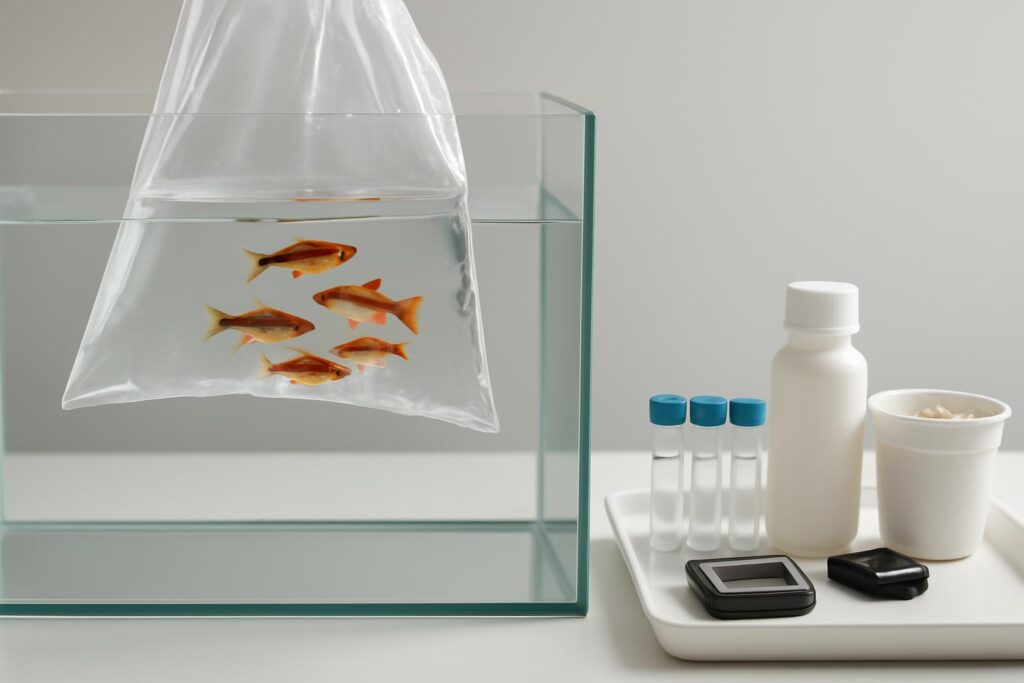
Float the sealed bag in the new aquarium for 15 to 20 minutes to match temperature. Open the bag and add a small amount of new tank water every 5 minutes for 20 to 40 minutes. Alternatively, use drip acclimation with airline tubing at 2 to 4 drops per second until the water volume in the bag doubles. Net the fish into the tank and discard the bag water. Keep the lights off for the rest of the day to reduce stress.
This acclimation schedule is gentle enough for most freshwater community species. If your pH or hardness differs more than the ranges above, use the drip method and go slower.
First week after the move
Test daily and act fast if needed
Test ammonia and nitrite daily for at least seven days. Both should read 0 ppm. Nitrate should remain moderate. If you detect any spike, act. If you detect ammonia after the move, perform an immediate 30 to 50 percent water change, dose a dechlorinator that detoxifies ammonia, reduce feeding, test daily, and repeat changes whenever ammonia or nitrite reach 0.25 ppm.
Watch for gasping, clamped fins, or flashing. Improve aeration if fish breathe hard. Keep the room quiet and avoid tapping the glass or sudden movements.
Feed light, manage light
Skip feeding on the first day after release. Then feed tiny portions once a day for a few days. Remove any uneaten food. Keep tank lights dim or off for the first day, then return to normal slowly. Stable oxygen and low waste help the filter adjust.
Confirm the filter is doing its job
Check flow rate and water movement across the surface. Prime canisters fully. Squeeze sponge filters only in old tank water if they clog, never in tap water. A gentle clean that preserves biofilm is fine if flow drops.
Moving plants, substrate, and decor
Live plants
Keep plants damp and cool, not submerged in stale water. Wrap roots in wet paper towels and bag them loosely. Replant quickly, trim damaged leaves, and dose a small amount of fertilizer only after the first few days when fish are settled. Avoid strong lighting changes right away.
Substrate
Old gravel and sand hold trapped waste. If you reuse substrate, keep it moist but not submerged and rinse it lightly in dechlorinated water to remove loose debris. Do not stir deep anaerobic pockets into the new tank. If the old substrate is very dirty, consider discarding most of it and seeding the new substrate with a handful for bacteria.
Hardscape and gear
Keep rocks, wood, and decorations wet to preserve biofilm. Do not bleach or scrub them aggressively before the move. Place heaters in the off position for at least 20 minutes before removing from water and do not turn them on until fully submerged in the new tank.
Special cases and longer trips
Long drives
Use insulated containers or coolers to hold temperature steady. For trips over one hour, run a battery air pump to keep oxygen high. Control cabin temperature and avoid direct sun. Check temperature during stops. For very long trips, use larger containers with more water volume for stability.
Delicate species and invertebrates
Small, scaleless, or sensitive species, and shrimp or snails, benefit from slower acclimation. Use the drip method and aim for a longer acclimation time. Cover filter intakes with a sponge prefilter so shrimp and fry do not get pulled in while they explore the new tank.
Common mistakes to avoid
Do not move fish before the new tank is cycled and tested. Do not deep clean or replace all filter media on move week. Do not pour bag water into the new tank. Do not mismatch temperature or pH by large margins. Do not overcrowd transport bags or skip aeration on long trips. Do not skip daily testing in the first week. Do not feed heavy meals during and right after the move. Avoid handling fish with dry nets or hands that can damage slime coats.
Simple checklists you can follow
Pre move
Seed the new filter with mature media. Match temperature and pH. Gather dechlorinator, test kit, nets, bags, buckets, labels, and a battery air pump. Plan the route between tanks and prepare extra heated, dechlorinated water.
Move day
Dim lights. Transfer mature media first and restart the filter. Catch fish calmly. Bag with one third water and two thirds air, or use lidded buckets with aeration. Insulate and label. Float to match temperature. Acclimate by adding small amounts every few minutes or drip until volume doubles. Net fish into the tank and discard bag water. Keep lights off.
First week
Test ammonia and nitrite daily. Keep both at 0 ppm. Change 30 to 50 percent of water if you see 0.25 ppm of ammonia or nitrite. Dose dechlorinator, feed lightly, and watch behavior.
Old water, new water, and bacteria
Old tank water carries very little beneficial bacteria. Prioritize moving filter media. You can reuse up to 50 percent of the old water to help match chemistry, but never move dirty water full of waste. The filter is the heart of your biofilter, so treat its media like treasure and keep it wet and oxygenated at all times.
Putting it all together
A safe move is a simple sequence. Prepare the new tank and seed the filter early. Match temperature and pH. Move mature media first. Catch fish with care. Acclimate slowly. Test and adjust for one week. Each step reduces stress and protects the biofilter that keeps your fish safe.
Conclusion
Moving fish to a new aquarium does not have to be risky. With a seeded filter, matched water, gentle acclimation, and careful monitoring, fish settle fast and stay healthy. Follow this plan, act on your test results, and move at the pace of stability. Your reward is a smooth transition and a thriving aquarium that starts strong from day one.
FAQ
Q: How long should I cycle the new aquarium before moving fish
A: With seeded media most tanks stabilize within 7 to 14 days. Do not move fish until you record zero ammonia and zero nitrite for at least three days in a row.
Q: Should I move the old filter media or start fresh
A: Yes, move the entire mature filter media, keep it wet in tank water, and restart it on the new tank as soon as possible. Do not rinse it in tap water.
Q: What is the safest way to acclimate fish on move day
A: Float the sealed bag in the new aquarium for 15 to 20 minutes to match temperature. Open the bag and add a small amount of new tank water every 5 minutes for 20 to 40 minutes. Alternatively, use drip acclimation with airline tubing at 2 to 4 drops per second until the water volume in the bag doubles. Net the fish into the tank and discard the bag water.
Q: What should I do if I see ammonia after the move
A: If you detect ammonia after the move, perform an immediate 30 to 50 percent water change, dose a dechlorinator that detoxifies ammonia, reduce feeding, test daily, and repeat changes whenever ammonia or nitrite reach 0.25 ppm.
Q: Should I reuse old tank water in the new aquarium
A: Old tank water carries very little beneficial bacteria. Prioritize moving filter media. You can reuse up to 50 percent of the old water to help match chemistry, but never move dirty water full of waste.