
We are reader supported. When you purchase through links on our site, we may earn an affiliate commission. Also, as an Amazon affiliate, we earn from qualifying purchases.
Your fish is quiet, not eating, or breathing fast. You wonder if it is too late. React fast and you can turn things around. Most fish emergencies start with water quality or oxygen, not an exotic disease. Learn the key signs, act in the right order, and fix root causes so it does not happen again. This guide gives you clear steps that new hobbyists can follow without guesswork.
Start With a Life-Saving Checklist
Stabilize Water Fast
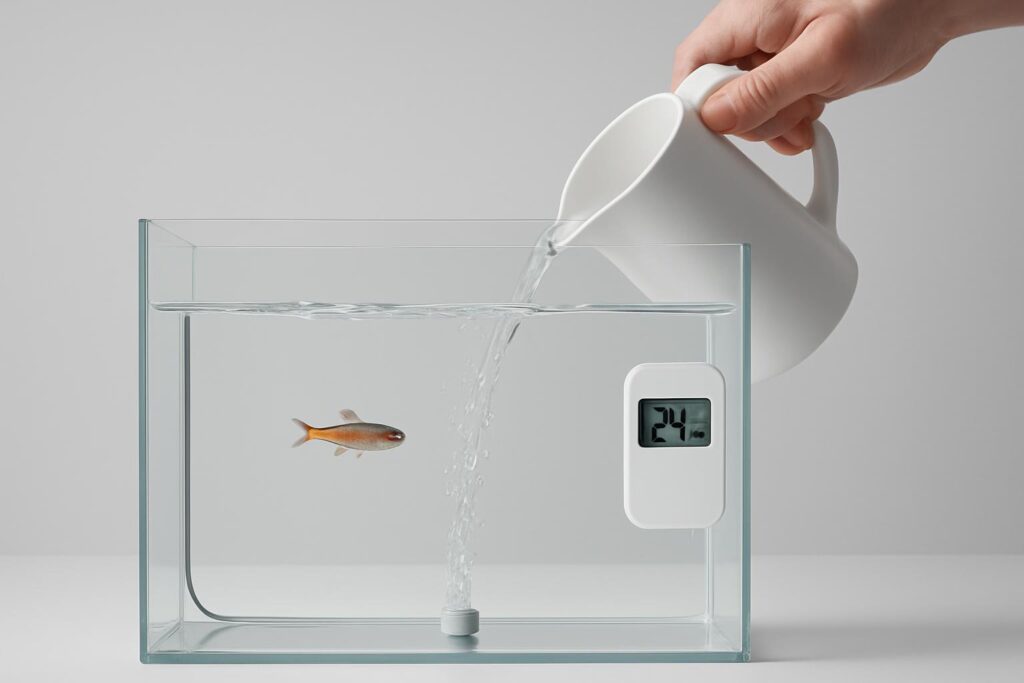
Do an immediate 25 to 50 percent water change with dechlorinated water that matches the tank temperature. This dilutes ammonia, nitrite, and other irritants that burn gills and stress fish. Match temperature by touch or a thermometer to avoid shock. Add fresh water slowly.
If you suspect chlorine or chloramine in your tap, always use a water conditioner that neutralizes them. Condition the new water before it enters the tank.
Increase Oxygen
Boost surface agitation right away. Raise your filter outlet to ripple the surface or add an air stone. Oxygen enters where water meets air. More ripple means more oxygen. Low oxygen makes fish gasp, breathe fast, and collapse.
Stop Feeding for 24 Hours
Do not feed stressed fish during the first day. Food adds waste and can rot if uneaten. Once the fish stabilizes, offer small meals and remove leftovers. Fasting reduces ammonia production and eases digestion.
Isolate if Needed
If one fish is bullied, covered in spots, or badly injured, move it to a clean hospital tank with a heater, filter, and extra air. Use water from the main tank to match parameters. Isolation protects others and lets you medicate accurately if needed.
Record What You See
Note the time, behavior, and visible changes. Take pictures. This helps you spot patterns and choose the right fix. Combine your notes with test results for ammonia, nitrite, nitrate, pH, and temperature.
9 Signs Your Fish Is Dying and How to Save It
1. Gasping at the Surface
What you see: fish hang near the top, gulping air or staying under the filter outflow.
Likely causes: low oxygen, high ammonia or nitrite, high temperature, gill damage from disease.
What to do now:
Increase aeration and surface movement immediately. Do a 25 to 50 percent water change with dechlorinated, temperature-matched water. Test ammonia and nitrite. Both should be zero. If they are not, repeat partial water changes until they read zero. Lower temperature a degree or two if it is too warm for the species, but avoid sudden swings. If gills are inflamed, consider isolation and medication based on label directions after water is stable.
2. Rapid Gill Movement
What you see: gills pulsing fast, flared opercula, fish breathing harder than usual even at rest.
Likely causes: ammonia or nitrite poisoning, low oxygen, toxins, gill parasites.
What to do now:
Test immediately. Ammonia and nitrite must be zero. Nitrate should be kept low, ideally under 20 to 40 ppm. If ammonia or nitrite is present, do large but safe partial water changes and add extra aeration. Do not overclean filter media; keep your beneficial bacteria alive. If water is fine yet breathing stays rapid, isolate and consider targeted treatment for gill issues per medication instructions. Always remove carbon from the filter while medicating unless the label says otherwise.
3. Lethargy or Hiding All Day
What you see: fish sits on the bottom, stays in a corner, reacts slowly, or avoids light.
Likely causes: poor water quality, temperature outside the preferred range, stress from tankmates, early-stage illness.
What to do now:
Test water and correct anything off. Stabilize temperature to a suitable range for the species. For most tropical freshwater fish, that is around 24 to 26 C. For common coldwater fish, around 18 to 22 C. Reduce bright lighting and stress for a day. Check for bullies and give hiding places. If behavior improves after water changes and oxygen increase, continue gentle care. If not, inspect for spots, fin damage, or bloating and treat accordingly.
4. Loss of Appetite
What you see: fish spits food, ignores it, or cannot find it.
Likely causes: stress, poor water, early disease, mouth or gill problems, food too large or stale.
What to do now:
Fix water first. Offer a small amount of high-quality, appropriate food after 24 hours. Soak dry food briefly so it sinks if the fish is weak. Remove leftovers. If the fish still refuses food, isolate for observation. Look for other signs in this list to guide treatment. Do not force-feed. Appetite often returns once water and oxygen are corrected.
5. Clamped Fins
What you see: fins held tight to the body, fish looks sleek and tense.
Likely causes: stress, cold or unstable temperature, early infection, high ammonia or nitrite.
What to do now:
Stabilize temperature and water chemistry. Keep the tank calm and reduce sudden changes. If clamping persists after parameters are fixed, consider isolation and a broad assessment for parasites or bacterial issues. Treat only when you have a probable cause and stable conditions.
6. White Spots or Gold Dust on the Body
What you see: salt-like white grains or a fine yellow gold dust; fish may scratch on objects, a behavior called flashing.
Likely causes: common parasitic infections such as ich in freshwater or similar problems in other systems.
What to do now:
Confirm water quality is good to help the fish cope. Increase aeration because many treatments lower oxygen. For ich in freshwater, many keepers raise temperature gradually within the safe range for the species to speed the parasite life cycle and then use a suitable medication as directed. Follow the label, treat the whole tank, and continue the course after spots vanish to catch free-swimming stages. Remove carbon during treatment unless the label allows it. Do not mix medications. Maintain stable parameters during and after treatment.
7. Torn Fins, Red Edges, or Fraying
What you see: ragged fins, redness at the edges, or streaks in fins or body.
Likely causes: fin-nipping by tankmates, bacterial fin rot, poor water conditions.
What to do now:
Improve water quality with partial changes and reduce aggression by rearranging decor or separating species that do not mix well. If fins keep deteriorating despite clean water, isolate and consider an antibacterial treatment per directions. Keep oxygen high and avoid overfeeding. Clean, stable water is the main driver of fin repair.
8. Bloating, Pineconing Scales, or Stringy Poop
What you see: swollen belly, scales lifted outward like a pinecone, long white stringy feces, or the fish struggles to pass waste.
Likely causes: constipation from overfeeding, internal infection, internal parasites, organ failure in advanced cases.
What to do now:
Fast the fish for 24 to 48 hours. Resume with smaller, appropriate feedings. Keep water pristine and oxygen high. If the fish is severely swollen or scales are pineconing, isolate in a hospital tank and use a medication suitable for internal infections or parasites as directed. Pineconing often means serious internal fluid buildup. Treat promptly and focus on gentle, stable conditions. Reduce stress to the lowest possible level.
9. Erratic Swimming, Floating or Sinking
What you see: the fish floats sideways, sinks to the bottom, struggles to rise, or swims in jerky patterns.
Likely causes: swim bladder issues from poor water or sudden temp change, constipation, injury, or systemic illness.
What to do now:
Check water and temperature stability first. Avoid strong currents. Fast for 24 to 48 hours, then offer small, easy-to-digest meals. Keep oxygen high. If there is no improvement and other signs exist, isolate and treat based on the most likely cause. Do not poke or squeeze the fish. Recovery depends on removing stress and restoring stable conditions.
Test and Correct Water Parameters
Ammonia and Nitrite: Always Zero
Ammonia and nitrite burn gills and blood. Even small amounts can be lethal. If either is above zero, the tank is cycling, the filter is failing, or there was a recent disturbance. Respond with partial water changes, extra aeration, and reduced feeding. Do not wash filter media in tap water. Rinse it in tank water to protect beneficial bacteria.
Nitrate: Keep Under Control
Nitrate is less toxic but still stresses fish at high levels. Keep it under 20 to 40 ppm. Regular water changes and moderate feeding keep nitrate in check. Live plants in freshwater help consume nitrate but do not replace maintenance.
pH and Hardness: Stability First
Most fish prefer a stable pH suited to their species. Sudden shifts cause shock. Test pH after water changes to confirm stability. Do not chase exact numbers unless you keep sensitive species. Aim for consistency.
Temperature: Consistent and Appropriate
Use a reliable heater or chiller and a thermometer. Tropical freshwater fish usually do best around 24 to 26 C. Coldwater species prefer cooler ranges. Keep daily swings under 1 to 2 degrees. Match new water temperature during changes.
Root Causes and Fixes After the Crisis
Stocking and Tank Size
Overcrowding causes oxygen drops, fast waste buildup, and stress. Research adult size and stocking limits for your species. If fish are aggressive or nippy, split them into groups that match temperament.
Feeding Routine
Feed small amounts that are eaten within a few minutes. Remove leftovers. Vary diet based on species needs. Overfeeding is the fastest way to raise ammonia and nitrate and trigger bloating or swim issues.
Filter and Maintenance
Use a filter rated for your tank size and bioload. Rinse sponges or media in removed tank water to preserve bacteria. Vacuum debris during water changes without overcleaning the substrate. Change 25 to 50 percent weekly in most community tanks, adjusting based on test results.
Tank Maturity and Cycling
New tanks have unstable bacteria. During cycling, ammonia appears first, then nitrite, then nitrate. Keep fish loads light, test often, change water to keep ammonia and nitrite at zero, and be patient. Avoid replacing all filter media at once.
Quarantine New Fish
Quarantine new arrivals for 2 to 4 weeks in a separate tank. Observe for spots, frayed fins, labored breathing, or refusal to eat. This prevents outbreaks in your main tank.
Medication Basics and Safety
Use medication only after water is stable and you have signs that point to a likely cause. Follow label directions. Remove carbon if required. Increase aeration during treatment. Do not mix multiple medications. Complete the full course. After treatment, resume normal filtration and do partial water changes to remove residual chemicals.
When to Seek Help
If multiple fish crash at once despite clean water and high oxygen, suspect a toxin or severe disease and seek experienced help quickly. Document parameters, symptoms, and what you already did. The more exact your notes, the faster others can guide you.
Putting It All Together
Most dying fish show warning signs for hours or days. The faster you act, the better the outcome. Move in order. Stabilize water with large partial changes. Raise oxygen. Pause feeding. Test and correct parameters. Then match symptoms to the likely cause and treat that cause in a stable, quiet setting.
Long term success is simple. Keep ammonia and nitrite at zero. Keep nitrate low. Hold temperature steady. Feed modestly. Maintain the filter. Quarantine new fish. These habits stop emergencies before they start and give your fish the best chance to thrive.
FAQ
What should I do first when my fish looks like it is dying
Do a 25 to 50 percent water change with dechlorinated, temperature-matched water, increase aeration to boost oxygen, stop feeding for 24 hours, and test ammonia, nitrite, nitrate, pH, and temperature before choosing any treatment.
How big should the first emergency water change be
Change 25 to 50 percent of the water, matching temperature and using a conditioner to neutralize chlorine or chloramine.
What are safe levels for ammonia, nitrite, and nitrate
Ammonia and nitrite must be zero, and nitrate should be kept low, ideally under 20 to 40 ppm.
Why is my fish gasping at the surface
Low oxygen, high ammonia or nitrite, high temperature, or gill disease can cause gasping; increase aeration, perform a partial water change, and test water immediately.
Should I feed a sick fish
Pause feeding for 24 hours during an emergency, then offer small, easy-to-eat meals once the fish stabilizes, removing any leftovers.