
We are reader supported. When you purchase through links on our site, we may earn an affiliate commission. Also, as an Amazon affiliate, we earn from qualifying purchases.
Picking your first filter can feel confusing. You see sponge filters everywhere in breeding tanks and quarantine setups. You also see hang on backs on many community aquariums, promising crystal clear water. Both work when used correctly, but they shine in different situations. This guide explains the differences in simple terms, shows where each filter wins, and helps you choose based on your tank, your fish, and your routine.
Introduction
Filtration is the foundation of a stable aquarium. A good filter keeps water clear, processes fish waste, and maintains steady oxygen levels. The right choice depends on tank size, livestock, your maintenance habits, and your tolerance for noise, cost, and appearance. Keep reading to learn what matters most and how to match a filter to your goals.
What Is a Sponge Filter
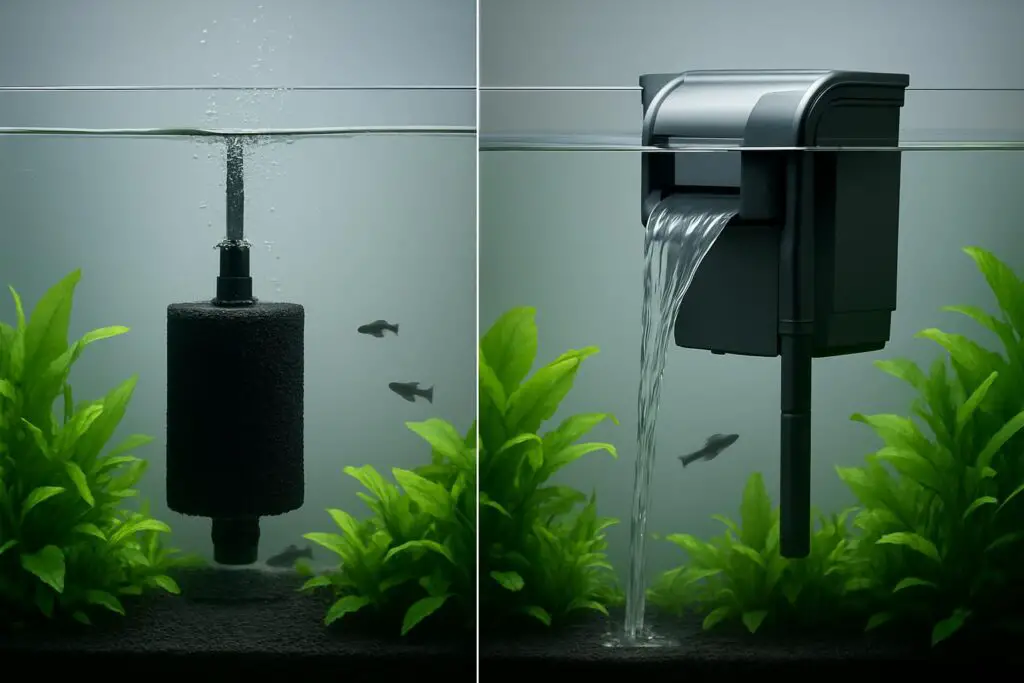
A sponge filter is a block or cylinder of foam connected to an uplift tube. An air pump pushes air through a line into the filter. Rising bubbles pull water through the sponge. The foam traps debris and houses beneficial bacteria that convert toxic ammonia to safer nitrate.
Key parts include the sponge body, uplift tube, airline, check valve, and an optional airstone to make fine bubbles. It sits inside the tank. You squeeze the sponge in old tank water to clean it. There are no moving parts in the water, which makes it reliable and gentle.
What Is a Hang on Back Filter
A hang on back filter sits on the rim of your tank. A small motor pulls water through an intake tube into a box where media remove debris and support beneficial bacteria. The filtered water returns to the tank as a controlled waterfall or through a spillway.
Most HOBs accept a mix of media. You can use sponges or floss for mechanical filtration, ceramic rings or bio balls for biological filtration, and optional chemical media such as carbon when needed. The motor, impeller, and intake need periodic cleaning to keep flow strong and noise low.
Filtration Types in Plain Terms
Mechanical Filtration
Mechanical media catch particles so the water looks clear. Sponges and floss are common. Coarse foam catches larger bits. Fine floss polishes the water by catching smaller particles.
Biological Filtration
Beneficial bacteria grow on surfaces and convert ammonia to nitrite and then nitrate. Both sponge filters and HOBs provide this with porous media such as foam or ceramic. Stable flow and oxygen support this process.
Chemical Filtration
Chemical media bind specific substances. Carbon removes medication and discoloration. Resin targets specific compounds. This is optional and situational, not a daily requirement for most tanks.
Mechanical Performance Compared
Sponge Filter Mechanical Strengths
Sponge pores collect debris without clogging too quickly. They are excellent for fish that produce fine waste such as shrimp and livebearers. The flow is gentle, so delicate plants and fry are not blasted around the tank.
HOB Mechanical Strengths
HOBs can pack layered mechanical media from coarse to fine, producing very clear water when maintained. They also move water across a larger surface area, which can remove suspended particles faster in moderately stocked tanks.
Biological Performance Compared
Sponge Filter Biological Strengths
Sponge filters excel at biological filtration because foam offers large surface area and steady, oxygen rich flow. This is why breeders and quarantine tanks rely on them for stable cycles. You can also run an extra sponge in a mature tank to seed a new aquarium.
HOB Biological Strengths
HOBs provide strong biological capacity when filled with reusable sponges and ceramic media. They also increase circulation across the tank, bringing waste to the filter. Avoid relying on disposable cartridges that remove bacteria when replaced. Use permanent media instead.
Chemical Filtration Use
HOBs make chemical media easy to add and remove. This is helpful after medications or when clearing discoloration from tannins. Sponge filters do not include a dedicated chamber for chemical media. In most community tanks, chemical media is optional, not mandatory.
Noise and Vibration
Sponge Filter Noise
The sponge itself is silent. Noise comes from the air pump and bubbling. Place the pump on a soft pad and use an airstone to make fine bubbles that sound softer. Keep the airline secured to prevent rattles.
HOB Noise
HOBs produce motor hum and water trickle. Keep the water level high to reduce splash. Clean the impeller and intake to prevent rattling and flow loss. A quality HOB can be very quiet when maintained, but a sponge filter with a tuned air pump often wins in bedrooms.
Maintenance Workload
Sponge Filter Maintenance
Maintenance is simple. During a water change, squeeze the sponge in a bucket of old tank water until the brown waste runs clear. Do not use tap water for this. Chlorine can kill beneficial bacteria. Frequency depends on stocking and feeding. Weekly or biweekly is typical.
HOB Maintenance
Rinse the mechanical media weekly to maintain flow. Swish biological media gently in old tank water to keep bacteria alive. Clean the intake tube and impeller monthly to prevent buildup and noise. Avoid replacing all media at once. Preserve some established media to protect the cycle.
Cost of Ownership
Sponge Filter Costs
Startup cost is low. You need a sponge, an air pump, airline, and a check valve. Operating cost is also low. The sponge can last years. The air pump diaphragm may need replacing after long use. There are no cartridges to buy.
HOB Costs
HOBs cost more upfront and can cost more over time if you use disposable cartridges. You can keep costs down by using reusable sponge and ceramic media. Power use is moderate. Clean parts on schedule to maintain efficiency and avoid replacing motors early.
Safety for Shrimp, Fry, and Delicate Fish
Sponge filters are the safest option for small shrimp and fry because the intake is a large, gentle surface. HOBs can be made safe by adding a pre filter sponge over the intake. Delicate fish that dislike strong currents often do better with the gentler flow of a sponge filter.
Flow, Oxygen, and Circulation
HOBs move water across the tank and disturb the surface, which improves gas exchange and helps eliminate surface film. Sponge filters deliver constant aeration through bubbles and create a slow, circular flow around the tank. Both can keep oxygen high. Choose based on the needs of your fish. Fast water species prefer more movement. Bettas and shrimp thrive with gentler flow.
Aesthetics and Space
Sponge filters sit in the tank and are visible. You can hide them behind plants or hardscape. HOBs hang outside and free up space inside, but you see the box on the rim and the intake tube in the water. Decide which look you prefer for your setup.
Reliability and Power Outages
Sponge filters have no motor in the water and rarely fail. If the air pump loses power, they restart immediately when power returns. HOBs sometimes need priming if they lose siphon. Keep the water level proper and mount the filter level to improve restart reliability.
Tank Size and Stocking Considerations
For nano tanks and lightly stocked aquariums, sponge filters provide ample biofiltration with gentle flow and low noise. For medium tanks with active fish or messy eaters, a HOB can polish the water faster while still offering strong biological capacity. On larger tanks, many aquarists run both a HOB and a large sponge to increase stability and provide backup.
Stocking level matters more than gallons. Heavily stocked tanks produce more waste, need more mechanical filtration, and benefit from stronger circulation. Lightly stocked planted tanks can rely on a sponge filter and routine water changes without issue.
Setup Basics
Setting Up a Sponge Filter
Rinse the sponge in dechlorinated water. Assemble the uplift tube, airstone, and airline with a check valve above the water line. Place the sponge near a back corner to guide gentle circular flow. Adjust air so bubbles are steady, not violent. Seed the sponge by running it in an established tank for a couple of weeks when possible.
Setting Up a HOB
Mount the filter level. Fill the body with tank water before starting so the motor does not run dry. Use a reusable sponge as the first stage, add ceramic media for biofiltration, and reserve chemical media for special cases. Set the return height and flow so surface movement is strong but not splashing. Keep the water level high to reduce sound.
Common Mistakes to Avoid
Do not replace all media at once. Keep at least part of the established media wet and running to protect beneficial bacteria. Do not rinse media in chlorinated tap water. Do not oversize flow for delicate species without adding pre filters or flow control. Do not rely on disposable cartridges as your only bio media. Use permanent sponges and ceramics.
Do not let filters run with clogged intakes. Flow loss reduces oxygen in the filter and can harm bacteria. Clean on schedule and watch for slower output or increased noise, which signal maintenance is due.
Which Filter Should You Choose
Choose a Sponge Filter If
You keep shrimp, fry, or delicate fish. You want very quiet operation with a small footprint on your power bill. You prefer simple maintenance without replacing cartridges. You run breeding or quarantine tanks where stable biofiltration and gentle flow are top priorities. You want an easy way to seed new tanks by moving an established sponge.
Choose a Hang on Back If
You want strong mechanical polishing and clear water with adjustable flow. You need better circulation and surface movement in a medium tank. You prefer to use optional chemical media for specific tasks. You like an in tank look with fewer visible devices inside the glass.
When to Run Both
Running both a HOB and a sponge filter increases biological capacity, gives redundancy during maintenance, spreads flow more evenly, and provides a seeded filter you can move to a hospital or new tank. This combination is a practical upgrade for growing tanks and busy households.
Practical Examples
Nano Shrimp Tank
A single sponge filter with moderate air delivers stable biofiltration, high oxygen, and zero risk to baby shrimp. Clean the sponge lightly every week or two and change water weekly.
20 Gallon Livebearer Community
A HOB with sponge and ceramic media keeps up with the heavier feeding and produces clearer water. Add a pre filter sponge to the intake to protect fry. Maintain weekly and clean the impeller monthly.
Planted Betta Tank
A sponge filter maintains flow without stressing the betta. Keep air low for gentle circulation. The plants help with nitrate, so mechanical polishing needs are modest.
Growing Out Cichlid Fry
Run both. The sponge filter protects tiny fish and provides a movable seeded filter for future tanks. The HOB handles extra debris and holds optional chemical media after heavy feeding.
Troubleshooting Tips
Cloudy Water
Rinse mechanical media more often and reduce overfeeding. Ensure flow is not restricted. For a HOB, add a fine polishing layer on top of coarse sponge temporarily and remove once clear.
Noisy Operation
For sponge filters, reduce vibration by padding the air pump and straighten airline runs. For HOBs, top off water, clean the impeller, and ensure the filter is level and fully primed.
Poor Flow
Check for clogged intakes, kinked airline, or saturated fine media. Clean sponges in old tank water and reassemble correctly. Replace worn air pump diaphragms when airflow drops.
Conclusion
Both sponge filters and hang on backs can deliver safe, stable, and clear aquariums. Sponge filters are simple, quiet, and gentle. HOBs add stronger mechanical polishing and flexible media options. Choose based on your livestock, tank size, maintenance style, and noise tolerance. When in doubt, you can run both for the best mix of stability, clarity, and convenience.
FAQ
Q: Which filter is quieter in a bedroom?
A: A well tuned sponge filter with an air pump on a soft pad is usually quieter than a budget hang on back. A good HOB can be quiet if the water level is high and the impeller is clean, but water trickle noise is harder to eliminate.
Q: Which filter is best for shrimp and fry?
A: A sponge filter is safest because the intake surface is large and gentle. If you use a HOB, add a pre filter sponge to the intake to prevent small animals from being pulled in.
Q: Do I need chemical media all the time?
A: No. Run chemical media only for specific jobs such as removing medication or reducing discoloration. For normal use, mechanical and biological filtration are enough in most tanks.
Q: How often should I clean each filter?
A: Rinse a sponge filter in old tank water weekly or biweekly, depending on waste. For a HOB, rinse mechanical media weekly, swish biological media gently, and clean the impeller and intake monthly.
Q: Can I run both a sponge filter and a HOB?
A: Yes. Running both increases biological capacity, gives redundancy, improves circulation, and lets you move the sponge to seed new tanks.