
We are reader supported. When you purchase through links on our site, we may earn an affiliate commission. Also, as an Amazon affiliate, we earn from qualifying purchases.
Herons and other predators are smart, persistent, and tuned to hunt in garden ponds. You can stop the losses with a plan that combines design, barriers, and daily habits. This guide breaks down what works, what fails over time, and how to secure your pond without harming wildlife. Follow the steps, and your fish will have a fighting chance even when predators return again and again.
Introduction
Many pond keepers lose fish because they react late or try one gadget at a time. Predators adapt fast. Your best defense is a layered approach that makes hunting hard, forces mistakes, and gives fish safe places to hide. You will learn how herons hunt, how to prevent easy access, how to reduce visibility, and how to create reliable refuge for your fish. You will also get a step by step plan you can start this week.
Understand the Predator Problem
Common Predators to Plan For
Herons are the top concern in many regions. They wade, wait, and spear fish with precise strikes. Egrets and bitterns hunt in similar ways. Raccoons can scoop fish at shallow edges. Otters and mink are rare in suburbs but devastating if present. Cats may harass small fish in very shallow ponds. Raptors usually struggle with ponds that have cover but can take fish from clear, open water.
How Herons Hunt and Why Ponds Are Easy
Herons prefer stable, shallow edges where they can stand. They hunt most at dawn and dusk. They return to successful spots within 24 to 48 hours. They need a clear approach path and open water with good visibility. They avoid obstacles near eye level and dislike lines across landing zones. They learn quickly if a deterrent is fake or static.
Signs You Are Losing Fish to Predators
Look for large footprints around the pond, long droppings on stones, displaced rocks, knocked over ornaments, and missing or skittish fish that stop coming up to feed. Clear beak marks on larger fish or scales on the bank point to birds. Torn plants and scattered gravel point to raccoons. A trail to the water often confirms regular visits.
Use Layers: Block, Obscure, and Shelter
Three Goals for Reliable Protection
Goal one is to block easy access with physical barriers. Goal two is to obscure visibility so predators cannot see and line up a strike. Goal three is to give fish shelter so a strike fails even if a predator reaches the water. When all three are in place, losses drop sharply.
Pond Design Upgrades That Work
Depth and Side Profile
Build depth that a heron cannot wade. A fish zone of 60 to 90 cm depth makes standing and spearing difficult. Use vertical or near vertical sides so there is no wide shallow shelf for a bird to use. Keep any planting shelf narrow and armored with rock and protective mesh.
Shallow Shelves and Edges
Many ponds have a wide shelf for plants. That shelf is a hunting platform. Reduce shelf width to 15 to 25 cm where possible. Raise pots on bricks under a secure grid so a heron cannot stand beside them. Avoid beach style entries. Use a firm edge with coping stones or a raised lip that removes easy footing.
Overhangs and Shade Cover
Overhangs block the vertical strike and reduce visibility from above. Create overhangs with marginal plants that drape into the water, pergola slats, or a rigid frame with shade cloth. Floating cover such as water lettuce and lilies helps break sightlines. Aim for 40 to 60 percent surface cover in peak predator seasons while maintaining gas exchange.
Fish Caves and Tunnels
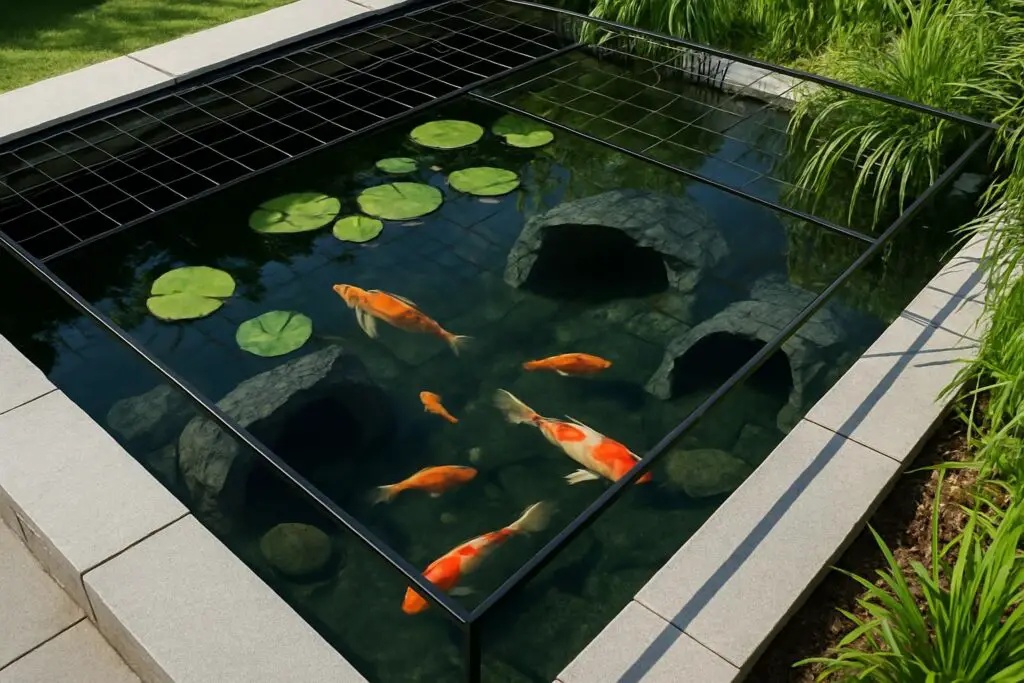
Give fish fast refuge they can reach in one burst. Use stacked slate caves, inverted milk crates covered with rock, large diameter PVC or clay pipes secured under rock, or preformed koi tunnels. Place multiple entrances at different depths. Openings of 10 to 15 cm suit medium koi and goldfish. Weight and pin the structures so a predator cannot shift them. Distribute caves across the pond so fish do not bottleneck at one spot.
Physical Barriers That Stop Attacks
Raised Pond Netting
Netting works when it prevents standing and landing, not only when it sits on the water. Mount a rigid or semi rigid frame around the pond and keep the net 20 to 30 cm above the surface. Use strong perimeter stakes or low posts. Choose mesh around 20 mm to 25 mm that blocks beaks and keeps leaves out. Keep the net tight so a heron cannot push it down to reach water. Leave enough slack at the edges to prevent gaps. Add a hinged section or quick release ties for maintenance access.
Fishing Line Grids and Tension Wires
A grid across the pond interrupts takeoff and landing. Run clear monofilament or black cord across the pond in a crisscross pattern at 25 to 45 cm above the water. Spacing of 30 to 45 cm between lines deters landing without blocking your view too much. Mark a few intersections with small flags or clips to reduce bird and bat collisions at night. Inspect weekly and after storms. Retension as needed.
Perimeter Fences and Low Voltage Lines
A short fence around the pond stops wading approaches. A 60 to 90 cm garden fence with small gaps keeps raccoons out and makes herons think twice. Some keepers use low voltage pet or poultry lines on posts at two heights around the perimeter. Check local laws before using any electrified deterrent. Keep vegetation off the lines. Post clear signs for safety.
Motion and Water Deterrents
Motion Activated Sprinklers
Motion sprinklers startle birds with a sudden spray. Place units so they cover the approach path and the pond edge. Overlap coverage to avoid blind spots. Connect to a stable hose supply. Test day and night. Reposition units every few days to prevent pattern learning. Turn off when you are working at the pond. These are more effective when combined with a barrier or grid.
Lights and Alarms
Spotlights with motion sensors can disrupt night visits. Use warm white to reduce insect draw. Place lights low and angled to avoid glare into windows. Sound alarms can bother neighbors and lose effect fast. Use sound only as a short term measure while you install physical protection.
Dogs and Human Presence
Regular activity near the pond reduces visits. A dog in the yard helps during daylight. Do not rely on presence alone. Predators shift to quiet windows, especially at dawn.
Decoys and Visual Tricks
Heron Statues and Owl Forms
Static decoys lose effect within days. If you use them, move them daily and pair with motion deterrents. Do not place a heron decoy near the pond during heron nesting season in some regions, as it can signal safe feeding to passing birds. Treat decoys as minor support, not as a core defense.
Reflective Tape and Flags
Reflective tape, flags, or spinning rods can unsettle a new visitor. They work better over open areas with wind. Rotate positions weekly. Replace when dull. Do not depend on them during peak migration or when a bird has already fed at your pond.
Daily and Seasonal Habits That Reduce Risk
Feeding Schedule and Fish Training
Feed at consistent times when you can supervise. Keep portions modest so fish do not stay near the surface after feeding. Use a feeding ring under cover or near a cave entrance. Stop feeding if a predator is active. Resume only after barriers are in place and fish come up with confidence.
Manage Water Clarity
Ultra clear water gives predators an edge. Use floating plants and marginal growth to break lines of sight. If needed, use a pond shade dye approved for fish to tint the water slightly in warm months. Balance clarity with oxygen needs. Avoid sudden heavy tinting that stresses fish.
Timing Risk Windows
Risk rises at dawn and dusk, during spring and fall migration, and after rain when hunting is easier. Check barriers before these windows. Turn on motion devices at night. Add temporary lines or extra cover during peak weeks.
Stocking and Fish Choices
Fish Size and Color
Very small fish are easy targets. Grow out small fish in a protected tank or shallow quarantine tub with a lid before moving them to the pond. Bright, high contrast fish are easier to spot in clear, open water. Provide heavy cover and caves if you keep bright koi or fancy goldfish.
Density and Behavior
Overcrowding forces fish to occupy shallow zones. Keep stocking modest for your volume and filtration. Train fish to feed under cover. Skittish behavior after an attack is normal. Confidence returns faster when refuge is plentiful.
Monitoring and Quick Response
Cameras and Tracks
A basic outdoor camera aimed at the pond edge will confirm species and timing. Even a doorbell camera can help. Check soil or gravel for prints after rain. Knowing the visitor shapes your response and saves time.
After an Attack Checklist
Pause feeding for 24 to 48 hours. Add floating cover and deploy a net or line grid the same day. Test water to confirm oxygen and ammonia are safe because stressed fish breathe fast. Treat visible injuries in a hospital tank if you have one. Expect the predator to return within 48 hours and be ready. Keep lights or sprinklers active at dusk and dawn.
Step by Step Plan to Secure Your Pond This Week
Day one, inspect the pond and identify shallow access points, wide shelves, and clear landing zones. Install a temporary fishing line grid at 25 to 30 cm height with 30 to 45 cm spacing. Add two or three fish caves and at least 30 percent floating cover.
Day two, build or place a raised net frame 20 to 30 cm over the water with 20 to 25 mm mesh, tight and well anchored. Leave a hinged access point. Set up a motion sprinkler to cover the main approach.
Day three, adjust feeding to supervised sessions near cover. Move any decoys to new positions or remove static ones. Add shade cloth or slatted cover over the most open zone if visibility is still high.
Day four to seven, monitor with a camera, check lines for sag, and retension after wind or rain. Walk the perimeter at dawn or dusk to confirm there are no new approach paths. If a predator still visits, add a short perimeter fence or a second grid layer at a different height.
Budget and Maintenance
What to Expect to Spend
Fishing line and stakes cost little and work as a fast stopgap. A sturdy raised net and frame cost more but deliver strong protection and leaf control. Motion sprinklers are mid range and reusable. Caves can be built from materials you already have. Perimeter fencing costs vary with style and length.
Ongoing Care
Check tension weekly and after storms. Remove leaves from netting before they sag the frame. Trim plants so overhangs block sight without choking flow. Clean and test motion devices monthly. Replace worn lines and cracked posts at the start of each season.
Common Mistakes and How to Fix Them
Do not place netting directly on the water for herons because a bird can stand on it and spear through gaps. Raise it. Do not rely on a single decoy for weeks. Move or remove it. Do not leave wide shallow shelves exposed. Narrow them or cover with a rigid grid. Do not feed near open water. Feed near cover. Do not wait after the first loss. Install barriers the same day because herons return quickly.
Legal and Ethical Notes
Many bird species, including herons, are protected by law in many countries. Use non lethal, non injurious methods. Never trap, harm, or handle wildlife. Fences, nets, lines, sprinklers, and habitat design are effective and responsible. Check local rules before using electric deterrents or installing permanent structures.
Conclusion
Stopping herons and other predators from eating pond fish is a system, not a single product. Build depth and steep sides to remove easy footing. Add raised netting or a line grid to block entry and landing. Use motion sprinklers to disrupt first visits. Pack the pond with caves and cover so fish can escape. Adjust feeding and clarity so predators cannot plan clean strikes. Maintain the setup, watch the risk windows, and respond fast after any incident. With these layers in place, losses drop and your pond becomes a hard target.
FAQ
Q: What stops herons most reliably
A: A raised net or a tight fishing line grid combined with a deep fish zone and solid caves gives the most reliable protection.
Q: How high should pond netting be to stop herons
A: Keep the net 20 to 30 cm above the water, use mesh around 20 to 25 mm, and tension it so a bird cannot push it down.
Q: What pond depth helps against wading birds
A: A fish zone of 60 to 90 cm depth with vertical sides removes safe footing and reduces successful strikes.
Q: Are decoys effective for long term protection
A: Decoys have limited effect and lose power fast, so use them only with motion deterrents and move them often or skip them.
Q: What should I do right after a predator attack
A: Pause feeding, add cover, install a raised net or line grid the same day, test water, treat any injuries, and expect a return within 48 hours.