
We are reader supported. When you purchase through links on our site, we may earn an affiliate commission. Also, as an Amazon affiliate, we earn from qualifying purchases.
Hand feeding a fish looks simple, but it is a learned routine that builds trust over time. Done well, it makes feeding calmer, reduces waste, and helps you notice health problems early. This guide gives you a clear path from the first approach to a confident fish taking food from your fingers. Every step centers on safety, patience, and water quality, so your fish learns without stress.
What Hand Feeding Really Means
Hand feeding is not about grabbing or forcing contact. It is a quiet routine where your hand becomes the place where food appears. The fish learns that approaching your hand is safe and rewarding. Some fish will never accept touch, and that is fine. The goal is a consistent feeding response near your hand, with calm behavior and clean technique.
Why Train This Skill
Hand feeding has practical benefits. You can target-feed timid fish so they get a fair share. You can observe eyes, fins, scales, and breathing up close. You reduce food drifting into filters and decor, which improves water quality. You make dosing medicated foods easier. You also help skittish fish relax during routine care.
Which Fish Are Good Candidates
Many freshwater fish can learn hand feeding. Goldfish, koi, bettas, gouramis, angelfish, oscars, discus, most cichlids, livebearers like guppies and platies, and many catfish will respond. In marine tanks, clownfish, damselfish, dottybacks, tangs, and some wrasses often learn well. Very shy schooling fish can still learn to associate your hand with food, but you may see slow progress.
Avoid hand feeding species that are venomous or risky. Lionfish, stonefish, large moray eels, and large predatory cichlids can bite or sting. Do not hand feed piranha or large triggerfish. For these cases, use tongs or a feeding stick instead of fingers.
Safety and Hygiene First
Wash and rinse your hands before every session. Avoid soap residue, sanitizer, perfume, and lotion. Do not put hands in the tank if you have cuts or if you handled chemicals. Remove rings and bracelets to avoid sudden flashes or scratches. If your skin is sensitive, use powder-free aquarium-safe gloves and rinse them in tank water first. Keep a clean towel nearby so you are not dripping over the floor or electrical gear.
Set Up the Tank for Calm Training
Stable water keeps fish confident. Keep temperature within the species range. Maintain filtration and gentle surface movement. Use a lid or feeding door that opens smoothly to avoid loud noises. Choose a fixed feeding station. The front right corner, a smooth rock, or the center under the light are good choices. Consistency matters. Reduce sharp shadows and bright room lights during training. If the fish spook easily, lower the tank lights slightly for the first few sessions.
Pick Foods That Motivate
Use food with strong scent and easy handling. High quality pellets sized for your fish are ideal. For early sessions, use extra tempting options like thawed bloodworms, brine shrimp, mysis shrimp, or a small gel food cube. For herbivores, use softened pellets, spirulina flakes pressed into a tiny ball, or a bit of blanched spinach or zucchini. Avoid oily kitchen meats and mammal or bird meat. Rinse frozen foods in a fine net to reduce excess phosphate. Keep portions small to protect water quality.
Plan a Short, Regular Schedule
Train once or twice per day at the same time. Keep each session under five minutes. On day one, offer a small meal after a light fast of 12 to 24 hours. Fish learn faster when hungry but not stressed. End each session on a small success, even if it is only approaching your hand by a few centimeters. Skip training if fish show signs of illness or if water parameters are off.
Step by Step Training Roadmap
Stage 1: Comfort With Your Presence
Stand or sit quietly near the tank for a minute before feeding. Move slowly. Open the lid gently. Hold food above the water and let a few pieces fall at the usual spot. Keep your hand still for a few seconds after feeding. Repeat for two to three days. The goal is calm approach and eating while your hand is near.
Stage 2: Your Hand Signals Food
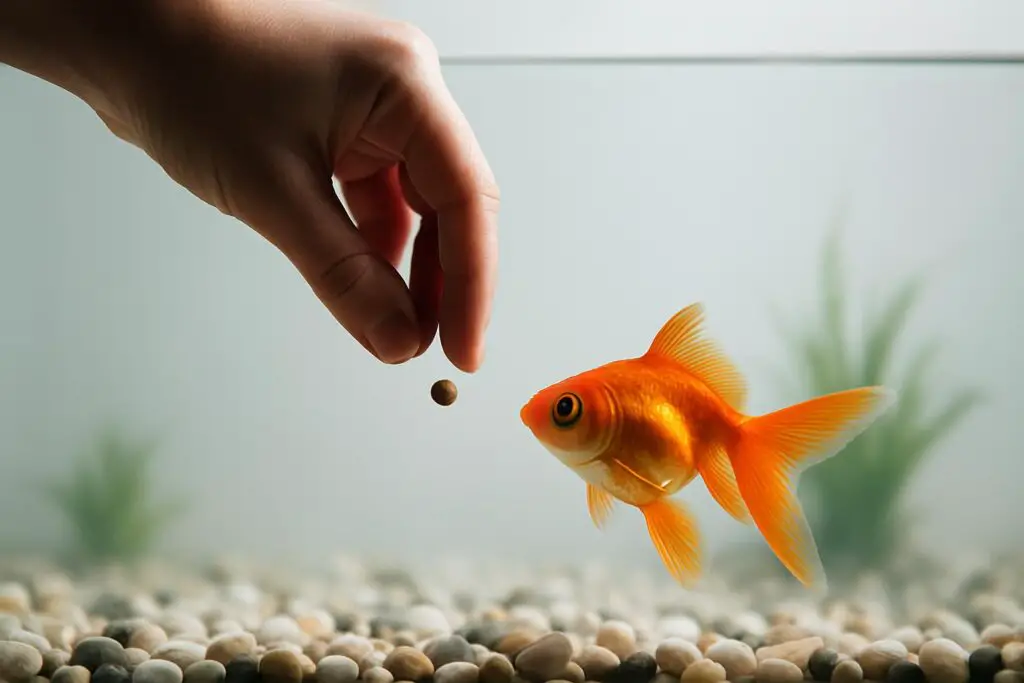
Hold a pellet or a small pinch of food between your fingertips above the surface. Let it hover for two to three seconds, then drop it directly below. Keep your other hand out of sight to reduce distraction. Fish learn that the fingertips predict food at a fixed location. Do this for a few meals until fish rush to the spot when they see your fingers.
Stage 3: Touching the Water Without Startle
After the fish gather below your fingers, slowly dip your fingertips so they barely touch the surface. Hold for one to two seconds. Release the food so it falls from your fingers. Repeat two or three times per session. If fish spook, lift your hand slowly, wait, and try again. Continue until the fish ignore your fingers touching the water.
Stage 4: Submerged Release
Pinch a piece of food and submerge your fingertips one to two centimeters. Keep your hand steady at the feeding station. Let the fish explore, then release the food. Some fish will take it right away; others wait. Do not chase or move toward the fish. The fish should come to you. Repeat until they approach quickly.
Stage 5: Brief Contact and Stationing
Hold the food so the fish needs to brush your fingers to take it. Slight contact builds confidence. Do not squeeze the food hard. If a fish nips your skin, do not jerk back. Calmly open your fingers and let the food go. Use the same corner or rock every time. Your hand becomes a stable station that feels safe.
Stage 6: Direct Pickup and Maintenance
Offer single bites from your fingertips. Once the fish takes several bites calmly, add variety. Sometimes release early. Sometimes ask for a closer approach. Keep sessions short. Over time, reduce reliance on the richest treats and use the main diet for most hand feedings. This keeps nutrition balanced and prevents pushy behavior.
Reduce Stress Signals
Watch for signs that you are moving too fast. Hiding, clamped fins, rapid breathing, pale color, dashed escape attempts, or repeated yawning can mean stress. If you see these, step back to the previous stage, shorten sessions, and use more tempting food. Keep the room quiet. Ask other people to move slowly near the tank.
Common Mistakes to Avoid
Do not overfeed. Small, frequent successes beat large meals that foul the water. Do not chase fish with your hand. Do not switch locations during the early stages. Do not change foods every day. Do not train right after a large water change if fish seem edgy. Do not train with dirty hands, perfumes, or lotions.
Troubleshooting
The Fish Will Not Approach
Start with the lid closed and feed near the front glass so they see your silhouette. Dim the light slightly. Try a 24 hour fast if the species tolerates it. Use a stronger scent like thawed mysis. Reduce room movement. Repeat stage 1 for several days. Patience is the cure for fear-based avoidance.
The Fish Snatches and Runs
Use slightly larger food pieces that require a slower bite. Hold your hand steady and low, not high above the surface. Feed one fish at a time if possible. Give two quick successes in a row to build rhythm. End the session before the fish gets frantic.
Tankmates Steal All the Food
Feed a small distraction pinch on the far side first. While bold fish are busy, offer a bite to the timid target fish at your hand station. You can also place a clear divider or a floating feeding ring to control the crowd. Remove the divider after the session.
The Fish Bites Hard
Switch to a feeding stick or blunt tongs. Many cichlids and puffers will nip skin. Hold the stick steady until the fish takes the food. Do not yank away. Over time, reduce distance slowly if safe. If biting persists or draws blood, stay with tools permanently.
The Fish Is Timid Only During the Day
Try training at dusk with tank lights low. Use red room light that is less disturbing to many species. Offer sinking foods that can be held near the bottom for loaches and catfish. Gradually shift to earlier times as confidence grows.
Species Tips
Goldfish and Koi
These fish often learn fast. Use softened pellets or gel foods that hold shape. Keep water cool within the species range to protect oxygen levels. Offer small bites to avoid gulping too much air at the surface. Expect splashes; train at a corner to contain water.
Bettas
Use very small pellets or a single bloodworm. Reduce surface flow so the fish can approach with ease. Present one pellet at a time at the same spot. Bettas cue strongly to routine, so consistent timing speeds learning. Avoid overfeeding; they have small stomachs.
Oscars and Other Large Cichlids
These fish are bold and may bite. Use a feeding stick first. Keep your hand below the surface, not hovering. Watch for territorial lunges if the fish is guarding an area. Avoid feeding live feeder fish. Use pellets, frozen foods, and safe treats.
Catfish and Loaches
They prefer dim light and bottom stations. Train at dusk. Place your fingers near the substrate and offer sinking wafers or soft gel bites. Be patient. Once they learn the station, they come quickly when lights are low.
Marine Fish
Quarantine new fish first. Train with high quality marine pellets or thawed mysis. Use a feeding ring to confine floating food near your hand. Nori sheets on a clip can be introduced by hand for tangs and angels. Maintain stable salinity and temperature to reduce stress during training.
Food Choices That Help Training
Use the main pellet as the core diet. Add a few training enhancers like thawed brine shrimp for the first week. Gel foods work well because you can pinch tiny bites and they do not crumble fast. For herbivores, blanched greens are useful. For insectivores, black soldier fly larvae pellets are enticing. Rotate treats within a small set to keep interest without causing digestive upset.
Portion Control and Water Quality
Count bites. Most small fish need only what they can eat in one to two minutes, once or twice per day. Larger fish can have more, but still avoid large dumps of food. Remove uneaten food within five minutes. Rinse frozen foods in tank water or dechlorinated water before offering. Pre-soak hard pellets for sensitive species to prevent bloat. Test ammonia, nitrite, nitrate, and pH weekly. Good water makes training smooth.
Tools That Support Hand Feeding
A target stick is a simple tool. A cotton swab with the cotton removed or a blunt acrylic rod works. Touch the target to the water where you will feed. When fish approach the target, reward at that spot. Over time, your fingers replace the target. A floating feeding ring helps keep food and fish centered. A small plastic cup can be used as a transitional hand. Start by feeding from the cup, then hold the cup and slowly replace it with your hand.
Teach a Station Behavior
Pick a fixed point. Hold your fingers there before every release. Cue the fish with the same slow movement. When the fish reaches the point, give a small bite. If you keep that rule, the fish will wait at the station instead of pacing or splashing. Stationing prevents chasing and keeps the group settled. For groups, feed the calmest fish first to set the tone. Rotate who gets the first bite to reduce competition.
Fixing Bad Habits
If fish start splashing the surface, lower the feeding point by a few centimeters and wait for calm bodies before releasing food. If fish nip too hard, switch to tools for a week and reintroduce fingers gradually. If fish only eat treats and refuse pellets, offer pellets first and give a single treat only after two to three pellet bites. Consistency resets behavior.
How Long This Takes
Bold fish can learn in three to seven days. Shy fish may need two to four weeks. No progress for seven days usually means the steps are too big. Break stages into smaller pieces. Track sessions in a simple notebook. Note the food used, approach distance, and any stress signs. Small adjustments make big differences over time.
Training With Kids or Guests
Explain the rules before they feed. Wash hands, move slowly, do not tap glass, and use small portions. Show them the station and have them hold still. Supervise closely with larger or nippy fish. End the session before fish get hyper. This keeps the routine positive.
When Not to Hand Feed
Do not train new arrivals in the first week. Let them settle and eat well from a distance first. Do not hand feed during aggressive breeding or guarding. Do not hand feed while fish are ill or on strong medication unless the medicated food requires target feeding. Do not hand feed venomous or dangerous species. Use tools and safety gear for those cases.
After You Succeed
Maintain the routine with a few hand-fed bites at most meals. Keep the rest of the food delivered the usual way so fish do not become frantic for your fingers. Refresh the behavior with short, calm sessions. If you travel, show the sitter how to feed without hands to avoid confusion. Your fish will remember the routine after a short break, but you may need a day of refresher training.
Examples of Simple Routines
For a community tank, dim the lights by 20 percent, open the lid, hold a soaked pellet at the front right corner, touch the surface for two seconds, release one pellet, wait, then offer a second pellet by hand. End the session and feed the rest normally away from the station.
For a single betta, turn off the filter for three minutes, offer one pellet at the same spot on the surface, then one bloodworm at fingertip height, then turn on the filter. Keep it predictable and short.
Signs of Success
Fish approach your hand quickly when you open the lid. They hold steady body position near your fingers. They take bites without darting away. They resume normal behavior right after feeding. Water stays clear and parameters stable. These signs show learning and low stress.
Advanced Options
Once hand feeding is solid, you can teach a simple target follow or a wait cue at the station. Hold your fingers in a closed position for three seconds, then open and feed. Over time, fish learn to pause until the open hand appears. This reduces crowding and splashing with groups. Keep sessions short and end on a win.
Health Checks During Hand Feeding
Use the close view to inspect eyes for cloudiness, fins for fray, scales for raised patches, and gill motion. Note any rubbing, yawning, or imbalance. Detecting problems early keeps treatments simple. If you see issues, pause training and return to normal feeding while you diagnose and correct water or health problems.
Consistency Beats Speed
Fish remember patterns. Same time, same spot, same movements build trust. If you miss a day, resume with the previous successful stage rather than jumping ahead. With each calm session, your fish becomes more confident and the routine becomes effortless.
Conclusion
Training a fish to eat from your hand is a small daily habit with clear rewards. You earn close access without stress. You feed efficiently and protect water quality. You spot health concerns early. The process is simple when you follow steady steps. Set a station, choose the right food, move slowly, keep sessions short, and end on success. With patience and clean technique, most fish will meet you at your hand and feed with calm confidence.