
We are reader supported. When you purchase through links on our site, we may earn an affiliate commission. Also, as an Amazon affiliate, we earn from qualifying purchases.
Feeding fish from your hand feels rewarding, but it must be done safely for you and your fish. This guide gives you a clear plan that works for beginners. You will see how to choose the right fish, prepare your tank, use the best foods, and train step by step without stress. You will also learn hygiene rules to protect your health and your aquarium. Follow the sequence, keep sessions short, and let your fish set the pace.
Introduction
Hand feeding is not a trick. It is a calm routine that builds trust. Done right, it improves observation, reduces food waste, and helps shy fish become more confident. Done wrong, it can stress fish, foul water, and raise health risks. The difference is in the details. This article gives you those details and a schedule you can follow today.
Set a realistic timeline. Most fish learn in two to six weeks with one or two short sessions per day. Bold species may learn faster. Shy fish may need longer. Your job is to make every session safe and predictable.
Who Can Be Hand-Fed Safely
Good candidates
Choose fish that are already eating well and show curiosity at the front glass. Peaceful or moderately bold fish are easier to train than skittish species. Community fish that feed mid-water or at the surface respond quickly when the routine is consistent.
Which fish are easiest to hand-feed? Goldfish, koi, oscars and many medium to large cichlids, livebearers like mollies, platies, and guppies, and many bettas are good candidates.
Use caution or avoid
Very small fry are not suitable for hand feeding. Predatory or aggressive fish can nip hard and should be trained with a feeding stick or tongs, not bare fingers. Venomous marine species must not be hand fed. Nocturnal or reclusive fish may only accept target feeding at specific times with tools.
Individual temperament
Even within one species, some fish are bold and others are shy. Work with individuals that already approach during feeding time. If a fish hides every time you move, train other fish first. Group confidence often helps the shy ones later.
Safety and Hygiene Rules
Before your hand enters the water
Rinse hands and forearms with plain tap water only. Do not use soap, sanitizer, lotion, or fragrance before you reach into the tank. Residues harm fish and biofilter bacteria. Remove rings and watches to avoid scratches and contamination.
Cover any cuts with a waterproof bandage and wear long aquarium gloves if you have sensitive skin or broken skin. If you are immunocompromised, avoid direct contact and use tools instead.
During feeding
Move slowly and steadily. Sudden motions trigger flight responses. Keep your hand in one place and let the fish come to you. Do not chase fish with your fingers. Keep the session short to protect oxygen levels and reduce stress.
After feeding
Rinse your arm with tap water, then wash with soap and water after your hand is out of the aquarium. Dry the area. If you used tools, rinse and air dry them. Disinfect tools between tanks to prevent cross contamination.
Kids and family
Supervise children closely. Use a feeding stick for kids. Set a firm rule that only trained adults put hands in the aquarium. This keeps routines consistent and prevents accidents.
Equipment and Food Preparation
Helpful tools
Use a feeding ring to define a station and reduce surface drift. A feeding stick or blunt tongs help with cautious or nippy fish. A small turkey baster or pipette is useful for target feeding smaller species. Keep a clean container for thawing frozen foods.
Choosing starter foods
Strong scent and clean handling matter during training. Start with moist, high value foods that draw fish in but do not break apart into the filter. Match the food to the fish size and diet.
What food should I use to start hand-feeding? Start with high value foods that release scent and are easy to control such as thawed bloodworms, brine shrimp, mysis shrimp, finely chopped prawn or fish, moistened pellets, algae wafers, or small pieces of blanched vegetables for herbivores.
Portion control
Measure a normal meal before you start so you do not overfeed once fish start taking food from your hand. As a rule, feed what fish can finish in one to two minutes, then stop. Remove uneaten food within five minutes.
Target feeding in community tanks
In mixed tanks, bold fish can steal food. Use a feeding ring to focus the group while you hand feed from one spot. For bottom dwellers, place food near their shelter with a stick. Train one species at a time if needed.
Prepare the Tank and Routine
Water quality baseline
Training succeeds in stable water. Test ammonia, nitrite, nitrate, pH, and temperature. Ammonia and nitrite must be zero. Keep nitrate below 20 to 40 ppm depending on species. Maintain temperature within the ideal range for your fish. Make a water change before you start if levels are off.
Lighting, flow, and environment
Set moderate lighting so fish can see you and the food. Reduce strong current near the feeding station so food stays in place. Add plants or decorations that offer retreat paths. Fish are more willing to approach if escape routes are clear.
Choose a feeding station
Pick one consistent corner or surface area. Place a feeding ring or mark a spot on the rim. Always use the same location so fish learn where to expect your hand.
Establish a schedule and cue
Feed at the same times each day. Pick a soft cue that is not stressful, such as setting the feeding ring on the surface or opening the lid gently. Avoid tapping on glass. Small, repeatable steps build predictable patterns that fish trust.
Step-by-Step Training Plan
Stage 1: Build association without your hand in the water
Stand still at the tank at the same times daily. Place food gently into the feeding ring or hold it near the surface with a stick. Wait quietly. The goal is simple association: your presence means food appears at the station. Do this for three to seven days, or until most fish approach within a minute.
Stage 2: Move the food closer to your fingers
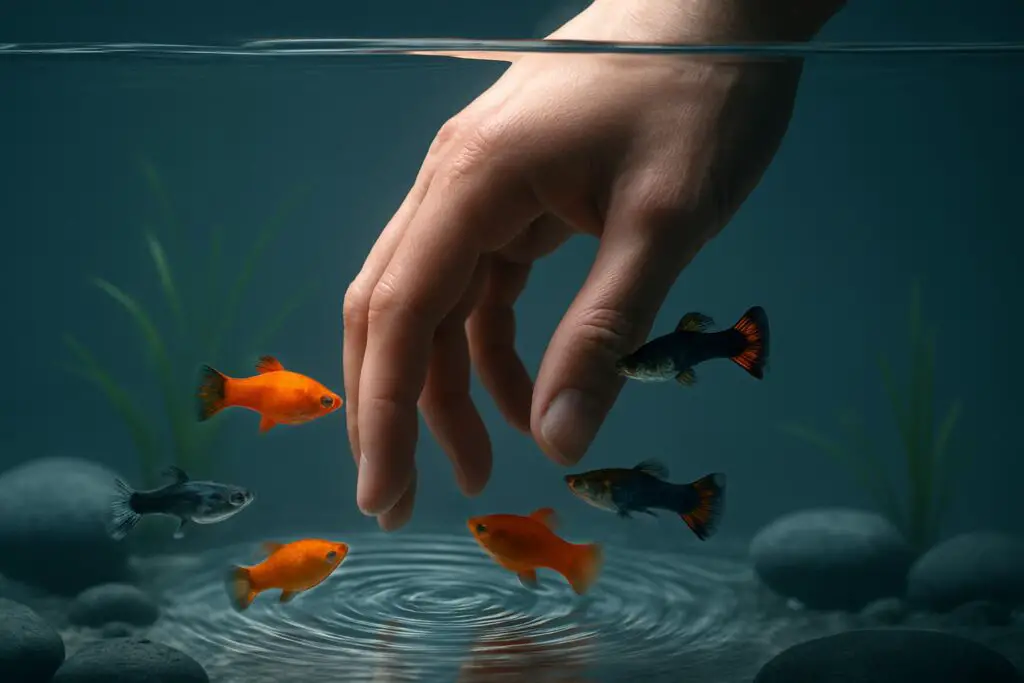
Hold the food just above the water with your fingers. Let fish strike at the surface tension. Next, let your fingertips touch the water while you still hold the food. Keep your wrist and arm out for now to reduce the size of the object in the water. Continue until fish feed confidently with your fingertips present.
Stage 3: Hand in the water, food just ahead of it
Submerge your fingers by one to two centimeters while presenting food at the tips. Keep your palm closed and still. If fish hesitate, retreat one step and try again next session. Progress only when fish eat without signs of stress.
Stage 4: Open palm feeding
Place a small amount of food on your open palm or pinched between thumb and finger. Lower your hand slowly to the feeding depth used in normal meals. Let fish pick pieces off. Do not raise your hand while a fish is approaching. End the session with a few easy pellets dropped from your fingers so fish always finish on success.
Stage 5: Wean to normal diet and maintain
Once fish eat from your hand, start mixing in their regular pellets or flakes while still hand feeding. Over a week, reduce special treats to occasional rewards. Keep the routine, but avoid overfeeding. The goal is trust, not excess food.
How long should each training session last? Keep sessions to five to ten minutes, once or twice per day, and end while fish are still responsive.
How long does it take to train fish to eat from your hand? Most fish learn in two to six weeks with one or two short sessions per day. Bold species may learn faster. Shy fish may need longer. Never rush the timeline.
Reading Fish Body Language
Signs of curiosity and readiness
Fish that are ready to train come forward when you approach. They hover near the feeding station, follow your fingers, and test food with quick nibbles. Fins are held normally, and colors look bright.
Signs of stress
Watch for rapid darting, clamped fins, pale coloration, gasping at the surface, or hiding for more than a few minutes after you leave. If you see these, stop the session, check water quality, and reduce the next session length. Stress means progress will be slower if you push.
Troubleshooting Common Problems
Fish ignore the food
Check temperature and water tests first. Hungry fish in healthy water are curious. Confirm that you are not overfeeding earlier meals. Try a higher value food, offer smaller pieces, and reduce flow near the station so scent lingers. Give new fish at least one to two weeks to settle before training.
Shy fish will not approach your hand
Cover one or two sides of the tank to reduce visual stress. Add floating cover or plants to break open spaces. Step back from the glass and keep your hand lower in the water to reduce your profile. Train bolder tank mates first to model the behavior. Use a stick or pipette to bridge the gap.
One fish dominates and others miss out
Use two feeding stations at opposite ends of the tank. Start the assertive fish on one side, then hand feed shy fish on the other. Rotate which group gets the hand feed each session. Target feed bottom dwellers with sinking foods delivered by stick to their shelter.
Nips or bites on your fingers
Expect test nibbles from cichlids, goldfish, and some catfish. Keep nails short. Offer food between thumb and index finger so fish target the food, not skin. If bites are strong, switch to a feeding stick or wear a thick glove. Do not jerk your hand away, as sudden motion spooks the tank and sets back training.
Water gets cloudy after sessions
Reduce portions, offer larger pieces that do not crumble, and pre soak dry pellets so they sink as a unit. Use a feeding ring to keep food localized. Siphon uneaten food within five minutes. Do a filter maintenance check if debris builds up quickly.
Special Notes by Species
Goldfish and koi
They are strong eaters and learn fast. Use large sinking pellets, gel foods, or blanched greens for control. Watch for gulping air at the surface. Keep sessions short to limit surface gasping. Always rinse hands well to avoid introducing oils that can form a film.
Bettas
Train at the surface with moistened micro pellets, small thawed foods, or a single soaked pellet at a time. Bettas often take food from fingers within a week. Keep water warm and stable. Avoid strong current near the feeding spot.
Cichlids including oscars
They are bold but can nip hard. Use a feeding stick during early stages. Offer larger, tidy pieces that reduce frenzy. Maintain a clear hierarchy in community tanks by spacing feeding stations. Watch for aggression and split sessions if needed.
Catfish and loaches
Most are crepuscular or nocturnal. Train at dusk with a dim room and tank lights. Use sinking wafers or gel cubes placed near shelters. Hand proximity may be tolerated, but many prefer stick or ring feeding. Be patient and consistent.
Ethical and Biosecurity Considerations
Quarantine and disease control
Quarantine new fish for at least a few weeks before any hand feeding in the main tank. Never move unwashed hands or wet tools from one tank to another. Rinse and disinfect tools between systems. If a tank shows signs of disease, stop hand feeding and address the issue first.
Human health
Is it safe to put your hands in the aquarium? Yes if you follow hygiene and safety rules. Rinse hands and arms with plain water only before contact, avoid soap, lotion, or sanitizer residues, cover cuts or wear long aquarium gloves, keep sessions short and calm, and wash with soap and water after.
Feeding ethics
Hand feeding is not a license to overfeed. Keep a fasting day once per week for most species unless they are very young or medically exempt. Use a simple log to track portions, water tests, and behavior changes. The goal is consistent care, not novelty.
Milestones and Maintenance
Week by week progress
Week one builds association with your presence and the feeding station. Week two brings fingertip contact and shallow submersion. Weeks three to four bring open palm feeding and weaning to normal diet. Continue at the pace of your fish. If stress appears, revert to the last successful step.
Keep the behavior strong
Maintain the same station, cue, and posture. Reward with a special treat once or twice per week. If you travel or miss sessions, restart at an easier step rather than forcing full contact immediately.
Know when to stop
Stop a session if fish startle repeatedly, if a dominant fish becomes aggressive, or if food begins to break apart. End on a calm moment with a small easy bite. Consistent calm endings build long term trust.
Conclusion
Hand feeding works when you control the environment, respect your fish, and protect hygiene. Choose good candidate species, stabilize water quality, set one station and a gentle cue, and use high value but tidy foods. Progress in short, predictable steps. Watch body language and adjust. Protect yourself with simple precautions and tools. With this plan, your fish learn safely, your tank stays clean, and your feeding routine becomes a steady moment of calm connection.
FAQ
Q: How long does it take to train fish to eat from your hand?
A: Most fish learn in two to six weeks with one or two short sessions per day. Bold species may learn faster. Shy fish may need longer. Never rush the timeline.
Q: Which fish are easiest to hand-feed?
A: Goldfish, koi, oscars and many medium to large cichlids, livebearers like mollies, platies, and guppies, and many bettas are good candidates.
Q: Is it safe to put your hands in the aquarium?
A: Yes if you follow hygiene and safety rules. Rinse hands and arms with plain water only before contact, avoid soap, lotion, or sanitizer residues, cover cuts or wear long aquarium gloves, keep sessions short and calm, and wash with soap and water after.
Q: What food should I use to start hand-feeding?
A: Start with high value foods that release scent and are easy to control such as thawed bloodworms, brine shrimp, mysis shrimp, finely chopped prawn or fish, moistened pellets, algae wafers, or small pieces of blanched vegetables for herbivores.
Q: How long should each training session last?
A: Keep sessions to five to ten minutes, once or twice per day, and end while fish are still responsive.