
We are reader supported. When you purchase through links on our site, we may earn an affiliate commission. Also, as an Amazon affiliate, we earn from qualifying purchases.
Anchor worm is one of the most alarming parasites you can find on aquarium fish. It looks like a thin thread sticking from the skin or gills, and it can quickly spread through a tank. The good news is that you can identify and remove it with a clear plan. This guide explains how to spot anchor worm early, how it spreads, what to do first, which treatments work, how to protect the rest of your fish, and how to prevent it from returning.
What Anchor Worm Is
Anchor worm, or Lernaea, is not a worm. It is a crustacean parasite that embeds a hook-like head into a fish and leaves a thread-like body protruding. Adult females carry two egg sacs and release free-swimming larvae into the water. Once established, it can affect multiple fish and cause severe stress, ulcers, and secondary infections.
Why You Need To Act Fast
Anchor worm injures the skin and gills. The open wound becomes a doorway for bacteria and fungi. The parasite also breeds in the tank, creating more larvae that will look for new hosts. Treating one fish is not enough. You must remove the parasites you see, stop new ones from hatching, and support healing.
Where It Comes From
- New fish without quarantine
- Outdoor pond fish such as goldfish and koi
- Plants or hardscape from ponds or wild sources
- Live foods collected outdoors
Once inside, the life cycle continues in your system unless you break it.
How To Recognize Anchor Worm
Typical Signs
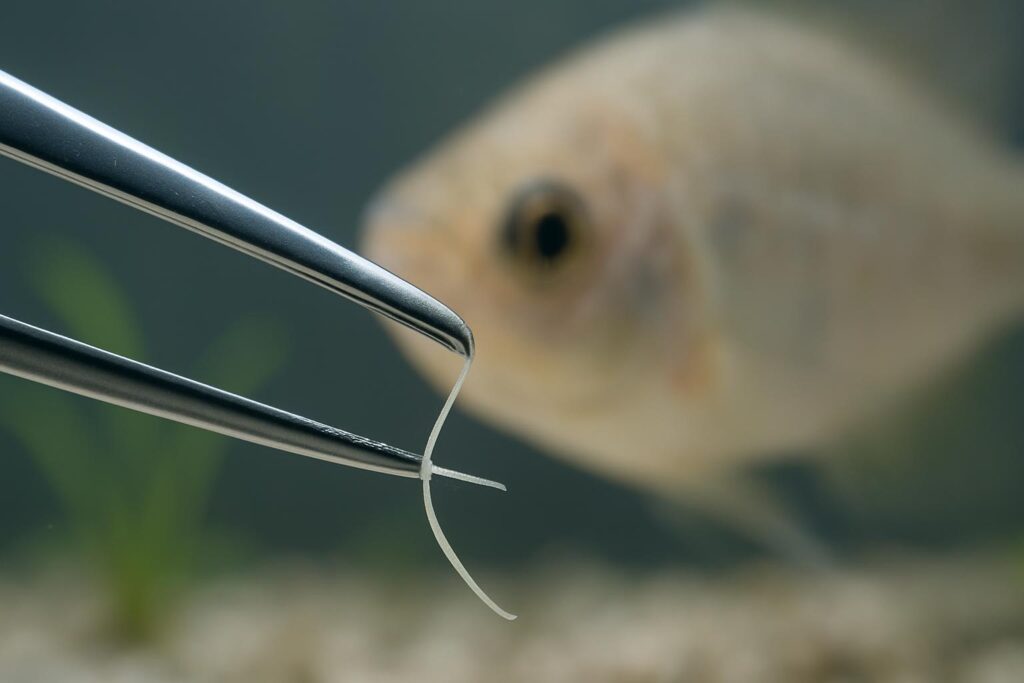
- Thin, pale green or whitish threads 5 to 20 mm protruding from the skin, gills, or fin base
- A small red spot, swelling, or ulcer at the attachment point
- Two tiny sacs near the end of the thread on mature females
- Flashing, rubbing on decor, lethargy, fin clamping
- Heavy breathing if gills are affected
Simple Inspection Method
- Turn off room lights and use a small flashlight at an angle
- Watch from the side for thread-like bodies and red bases
- Take a clear photo and zoom in
- Use a magnifying glass for closer confirmation
Do Not Confuse With Look-Alikes
- Camallanus worms are bright red threads emerging from the anus
- Fungus looks cottony, not a single firm thread with a red base
- Leeches glide over the surface; they do not anchor with a red wound
Immediate Actions Checklist
- Isolate visibly infested fish in a hospital tank if possible
- Stop moving equipment, plants, or media between tanks
- Increase aeration and maintain stable temperature and water quality
- Remove activated carbon and UV during treatment
- Plan to medicate the whole affected system, not only the fish you can see
Quarantine Strategy
If you have invertebrates or sensitive plants in the display tank, move fish to a bare-bones hospital tank for medication. Keep the display fishless for a period to cut the life cycle.
Recommended Fallow Period
Leave the display tank without fish for 4 to 6 weeks. Free-swimming stages cannot survive long without a host. This fallow window adds a safety margin after the last visible case.
Manual Removal: When And How
Manual removal gives instant relief to a fish but only if done correctly. It does not replace full-system treatment.
When To Remove Manually
- There are only a few visible anchor worms
- The fish is strong enough to handle short handling time
- You have antiseptic and a calm, clean workspace ready
Tools You Need
- Fine tweezers or forceps
- Clean, wet towel or soft net for gentle restraint
- Cotton swabs
- Diluted povidone-iodine or diluted hydrogen peroxide for the wound
- Small container with tank water
Step-by-Step
- Wash hands and prepare all tools
- Net the fish and keep it wet at all times
- Grip the worm firmly as close to the skin as possible
- Pull straight out with steady pressure; do not break the body
- Touch the wound briefly with a cotton swab dipped in antiseptic; avoid the gills
- Return the fish to clean, aerated water
If you are not confident or the fish is stressed, skip manual removal and proceed with medication.
Whole-Tank Medication That Works
You must stop new parasites from maturing. Use a product designed for anchor worm that targets chitin formation in crustaceans.
Best-Choice Actives
- Diflubenzuron
- Lufenuron
These ingredients interrupt development and break the life cycle. Choose an aquarium product labeled for anchor worm or crustacean parasites and follow the manufacturer directions exactly.
Important Precautions
- Remove shrimp, crayfish, crabs, and other crustaceans; chitin inhibitors will harm them
- Snails may be sensitive; move them if possible
- Turn off UV and remove carbon during dosing
- Increase aeration and monitor ammonia and nitrite
Dosing Rhythm
- Dose according to label
- Repeat in 10 to 14 days to catch newly emerged juveniles
- Perform partial water changes between doses as the label allows
If You Cannot Get A Chitin Inhibitor
You can use an oxidizing bath to knock back attached parasites and external stages on the fish, then combine with strict tank hygiene. This approach is less reliable than a labeled chitin inhibitor and needs careful handling.
Potassium Permanganate Bath
- Prepare a separate container with 10 mg per liter potassium permanganate
- Place an airstone in the bath
- Move the fish into the bath for up to 30 minutes, watching constantly
- End the bath early if the fish shows distress
- Return fish to clean, conditioned water
Always handle potassium permanganate with care. It stains and is a strong oxidizer. Do not combine it with other treatments. Do not use in heavily planted display tanks.
Salt Baths
Short salt dips can reduce irritation and help some parasites detach, but salt alone does not eliminate anchor worm at all stages.
- Prepare a separate container with 30 grams per liter of non-iodized salt
- Dip the fish for 5 to 10 minutes with strong aeration
- Return the fish to fresh tank water
Use salt dips as supportive care only. Do not rely on salt to clear the infestation.
Support The Wounds And Immune System
Water Quality Targets
- Ammonia and nitrite at zero
- Nitrate as low as practical
- Stable temperature appropriate for the species
Antiseptic And Secondary Infections
After manual removal or a heavy infestation, small wounds can inflame. Touch visible lesions with diluted povidone-iodine or diluted hydrogen peroxide once per day for one to two days. If you see spreading redness, fuzzy growth, or loss of appetite, consider a broad-spectrum antibacterial in a hospital tank and maintain high aeration.
Stress Reduction
- Dim lighting
- Provide hiding spots in the hospital tank
- Feed light, frequent, high-quality meals the fish will finish
Tank Hygiene During Treatment
- Vacuum the substrate thoroughly every few days
- Rinse mechanical filter media in tank water to remove debris
- Remove uneaten food promptly
- Disinfect nets and tools between uses
Larval stages drift. Good mechanical removal reduces the number that find a host.
Treatment Timeline You Can Follow
Day 1
- Confirm diagnosis with visual inspection
- Move fish to a hospital tank if invertebrates are present in the display
- Manual removal of visible parasites if you are prepared
- Dose a labeled diflubenzuron or lufenuron product in the treatment tank
Days 2 to 7
- Monitor fish behavior and wounds
- Vacuum substrate every 2 to 3 days
- Maintain high aeration and stable water
Day 10 to 14
- Repeat the medication dose as directed
- Continue good hygiene and observation
Week 4
- Assess progress; no new threads should appear
- If the display tank was left fishless, the fallow period can end between weeks 4 and 6
Common Mistakes To Avoid
- Treating only the fish you can catch and ignoring the tank
- Stopping after one dose and missing the next wave of juveniles
- Leaving shrimp or crayfish in a medicated system with chitin inhibitors
- Handling fish dry or ripping the parasite body and leaving the head embedded
- Skipping water quality checks during treatment
Prevention That Works Long Term
Quarantine New Fish
- Quarantine all new fish for 4 weeks
- Observe under bright light every few days
- Consider a preventive deworming and general parasite check as needed
Plant And Hardscape Hygiene
- Rinse new plants thoroughly
- Quarantine plants for at least 2 weeks if sourced from outdoor ponds
- Optional dip for hardy plants: potassium permanganate at 10 mg per liter for 20 minutes with a rinse afterward
Live Food Safety
- Avoid wild-collected live foods
- Use trusted commercial sources or culture indoors
Equipment Discipline
- Keep dedicated nets, buckets, and siphons for each tank
- Disinfect tools between systems
Special Notes For Different Setups
Ponds, Goldfish, And Koi
Anchor worm is very common in pond fish. Treat the entire pond system with a suitable product when weather allows stable temperatures. Increase aeration and plan repeat doses. If you keep invertebrates in the pond, house them elsewhere during treatment.
Tropical Community Tanks
Anchor worm is less common but still possible. Small tetras and gouramis may show only rubbing and redness early on. Inspect closely under good light. Use a hospital tank to avoid harming shrimp and snails when using chitin inhibitors.
When To Seek Help
- Multiple fish show breathing difficulty or rapid decline
- Severe ulcers or deep wounds after removal
- No improvement after two full treatment cycles
Aquatic veterinarians and experienced pond professionals can provide sedation for removal, culture-based antibiotics, and precise dosing plans.
Clear Signs Treatment Is Working
- No new threads appearing after the second dose
- Existing wounds shrinking with clean edges
- Fish resuming normal feeding and activity
Summary Action Plan
- Confirm anchor worm visually
- Manual removal only if prepared, then antiseptic
- Medicate the entire affected system with diflubenzuron or lufenuron
- Repeat in 10 to 14 days
- Maintain top water quality and strong aeration
- Vacuum substrate and clean filters regularly
- Leave displays fishless for 4 to 6 weeks if you moved fish to a hospital
- Rebuild biosecurity with quarantine and equipment discipline
Conclusion
Anchor worm looks dramatic, but it follows a predictable life cycle that you can break. Identify it with careful inspection, remove visible parasites if you can, and treat the entire system with a medication that stops development. Support healing with clean water, antiseptic care, and steady feeding. Finish the job with a second dose and strong hygiene. Then close the door on future outbreaks with quarantine and simple biosecurity habits. With a calm plan, your fish can recover fully and your tank can return to a stable, healthy rhythm.
FAQ
Q: What does anchor worm look like on fish?
A: It appears as a thin, pale green or whitish thread 5 to 20 mm protruding from the skin, gills, or fin base, often with a small red spot or ulcer at the attachment point and sometimes two tiny sacs near the end.
Q: Is manual removal safe for anchor worm?
A: Yes, if done carefully by gripping the worm close to the skin and pulling straight out with steady pressure, then touching the wound with diluted antiseptic; if you are not confident or the fish is stressed, skip removal and medicate.
Q: What is the most reliable treatment for anchor worm in a tank?
A: Use a product labeled for anchor worm that contains diflubenzuron or lufenuron, follow the directions, remove invertebrates, and repeat the dose in 10 to 14 days while maintaining strong aeration and water quality.
Q: Will salt alone cure anchor worm?
A: No, short salt dips can reduce irritation but salt alone does not eliminate anchor worm at all stages, so do not rely on salt to clear the infestation.
Q: How long should I leave a display tank fishless after moving fish to a hospital tank?
A: Leave the display tank without fish for 4 to 6 weeks to help break the life cycle before reintroducing fish.