
We are reader supported. When you purchase through links on our site, we may earn an affiliate commission. Also, as an Amazon affiliate, we earn from qualifying purchases.
Aquarium salt is one of the most debated tools in fishkeeping. Some hobbyists use it for every problem. Others never touch it. The truth sits in the middle. When used with a clear goal, the right dose, and the right species, salt can save fish and reduce stress. When used blindly, it can harm plants and sensitive fish. This guide gives you practical, beginner-friendly rules you can apply today. You will learn what aquarium salt is, what it does, exact dosages, how to add it safely, and when you should skip it.
What Aquarium Salt Is and Is Not
What aquarium salt actually is
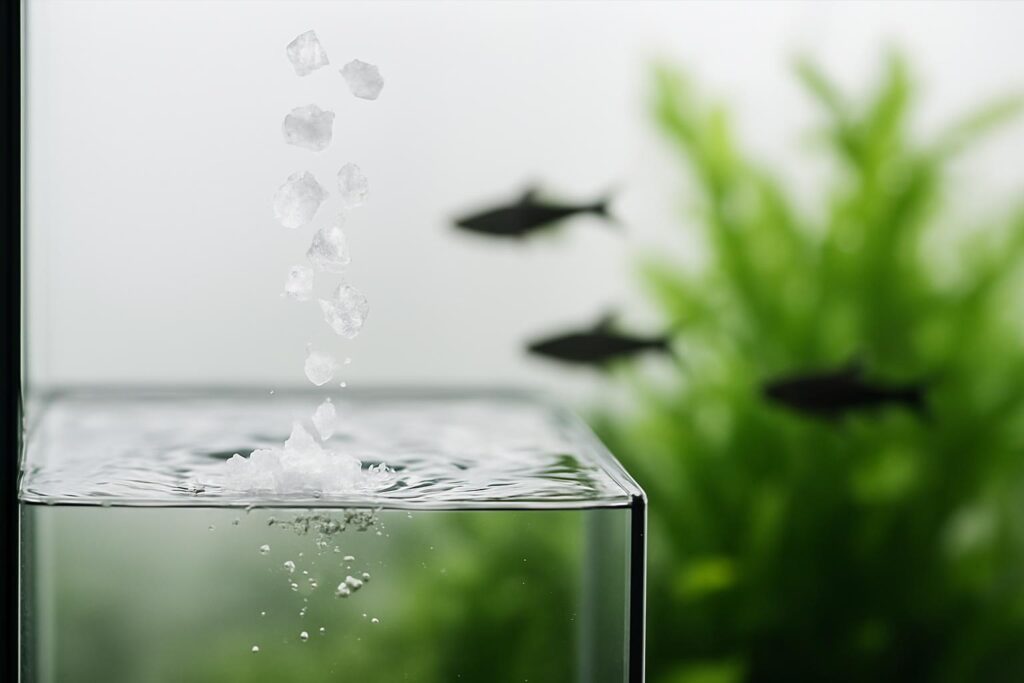
Aquarium salt is plain sodium chloride. It contains no buffers, trace elements, or medications. Its job is simple. It changes the salinity of the water in a controlled way to aid fish health.
Do not confuse it with other salts
Do not use marine salt mix for freshwater fish unless you are keeping brackish species. Marine salt mix changes hardness, pH, and adds minerals designed for marine tanks.
Do not use Epsom salt as a replacement for aquarium salt. Epsom salt is magnesium sulfate. It can help with constipation and swelling in targeted cases, but it does not provide the chloride needed to block nitrite uptake at the gills.
Do not use tonic salts with perfumes, dyes, or unknown additives.
Can I use table or kosher salt
You can use pure sodium chloride that has no flavors, scents, or colorants. Many aquarists use aquarium salt, pickling salt, or plain kosher salt. Iodine in normal table salt is usually not a problem at aquarium doses, but anti‑caking additives vary. If you are not sure, choose a product labeled for aquariums or a food-grade pickling salt with only sodium chloride listed.
Why Salt Helps Freshwater Fish
Osmoregulation support and stress reduction
Freshwater fish constantly lose salts to their surroundings. Mild salinity reduces this loss and helps them balance fluids and electrolytes. This can reduce stress after transport, during healing, and during minor water quality issues. It can also support gill function and energy use.
Protection during nitrite spikes
Nitrite enters through the gills and damages oxygen transport in blood. Chloride from salt competes with nitrite at the gill and blocks uptake. This does not remove nitrite from the water, but it protects fish while you fix the cause. This is one of the most reliable uses of salt in freshwater systems.
External parasites and opportunistic pathogens
Mild to moderate salt levels can reduce the load of some external parasites and protozoa. It also makes the environment less favorable for some fungus and bacteria on the skin and fins. Salt is not a cure for every pathogen, but it can be a strong first step or a supportive treatment alongside targeted medications. It is also less harsh than many chemicals when used correctly.
Wound care and slime coat support
Salt encourages a healthy slime coat and helps damaged tissue manage fluids. This can speed recovery from net damage, minor fin tears, and nips. The goal is to reduce stress and second infections while the fish heals.
Transport, quarantine, and acclimation
Low salt levels can lessen osmotic shock during transport and quarantine. It can stabilize fish that arrive stressed or are adapting to new water. Many breeders and importers use controlled doses during intake.
When You Should Not Use Salt
Sensitive species
Some fish do poorly with salt, especially at moderate or higher doses. Use great caution or avoid salt for the following:
Corydoras catfish, otocinclus, loaches including kuhli and clown, plecos and many other loricariids, some tetras and rasboras, dwarf cichlids such as Apistogramma and rams, discus. Young fry of many species are also sensitive.
These fish may tolerate low levels for short periods, but they are at risk at 0.2 percent and above.
Live plants and aquascapes
Many freshwater plants are salt sensitive. Even 0.1 percent can burn delicate species over time. Mosses, Vallisneria, some stem plants, and carpeting plants often show damage first. If you maintain a planted display, treat fish in a separate hospital tank when possible.
Invertebrates
Freshwater shrimp, most snails, and many microfauna are sensitive to salt. Avoid dosing in tanks that house Caridina, Neocaridina, or sensitive snails. Malaysian trumpet snails and ramshorn snails handle low levels better than some others, but caution still applies.
Softwater species and blackwater setups
Fish adapted to very low mineral content, such as wild-caught discus, some dwarf cichlids, and certain tetras, can be stressed by added salt. Use other methods unless salt is clearly indicated and you can isolate fish.
Do not use salt as a routine additive
Salt is not a daily supplement for a healthy freshwater tank. Routine use can stress plants and sensitive fish and is unnecessary when water quality is good. Use salt with a purpose, at a defined dose and time, then remove it with water changes.
Safe Dosages at a Glance
Salt concentrations are often shown as percent by weight. The most common target ranges for freshwater fish are:
Low or tonic dose: 0.1 percent. This equals 1 gram per liter or about 3.8 grams per US gallon. Often written as 1 tablespoon per 5 gallons. Use for general stress support, mild external issues, and short-term stabilization.
Moderate dose: 0.2 percent. This equals 2 grams per liter or about 7.6 grams per gallon. Often written as 1 tablespoon per 2 to 3 gallons depending on grain size. Use for external parasites and more serious issues in salt-tolerant fish only.
High dose: 0.3 percent. This equals 3 grams per liter or about 11.4 grams per gallon. This is the upper end for many freshwater fish and should be limited to short-term treatment in a hospital tank for species that tolerate salt well such as goldfish, koi, many livebearers, and some cichlids.
Short baths or dips: 10 to 30 grams per liter for 30 seconds to 10 minutes, depending on species and response. This is only for experienced keepers, and it should be done outside the main tank with close observation.
Tablespoons versus grams
Measuring by weight is more accurate. Aim to use a kitchen scale. If you must use volume measures, assume the following approximations:
1 teaspoon coarse aquarium salt is about 5 to 6 grams. 1 tablespoon is about 15 to 18 grams. Grain size changes these numbers, so watch fish closely and err on the low side if uncertain.
Measuring and Adding Salt Correctly
Step 1. Calculate true water volume
Do not use the tank size printed on the box. Subtract for substrate, rocks, wood, and equipment. A quick rule is to take 85 to 90 percent of the nominal volume. For example, a 20 gallon tank often holds 17 to 18 gallons of water once filled with decor.
Step 2. Weigh the salt
Decide on your target percent and multiply by water volume. Examples are provided below. Weigh the total dose if possible. If you cannot weigh it, use the tablespoon estimates and stay conservative.
Step 3. Dissolve before adding
Fill a clean container with tank water. Stir the salt until fully dissolved. Never dump dry crystals into the tank. Local crystals can burn gill tissue or plants.
Step 4. Add in stages
Add one third to one half of the solution. Wait 30 to 60 minutes while observing fish. Add the rest in one or two more portions. Fish adapt better to gradual increases. Use more, smaller portions when dosing above 0.1 percent.
Step 5. Replace only what you remove
Salt does not evaporate. If you do a 30 percent water change, add back 30 percent of the original salt dose after the change. Do not re-dose the entire amount each time, or salinity will creep higher without you noticing.
Step 6. Monitor behavior and water tests
Watch for rapid breathing, flashing, clamped fins, loss of balance, and surface gasping. Test ammonia, nitrite, nitrate, and temperature. Salt is a support, not a substitute for clean water and stable parameters.
Worked Examples
Example 1. Low dose for a 20 gallon tank
Goal: 0.1 percent to support fish after a stressful move.
Assume true water volume is 18 gallons. 0.1 percent equals 3.8 grams per gallon.
18 gallons × 3.8 g per gallon = about 68 grams total. This is roughly 4 tablespoons of coarse aquarium salt. Dissolve, add in two to three portions, and observe fish.
Example 2. Moderate dose for a 55 gallon hospital tank
Goal: 0.2 percent for external parasite support in salt-tolerant fish.
Assume true water volume is 47 gallons. 0.2 percent equals 7.6 grams per gallon.
47 gallons × 7.6 g per gallon = about 357 grams total. This equals about 20 to 24 tablespoons, or 1.25 to 1.5 cups, depending on grain size. Dissolve the salt and add over several hours while closely observing fish. Aerate well.
Example 3. Short salt bath for a single fish
Goal: brief high concentration dip to dislodge external protozoa on a koi.
Use separate container with matched temperature and pH. Prepare 10 grams per liter. Place the fish in the bath for 3 to 5 minutes with strong aeration. Watch continuously. If the fish loses balance or shows extreme stress, move it back to the main tank at once. This method is not for delicate species.
Example 4. Nitrite spike emergency
Goal: protect fish during a sudden nitrite rise in a cycling tank.
Measure nitrite with a reliable test kit. Perform a large water change to dilute nitrite. Then add salt to provide chloride that blocks nitrite uptake at the gills. A practical approach is to dose 0.1 percent as a first step in most community tanks, or up to 0.2 percent for salt-tolerant fish. Continue daily water changes and testing. Reduce feeding. Restore biofilter health. When nitrite returns to zero for a full week, taper off salt through water changes.
How Long to Keep Salt in the Tank
Short-term support
For stress and minor injuries, 0.1 percent for 5 to 7 days is often enough. If fish improve and water quality is stable, begin normal water changes without replacing salt.
External parasites
Use 0.2 to 0.3 percent for 7 to 14 days in a hospital tank for tolerant species. Combine with elevated aeration and careful observation. If you pair salt with a specific medication, follow the most conservative dose recommendations and monitor closely for interactions.
Nitrite protection
Maintain 0.1 to 0.2 percent only as long as nitrite reads above zero. Once the biofilter catches up and nitrite holds at zero for a week, reduce salt gradually through normal water changes. Do not drop from 0.2 percent to zero in one day unless you are moving fish to fresh water for a strong medical reason.
Special Notes by Species Group
Goldfish and koi
These fish tolerate 0.3 percent well in most cases, with strong aeration. Salt is useful during spring startup, parasite treatment, and nitrite events.
Livebearers
Guppies, mollies, platies, and swordtails often benefit from 0.1 to 0.2 percent in quarantine or during minor disease. Many strains handle mild salinity long term, but still avoid routine dosing in planted displays.
African cichlids
Many Malawi and some Tanganyika cichlids handle 0.1 to 0.2 percent. They prefer harder, mineral-rich water. Use dedicated mineral buffers for hardness first. Add salt only if clearly needed.
Tetras, rasboras, dwarf cichlids, and softwater species
Use 0.1 percent with care and for short durations only. Avoid 0.2 percent and higher unless you isolate in a hospital tank and the species is known to tolerate it.
Catfish and loaches
Corydoras, otos, plecos, and loaches are sensitive. Avoid salt unless you have no alternative and you keep the dose very low and brief. Hospital tanks without salt are better for these fish.
Practical Tips for Success
Good aeration is essential
Salt slightly reduces oxygen solubility and can increase fish oxygen demand when fighting disease. Add an air stone or increase filter agitation during any salt treatment.
Temperature and salt
Do not combine high temperatures and high salt in sensitive species. For example, many fish tolerate 0.1 to 0.2 percent at normal temperatures but may struggle if you also raise heat above 30 C. Choose one lever at a time unless the species is known to handle both.
Salt and the biofilter
Most freshwater nitrifying bacteria handle up to 0.3 percent without collapse, but some temporary slowdown can occur. Monitor ammonia and nitrite and be ready to do water changes. Never rely on salt to substitute for an established biofilter.
Plants and alternatives
If you run a planted aquarium, consider moving fish to a bare-bottom hospital tank for treatment. In the display, use improved maintenance, targeted medications, or UV sterilization as needed rather than salt.
Keep records
Write down date, dose, species, behavior, and test results. This saves fish during future problems and prevents accidental overdosing during water changes.
Common Mistakes to Avoid
Adding the full dose at once
Rapid salinity swings can shock fish. Split the dose into multiple additions over several hours.
Redosing the full amount after every water change
Only replace the amount removed with the water change. Salt does not evaporate. Forgetting this leads to creeping salinity and plant or fish stress.
Using salt as a cure-all
Salt does not fix ammonia burns, filter crashes, or bacterial infections that require targeted antibiotics. Always address the root cause. Test water. Improve husbandry.
Using the wrong salt product
Do not use marine mix, scented bath salts, or rock salt with unknown contaminants. Stick to pure sodium chloride.
Ignoring species limits
What works for goldfish can harm corydoras or shrimp. Dose for the most sensitive organism in the tank or move fish to a hospital tank.
Quick Dosage Reference
0.1 percent
1 g per liter, 3.8 g per gallon. About 1 tablespoon per 5 gallons. Use for stress support, nitrite protection in community tanks, and mild external issues. Usually safe for short periods in many community fish. Be cautious with plants and invertebrates.
0.2 percent
2 g per liter, 7.6 g per gallon. About 1 tablespoon per 2 to 3 gallons. Use in hospital tanks for tolerant species to target external parasites and tougher cases.
0.3 percent
3 g per liter, 11.4 g per gallon. High end for short-term use in salt-tolerant species only. Increase aeration. Watch closely.
Short baths
10 to 30 g per liter for minutes only, with direct observation. Not for beginners without supervision or species-specific guidance.
Troubleshooting and Decision Guide
If fish are breathing fast and nitrite tests positive
Do an immediate 50 percent water change. Add 0.1 percent salt. Increase aeration. Reduce feeding. Test daily and keep nitrite near zero with water changes. Maintain salt until nitrite remains zero for a week, then taper off.
If a fish has fin nips or minor fungus on the edge of a wound
Use 0.1 percent in a hospital tank for 5 to 7 days, plus clean water and stable temperature. If no improvement in 48 to 72 hours, reassess diagnosis and consider targeted medications.
If you see visible parasites on salt-tolerant fish
Consider 0.2 to 0.3 percent salt in a hospital tank with strong aeration and daily observation, or a short controlled salt bath. Confirm the parasite and follow a complete treatment cycle to catch all life stages.
If you keep plants or sensitive fish
Avoid dosing the display. Move fish to a hospital tank if salt is clearly beneficial. In the display, focus on mechanical removal, water changes, stable parameters, and species-safe medications.
Conclusion
Aquarium salt is a focused tool, not a cure-all. It can protect fish during nitrite spikes, reduce stress, support healing, and help control external parasites when used with care. It can also harm plants and sensitive species if used without a plan. Start with a clear goal. Confirm that your fish can handle the chosen dose. Measure the true water volume. Dissolve and add gradually. Replace only what you remove with water changes. Watch fish and test water every step of the way.
If you treat with intention, salt becomes a reliable part of your toolkit. Keep it for the right job, at the right time, and your fish will show you the results through calmer behavior, steady breathing, and healthier recovery.