
We are reader supported. When you purchase through links on our site, we may earn an affiliate commission. Also, as an Amazon affiliate, we earn from qualifying purchases.
Clear water and healthy fish often depend on the right use of UV equipment. Many hobbyists hear both UV sterilizer and UV clarifier and assume they are the same. They are not. The goal, dose, flow rate, and expected results are different. If you match the tool to the job, you get fast results and fewer problems. If you pick the wrong one, you waste money and time. This guide shows the difference in plain language and helps you choose with confidence.
Quick answer
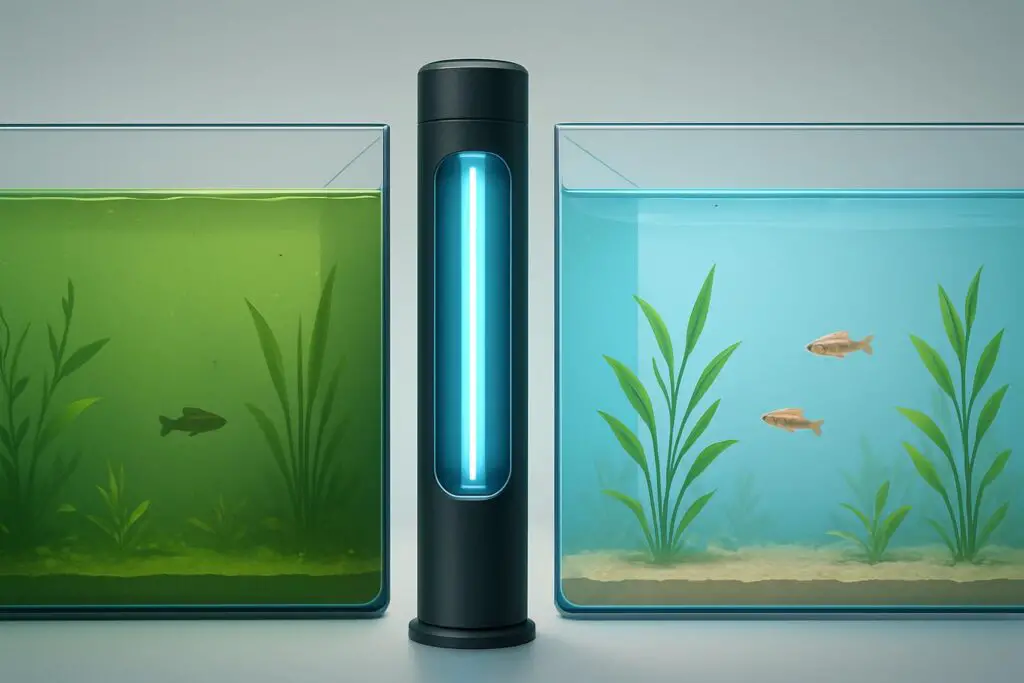
A UV clarifier is for green water and fine haze. It uses a lower UV dose at higher flow to clear free floating algae. A UV sterilizer is for disease control in the water column. It uses a higher UV dose at lower flow to inactivate bacteria, viruses, and free swimming parasite stages. Some units can do both if sized well and paired with adjustable flow.
What UV does in aquariums
How UV-C works
UV-C light damages the DNA or RNA of organisms that pass by the lamp. This stops them from reproducing. It only works on what flows through the chamber. It does not treat fish skin, gills, or surfaces. It does not remove ammonia, nitrite, or nitrate. It is not a filter. It is a polishing and risk reduction tool inside your filtration loop.
Limits of UV
UV only affects free floating organisms small enough to travel through the chamber. It will not remove debris, detritus, or mulm. It will not cure a parasite once it is embedded in a fish. It will not fix poor maintenance or overstocking. It supports good husbandry. It does not replace it.
UV clarifier
Goal
Clear green water and fine suspended algae that make the water look tinted or cloudy. This is common in ponds and sunlit aquariums.
How it achieves the goal
A clarifier uses a lower UV dose and a higher flow rate. More water passes the lamp per hour. The unit targets simple algae cells that are easy to inactivate. After a few days, cells can no longer reproduce and the filter removes the dead and clumped material. Visibility improves steadily.
Setup notes
Place the unit after mechanical filtration so water is free of large particles. This improves UV penetration and protects the quartz sleeve. Use moderate to high flow so the whole tank or pond volume passes through many times a day. Keep the quartz sleeve clean for steady output.
Expected results
Green water usually clears in 3 to 7 days. Heavier blooms can take 1 to 2 weeks. If clarity does not improve, the flow is likely too slow to circulate enough water, the lamp is old, or the sleeve is dirty.
UV sterilizer
Goal
Reduce the number of waterborne pathogens and parasites in their free swimming stages. Lower the risk of disease spread. Support quarantine. Support systems with high fish density or frequent new arrivals.
How it achieves the goal
A sterilizer uses a higher UV dose and a slower flow rate. It increases contact time with the UV-C light to deliver a stronger dose. This is important for tougher organisms such as protozoa and some bacteria. Slower flow and higher wattage raise the inactivation rate per pass.
Setup notes
Plumb the unit after mechanical filtration and before the return to the tank. Use a dedicated pump or a valve to control flow precisely. Keep the housing opaque to prevent stray light. Size the lamp and chamber to achieve the needed dose at the actual flow you will run.
Expected results
You will not see a dramatic visual change unless algae are present. Instead, you reduce the pathogen load in the water. This lowers transmission risk and can support recovery in combination with proper treatment and care. It is most effective when run continuously in quarantine or during outbreaks.
Key differences that matter
Target organisms
Clarifier targets free floating algae. Sterilizer targets bacteria, viruses, and free swimming parasite stages in the water column. Both work only on what passes through the chamber.
UV dose and flow rate
Clarifier uses a lower dose and higher flow for quick turnover. Sterilizer uses a higher dose and lower flow for stronger inactivation. Dose depends on lamp wattage, chamber design, water clarity, and dwell time. Flow rate is the easiest knob you control.
Sizing and cost
Clarifiers are smaller and cheaper per gallon. Sterilizers are larger and cost more because they need more wattage and a chamber that supports slow, even exposure. Undersizing is the most common cause of poor results with sterilizers.
Outcome and timeline
Clarifier improves visibility within days. Sterilizer improves biosecurity and disease risk over time. You may not see visible changes in the water unless you also had algae.
When to choose a clarifier
Pick a clarifier if your main problem is green water. This is common in ponds, tanks near windows, or systems with long photoperiods and limited nutrient control. A clarifier is a fast fix for suspended algae while you balance light and nutrients. It is also a good choice if your tank is healthy but you want consistently clear water for viewing and photos.
Great fits for clarifiers
Outdoor ponds with algae blooms. Freshwater community tanks with haze. Display aquariums where visual clarity is a priority. New tank setups where microalgae often spike in early weeks.
When to choose a sterilizer
Pick a sterilizer if disease prevention or control is the priority. This includes quarantine systems, fish rooms with frequent new fish, high value collections, and heavily stocked aquariums. A sterilizer helps reduce the spread of pathogens through the water column. It does not replace quarantine or treatment. It improves odds when paired with good practice.
Great fits for sterilizers
Quarantine tanks that cycle many fish. Reef tanks with high fish density. Retail and breeding systems. Any setup where new fish enter often and biosecurity matters.
Can one unit do both
Yes, if the unit is sized generously and you can change the flow. Run faster flow for clarifying green water. Run slower flow for sterilization. This works best with a larger chamber and higher wattage because they give you enough range to hit both targets. Use a valve or a controllable pump to switch modes. Plan and record the flow settings that match each goal.
Sizing guidelines that actually help
Start with your goal. Then match wattage and flow to the tank volume.
Simple starting points
- Clarifier use: about 1 to 2 watts of UV per 10 gallons
- Sterilizer use: about 3 to 5 watts of UV per 10 gallons
- Clarifier flow: 2 to 3 tank volumes per hour through the UV loop
- Sterilizer flow: about 1 tank volume per hour or less through the UV loop
These are starting points, not rigid rules. Clear water improves UV effectiveness. Dirty water reduces it. A larger chamber with a long water path improves exposure. Compact units need stricter flow control.
Examples
For a 55 gallon freshwater tank with green water, a 6 to 11 watt clarifier at 120 to 180 gallons per hour through the unit is a practical start. For the same tank as a sterilizer, a 15 to 25 watt unit at about 55 gallons per hour is a practical start. If the unit is larger, you gain margin and can tune faster or slower as needed.
Installation tips that avoid headaches
Plumbing order
Place the UV after mechanical filtration and before the return to the tank. This keeps debris from blocking light and improves dose. In canister setups, run the UV on the return side. In sump setups, feed the UV from a clean section and return to the final chamber.
Prefilter and flow control
Use a sponge or fine filter pad upstream to catch fines. Install a valve on the UV feed line so you can tune flow. If the pump is controllable, set a repeatable speed for clarifying and another for sterilizing. Label the settings.
Keep the sleeve clean
Algae film and mineral scale cut UV output fast. Wipe the quartz sleeve gently during routine maintenance. If you have hard water, expect more frequent cleaning. Always unplug the unit and allow it to cool before service.
Lamp life
UV-C lamps drop in useful output long before they burn out. Replace the lamp every 9 to 12 months of use for consistent results. Make a reminder on your calendar. Keep a spare on hand to avoid gaps.
Protect O rings and seals
Inspect O rings during service. Replace if flattened, cracked, or sticky. Use a thin film of aquarium safe lubricant to prevent binding.
Operating schedule
For a clarifier, run the unit continuously until the water is clear, then keep it on if your light and nutrient balance tends to trigger blooms. For a sterilizer, continuous operation brings the most benefit in quarantine and high risk systems. In stable display tanks, some keep it on full time, others run it during periods of stress or after new introductions. Choose one approach and be consistent.
What UV does not do
UV does not replace water changes. UV does not remove dissolved nutrients. UV does not cure fish of embedded parasites or infections. UV does not protect fish on contact. It only reduces the number of organisms that pass through the chamber. You still need good filtration, steady parameters, and quarantine.
Notes for reef and planted tanks
UV does not block light used by corals or plants. It only affects water that flows inside the UV chamber. It can reduce free floating plankton and bacteria, which may slightly change water clarity and nutrient dynamics. Most systems handle this without issue. If you culture live plankton or rely on very high levels of waterborne microfauna, use UV part time or not at all.
Troubleshooting poor results
Water still green
Check lamp age. Clean the sleeve. Increase turnover through the UV. Verify actual flow rate. Confirm placement after mechanical filtration. If the tank sits in direct sun, reduce light exposure while the clarifier works.
Fish still getting sick
Confirm that you are running sterilizer flow, not clarifier flow. Upgrade wattage if the chamber is small. Run the unit continuously. Improve quarantine and nutrition. Treat sick fish as needed. UV supports a plan. It is not the plan.
Unit feels hot
Most housings run warm. Ensure there is water flow whenever the lamp is on. Never dry fire a UV lamp. Verify that tubing is not kinked and that the pump is delivering the intended flow.
Cost of ownership
The main costs are the lamp and electricity. Small clarifiers draw a few watts and are inexpensive to run. Larger sterilizers draw more power but still cost less than many heaters or lights. Lamp replacement once a year is the predictable expense. Cleaning supplies and occasional O rings add little. The gain in clarity or biosecurity often justifies the cost.
Safety basics
UV-C light can harm eyes and skin. Never power the unit when it is open. Unplug before service. Allow the lamp and sleeve to cool before handling. Keep the unit out of reach of children and pets. Check for leaks after reassembly.
Putting it all together
Pick a clarifier if your target is green water. Pick a sterilizer if your target is disease risk. Size the unit to your volume and run the right flow for the goal. Keep the sleeve clean and change the lamp on schedule. Place the UV after mechanical filtration and control the flow with a valve or pump. Do this and you will see clear water when you need it and improved biosecurity when it matters.
Conclusion
The difference between a UV clarifier and a UV sterilizer is purpose and dose. A clarifier focuses on visible clarity by targeting algae with lower dose and higher flow. A sterilizer focuses on pathogen control by using higher dose and lower flow. Many hobbyists can use one well sized unit for both jobs if they can adjust flow. The rest comes down to placement, maintenance, and consistency. Decide the goal, size correctly, tune the flow, and keep the sleeve clean. That is how UV pays off in real aquariums and ponds.
FAQ
Q: Do I need a UV sterilizer or a UV clarifier
A: Choose a clarifier if your main issue is green water. Choose a sterilizer if your goal is disease control in the water column.
Q: Will UV clear green water
A: Yes. A UV clarifier clears green water by targeting free floating algae with lower dose and higher flow.
Q: Can one UV unit do both clarifying and sterilizing
A: Yes, if it is sized generously and you can adjust the flow. Run faster flow for clarifying and slower flow for sterilizing.
Q: Does UV harm beneficial bacteria
A: UV does not harm bacteria living on surfaces like filter media. It only affects free floating organisms that pass through the chamber.
Q: How often should I replace the UV lamp
A: Replace the lamp every 9 to 12 months of use for consistent output.