
We are reader supported. When you purchase through links on our site, we may earn an affiliate commission. Also, as an Amazon affiliate, we earn from qualifying purchases.
If your angelfish has suddenly started hiding behind plants, filters, or in a corner, you are not alone. This is one of the most common questions new aquarists ask. The good news is that angelfish usually hide for reasons you can understand and fix. In this guide, you will learn the most likely causes and the exact steps to help your angel feel safe, visible, and active again. The language here is simple and beginner-friendly, but the tips are what experienced aquarists use every day.
Understanding Angelfish Behavior
Natural shy moments
Angelfish are cichlids, and cichlids are thoughtful fish. They use cover to feel safe. Short periods of hiding can be normal, especially right after lights turn on, after you work in the tank, or when something in the room startles them. A new angelfish may hide for several days as it learns the tank and the people around it. This behavior alone is not a problem if eating and breathing are normal.
Daily rhythm and territory
Angelfish are diurnal. They are more active during the day and calmer at night. They also like to pick a territory, often near a tall plant, a piece of wood, or a filter pipe. If another fish bothers them, they may stay close to their chosen spot. A tank with broken sightlines and tall decorations lets them feel protected while still being visible.
Differences between juveniles and adults
Young angels are usually cautious and will dash to cover more often. As they grow and learn your routine, they come out more. Adult angels may hide when pairing up to breed or when bullied by a larger or more dominant fish. Knowing the age and size of your angelfish helps you read their behavior better.
Common Causes of Hiding
New tank stress and acclimation
Moving is stressful for fish. If you just brought your angelfish home or changed its tank, hiding is expected. Sudden changes in temperature, pH, or hardness can shock the fish. Fast movement around the tank, tapping on the glass, or bright lights on day one add to the stress. Give the fish quiet time, dim lighting, and gentle acclimation to reduce hiding.
Poor water quality
Angelfish are sensitive to ammonia and nitrite. Even small amounts can burn gills and make the fish seek cover. High nitrate over time also causes stress. The target numbers are simple: ammonia 0 ppm, nitrite 0 ppm, and nitrate below 20 ppm, with under 40 ppm as an upper limit in a pinch. An uncycled or newly cycled tank is a common cause of hiding and gasping. Testing your water is the fastest way to rule this out.
Inadequate tank size and layout
Angelfish are tall fish. A tank that is too small in height or volume makes them feel cramped. A single angelfish can live in a 20 gallon tall tank, but a pair is happier in 30 gallons or more, and a community with angels is best at 55 gallons and up. Tanks with only open space and no cover cause stress. Without plants, wood, or vertical structures, an angelfish has nowhere to retreat except corners. Corners are the most common hiding spot in barren tanks.
Aggressive tankmates and bullying
Fin-nipping fish, fast chasers, or other cichlids can intimidate angels. Tiger barbs, serpae tetras, some danios, and large aggressive cichlids are frequent bullies. Even other angels can chase. A bullied fish will hide, clamp its fins, and avoid food when others are near. Watch for pecking order fights at feeding time and in the evening. If your angel only hides when certain fish are active, you may have a compatibility problem.
Mating and breeding behavior
When a pair forms, they choose a spawning site and defend it. They may hide more, especially in thick plants or behind a flat surface like a filter intake or slate. The pair may also chase away tankmates, which can push the rest of the fish to the opposite side of the tank. In this case, hiding is part of normal breeding behavior.
Illness and parasites
Sick fish seek cover. Look for other signs: clamped fins, rapid breathing, white spots like salt (ich), a gold dust look (velvet), ragged fins, red streaks, bloating, or white stringy feces. A fish that hides and refuses food for more than two days may be ill. Illness often links back to stress, poor water quality, or new arrivals that were not quarantined.
Strong water flow or noisy equipment
Angelfish prefer calm to moderate flow. A powerful filter outlet or wavemaker can push them to calmer corners. Loud rattling lids, buzzing air pumps, or rumbling canisters also stress fish. Vibration travels well through stands and glass. If your angel hides near the quietest spot in the tank, noise or flow might be the reason.
Lighting that is too bright or inconsistent
Angels like soft, even light. A bare tank with intense LEDs can feel harsh. Sudden on-off lighting, direct sunlight, or long photoperiods make fish uneasy. Many fish hide when lights snap on suddenly. Floating plants and a timer help your fish predict when it is safe to explore.
Temperature swings
Angelfish are warm-water fish. They do best around 78 to 82 degrees Fahrenheit, which is about 25.5 to 28 degrees Celsius. Chilly rooms, heaters that flick on and off, or big changes during water changes can cause hiding. Rapid shifts of more than 2 degrees in a short time are stressful.
Hunger, diet, and feeding routine
Angels are more confident when they trust feeding time. Irregular feeding, bland diets, or food that sinks too fast can keep them from eating well. A fish that misses meals gets weak and hides. Variety matters. Quality flakes or small pellets plus frozen or live foods build confidence and energy.
Seasonal and household changes
New pets, loud music, parties, kids playing close to the tank, or heavy foot traffic can spook fish. Seasonal changes like dry winter air can increase evaporation and change water chemistry. Even a new air freshener or cleaning spray near the tank can cause stress. If the room changed, your angel noticed it.
Loneliness or overcrowding
A single angelfish can do well with calm community fish, but some individuals feel safer with another angel or two. On the flip side, too many fish, or too many dominant angels in a small tank, leads to constant stress. Both extremes can cause hiding. The right number depends on your tank size and aquascape.
How to Diagnose the Reason
Observe body language
Start with a slow look at the fish. Clamped fins, the dorsal or anal fins held tight to the body, show tension. Rapid gill movement signals stress or poor water. A curved spine, tilted posture, or rubbing on objects can hint at disease. If the fish comes out to eat when you step back from the tank, fear is likely. If it ignores food completely, illness is more likely.
Quick water tests and what numbers mean
Use liquid test kits for ammonia, nitrite, nitrate, and pH. Ammonia and nitrite must be zero. Nitrate should be below 20 ppm for comfort. pH can be 6.5 to 7.5 for angels, with stability more important than a specific value. If ammonia or nitrite is above zero, the fish is stressed and hiding for a good reason. Do a partial water change and fix the cycle. Record your test results to spot patterns over time.
Inspect the environment
Check heater temperature and verify it with a second thermometer. Look at filter output. If plants sway hard, flow is strong. Listen for buzzing or rattling. Note the lighting schedule. If lights come on suddenly while the room is dark, fish are often startled. Look for enough hiding places and vertical cover. If the tank is bare, the fish is using corners as fake plants.
Review recent changes
Think about what changed in the last two weeks. New fish? Deeper cleaning? Moved decor? Switched foods? Big water change with colder water? Additives or treatments? Many hiding problems start right after a change. If you can connect the timeline, you can target the fix.
Rule out diseases
If your angelfish hides and shows spots, fuzz, swelling, red sores, or stringy feces, consider disease first. Quarantine if possible. Take clear notes on symptoms, speed of breathing, and appetite. The earlier you identify disease, the easier the treatment and the faster your fish will return to normal behavior.
Solutions and Fixes
Make a calm first week for new fish
Dim the lights for the first 24 to 48 hours. Use a timer so the photoperiod is predictable. Feed lightly and remove uneaten food. Keep the room quiet, and avoid tapping the glass. If you have a bare tank, add temporary cover like tall plastic plants so the fish can claim a spot. Allow the fish to explore on its timeline.
Improve water parameters
Do a partial water change of 25 to 40 percent with dechlorinated water that matches temperature within 1 to 2 degrees. Keep ammonia and nitrite at zero. If your tank is not fully cycled, add a trusted bottled bacteria and reduce feeding for a few days. Keep nitrate below 20 ppm with regular weekly changes and good filter maintenance. Rinse filter media in tank water, not tap water, to protect beneficial bacteria.
Redesign the aquascape for confidence
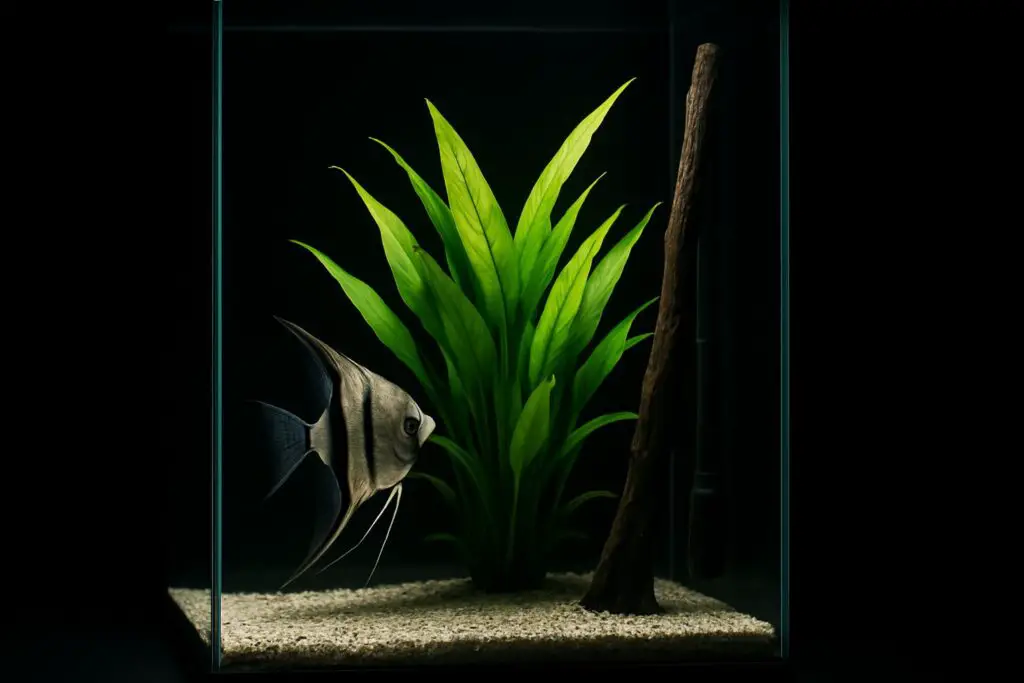
Angels love vertical structures. Add tall plants like Amazon swords and vallisneria. Use driftwood that reaches toward the surface. Include a flat rock or slate angled against the glass. Break line of sight so a chased fish can duck behind cover and feel safe. Darker substrate and a black background reduce reflections and make fish feel secure.
Pick suitable tankmates
Choose peaceful, non-nipping species. Good options include larger-bodied tetras kept in groups, corydoras catfish, rummynose tetras in a school, and a bristlenose pleco. Avoid tiger barbs, serpae tetras, red-tailed sharks, and long-finned or aggressive cichlids. Be careful with small neon tetras, as adult angels may view them as snacks. Watch feeding time to see who pushes whom. If a fish repeatedly harasses your angel, rehome or separate.
Manage lighting and photoperiod
Run lights for 8 to 10 hours a day. Use a timer so the schedule is consistent. If your light is harsh, lower intensity or add floating plants such as frogbit or water lettuce to diffuse it. Turn on room lights 10 minutes before the tank lights, and turn off the tank lights before the room goes dark. This soft transition reduces startle responses.
Tame the flow and reduce noise
Angle the filter outlet against the glass or add a spray bar to spread the flow. Place a prefilter sponge on the intake to reduce suction and noise. Cushion vibrating equipment with rubber pads. Ensure lids sit flat and do not rattle. Gentle water movement and quiet operation make angels brave.
Feeding plan for trust
Feed small amounts twice a day at the same times. Offer a mix of quality pellets or flakes with frozen foods like brine shrimp, bloodworms, or daphnia two to three times per week. Soak dry food briefly so it sinks slowly and gives your angel time to eat. Remove leftover food after a few minutes. A regular routine helps shy fish come forward at feeding time.
Treat disease safely
If you see ich, use a proven ich medication and increase aeration. Angels tolerate short-term warmth, so raising temperature slowly to about 86 degrees Fahrenheit, or 30 degrees Celsius, for a few days can speed the ich life cycle, but always follow medication directions and monitor oxygen. For internal parasites suggested by white stringy feces, consider a food-based antiparasitic with ingredients like metronidazole and focus on water quality. Remove carbon from filters during treatment if the medicine instructions say so. Quarantine sick fish when possible to protect the main tank.
Temperature stability
Use a reliable heater and a simple thermometer you can read at a glance. Keep the tank between 78 and 82 degrees Fahrenheit, or 25.5 to 28 degrees Celsius. Match new water temperature during changes. If your home is cold at night, consider a heater guard and a backup temperature alarm. Stable warmth builds confidence.
Breeding setup and strategies
If your angels are pairing and hiding more, give them a calm corner. Provide a vertical spawning surface like slate or a filter intake shield. Reduce foot traffic during spawning. If the pair becomes aggressive toward tankmates, consider moving them to a separate breeding tank. Once breeding behavior passes, activity levels often return to normal.
Use of dither fish
Sometimes shy angels gain confidence from relaxed, active schooling fish. Calm dither fish that swim in the open signal that the area is safe. Choose peaceful species that are large enough not to be eaten and not prone to fin nipping. Keep them in proper group sizes so they behave naturally. When dithers swim boldly in the open, angelfish tend to follow.
When to rehome or separate
If you have tried layout changes, water fixes, and better companions but the angelfish still hides due to constant bullying, separation is kindest. Move the aggressor or the angelfish to another suitable tank. Rehoming is not a failure; it is responsible fishkeeping. A safe fish is a visible fish.
Preventive Care and Routine
Daily checklist
Look at your fish for one minute each day. Are fins open? Is the fish breathing normally? Did it eat? Check temperature. Listen for unusual equipment noise. Small daily checks catch problems before they cause hiding.
Weekly and monthly tasks
Do a 25 to 40 percent water change weekly. Vacuum lightly around debris without removing all biofilm. Test water for ammonia, nitrite, and nitrate. Clean algae on glass with a magnet tool. Rinse filter sponges in a bucket of tank water once a month or as flow slows. Trim plants to keep open swimming space. Consistent maintenance prevents stress spikes that lead to hiding.
Quarantine best practices
Quarantine new fish for 2 to 4 weeks in a separate tank. Observe eating, breathing, and feces. Treat issues before moving fish to the display tank. Quarantine prevents surprise diseases that cause hiding and illness in the main aquarium.
Travel and holiday planning
If you travel, set lights on a timer and arrange for minimal feeding, ideally every other day in small amounts by a helper. Do a water change before you leave. Avoid adding new fish or making big changes right before a trip. A stable, quiet tank prevents stress while you are away.
FAQs
How long is normal for a new angelfish to hide?
It can take three to seven days for a new angelfish to feel safe. During this time, keep lights softer, feed lightly, and avoid sudden movements near the tank. If the fish still refuses food after 72 hours or shows illness signs, start diagnosis.
Should I add more hiding spots if the fish hides too much?
Yes, but do it smartly. Add tall plants and vertical structures that break sightlines. This counterintuitive step often brings the fish out because it feels protected. Without cover, corners become the only option, which increases hiding.
Can two angelfish live together peacefully?
A bonded pair usually does well in a tank of 30 gallons or more. Two unpaired angels can fight, especially in small tanks. If you want multiple angels, use a larger tank with clear territories, or keep a confirmed pair.
Will bright light make my angelfish hide?
Very bright or direct light can. Use a timer and keep lights on for 8 to 10 hours. Add floating plants or reduce intensity. Provide shade zones so the fish can choose its comfort level.
Are small tetras safe with angelfish?
Young angels are usually fine with small tetras, but adult angels may eat very small fish. If you want tetras, choose larger schooling types, keep them in groups, and add them before the angels grow large.
Is a strong filter bad for angelfish?
Strong flow is uncomfortable for angels. They prefer gentle to moderate movement. You can diffuse the output with a spray bar, point it at the glass, or block it slightly with decor. Keep oxygenation strong but current calm.
What is the ideal temperature and pH for angelfish?
Keep temperature at 78 to 82 degrees Fahrenheit, or 25.5 to 28 degrees Celsius. Maintain pH between 6.5 and 7.5. Stability is more important than chasing exact numbers. Sudden swings cause stress and hiding.
How often should I feed to reduce shyness?
Feed small amounts twice daily at consistent times. Use a mix of quality dry food with frozen or live food a few times a week. Regular, positive feeding builds trust and helps your angel associate you with good things.
Conclusion
Angelfish hide for clear reasons, and most of those reasons can be fixed. Start by checking water quality and temperature. Look at flow, lighting, and the tank layout. Watch for bullying. Consider recent changes, and observe the fish’s body language for signs of disease. Then apply simple solutions: gentle acclimation, regular maintenance, stable warmth, soft lighting, and a calm environment with tall plants and broken sightlines. Choose peaceful tankmates, feed a varied diet on a schedule, and quarantine new arrivals. With patience and a steady routine, your angelfish will stop hugging the corners and start gliding proudly in the open, showing off the graceful behavior that made you love the species in the first place.