
We are reader supported. When you purchase through links on our site, we may earn an affiliate commission. Also, as an Amazon affiliate, we earn from qualifying purchases.
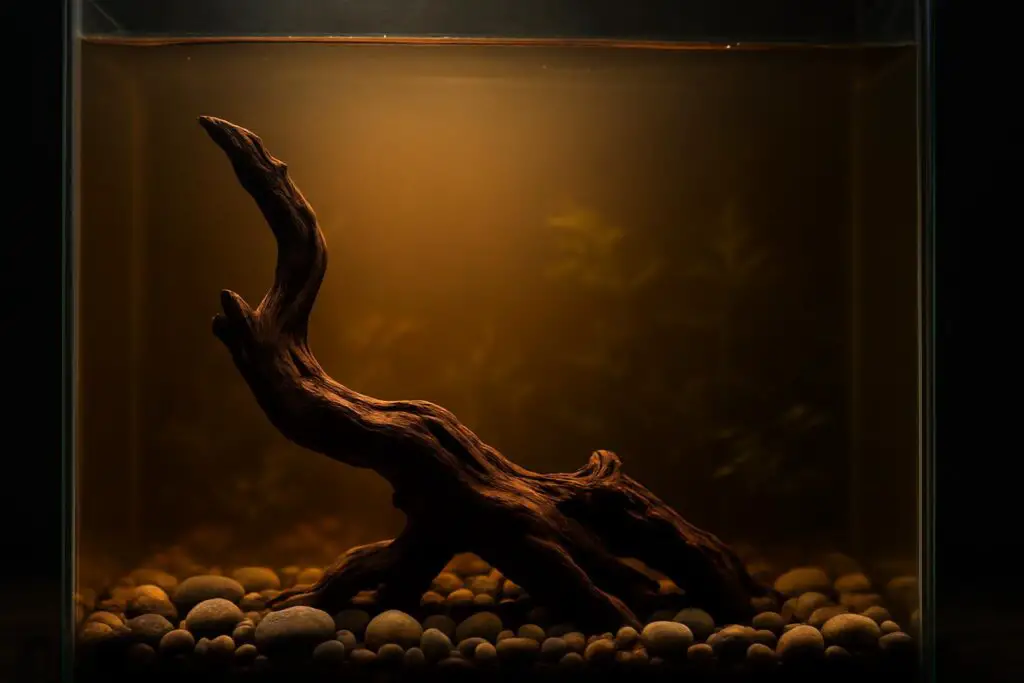
You added a beautiful piece of driftwood to your aquarium and the water turned brown. This is a common moment of surprise for new aquarists. The good news is that the brown tint is normal, usually harmless, and even beneficial in many setups. In this guide you will learn why driftwood stains water, what it means for your fish and plants, how to manage it if you prefer clear water, and how to use it to your advantage if you want a natural blackwater look.
What Causes Brown Water After Adding Driftwood
The brown color comes from tannins and related humic substances that leach out of wood as it hydrates. Think of it as a tea made from wood. Tannins are natural compounds found in bark and heartwood. When wood sits in water, these compounds dissolve slowly and stain the water a yellow to amber color. The intensity depends on the type of wood, the piece size, how fresh the wood is, your water chemistry, and how often you change water.
Why Wood Releases Tannins
Driftwood is plant material that once provided structure and defense for a tree or shrub. Tannins helped the plant resist decay and pests. Once submerged, these compounds diffuse into the water. Freshly cut or recently processed pieces tend to leach more. Old, well-cured or previously soaked pieces leach less. Harder, denser woods often release tannins for longer periods but at a slower rate compared to softer, porous woods that can dump a lot early and then taper off.
Is Brown Water Harmful
In general, no. Tannins are common in natural streams and tropical forest waters. They can have mild antibacterial and antifungal effects and can help fish feel secure under subdued lighting. Many species from soft, acidic habitats thrive in tannin-stained water. However, tannins also slightly acidify water, which can be an issue for tanks with very low alkalinity or for fish that prefer hard, alkaline water. The key is to know your water parameters and stock preferences.
How Tannins Affect pH and Water Chemistry
Weak Acids and Alkalinity Buffering
Tannins and humic acids are weak organic acids. They can lower pH a little, but their effect depends on alkalinity, also called carbonate hardness or KH. If your KH is moderate to high, typically 4 dKH or more, the pH shift from driftwood tannins is usually small. If your KH is low, the pH may drop more, and the water can become less stable. This is not automatically dangerous, but it does require monitoring.
When to Be Cautious
Be cautious if you keep fish that prefer hard, alkaline water such as African rift lake cichlids or many livebearers. In those setups, heavy tannins and subsequent pH drop are not ideal. Also be cautious in nano tanks with low buffering capacity, where small amounts of acid may cause noticeable swings. You can still use driftwood, but you may need to manage tannins proactively and maintain stable KH.
How to Tell Tannins from Other Water Problems
Tea Tint vs Cloudy Bloom
Tannin discoloration looks like clear tea. You can still see across the tank, but everything has a yellow, amber, or light brown tint. If the water is milky white, that is likely a bacterial bloom from new tank syndrome or a disturbance to the biofilter. If the water is green, that is an algae bloom. Those are different issues with different fixes.
Simple Clues
With tannins, the water is usually clear but tinted. The glass does not build up slimy green patches associated with algae. The smell tends to be earthy or woody, not sour or rotten. Test kits may show a small pH decrease. If your KH is steady and filtration is strong, tannin staining is just a cosmetic and minor chemical change, not a sign of poor water quality.
Common Driftwood Types and How Much They Leach
Mopani Wood
Dense, heavy, and often two-toned. Known to leach tannins heavily at first. It can release color for weeks to months, gradually lessening over time. Pre-soaking is recommended if you want a clearer tank.
Malaysian Driftwood
Dark, dense, sinks easily. Often leaches a moderate amount of tannins initially, then tapers off. Many aquarists like it for its twisted shapes and stable nature.
Spider Wood
Lightweight, intricate branches, sometimes floats for days to weeks. Usually leaches moderate tannins. Can grow a white biofilm early on that shrimp and fish will graze; this biofilm is harmless and temporary.
Manzanita
Popular for aquascaping. Typically well-cured pieces leach less than Mopani but still add a light tea tint. Smooth texture and elegant branching make it a favorite.
Cholla and Bogwood
Cholla is light and porous, great for shrimp tanks, and leaches quickly but often for a shorter period. Bogwood can be variable; some pieces release quite a lot. Always pre-soak if clarity matters to you.
How Long Will Driftwood Leach Tannins
Expect a noticeable release for the first 2 to 6 weeks, declining over time. Some dense woods can continue to tint water for several months, though the intensity fades. The process is not constant; it slows as the outer layers are depleted. Large or freshly cut pieces take longer to settle. Heat, flow, and water changes all influence the timeline.
How to Reduce or Prevent Brown Water
Pre-Soak Method
Rinse and scrub the wood under tap water to remove dust and loose bark. Place it in a bucket or tote filled with dechlorinated water. Change the soak water daily or every other day. Continue for 1 to 4 weeks until the water stays only lightly tinted between changes. Pre-soaking hydrates the wood so it sinks faster and removes a large portion of early tannins before the wood ever goes into your display tank.
Boiling Method for Small Pieces
For small pieces that fit safely in a dedicated pot, simmer for 1 to 2 hours. Replace the water once or twice as it darkens to accelerate extraction. Let the wood cool fully before placing. Do not boil large pieces that can trap steam or damage cookware. Use a pot reserved for aquarium use to avoid food contamination concerns.
On-Tank Controls
If the wood is already in the tank or pre-soaking is not practical, use a combined approach:
Perform partial water changes. A 25 to 50 percent change once or twice a week will dilute tannins quickly without stressing fish.
Run chemical filtration. Activated carbon removes tannins well. Regenerable resins such as Purigen and adsorptive pads like Poly-Filter also work. Place them in a high-flow section of your filter for best contact. Replace or regenerate them as they become exhausted.
Increase mechanical polishing. Add a fine filter pad or floss to catch fine particles that can make the tint look worse. Rinse or replace as needed to maintain flow.
Position wood near flow. Good circulation moves tannin-rich water into the filter where carbon or resins can remove it.
Lighting and Plant Considerations
Tannins slightly reduce light penetration. If you run lower light, consider increasing intensity a small amount while tannins are strong, or extend the photoperiod slightly. Most common plants handle tannins without issue. Observe growth and adjust light and nutrients accordingly.
Routine Care When Using Driftwood
Filter Media Schedule
Carbon generally lasts 2 to 4 weeks. Replace when the water begins to re-tint faster between changes. Regenerate Purigen when it turns dark brown. Replace Poly-Filter when it is spent per manufacturer guidance. Maintain a balance of biological media so that removing or replacing carbon does not affect your biofilter.
Water Testing
Test pH and KH weekly while the wood is new. If KH is below about 3 dKH and pH is drifting downward, consider buffering. Crushed coral in a media bag or a small amount of aragonite in the filter can raise KH and stabilize pH. Adjust slowly and test regularly.
Biofilm Management
New wood often develops a white, fuzzy biofilm. This is not mold that threatens fish. Shrimp, snails, and many fish eat it. If it bothers you, remove it by gently siphoning or brushing during water changes. It usually disappears on its own within a few weeks as the wood stabilizes.
Special Cases and Troubleshooting
Shrimp and Tannins
Many shrimp keepers like tannins. They can reduce stress and encourage natural grazing on biofilm. Cholla and leaf litter are popular in shrimp tanks for this reason. Continue to monitor TDS, GH, and KH as usual for shrimp, and keep water changes regular to avoid large swings.
African Cichlids and Livebearers
These fish often prefer hard, alkaline water and clear conditions. If you want driftwood for aesthetics, use well-cured pieces, pre-soak thoroughly, and run carbon continuously. Maintain KH with crushed coral or an alkaline substrate so pH remains stable.
Blackwater Aquariums by Design
Some aquarists intentionally aim for a blackwater look to mimic rainforest streams for tetras, rasboras, bettas, and dwarf cichlids. In that case, embrace the tint with wood and botanicals. Keep KH low to moderate, monitor pH, and use subdued lighting. Filtration should still be robust to maintain clarity within the amber tone.
Silicone and Decor Staining
Strong tannins can lightly tint white silicone seams and pale ornaments. This is cosmetic. The tint may fade over time with water changes and carbon. If you plan a very bright, clear display, manage tannins early with pre-soaking and chemical filtration.
UV and Clarifiers
UV sterilizers do not remove dissolved tannins. They can clear green water and reduce pathogens but will not decolor the tea tint. Flocculant water clarifiers also have limited effect on tannins because the color is from dissolved organics, not suspended particles. Water changes plus carbon or resin media are the reliable methods.
Safety Checklist Before Adding Wood
Source from reputable aquarium suppliers when possible. Unknown woods can contain contaminants or be poorly cured.
Avoid soft, punky wood that crumbles. It will break down rapidly and foul the tank.
Remove bark and loose material with a stiff brush. Rinse thoroughly to get rid of dust.
Pre-soak or boil small pieces to accelerate tannin release. Confirm the piece sinks or secure it safely so it does not shift and damage the tank.
Do not use bleach or harsh chemicals to strip tannins. If you sanitize a tub or bucket, rinse thoroughly and dechlorinate.
Step-by-Step Plan to Keep Water Clear Without Losing Driftwood
1. Prepare the wood. Scrub, rinse, and pre-soak for 1 to 4 weeks. Change soak water frequently until the tint is mild.
2. Place the wood and increase filter contact. Put carbon, Purigen, or Poly-Filter in the filter. Add a polishing pad to improve clarity.
3. Do frequent partial water changes. Start with 25 to 50 percent weekly for the first month. Adjust frequency based on how quickly the tint returns.
4. Monitor pH and KH. If KH is low and pH drifts, add a small amount of crushed coral to stabilize. Recheck weekly and adjust slowly.
5. Maintain media. Replace or regenerate chemical media when exhausted. Keep biological media stable to protect the nitrogen cycle.
6. Reassess after a month. Many tanks settle into a light tint that is easy to maintain or nearly clear with routine care.
When Brown Water Is a Feature, Not a Bug
You can lean into the natural look. Many fish show better color and less stress with tannins and subdued light. Plants can still thrive with appropriate lighting and nutrients. If your stocking suits softer, slightly acidic water, driftwood and botanicals can help create stable, natural conditions that fish recognize from the wild.
Common Mistakes to Avoid
Skipping pre-soak and then being surprised by heavy staining that takes weeks to resolve.
Relying on UV sterilizers or flocculants to remove dissolved color. They will not solve tannin tint.
Letting KH drop too low without monitoring, leading to unstable pH in small or lightly buffered tanks.
Overcleaning the filter or changing too much media at once, which can destabilize the biofilter.
Using bleach or harsh chemicals to remove tannins, which risks harming fish and beneficial bacteria.
Introduction Recap
The moment you see brown water after adding driftwood, remember that tannins are normal, largely safe, and manageable. With a little preparation and the right filtration strategy, you can keep your water clear or choose to embrace a natural blackwater aesthetic. Understanding tannins turns a surprise into a tool you can use to shape your aquarium.
Conclusion
Driftwood turns aquarium water brown because of tannins and humic substances that leach as the wood hydrates. This color is not a cause for panic. It can benefit many fish, provide a natural look, and only slightly affects water chemistry when alkalinity is adequate. If you want clear water, pre-soak or boil small pieces, perform regular water changes, and run chemical filtration such as activated carbon or regenerable resins. Monitor pH and KH, especially in small or low-buffer tanks. If you prefer a blackwater style, embrace the tint and support it with stable parameters and good husbandry. With these steps, driftwood becomes a reliable, attractive, and safe part of your aquascape rather than a source of mystery.
FAQ
Q: Why did my water turn brown after adding driftwood
A: The brown color comes from tannins and humic substances that leach from the wood as it hydrates, similar to tea staining.
Q: Is tannin-stained water harmful to fish
A: Generally no. Tannins are common in natural waters, can reduce stress, and only slightly lower pH unless KH is very low.
Q: How can I quickly clear brown water from driftwood
A: Do 25 to 50 percent water changes and run chemical filtration such as activated carbon, Purigen, or Poly-Filter placed in high-flow areas of your filter.
Q: How long will driftwood leach tannins
A: Most pieces release noticeable tannins for 2 to 6 weeks, then gradually less for months depending on wood type, size, and water changes.
Q: Do UV sterilizers remove tannins
A: No. UV clears green water and reduces pathogens but does not remove the dissolved compounds that cause tea tint.