
We are reader supported. When you purchase through links on our site, we may earn an affiliate commission. Also, as an Amazon affiliate, we earn from qualifying purchases.
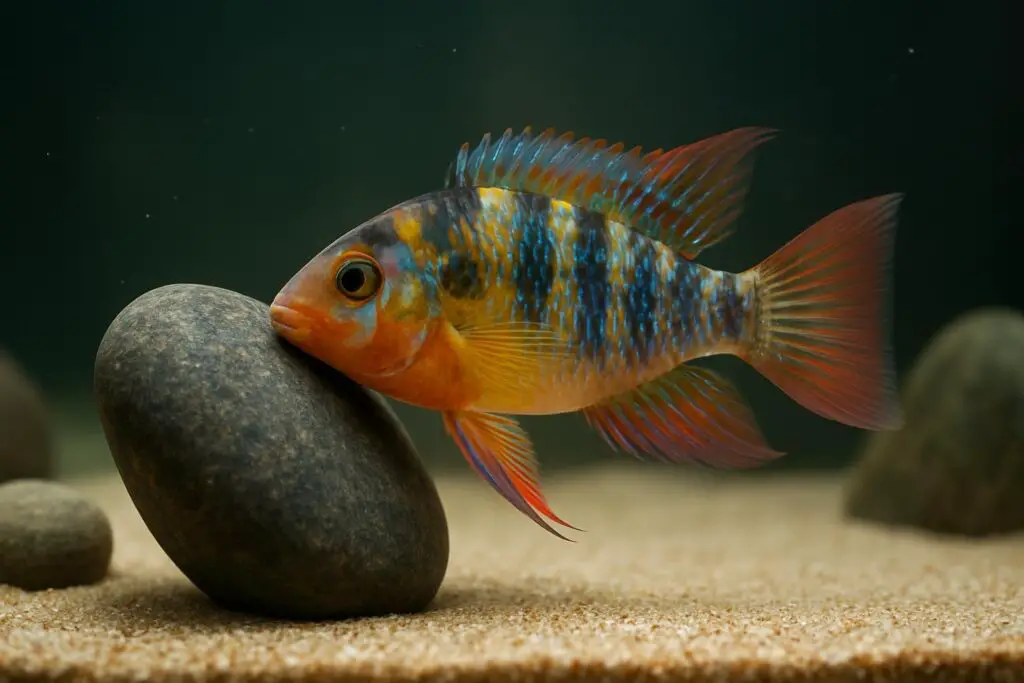
Fish sometimes dash and rub their bodies against rocks, sand, or decor. In the hobby this is called flashing. A single quick rub can be harmless. Frequent or forceful flashing is a warning that something is irritating the skin or gills. Learn how to tell the difference, what causes it, and what to do next. Simple steps and timely action can protect your fish and your biofilter.
What Flashing Looks Like
Flashing is a sudden, sharp movement where a fish turns its side and scrapes along a surface. It may look like a short burst of speed followed by a rub. Some fish also shake their head or clamp fins afterward. A fish that flashes once or twice after a change in environment may be fine. Repeated flashing every few minutes, multiple fish doing it, or flashing that escalates to red skin or missing scales is not normal.
Why This Matters
Flashing is usually a response to irritation. The causes range from water quality issues to external parasites. Early detection saves time, money, and fish health. You will learn how to separate minor, situational rubbing from true flashing that needs a plan.
Common Causes of Flashing
External Parasites
Parasites are the classic trigger. They attack skin, gills, or fins and cause intense itching or pain.
Ich or white spot disease. Tiny white grains on the body or fins after 2 to 3 days. Fish may flash, clamp fins, and breathe faster. Ich cycles through the water and requires a full course of treatment, not just a single dose.
Gill and body flukes. Often no visible spots at first. Signs include persistent flashing, increased mucus, torn fins, one gill stuck open or closed, and rapid breathing. Common after adding new fish without quarantine.
Trichodina, Costia, and Chilodonella. Protozoa that increase when fish are stressed or water is poor. Fish may look cloudy or produce excess mucus. Flashing is frequent and fish may get listless.
Velvet. A fine dusty sheen that can be hard to see until you shine light at an angle. Fish flash, clamp fins, and hide from light. Velvet spreads fast and can be deadly without quick action.
Water Quality Irritation
If your test kit shows any ammonia or nitrite above zero, gills and skin burn. Fish try to relieve it by rubbing. High nitrate can also irritate over time. Rapid pH swings, especially after large water changes, can cause flashing for hours. Chlorine or chloramine left in tap water will irritate gills within minutes. Heavy metals can have a similar effect if water is not conditioned.
Temperature shock happens when new water is more than 2 to 3 degrees different. In marine systems, salinity changes can cause immediate flashing. Low oxygen or high carbon dioxide causes gasping and erratic rubbing as gills struggle.
Physical and Environmental Triggers
Dusty new sand or unwashed decor releases fine particles that lodge under the slime coat. Sharp lava rock, jagged slate, or crushed coral can scrape long-finned fish. Stray electrical current from a cracked heater or pump can cause sudden dashes or twitching that looks like flashing. Exposure to aerosols, soap residue on hands, or paint fumes can irritate skin and gills.
Normal Behaviors That Mimic Flashing
Some fish rub for routine reasons. Algae grazers like plecos and mbuna cichlids rasp surfaces by design. Corydoras sift sand as part of feeding. Cichlids and goldfish may thrash plants and decor during spawning. One or two rubs during courtship may be normal for the species. If the behavior is constant, forceful, or paired with stress signs, assume trouble and investigate.
How to Tell Harmless Rubbing From Real Flashing
Frequency and Intensity
Harmless. A single rub after a water change or a new rock. Short-lived, no other signs.
Concerning. Multiple fish flashing several times per hour. Repeated for more than a day. Fish slam into surfaces or show visible marks.
Other Symptoms to Check
Watch for white spots, gold dust, cloudy patches, frayed fins, bloody streaks, red skin, excess mucus, clamped fins, head or gill shaking, rapid breathing, hanging near filter outflow, lethargy, hiding, or loss of appetite. The more signs you see, the more urgent the situation.
Species Context
Know your fish. A pleco rasping driftwood is normal. A betta repeatedly scraping its gill cover is not. Goldfish that bump plants during spawning season may be fine, but if they gasp at the surface and keep rubbing rocks, test water at once.
First Response: A Step-by-Step Plan
Step 1. Pause Feeding and Observe
Do not feed for 12 to 24 hours. Extra food increases waste and reduces water quality. Use this time to watch behavior from a distance. Count how often each fish flashes in 10 minutes. Look closely at gills and skin for spots or film.
Step 2. Test Water and Record Results
Use a reliable liquid test kit. Check ammonia, nitrite, nitrate, pH, temperature, and for marine tanks, salinity. If possible, test KH and GH to understand buffering and stability. Good targets: ammonia 0 ppm, nitrite 0 ppm, nitrate under 20 to 40 ppm for most community tanks, stable pH within your species range, stable temperature specific to species, and salinity appropriate for your reef or fish-only system. Any ammonia or nitrite is an emergency.
Step 3. Do a Safe Partial Water Change
Change 30 to 50 percent of the water. Match temperature within 1 to 2 degrees. Use a conditioner that neutralizes chlorine, chloramine, and heavy metals. If ammonia or nitrite is present, use a conditioner that temporarily detoxifies them and repeat partial changes daily until they reach zero. Vacuum the substrate to remove waste, but do not deep clean if your filter is immature. Rinse filter media in removed tank water only, never under the tap.
Step 4. Increase Aeration
Add an air stone or raise the filter outflow to create more surface movement. Extra oxygen helps stressed fish and supports your biofilter, especially during treatment or elevated temperatures.
Step 5. Check Gear and Decor
Inspect heaters, pumps, and powerheads. If you suspect stray current, unplug devices one by one to see if behavior changes, and install a grounding probe. Replace cracked heaters. Rinse new substrate and decor thoroughly before use. Remove or cover sharp rocks that could injure long-finned species.
When and How to Treat
Important Rules Before Medication
Always fix water quality first. Medication cannot overcome ammonia or nitrite. Treat based on the most likely cause, not guesswork. Do not mix medications unless the label says it is safe. Remove activated carbon during treatment so it does not strip the medication. Maintain strong aeration. Dose by actual water volume, not tank size on the box. Repeat doses as directed to cover parasite life cycles.
Freshwater Salt as Support
Aquarium salt can reduce nitrite stress and aid healing of mild external issues. Start at 0.1 percent salinity, which is about 1 tablespoon per 5 gallons or 2 grams per liter. Increase gradually to 0.2 to 0.3 percent for tougher cases if species tolerate it. Do not use with most plants, loaches, Corydoras, or other scaleless fish unless you know they are tolerant and you keep the dose low. Replace only what you remove during water changes.
Treating Ich in Freshwater
Look for white grains like salt on fins and body. Raise temperature slowly to 82 to 86 F if your fish allow it, and add extra aeration. Use a proven ich medication based on malachite green, formalin, or a combination. Continue treatment for at least one week after the last visible spot is gone to break the life cycle. For sensitive species, use reduced doses and a longer course. Keep testing water during treatment.
Treating Flukes in Freshwater
Praziquantel is the standard and is gentle on most fish. Dose per the label and repeat after 5 to 7 days to catch hatching eggs. If gill irritation is severe, combine treatment with added aeration and careful water changes. Avoid overdosing. If you have shrimp or snails, confirm compatibility before dosing.
Treating Protozoa Like Costia and Trichodina
Use formalin or malachite green products as directed. Improve water quality and reduce organics with partial changes and careful feeding. Maintain steady temperature and strong oxygenation. Avoid treating in very low oxygen conditions or at high temperatures without extra aeration.
Treating Velvet
Freshwater velvet often responds to the same agents as ich, along with a lights-off period of several days. For marine velvet, copper or chloroquine phosphate is standard, but copper is unsafe for invertebrates. Treat fish in a hospital tank and leave the display tank fallow without fish for several weeks to break the parasite cycle.
Marine Ich and Velvet Basics
In reef tanks, do not dose copper or formalin in the display. Move fish to quarantine and treat there. Keep the display tank fishless for 6 to 10 weeks depending on the parasite. Maintain stable salinity and temperature, and keep feeding quality foods fortified with vitamins to support recovery.
Quarantine and Prevention
Quarantine New Fish
Quarantine all new fish for 4 to 6 weeks. Observe for flashing, spots, torn fins, or heavy breathing. Prophylactic treatment for flukes with praziquantel is common in many collections. Keep a separate filter and tools for quarantine to avoid cross contamination.
Dip and Disinfect
Plants can carry parasites. Use an alum or potassium permanganate dip according to safe recipes, then rinse well before planting. Disinfect nets and siphons with a mild bleach solution, then neutralize with dechlorinator and rinse. Drying tools completely also helps as many parasites do not survive desiccation.
Manage Stress
Overstocking, aggression, and poor diet weaken fish. Keep stocking levels within your filter capacity. Provide hiding places to reduce chasing. Feed a varied, high quality diet. Stable water keeps the slime coat healthy, which is the first defense against parasites.
Routine Testing and Maintenance
Test weekly for ammonia, nitrite, nitrate, and pH. Log results so you can spot trends before there is a problem. Change 25 to 50 percent of the water weekly for most community tanks, more if stocking is heavy. Clean filter media gently in tank water to preserve beneficial bacteria. Keep hands clean and free of soaps or lotions before working in the tank.
Special Notes by Tank Type
Goldfish and Koi
These fish produce a lot of waste. Ammonia spikes happen fast and cause flashing. Keep strong filtration, large water changes, and low stocking. Springtime flashing can be linked to temperature swings and spawning. Test water first before reaching for medication.
African Cichlids
Hard, alkaline water is the norm. A sudden drop in pH or KH will cause immediate flashing. Maintain strong buffering with crushed coral or aragonite if needed. Territorial fights can cause scrapes that look like rubbing injuries. Rearrange rocks if aggression spikes.
Betta and Labyrinth Fish
Bettas prefer warm, stable water with gentle flow. Excess current and cold spots can make them rub surfaces. Their long fins tear easily on sharp decor. Avoid rough plastic plants and jagged rocks. Flashing in bettas often points to poor water in small tanks or cups, so test and change water promptly.
Catfish, Loaches, and Other Scaleless Fish
These species are sensitive to salt and many medications. If flashing appears, focus on water quality, gentle aeration, and parasite-specific treatments at reduced doses. Always confirm medication safety for scaleless fish before use.
Reef Tanks and Invertebrates
Do not use copper or formalin in display reefs. If fish flash, move them to hospital quarantine and treat there. Keep the display fishless for the required fallow period. Feed corals and invertebrates normally and maintain strong filtration and skimming.
Decision Guide: Fast Checks
If You See White Spots
Likely ich. Start temperature elevation if suitable, add aeration, and dose an ich medication in freshwater. In marine systems, treat with copper or chloroquine in quarantine and keep the display fishless for the full fallow period.
If Gills Move Fast or One Stays Open
Check ammonia and nitrite first. If water is clean and flashing continues, suspect gill flukes. Treat with praziquantel and maintain high oxygen.
If Flashing Starts Right After a Water Change
Suspect chlorine, chloramine, temperature mismatch, or pH shift. Dose conditioner, match temperature, and verify KH. Test tap water pH and adjust water change method to avoid swings.
If Fish Flash Only When Lights Come On
Velvet may worsen with light. Reduce light intensity, consider a blackout period, and treat with appropriate medication based on freshwater or marine setup.
If Only One Long-Finned Fish Is Affected
Inspect decor for rough edges. Replace or sand sharp rocks. Check flow for strong jets that pin fins against surfaces. Monitor others for signs of parasites to rule out infection.
If There Is Head Shaking or Twitching Near Equipment
Check for stray voltage from heaters and pumps. Use a multimeter or unplug devices to isolate the source. Replace faulty gear and add a grounding probe.
Realistic Timelines
Minor irritation from dust or a small water change mismatch often resolves within 24 hours once corrected. Ich and velvet need a full two weeks or more of consistent treatment. Flukes often require two rounds spaced one week apart. Water quality recovery from a mini-cycle can take days to weeks depending on biofilter health. Be patient, stay consistent, and keep testing.
Pro Tips for Faster Recovery
Support the Slime Coat
Use a conditioner that protects the slime coat during water changes. Keep hands out of the tank to avoid stripping protective mucus. Good nutrition with added vitamins supports skin repair. For marine fish, vitamin-enriched foods such as those soaked with HUFA and vitamin C can improve resilience.
Do Not Overclean
Overcleaning destroys beneficial bacteria and causes ammonia spikes that lead to flashing. Clean filter media gently and stagger maintenance so you never clean everything at once.
Watch at Night
Some parasites are more active in the dark, and fish behavior changes when lights are off. A quick check with room lights can reveal patterns you miss during the day.
Case Examples
New Sand, Sudden Flashing
Fish start rubbing within an hour of adding sand. Action: partial water change, fine filter floss or a polishing pad, run extra aeration. Rinse sand thoroughly before use next time. Behavior should settle within a day.
After New Fish Addition
Two days after adding tetras, existing fish begin flashing with no visible spots. Action: test water to confirm zero ammonia and nitrite, then treat for flukes in the main tank or move fish to quarantine if possible. Repeat treatment after one week. Quarantine new fish in the future.
Temperature Dip Overnight
Heater fails and water drops 4 degrees. Fish flash and breathe faster. Action: restore temperature slowly, add aeration, and monitor. If flashing persists beyond 24 hours, assess for opportunistic parasites and consider treatment.
Frequently Asked Questions
Is one or two flashes per week a problem
Not usually. Monitor for patterns and other symptoms. If flashing increases or multiple fish join in, start the triage steps.
Can I treat without a diagnosis
If there are clear spots or dust, treat for that parasite. If not, fix water quality first, then target the most likely parasite based on symptoms. Avoid shotgun mixes that stress fish and biofilters.
Will salt alone cure parasites
Salt helps in some freshwater cases at low levels, but it is not a cure-all. Many parasites require specific medications. Use salt as support, not a substitute.
How long should I wait before medicating
If water tests are normal and flashing is persistent or Severe for more than 24 hours, or there are clear parasite signs, start targeted treatment. If ammonia or nitrite is present, correct that immediately before any medication.
Quick Checklist
1. Count flashing events and note which fish do it
2. Test ammonia, nitrite, nitrate, pH, temperature, and for marine, salinity
3. Do a 30 to 50 percent conditioned water change and increase aeration
4. Inspect equipment and decor for hazards or stray voltage
5. If symptoms point to parasites, choose a targeted treatment and follow the label
6. Remove carbon, maintain oxygen, and keep testing water during treatment
7. Plan for quarantine next time to prevent repeats
Conclusion
Flashing is a clear signal that something is wrong, but it is also a solvable problem. Most cases trace back to water quality, external parasites, or simple physical irritation. Start with testing and a safe water change. Add aeration and correct any obvious equipment issues. If signs point to parasites, treat with a focused plan and complete the full course. Keep records, quarantine new fish, and maintain steady routines. With calm observation and decisive steps, your fish will stop rubbing the rocks and return to natural, relaxed behavior.