
We are reader supported. When you purchase through links on our site, we may earn an affiliate commission. Also, as an Amazon affiliate, we earn from qualifying purchases.
Yellow aquarium water is common and fixable. It usually points to tannins from wood, dissolved organics from waste, or something leaching color into the water. You can identify the cause quickly, correct it without tearing down the tank, and keep it from returning. This guide explains what yellow water means, how it affects fish, the main causes, and the exact steps to clear it fast.
What Yellow Water Looks Like and What It Means
Yellow vs green vs brown
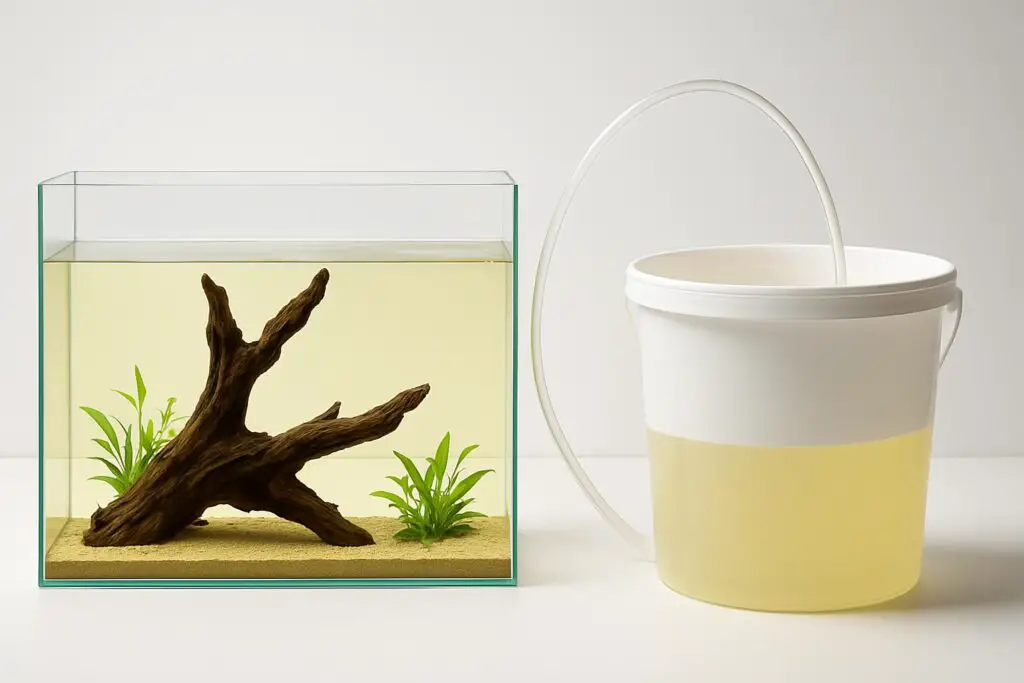
Yellow water looks like a light tea tint when you view the tank from the side. If the water looks green and opaque, the issue is a free floating algae bloom. If the water looks brown and the tank has driftwood or botanicals, tannins are likely. Many tanks show a mix of yellow and brown from tannins and dissolved organics.
Simple checks you can do in minutes
Use a white cup test. Scoop some tank water into a white cup and compare it to fresh tap water. A clear yellow tint means color is dissolved in the water, not just stuck to glass. Smell the water. A slight earthy scent is normal with tannins. A sour or swampy odor points to excess waste. Watch the fish. Gasping at the surface hints at low oxygen from high organics or a bacterial bloom.
Main Causes of Yellow Aquarium Water
Tannins from driftwood and leaves
Most new driftwood releases tannins that turn water yellow to amber. Seed pods and leaf litter used in blackwater tanks do the same. Tannins are not harmful to most soft water fish at normal levels and can even offer mild antibacterial benefits. The color often fades with regular water changes or with chemical media like activated carbon.
Decaying plant material and detritus
Dead leaves, melting new plants, and uneaten food break down into dissolved organic compounds. These organics add a yellow tint and can lower water clarity. Dirtier substrate traps this material and slowly releases color.
Overfeeding, fish waste, and dissolved organics
Feeding more than your fish can eat or keeping too many fish for the tank volume pushes up dissolved organics. This often comes with a film on the surface, a mild odor, and hazy water. The tint can turn stronger over time.
Algae tint and bacterial blooms
Green water is caused by free floating algae, not a true yellow tint. Still, some algal metabolites and bacterial blooms can make water look yellowish. If the tank is cloudy and yellow at the same time, there is usually a spike in organics and bacteria feeding on it. Excess light and long photoperiods make this worse.
Substrate and decor leaching dye or humics
Certain colored gravels, artificial decorations, and even some rocks can leach dye or humic substances. Color usually shows soon after setup or after adding new items. Rinsing before use helps, but some items continue to bleed color until removed.
Tap water and natural humics
Some water sources contain natural humic acids or dissolved iron that give a light yellow tint. The white cup test comparing tap and tank water shows if the color starts in your source water. If your tap is already tinted, use carbon, a sediment filter, or reverse osmosis water to remove it before it reaches the tank.
Medications and conditioners
Some liquid medications and conditioners can impart a yellow or amber hue. After treatment ends, the color can linger. Running fresh activated carbon and doing several partial water changes clears residual color.
How Yellow Water Affects Fish and Plants
Water chemistry shifts
Tannins can lower pH a little and soften water, which suits many tetras, rasboras, and dwarf cichlids. Hard water species may be stressed if pH swings happen quickly. Dissolved organics buffer light and reduce penetration, which may slow plant growth if levels get high.
Oxygen and gill irritation
Heavy organic load encourages bacteria that consume oxygen. Fish may breathe faster or hover near the surface. Strong yellow tint with haze and odor often means high organics, which can irritate gills and reduce appetite. This is a sign to act quickly with water changes, improved filtration, and better maintenance.
Step by Step Troubleshooting and Fix
Step 1 Check water and observe
Test ammonia, nitrite, and nitrate. Ammonia and nitrite should be zero. Nitrate ideally stays under 20 ppm for community tanks. Look for wood, leaves, or new decor. Note feeding amounts. Take a photo for comparison later.
Step 2 Immediate cleanup
Siphon the substrate to remove detritus. Trim melting or dead plant leaves. Remove uneaten food. Wipe inside glass with an algae pad. Clean the filter intake and return to restore flow.
Step 3 Filter media for color removal
Add fresh activated carbon, a synthetic adsorbent resin, or a poly filter pad to your filter. These media remove tannins and other dissolved organics. Replace carbon every 2 to 4 weeks or sooner if the yellow returns. Rinse mechanical pads in old tank water to keep beneficial bacteria alive.
Step 4 Water change plan
Do a 25 to 50 percent water change. If the yellow is strong, repeat 20 to 30 percent every 2 to 3 days for 1 to 2 weeks while the filter media does its job. Always match temperature and use a dechlorinator.
Step 5 Stabilize feeding and routine
Feed once or twice daily only what fish finish in under 2 minutes. For grazers, use small portions spread out. Create a weekly routine with a 25 to 50 percent water change plus a gravel vacuum. Consistent maintenance prevents organics from building up again.
Cause Specific Solutions
If the cause is driftwood tannins
Keep the wood if you like the look or the species prefer softer water. To reduce color, run activated carbon or a resin continuously for a few weeks. Water changes will gradually lighten the tint. If the wood is new and removable, pre soak it in a bucket with dechlorinated water, changing the water daily until the soak water remains nearly clear. Boiling the wood for 1 to 2 hours, if it fits in a pot, speeds up tannin release and kills hitchhikers.
If the cause is decaying plants
Trim away melting leaves and remove entire stems that are rotting. Review lighting and nutrients so plants grow instead of decay. Replace very fine substrates that trap mulm with a grain size that you can vacuum effectively. Improve water flow so debris does not settle in dead spots.
If the cause is overfeeding and waste
Cut feeding to match what fish eat quickly. Use a feeding ring to prevent food from drifting into plants and behind rocks. Increase substrate vacuuming and maintain a regular water change schedule. Check that your filter is rated for at least 4 to 6 times the tank volume per hour and that flow is not restricted.
If the cause is algae or bacteria
Reduce the photoperiod to 6 to 8 hours per day. Avoid direct sunlight on the tank. Increase surface agitation to boost oxygen. A water clarifier is not a real fix because it does not remove the dissolved organics behind the issue. Focus on nutrient control, water changes, and filter maintenance. A UV sterilizer can clear green water algae but is optional for a yellow tint.
If the cause is substrate or decor leaching
Remove suspect items. Do large water changes over a week to dilute color. Replace with aquarium safe materials known not to leach. Rinse new substrate and decor thoroughly before adding them back.
If the cause is tap water
Run carbon on the tap water using an inline filter or treat source water with a carbon block and sediment filter. Use reverse osmosis or distilled water blended with a remineralizer if needed. Store water in a clean container and test to confirm the yellow tint is gone before the next change.
If the tank was medicated
After finishing the full course and any required waiting period, run fresh activated carbon for a week, then discard it. Do several partial water changes to remove residual color. Avoid heavy resins while sensitive fish or shrimp are recovering unless the product is known to be safe for them.
Prevention That Actually Works
Stocking and feeding
Do not overstock. Add fish slowly and let the filter catch up. Feed a variety of quality foods in small portions. Remove uneaten food after a few minutes. Target feed bottom dwellers so food does not scatter and rot.
Maintenance routine
Change 25 to 50 percent of the water weekly in most community tanks. Vacuum at least half the substrate each week and alternate sections so you do not disrupt the whole bed at once. Clean pre filter sponges weekly and main media only when flow drops, rinsing in old tank water.
Filtration best practices
Use layered filtration. A coarse sponge catches big debris, a fine pad polishes, and a chemical media removes color. Replace or regenerate chemical media on schedule so it does not saturate. Keep return flow strong to move water through media effectively.
Plant care and tank hygiene
Healthy plants absorb nutrients and improve clarity. Provide stable light and basic fertilization so they grow instead of decay. Prune old leaves before they rot. Keep hardscape simple and avoid traps where dirt collects unseen.
Before you add new wood, rocks, or substrate
Rinse or soak new materials until the water runs clear. Test soak wood in a bucket and replace the soak water daily until color stops leaching. Avoid unknown dyed items and use aquarium safe products from trusted sources.
Lighting and aeration
Set lights on a timer for 6 to 8 hours per day unless you have demanding plants. Increase surface agitation with a spray bar or airstone if fish show fast breathing or if you see a surface film. Good gas exchange keeps the system stable.
When Yellow Water Is Normal or Desired
Mild yellow or amber tint from tannins can be a natural look called blackwater. Many soft water fish feel secure in this environment. If the tank does not smell bad, parameters are stable, and fish are thriving, you can accept a light tint as a style choice. If you want clear water instead, use carbon, frequent water changes, and pre soaked wood.
Clear Action Plan for Beginners
Test water. Ammonia and nitrite should be zero. If not, address cycling first. Do a 25 to 50 percent water change and gravel vacuum. Add fresh activated carbon to the filter. Cut feeding to what fish finish in under 2 minutes. Repeat 20 to 30 percent water changes every 2 to 3 days for the first week if the tint is strong. Trim decaying plants and clean filter intakes. If driftwood is the cause and you want clear water, pre soak any new pieces before adding and keep running carbon for several weeks. Keep a simple weekly schedule so the problem does not return.
Common Mistakes to Avoid
Do not tear down the tank. You lose beneficial bacteria and cause stress. Do not scrub filter media under tap water. Rinse in old tank water. Do not chase numbers with harsh chemicals. Focus on stable, moderate parameters. Do not rely on clarifiers alone. Remove the source of the color and maintain the system. Do not overclean the substrate all at once in a new tank. Work in sections to protect the biofilter.
Conclusion
Yellow aquarium water has clear causes and simple solutions. Most cases come down to tannins from wood or a buildup of dissolved organics from waste and decay. Identify the source with a quick visual check and basic tests. Clean the substrate, add chemical media, and perform consistent water changes. Adjust feeding and filtration to match your stocking. If you like the look of a light amber tint, keep it. If you prefer crystal clear water, the steps above will get you there and keep it that way.
FAQ
Q: What causes yellow aquarium water most often
A: The most common causes are tannins from driftwood and leaves, decaying plant material, and dissolved organics from overfeeding and fish waste. New decorations or substrate, tap water with humics, and medication residues can also add a yellow tint.
Q: Will yellow water harm my fish
A: Mild yellow from tannins is usually safe and can suit soft water species. Strong yellow with haze or odor signals high dissolved organics, which can lower oxygen and stress fish. In that case, act with water changes, better filtration, and reduced feeding.
Q: How do I clear yellow water fast
A: Start with a 25 to 50 percent water change and a thorough gravel vacuum. Add fresh activated carbon or a similar adsorbent to your filter. If the tint is strong, repeat 20 to 30 percent changes every 2 to 3 days for 1 to 2 weeks while the media works.
Q: Should I remove driftwood if it turns the water yellow
A: You do not have to remove it. Run carbon or a resin to strip tannins and do regular water changes. If the wood is new and removable, pre soak it in dechlorinated water or boil it if possible to speed up tannin release.
Q: How often should I replace activated carbon
A: Replace carbon every 2 to 4 weeks or sooner if the yellow tint returns. Remove carbon during medication treatment, then run fresh carbon after the treatment to clear residual color.