
We are reader supported. When you purchase through links on our site, we may earn an affiliate commission. Also, as an Amazon affiliate, we earn from qualifying purchases.
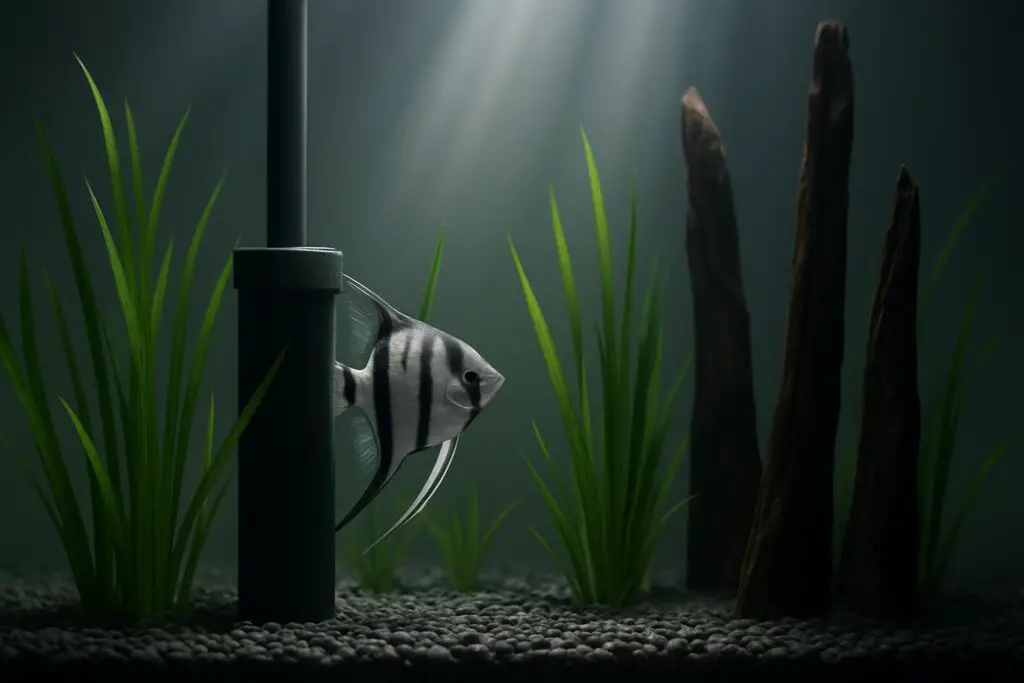
Angelfish are bold when they feel secure, but they hide when something is off. Hiding is a symptom, not a personality change. If you find your angelfish tucked behind a filter, hugging a corner, or sitting under a leaf, use that behavior as a signal. The faster you discover the cause, the faster your fish calms down, eats well, and shows normal cruising behavior again. This guide walks you through the most common reasons angelfish hide and gives you a clear plan to fix each one.
Introduction
New and experienced keepers see angelfish hide. The causes range from normal acclimation to poor water quality, bullying, or illness. Start with the simplest checks. Stabilize the environment first, then adjust stocking, flow, and layout. Only consider medication if clear disease signs are present. This order prevents overreacting and protects the biofilter that keeps your tank safe.
First, decide if the hiding is normal
New fish in a new home
Angelfish often hide for 3 to 7 days after arrival. Transport, new water chemistry, new sights, and human activity around the tank trigger caution. Give them low light, stable parameters, and predictable feeding. Avoid tapping the glass or rearranging the tank during this period.
Right after lights turn on or off
Sudden light changes can send fish into cover. Use a ramp-up schedule if your light supports it, or switch on room lights for 15 minutes before the tank light. Keep a consistent day length of 8 to 10 hours.
During or after spawning
Pairs may hide to choose a site, clean a leaf, or guard eggs and wrigglers. This is normal. Provide a flat surface like a broad plant leaf or a slate. Reduce disturbance near the tank.
Common causes of persistent hiding
Stress from aggressive tankmates
Angelfish are cichlids. They create a pecking order and defend space. Fin nippers like tiger barbs, some larger tetras, and boisterous cichlids often push angels into corners. Watch for chasing, split fins, missing chunks, or a fish that will not leave one spot. Bullying can be constant or occur during feeding.
Solutions include rehoming aggressive species, increasing the group of schooling fish to spread attention, or moving the angelfish to a calmer setup. In general, avoid notorious nippers and fast, pushy fish. Good companions include peaceful bottom dwellers like corydoras and bristlenose plecos, and calm midwater shoals that are too large to be eaten. Avoid very small tetras with adult angels, because they can be viewed as food.
Water quality and parameter shock
Water chemistry issues cause immediate hiding. Test first, guess later. Use a liquid test kit for ammonia, nitrite, nitrate, and pH. Confirm temperature with a reliable thermometer.
Target ranges for angelfish are:
Ammonia 0 ppm
Nitrite 0 ppm
Nitrate under 20 to 40 ppm
pH about 6.5 to 7.5
Temperature 78 to 82 F or 25.5 to 28 C
General hardness low to moderate is preferred, and a moderate carbonate hardness helps prevent swings. Stability is more important than chasing a perfect number. Rapid shifts in temperature or pH cause hiding, clamped fins, and loss of appetite.
If ammonia or nitrite is present, do an immediate 30 to 50 percent water change with dechlorinated water that matches the tank temperature. Vacuum debris, clean the filter intake and prefilter sponge, and avoid washing bio media in tap water. If nitrate is high, increase the volume and frequency of water changes and reduce overfeeding.
Excessive flow or harsh lighting
Angelfish are built for calm, slow water. A strong jet from the filter outflow can pin them to cover. Re-aim the nozzle toward the glass, add a spray bar, or add a baffle to reduce current in the main swimming zone. Keep surface movement gentle but consistent for gas exchange.
Bright, unshaded light can push fish to darker areas. Reduce intensity, shorten the photoperiod to 8 to 10 hours, and add tall plants or floating plants to create shade. This change often improves confidence within days.
Scape without cover or line-of-sight breaks
A bare tank makes fish feel exposed. Even bold fish hide when there is nowhere to retreat. Add vertical wood, tall background plants, and broad leaves. Use hardscape to block direct lines of sight across the tank so a dominant fish cannot patrol every corner. Provide at least two or three distinct refuge zones so a submissive fish has options.
Illness or injury
Sick angelfish hide to save energy. Look for clamped fins, rapid breathing, flashing against decor, white spots, frayed fins with red edges, a fuzzy patch, or stringy pale feces. Watch for a fish that will not eat for more than a day or two. If these signs are present, move the fish to a quiet hospital tank with matched water and gentle aeration. Only medicate after you identify likely symptoms. Maintain excellent water quality during treatment.
Feeding stress or poor routine
Unpredictable feeding, competition from faster fish, or food that sinks too fast can make angels hang back. Feed small amounts two to three times daily at consistent times. Use floating or slow-sinking pellets sized for cichlids. Offer frozen or live foods like brine shrimp as treats, not staples. Target feed the shy fish by placing food where it waits.
Overcrowding and territory pressure
Too many fish in limited space creates stress. A single angelfish does well in a community if the tank is large enough. A bonded pair does best in a tank of at least 30 gallons with height. Groups should be five or more to spread aggression, but this requires a larger tank and careful stocking. Avoid mixing large, territorial cichlids that will outcompete angels.
Step-by-step troubleshooting plan
1. Observe before you act
Stand back for 10 minutes. Note breathing rate, fin position, body color, and whether the fish darts when others pass. Check for marks on the body or fins. Watch at feeding time to see if it tries to eat.
2. Test water and record results
Measure ammonia, nitrite, nitrate, pH, and temperature. If available, test hardness. Write down the values and the time. This baseline helps you see trends. If ammonia or nitrite is above zero, move to the next step without delay.
3. Reset water quality safely
Do a 30 to 50 percent water change with dechlorinated water that matches the tank temperature. Vacuum the substrate to remove waste. Rinse sponges in a bucket of tank water. Do not replace all filter media at once. Restore gentle surface ripples.
4. Reduce flow and calm the light
Angle the outflow to the glass or install a spray bar. Add a baffle if needed. Dim the light or shorten the photoperiod to 8 to 10 hours. Add tall plants or floating plants for shade.
5. Audit tankmates and dynamics
Identify the main aggressor. If one fish harasses the angelfish repeatedly, move that fish, add cover, or separate tanks. Increase the size of peaceful shoals to spread attention. Choose tankmates that are not known fin nippers. Avoid very small fish that adult angels can eat.
6. Feed for confidence
Offer a small, high quality meal the fish can easily find. Use floating or slow-sinking pellets. Feed in two spots to reduce competition. Remove leftovers after a few minutes.
7. Reassess after 48 to 72 hours
If the angelfish still hides and shows illness signs, set up a hospital tank with matched water. Observe closely and consider treatment based on symptoms. If water quality and social stress are corrected, most fish resume normal behavior within a few days.
Preventive setup and husbandry
Right tank size and layout
Provide space and height. A pair needs at least 30 gallons with tall plants and vertical hardscape. Break sight lines. Add multiple hiding areas so no single spot becomes a trap. Secure heaters and intakes to prevent injuries.
Stable, clean water
Change 25 to 40 percent weekly. Vacuum debris. Keep ammonia and nitrite at zero and nitrate under 20 to 40 ppm. Keep pH and temperature steady within target range. Always dechlorinate new water and match temperature to within 1 to 2 F or 0.5 to 1 C.
Balanced community
Pick tankmates that match the angelfish pace and fin style. Avoid known fin nippers. Maintain appropriate group sizes for schooling fish. Avoid mixing with large, aggressive cichlids. Feed everyone fairly to reduce competition.
Predictable lighting and feeding
Run a consistent 8 to 10 hour light schedule. Feed small meals two to three times daily at steady times. Rotate foods to cover nutrition. Remove uneaten food to keep water clean.
Quarantine new fish
Quarantine new arrivals for a few weeks before adding them to the display. This prevents disease spread and allows you to observe their behavior and appetite. Match water parameters when moving fish between tanks.
Recognize urgent red flags
When to act fast
Act quickly if you see gasping at the surface, rapid breathing for more than a few minutes, inability to stay upright, white spots spreading, frayed fins with red streaks, or a fish that refuses all food for more than two days. Stabilize water first, then move to a hospital tank for targeted care.
Fine tuning the environment
Flow zones
Create a calm midwater lane for angelfish and stronger flow at the surface for oxygenation. Use hardscape to shape flow. Make sure food passes through the area where the angelfish feels safe.
Lighting comfort
Use a moderate intensity. Provide shaded areas with tall plants or floating cover. Avoid long photoperiods. If algae control is needed, adjust nutrients and maintenance instead of blasting light.
Cover and vertical structure
Add tall swords, vallisneria, or stems. Use driftwood to create vertical shelter. Place a few broad leaves for resting and, for pairs, for spawning. Keep open swimming space in the front.
Special cases
Single angelfish vs pair vs group
A single angelfish can thrive in a calm community if it is not harassed. A bonded pair will claim space and may push others away during breeding. A group spreads aggression but needs more room and careful mate selection. Watch interaction patterns and adjust stocking.
After a large water change
Hiding right after a big change often points to temperature or pH mismatch, or residual chlorine. Match temperature closely, dechlorinate fully, and pour water in gently to avoid current shock. If the fish hides after maintenance, turn down lights and let it settle.
Putting it all together
Sample recovery plan
Day 1. Test water and record values. If ammonia or nitrite is above zero, change 30 to 50 percent of the water with dechlorinated, temperature matched water. Reduce filter outflow. Dim lights. Add extra cover.
Day 2. Feed small, easy food. Watch for aggression and move bullies if needed. Check temperature and pH stability. Adjust photoperiod to 8 to 10 hours.
Day 3. Retest water. If parameters are on target and the fish eats, continue normal care. If symptoms of disease appear, move to a hospital tank and treat based on observed signs.
Conclusion
Hiding is a clear message. Start with water tests and stability, then reduce flow and glare, then fix social pressure, and finally assess health. Most angelfish stop hiding within a few days once the environment fits their needs. Keep your routine steady, keep the water clean and stable, and design the tank for calm midwater swimming with safe cover. When you read the signs early and respond in the right order, your angelfish will return to confident, graceful behavior.
FAQ
Q: How long will a new angelfish hide after being added to a tank
A: Many new angelfish hide for 3 to 7 days while they adjust. Keep lights low, maintain stable parameters, and avoid disturbing the scape during this time.
Q: What water parameters should I target to stop my angelfish from hiding
A: Aim for ammonia 0 ppm, nitrite 0 ppm, nitrate under 20 to 40 ppm, pH about 6.5 to 7.5, and temperature 78 to 82 F or 25.5 to 28 C. Keep these values stable and avoid rapid swings.
Q: Can bright lights or strong filter flow make angelfish hide
A: Yes. Harsh lighting and strong current push angelfish into cover. Dim the light, shorten the photoperiod to 8 to 10 hours, add shade with plants, and reduce outflow with a spray bar or baffle.
Q: What tank size helps reduce hiding for a pair of angelfish
A: A bonded pair does best in a tank of at least 30 gallons with height, tall plants, and vertical hardscape that breaks line of sight.
Q: What should I do first if my angelfish suddenly starts hiding
A: Test water for ammonia, nitrite, nitrate, pH, and temperature. If ammonia or nitrite is above zero, change 30 to 50 percent of the water with dechlorinated, temperature matched water. Then reduce flow, dim lights, and check for bullying.