
We are reader supported. When you purchase through links on our site, we may earn an affiliate commission. Also, as an Amazon affiliate, we earn from qualifying purchases.
Fish hide for a reason. Sometimes it is normal and healthy. Other times it is a clear sign that something in the tank is wrong. The faster you find the cause, the faster your fish will return to calm, visible behavior. This guide explains the most common reasons fish hide, how to diagnose the real cause in your tank, and what to do step by step. Keep it simple, act methodically, and your fish will reward you with confident swimming and regular feeding.
What counts as normal hiding
Species that are naturally shy
Not all fish enjoy open water. Many catfish, loaches, plecos, and cave-dwelling cichlids prefer crevices and shadows in the daytime. Some tetras and rasboras gain confidence only when kept in a proper school of their own kind. Shrimp and snails also stick to cover because they are prey animals. If these species dart out for food, show good color, and return to cover, this can be normal behavior.
Time of day patterns
Fish routines are tied to light. Nocturnal or crepuscular species are bolder at dusk, dawn, or in dim light. If your fish hide under bright lights but explore right before or after lights on and off, the light schedule is likely the trigger rather than a health issue.
New tank or new fish nerves
Fish entering a new tank often hide while they map the space and learn escape routes. This can last several days, commonly up to one to two weeks in a stable, cycled aquarium. If they eat, breathe normally, and come out a bit more each day, patience plus good husbandry is the solution.
Water quality problems that drive hiding
Ammonia, nitrite, and nitrate
Invisible toxins push fish into cover and reduce activity. Ammonia should be 0 ppm. Nitrite should be 0 ppm. Nitrate should stay as low as your setup allows, generally under 20 to 40 ppm for community tanks. Any reading above zero for ammonia or nitrite can make fish clamp fins, hover near the bottom, and hide. Test with a reliable kit, not guesswork.
pH swings and hardness
Most community fish do fine in stable pH between about 6.5 and 7.8, depending on species. Rapid swings cause stress that looks like hiding. Aim for stability over chasing exact numbers. Keep your source water and maintenance routine consistent.
Low oxygen and high temperature
Warm water holds less oxygen. Tanks running too hot can push fish into corners of higher flow where oxygen is higher. Tropical community tanks do well around 24 to 26 Celsius or 75 to 79 Fahrenheit. Goldfish prefer about 18 to 22 Celsius or 64 to 72 Fahrenheit. Watch for rapid gill movement or hovering near the surface. Increase surface agitation and verify temperature with a dependable thermometer.
Fix it fast
If ammonia or nitrite is above zero, change 50 percent of the water today with dechlorinated water matched to tank temperature. Repeat daily until both are zero. Clean filter intake sponges and prefilters in old tank water, not tap water. Do not strip the filter media. Feed lightly while parameters recover. When only nitrate is high, increase water change volume and frequency until you maintain safer levels.
Lighting and visual stress
Too bright or inconsistent light
Sudden or intense lighting makes many fish stay under cover. Use a timer for a predictable photoperiod, often 8 to 10 hours for most freshwater aquariums. Turn on room lights for 10 to 15 minutes before tank lights in the morning and do the reverse at night to soften transitions. Float plants or tall plants can diffuse light and help timid fish feel safe.
Reflections and clear sides
Reflections trick fish into thinking a rival is present. This is common on bare tanks, especially with bright side or back lighting. Add a dark background to the rear pane, reduce side lighting, and adjust the angle of the room lights. Clean the outside glass to remove glare-causing smudges.
Flow, noise, and vibration
Excess current
Some fish love current, like danios and hillstream species. Others avoid it, like bettas and many gouramis. If your fish are pressed behind decorations near the filter return, the flow may be too strong. Baffle the output, aim it at the glass, or switch to a gentler filter for sensitive species.
Household noise and tank rattles
Loud TV bass, door slams, tapping on glass, and rattling lids can keep fish in hiding. Make sure the tank stand is level and stable. Pad the filter underlay to stop vibration. Train family and guests not to tap the glass. Keep the lid from slamming when you feed or maintain the tank.
Social stress and aggression
Reading the signs
Hiding paired with chasing, split fins, missing scales, or bite marks points to bullying. The victim often eats less and stays near the bottom or behind the filter. Aggression can erupt when fish mature, when space is tight, or when territories lack clear borders.
Stocking and tank size
Give fish the space their adult size needs. Avoid overcrowding. Keep schooling fish in proper numbers so they feel secure. Many small tetras and rasboras are more confident in groups of six or more. For livebearers, keep more females than males, for example one male to two or three females, to spread attention and reduce chasing. When in doubt, rehome the known bully or separate with a divider.
Layout that breaks line of sight
Decor that creates paths and breaks line of sight helps. Use plants, driftwood, and caves to split the tank into zones. Rearrange the scape during aggressive phases to reset territories. Provide at least one hide per fish that tends to be shy or subordinate.
Species compatibility
Mix fish with similar temperaments. Avoid pairing slow, long-finned fish with fast fin-nippers. Keep bottom dwellers together only if the footprint supports multiple territories. Research before buying. If a mismatch is already in your tank, separate fish and plan a permanent solution rather than waiting for behavior to change.
Lack of shelter
Give them places to feel safe
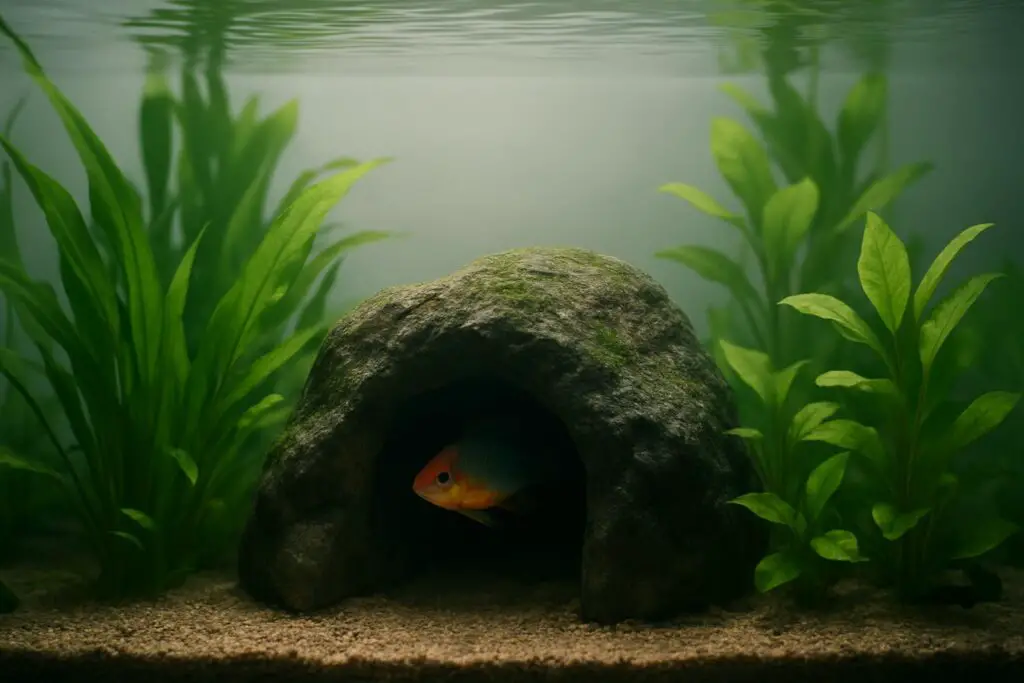
Even confident fish need cover to manage stress. Provide a mix of open water and shelter: dense plants, branching wood, rock caves, and leaf litter for species that use it. Offer multiple entrances and exits so no fish gets trapped. Use materials safe for aquariums and rinse them before use.
Backgrounds and substrate
A dark background reduces visual stress and reflections. A natural substrate color lets fish display true color. Bare bottom or very light substrates can make some fish feel exposed, which increases hiding. Choose a look that supports both fish comfort and maintenance.
Feeding and routine
Predictable schedule
Fish learn routines. Feed at set times, 1 to 2 small meals per day, and only what they finish in about two minutes. Remove leftovers. Predictability builds confidence and pulls shy fish out at feeding time. For extra timid fish, target feed near their hide with tongs or a pipette until they feel safe.
Do not shock them during maintenance
Weekly water changes of 25 to 40 percent keep parameters steady. Match temperature and dechlorinate. Avoid deep gravel vacs around nests or caves during spawning periods. Rinse mechanical media in old tank water to preserve bacteria. Sudden large cleanups or massive rescapes can push even bold fish into hiding for days.
Illness and injury
Red flags to act on
Hiding combined with loss of appetite for more than three days, rapid breathing, clamped fins, white spots, stringy feces, sores, or bloating needs fast attention. Move the fish to a simple quarantine tank with a heater, filter, and hides. Keep water pristine. Observe closely before medicating so you can target the problem well.
How to avoid disease surprises
Quarantine new fish for two to four weeks before adding them to your display tank. Feed well, monitor behavior, and test water during quarantine. This one step prevents many outbreaks that lead to widespread stress and hiding in a community tank.
New fish acclimation that actually works
Simple steps to reduce early hiding
Dim the room. Float the bag for 15 to 20 minutes to match temperature. Add small amounts of tank water to the bag over 20 to 30 minutes. Net the fish into the tank. Discard bag water. Lights stay low for the rest of the day. Do not feed for the first few hours. Add extra cover before the fish arrive so they can choose a safe spot immediately.
Troubleshooting checklist
Work from fastest checks to deeper fixes
Test water for ammonia, nitrite, nitrate, pH, and temperature. If ammonia or nitrite is not zero, change water today. If temperature is out of range, adjust the heater or cooling and add surface agitation. If lights are harsh or erratic, set a timer and dim or diffuse. Watch for chasing or fin damage. If present, rearrange decor, separate bullies, or adjust stocking. Reduce flow if fish are pinned to the filter output. Add a dark background and more hides. Cut room noise and stop glass tapping. Feed small predictable meals and confirm the hiding fish actually eats. Log changes and behavior daily for a week to see patterns.
Preventive routine that keeps fish visible
Weekly and monthly rhythm
Test water weekly until your tank is stable, then at least twice per month. Change 25 to 40 percent of the water weekly. Clean intakes and prefilters weekly. Rinse biological media gently in old tank water monthly. Trim plants to maintain shaded areas and open swimming lanes. Vacuum debris without stripping the substrate clean. Review stocking after every growth phase or new addition. Keep lights on a timer for a steady 8 to 10 hours unless your plants require different timing. Feed varied, high quality foods in small portions.
Special notes by common fish types
Bettas and gouramis
These labyrinth fish dislike strong flow and harsh light. Provide floating plants and gentle filtration. Keep tank mates peaceful and non nippy. Hiding often drops once flow and light are tuned.
Tetras, rasboras, and barbs
These schooling fish gain confidence in groups. Keep enough of the same species and provide midwater plants to reduce open water exposure. Avoid mixing with aggressive fin nippers unless the species are known to be compatible.
Corydoras and loaches
Provide soft substrate, multiple hides, and group sizes appropriate for the species. They are active when kept in groups and in low to moderate light. Sharp gravel or no cover leads to constant hiding.
Plecos and other cave fish
They need defined caves sized to their body, with at least two exits. Feed after lights out if they are shy. Strong white light without shelter results in all day hiding.
Goldfish
Keep them cool, oxygenated, and in large footprints with smooth decor. Many goldfish hide when temperatures climb or oxygen drops. Heavy feeding without strong filtration also adds stress.
When to worry and seek help
Escalate when simple fixes fail
If you correct water quality, adjust light and flow, add shelter, and remove aggression yet the fish still hides constantly, widen the check. Look for subtle disease signs and review your maintenance routine. If a fish refuses food for more than three days, breathes rapidly, or shows lesions, move to quarantine and consider veterinary or experienced aquarist advice. Provide photos, test results, and a clear timeline when asking for help.
Conclusion
Clarity leads to calm fish
Fish hide either because they are meant to or because they are stressed. Sort these two cases first. Confirm water quality, set stable light and temperature, control flow and noise, fix social pressure, and build real shelter. Use a simple checklist and a steady routine. In most tanks, these steps restore normal behavior quickly. When you act early and keep conditions consistent, fish become visible, feed well, and live longer.
FAQ
Q: Why is my new fish hiding and how long will it last?
A: Many fish hide during the first days or even one to two weeks while they learn the layout, smells, and lighting of a new tank, and if they eat, breathe normally, and come out a bit more each day, patience plus stable water and routine is the solution.
Q: Which water problems make fish hide?
A: Any ammonia above 0 ppm, any nitrite above 0 ppm, high nitrate often above 20 to 40 ppm, rapid pH swings, low oxygen, and incorrect temperature all drive hiding and lethargy.
Q: How do I stop hiding caused by bullying?
A: Confirm signs like chasing and split fins, then rearrange decor to break line of sight, add more hides, balance groups and sex ratios, separate or rehome bullies, and make sure the tank size and layout fit the species.
Q: Is my light scaring the fish and what schedule should I use?
A: Harsh or unpredictable lighting keeps fish under cover, so use a timer for a steady 8 to 10 hour photoperiod, soften transitions with room lights before and after, and add floating or tall plants to diffuse light.
Q: When should I worry about a hiding fish?
A: Worry when hiding comes with refusal to eat for more than three days, rapid breathing, clamped fins, visible spots or sores, or bloating, and move the fish to quarantine while you correct water and observe closely.