
We are reader supported. When you purchase through links on our site, we may earn an affiliate commission. Also, as an Amazon affiliate, we earn from qualifying purchases.
Loaches and catfish both live on the bottom. They need caves, smooth substrate, food at the same time, and space to move. When those needs collide, the stronger or faster fish often pushes the other aside. If you see chasing, nipping, or a stressed catfish, the tank is telling you something. The good news is that aggression has clear causes and clear fixes. This guide shows why loaches bully catfish and how to stop it with simple, practical steps.
Introduction
Many aquarists want a busy bottom crew. Loaches sift and explore, catfish graze and clean. The mix looks perfect on paper. In practice, it can turn tense. Loaches are social but competitive. Some species get bold as they grow. Catfish can be shy and slow to compete at feeding time. The result is pushing, blocking, and sometimes injury. You can prevent this with the right tank layout, group sizes, and feeding plan. You can also fix it fast when it appears.
Behavior Basics: Why Tension Builds
Bottom territory is limited
Most aggression is about space. The bottom is a narrow strip, full of caves and pathways. Loaches like to claim routes and resting spots. Many catfish, especially Corydoras and smaller plecos, need the same footprint. When both species overlap, loaches often win through speed and numbers. Without clear zones, every path becomes a contest.
Loach group dynamics drive bold behavior
Loaches are social fish that gain confidence in a group. In small numbers they become skittish or hyper-focused on other bottom fish. In larger, proper groups they spread energy among themselves and display to each other. Too few loaches can make one fish fixate on catfish and start bullying. Too many for the space also creates pressure.
Nighttime overlap intensifies contact
Loaches and many catfish become most active after lights out. If the tank has only one feeding zone or one main cave, the clash happens in the dark when you are not watching. On cameras or red lights, you often see the real problem hours after feeding.
Resource guarding: food, caves, flow
Boisterous loaches guard sinking pellets, shrimp, and favored caves. Some also compete for high flow spots that deliver oxygen and drift food. Catfish that move slowly or pause to graze get shoved aside. Over time, the catfish stops trying and loses condition.
Size and body language mismatch
Fast, angular loaches can read slow barbel movements as a challenge. Larger loaches, or those reaching maturity, may test anything near their nest or cave. Smaller catfish cannot answer the challenge, so they yield or get nipped.
Stress feedback loop
Once a catfish is stressed it hides more, breathes faster, and forages less. This weakens it further and makes it an easier target. Meanwhile, the loach learns that chasing earns it food and space, and the cycle repeats. Break the loop by changing the environment quickly.
Common Loach–Catfish Pairings and What to Expect
Kuhli loaches with Corydoras
Kuhli loaches are generally peaceful and snake through tight spaces. With soft sand and plenty of cover, they tend to ignore Corydoras. Feed in multiple spots and the pair works well in medium tanks.
Yoyo or zebra loaches with Corydoras and small plecos
Yoyo and zebra loaches are active and curious. In cramped tanks or with few hides, they harass slower Corydoras and block plecos at vegetables. In larger tanks with strong structure, they settle and focus on their group. Give them room and a clear feeding plan.
Clown loaches with plecos
Clown loaches grow large and need space. With plecos, conflict is most common at feeding time and around a single cave or cucumber slice. Spread food and add more wood tunnels to keep peace. Mixing clowns with very small catfish in short tanks is risky.
Hillstream loaches with catfish
Hillstream loaches prefer strong flow over flat rocks and often leave catfish alone if their zone is separate. Problems arise only when the whole bottom is flat and open with one high flow area. Provide a defined rocky river zone and they coexist well.
Tank Setup That Prevents Bullying
Footprint first, not just volume
Long tanks reduce contact. Depth front-to-back creates parallel routes and room for caves without crowding. A clear footprint target helps: at least 90 cm length for small loaches with small Corydoras, 120 cm for yoyo or zebra loaches, and 150 cm or more for clown loaches or mixed bottom crews.
Break lines of sight
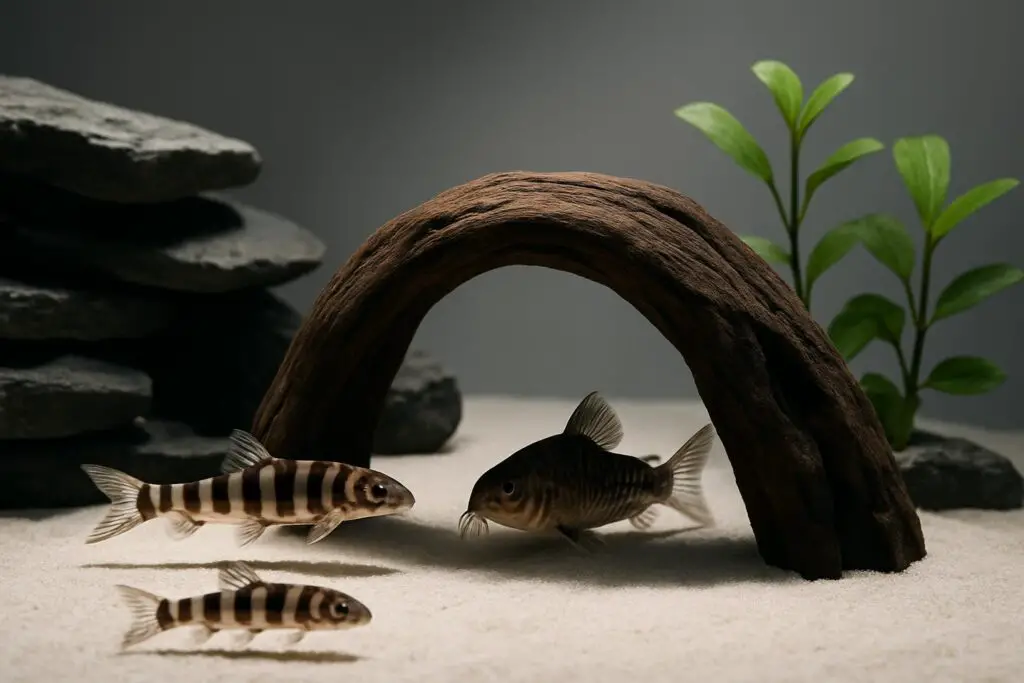
Use wood, rock, and plants to create walls and arcs. Aim for three to five sight breaks across the front glass. Fish that cannot see a rival all the time do not chase all the time. Curved barriers make multiple routes and reduce corner traps.
Create zones with purpose
Build a high flow rock zone for hillstream or active loaches. Add a wood and leaf zone for catfish that graze and rest. Give each zone its own hides and feeding spots. When zones serve different needs, overlap drops.
Caves and hides for each fish
Provide at least one snug hide per bottom fish plus a few extras. Mix sizes: narrow tubes for loaches, low caves for Corydoras, and side-opening wood for plecos. Place hides along different routes so one fish cannot guard them all.
Substrate matters
Fine sand is best for Corydoras barbels and safe for loaches. Avoid sharp gravel. A thin layer works; deep sand can trap waste unless you have plants and flow. Smooth pebbles can top sand in hillstream zones.
Flow and oxygen
Loaches and many catfish thrive in well-oxygenated water. Use a spray bar or powerhead to spread flow. Offer calm pockets too. Good flow reduces conflict by delivering food to more places and by keeping fish comfortable.
Lighting and routine
Dimmer evenings help shy catfish feed. Keep a steady photoperiod. Consistent schedules reduce tension and make behavior predictable. Predictability lowers the urge to compete hard at random times.
Feeding That Stops Fights
Timing and distribution
Feed small amounts twice daily and a targeted bottom feed after lights out. Drop food across three to five spots, not in one pile. Use tongs to place wafers by caves and under wood.
Food types for each role
Use mixed sinking options: protein pellets for loaches, algae wafers and vegetables for plecos, fine granules or micro pellets for Corydoras. This reduces direct competition and allows each species to eat the right diet.
Separate stations
Place a wafer under a wood arch, a pellet trail behind a rock, and a veggie clip near strong flow. With stations far apart, one loach cannot guard them all. Rotate positions so no station becomes a permanent territory.
Stocking and Compatibility Strategy
Keep loaches in proper groups
Most loaches do best in groups of six or more of the same species if the tank allows. In undersized groups they vent energy on tankmates. In proper groups they school, explore, and focus on each other.
Match sizes and activity
Avoid pairing very large, hyper loaches with tiny, slow catfish in short tanks. Match adult sizes and energy levels. If loaches will outgrow the footprint soon, plan to upgrade or choose a smaller species.
Species to try or avoid
Gentler options include kuhli loaches for peaceful setups and hillstream loaches for dedicated flow zones. Yoyo and clown loaches can work with catfish in larger, well-structured tanks. Avoid mixing multiple assertive loach species in small footprints.
Quarantine and observation
Quarantine new fish. Introduce groups together after a rescape so nobody owns the tank. Watch for two weeks, especially at night, to catch early signs of stress.
When Aggression Appears: Quick Fixes That Work
Rescape to reset territories
Move wood and rocks to change patrol routes. Add sight breaks in the hot zones where chases start. A small change often stops repeated patterns because the map is new.
Add hides now, not later
Drop in extra caves, tubes, and leaf piles. Place them at different depths and angles. A bullied catfish needs a safe stop one swim away, not across the tank.
Feed smart for a week
Increase target feeding after lights out. Use multiple stations every time. Slightly overprovide during the reset week to remove the food scarcity trigger. Siphon uneaten food after an hour to protect water quality.
Isolate the bully if needed
Use a breeder box or divider for three to seven days if one loach keeps attacking. During isolation, rearrange decor and expand hiding. Reintroduce after dark with food present so attention shifts to feeding, not fighting.
Last resort: rehome or change species mix
If space and structure are maxed out and aggression continues, rehome the most assertive fish or move to a larger tank. Stable peace is the goal.
Health and Water: Protect the Catfish
Watch for stress and injury
Early signs include hiding more than usual, clamped fins, frayed barbels, rapid breathing, skipped meals, and hanging near the surface or filter outflow. Check at night with a dim room light to confirm.
Water quality standards
Keep ammonia and nitrite at zero. Keep nitrate low with regular water changes. Provide steady temperature and high oxygen. Clean substrate lightly to remove trapped waste around caves and under wood.
Gentle first aid
For minor barbel wear or scrapes, best treatment is pristine water, smooth sand, and reduced stress. Avoid harsh medications unless you confirm infection. Many loaches and catfish are sensitive. Isolation with clean, warm, well-oxygenated water helps recovery.
Putting It All Together
Simple checklist
Add sight breaks and caves. Spread food at night. Keep loaches in proper groups. Match species and sizes. Provide a long footprint and zone the bottom. Monitor after any change, and act fast at the first sign of bullying.
Examples
Small community with kuhli loaches and Corydoras
Tank length is 90 cm with fine sand. Add wood arcs and three leaf piles. Feed micro pellets in two trails and wafers under wood after lights out. Kuhlis weave through leaves and ignore Corys. No chasing observed.
Active tank with yoyo loaches and a bristlenose pleco
Tank length is 120 cm with rocks and wood walls. Add three caves for the pleco, tubes for loaches, and a cucumber clip in a corner. Feed pellets across the back line and algae wafers under wood. Chasing drops because food is everywhere and hides are many.
Key Reasons and Solutions at a Glance
Core cause statement
Loaches often bully catfish because both claim the same bottom territory, they are active at the same night hours, they guard food and caves, and boisterous loaches mistake slow catfish for rivals or intruders.
Core solution statement
To stop loach aggression toward catfish quickly, increase floor space and line-of-sight breaks, add more caves and tubes, feed after lights out with food spread across several spots, keep loaches in a proper group, and move or isolate any persistent bully.
Footprint target statement
A clear footprint target helps: at least 90 cm length for small loaches with small Corydoras, 120 cm for yoyo or zebra loaches, and 150 cm or more for clown loaches or mixed bottom crews.
Compatibility summary statement
Kuhli loaches are usually peaceful with small catfish, hillstream loaches share space if given high flow rock zones, while yoyo and clown loaches are more boisterous and need more room and cover to avoid bullying.
Stress sign statement
Early signs include hiding more than usual, clamped fins, frayed barbels, rapid breathing, skipped meals, and hanging near the surface or filter outflow.
Conclusion
Loach aggression toward catfish is common but manageable. It comes from overlap in space, time, and resources. Fix the layout, feed with intent, group loaches correctly, and match species to your footprint. Watch at night and respond early. With a plan, loaches and catfish can share the bottom without conflict, and your tank will run calmer and cleaner.
FAQ
Q: Why do loaches bully catfish?
A: Loaches often bully catfish because both claim the same bottom territory, they are active at the same night hours, they guard food and caves, and boisterous loaches mistake slow catfish for rivals or intruders.
Q: How do you stop loach aggression toward catfish quickly?
A: To stop loach aggression toward catfish quickly, increase floor space and line-of-sight breaks, add more caves and tubes, feed after lights out with food spread across several spots, keep loaches in a proper group, and move or isolate any persistent bully.
Q: What tank size and footprint help prevent bullying?
A: A clear footprint target helps: at least 90 cm length for small loaches with small Corydoras, 120 cm for yoyo or zebra loaches, and 150 cm or more for clown loaches or mixed bottom crews.
Q: Which loaches are more likely to live peacefully with catfish?
A: Kuhli loaches are usually peaceful with small catfish, hillstream loaches share space if given high flow rock zones, while yoyo and clown loaches are more boisterous and need more room and cover to avoid bullying.
Q: What are early signs that a catfish is being bullied?
A: Early signs include hiding more than usual, clamped fins, frayed barbels, rapid breathing, skipped meals, and hanging near the surface or filter outflow.