
We are reader supported. When you purchase through links on our site, we may earn an affiliate commission. Also, as an Amazon affiliate, we earn from qualifying purchases.
New fish die while old ones seem fine because the tank is stable only for the residents, not for newcomers. Stability for a long-term resident can still be stressful or even lethal for a fish that just endured transport, bag water, and a sudden change in parameters. The fix is not guesswork. It is a set of repeatable steps: quarantine, correct acclimation, water that is truly safe, slow stocking, low stress, and steady care. Follow the plan below and you will see survival rates climb.
Introduction
Many aquarists face the same puzzle. You add new fish, they crash within days, and your old fish keep cruising. This is not luck. It is a stack of predictable causes: ammonia traces that residents tolerate, pH or hardness jumps, poor acclimation, hidden aggression, low oxygen, and microbes that new fish have never met. The goal of this guide is simple. Understand the reasons, fix the weak links, and prevent losses before they start.
The Core Reason New Fish Die
Old fish are adapted to your tank
Old fish have adapted to your exact water, microbe mix, light cycle, decor, and feeding. They have learned your tank. Mild issues that exist do not push them over the edge.
New fish face multiple stressors at once
New fish arrive dehydrated, underfed, and stressed. They land in water with different temperature, pH, KH, GH, and microbial flora. Immune function drops. A small mismatch becomes a big problem. If several factors stack, mortality is likely.
Water Quality: The Non‑negotiables
Cycle must be complete and stable
Ammonia and nitrite must be zero at all times. Nitrate should stay under 20 to 40 mg per liter. If you cannot keep these numbers stable, stop adding fish.
KH, pH, and hardness must be consistent
Keep KH steady to avoid pH swings. A range of 3 to 8 dKH suits most community freshwater setups. Aim for a pH that does not swing more than 0.2 per day. Match species to your GH and pH instead of forcing extremes.
Temperature must not swing
Hold temperature within 1 Celsius degree in 24 hours. Sudden drops or spikes after water changes kill new fish faster than old fish.
Oxygen must be high
Provide strong surface agitation or an airstone. New fish under transport stress need higher oxygen. If you see fast gill movement or surface gulping, increase aeration now.
Acclimation: Do It Right
Why drip and match work
Transport water often has high CO2, low oxygen, and rising ammonia. A quick dump into your tank can cause pH and osmotic shock. Proper acclimation reduces that shock and preserves gill function and microbiome.
Practical acclimation steps
Turn off tank lights. Dim the room. Float the sealed bag for 15 to 20 minutes to match temperature. Open the bag and keep it upright in a tub. Add small amounts of tank water to the bag every 5 minutes for 30 to 45 minutes. Net the fish into the tank or quarantine tank. Do not pour store water into your system. Keep lights low for the first day.
Quarantine: Your Best Insurance
Why quarantine saves fish
Old fish can carry pathogens without visible signs. New fish are naive to your tank microbes. Quarantine gives new fish time to rest, eat, adapt to your water, and declare any issues without risking your display.
Setup for a simple quarantine tank
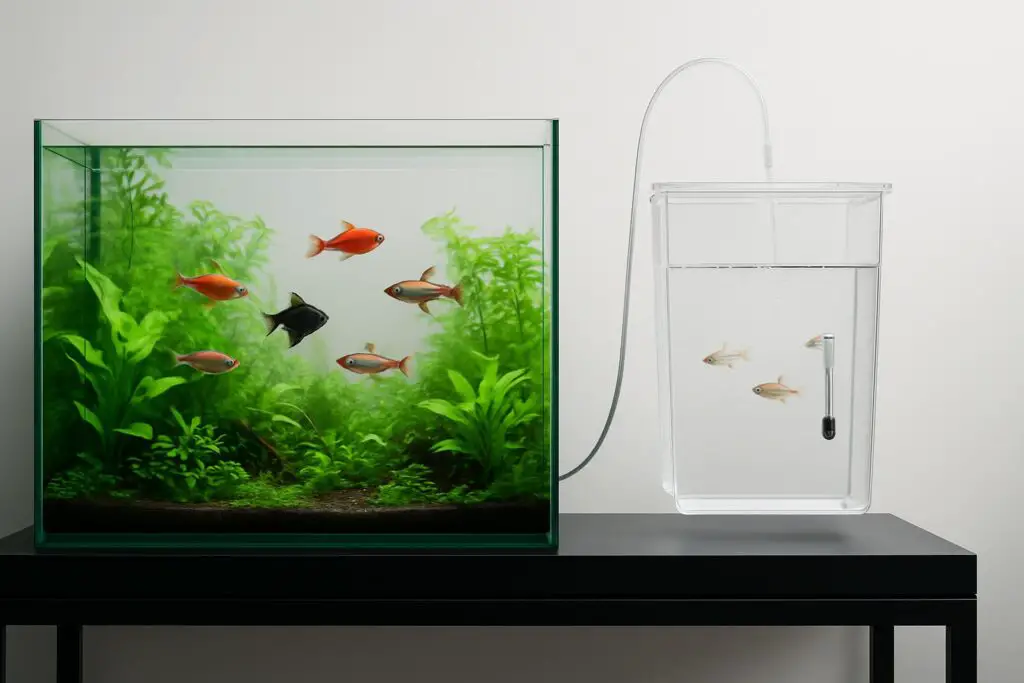
Use a bare bottom tank with a lid, a seeded sponge filter, a heater, and simple hides. Match temperature and pH to your display. Observe for 4 to 6 weeks. Feed lightly and perform frequent small water changes with dechlorinated, temperature matched water. Only move fish to the display when they are eating well, active, and stable.
Stocking Pace and Filter Capacity
Add fish slowly
Even a cycled filter needs time to scale up. Add small groups and then wait 1 to 2 weeks. Test ammonia and nitrite during this period. If either is above zero, do a water change and pause new additions.
Avoid large bioload jumps
Big additions overwhelm bacteria and drop oxygen. Old fish tolerate the temporary spike. New fish do not. Slow and steady prevents this mismatch.
Compatibility and Aggression
Territory and pecking order
Established fish defend space and food. New fish take the hits. Aggression raises stress hormones and suppresses immunity.
Reduce conflict before release
Rearrange decor before adding newcomers. Add fish in groups when the species needs it. Introduce after lights out to lower visual targeting. Use an acclimation box for known bullies or delicate species. Feed lightly right before release to distract residents.
Pathogens and Immunity
Resident microbes are not neutral
Your tank has its own mix of bacteria, protozoa, and parasites. Old fish have partial resistance. New fish do not. Quarantine and stable water give new fish time to adapt and build resilience.
Biosecurity matters
Use dedicated nets and buckets for quarantine. Disinfect tools with dilute bleach or hydrogen peroxide, then rinse and dechlorinate. Wash hands between tanks. Do not share water between systems.
Source Quality and Selection
Choose healthy stock
Observe fish at the store. Look for clear eyes, full bellies, smooth breathing, tight fins, normal swimming, and no flashing. Ask to see the fish eat. Avoid tanks with dead or gasping fish.
Avoid hidden parameter traps
Some stores run low salinity in marine systems or very soft or hard water in freshwater. Match your home water to the fish you buy. Do not try to force a big parameter shift after purchase.
Water Change Technique
Match more than just temperature
Dechlorinate all new water. Match temperature to within 1 Celsius degree. Keep pH and TDS close to your tank to avoid osmotic shock. For large changes, split them into smaller changes across a day.
Routine that protects new fish
Change 25 to 50 percent weekly in most community tanks. Vacuum gently to avoid stirring deep anaerobic pockets. Clean prefilters and sponge filters in removed tank water, not under the tap.
Feeding for Recovery and Stability
Feed small, frequent, and varied
New fish do better with small meals two to three times per day, then taper to your normal routine. Use a mix of high quality pellets or flakes, frozen foods, and species appropriate greens or live foods. Soak frozen foods and avoid overfeeding.
Watch behavior over numbers
Active exploration, clear eyes, extended fins, and steady breathing are good signs. Hiding all day, clamped fins, or floating near the surface signal stress. Adjust care and test water if you see these signs.
Parameter Matching Details
Freshwater community baselines
For most community species, aim for ammonia and nitrite at zero, nitrate under 20 to 40 mg per liter, KH at 3 to 8 dKH, stable pH with minimal daily change, and a stable temperature suitable for the species.
Hardness and species choice
Do not force soft water species into hard alkaline water or the reverse. Pick species that match your tap or be ready to condition water the same way every time.
Special Cases: Marine, Shrimp, and Sensitive Species
Marine fish
Match salinity with a calibrated refractometer. Many retailers run low salinity. Raising salinity too fast after purchase causes osmotic stress. Acclimate slowly and provide strong aeration and skimming.
Shrimp and delicate nano fish
These do poorly with any ammonia, copper, or temperature swings. Acclimate longer, keep KH and GH stable, and avoid copper contamination from pipes or medications. Use a mature, algae rich tank.
Emergency Actions When New Fish Struggle
Stabilize first
Increase aeration. Test ammonia and nitrite. If above zero, perform an immediate partial water change and dose a reputable water conditioner that binds ammonia and nitrite. Dim lights and stop feeding for 24 hours.
Short term isolation
If aggression is the problem, move the fish to quarantine or use an acclimation box in the display until the fish is eating and stronger.
A Simple Prevention Checklist
Before buying
Research species, size, diet, and parameter needs. Test your tank. Ammonia and nitrite must be zero. Nitrate under 20 to 40 mg per liter. Temperature stable. KH and pH stable. Have a ready quarantine tank with a seeded sponge filter.
On purchase day
Choose healthy fish and ask to see them eat. Bring insulated transport if possible. Go straight home. Turn off display lights. Acclimate as described. Net fish into quarantine, not the display.
During quarantine
Observe daily for appetite, posture, breathing, and waste. Keep water pristine with small, frequent changes. Feed small, varied meals. Complete 4 to 6 weeks before moving to the display.
Display introduction
Rearrange decor. Add fish after lights out. Feed residents a small snack. Watch for aggression. Increase aeration for the first week. Test water every few days. Do not add more fish for 1 to 2 weeks.
Common Mistakes to Avoid
Dumping bag water into the tank
This brings in pathogens and ammonia. Always net fish out of the bag.
Adding too many fish at once
Filter bacteria need time to increase. Add slowly and test often.
Skipping quarantine
This is the most common cause of losses in stable displays. Quarantine prevents system wide problems.
Chasing pH with quick fixes
Rapid pH swings kill fish. Keep KH steady and match species to your baseline instead of forcing big changes.
Troubleshooting Patterns
New fish die within 24 to 72 hours
Likely causes include poor acclimation, temperature or pH shock, low oxygen, or high ammonia from transport water. Review acclimation and aeration. Test and correct water.
New fish fade over 1 to 2 weeks
Likely causes include chronic aggression, hidden ammonia or nitrite spikes after feeding, parameter mismatch, or pathogen exposure. Strengthen quarantine, add hiding places, improve filtration and flow, and match parameters more closely.
Conclusion
Old fish are fine because they are adapted to your exact setup. New fish die when several small stressors hit at once. Prevent this with a complete cycle, strict quarantine, slow acclimation, matched parameters, strong oxygen, gentle feeding, and steady stocking. Do these steps the same way every time. Losses drop, fish thrive, and your tank becomes predictable.
FAQ
Q: Why do my new fish die while the old fish are fine?
A: Old fish are adapted to your water, microbes, and routines, while new fish face transport stress, parameter mismatches, and aggression all at once. Fix this with full cycling, quarantine, slow acclimation, matched parameters, strong oxygen, and slow stocking.
Q: How long should I quarantine new fish?
A: Observe and stabilize new fish in a separate tank for 4 to 6 weeks before moving them to the display.
Q: What is the best way to acclimate new fish?
A: Float the sealed bag 15 to 20 minutes to match temperature, then add small amounts of tank water to the open bag over 30 to 45 minutes, net the fish into the tank, and keep lights low. Never pour store water into your system.
Q: How fast can I add new fish to a cycled tank?
A: Add small groups, then wait 1 to 2 weeks while testing ammonia and nitrite. If either rises above zero, do a water change and pause new additions.
Q: What water parameters should I aim for to keep new fish alive?
A: Keep ammonia and nitrite at zero, nitrate under 20 to 40 mg per liter, KH steady at about 3 to 8 dKH, pH with minimal daily change, temperature within 1 Celsius degree per day, and strong oxygenation.