
We are reader supported. When you purchase through links on our site, we may earn an affiliate commission. Also, as an Amazon affiliate, we earn from qualifying purchases.
New fish die while old ones live because the tank feels stable to you but not to the newcomers. Old residents are adapted to your water, your maintenance pattern, your microbe community, and your feeding routine. New fish arrive weakened by transport, shocked by different parameters, and exposed to unfamiliar germs. The good news is that you can break this pattern with a few disciplined steps. This guide explains the real causes and gives you a clear, beginner friendly plan to prevent losses.
Why this pattern happens
Old fish survive because they are acclimated, not because the tank is perfect. They tolerate small mistakes and swings that new fish cannot. New fish are pushed over the edge by a stack of stressors arriving at once. If you remove those stressors, losses drop sharply.
Tank maturity matters more than you think
The nitrogen cycle in practice
The nitrogen cycle converts toxic ammonia to nitrite, then to nitrate. In a mature tank, biofilters and surfaces host bacteria that run this cycle fast enough to match waste production. In a new or recently disturbed tank, these bacteria are not abundant or stable, so ammonia and nitrite can appear after feeding, cleaning, or adding fish.
Zero on a single test does not prove stability. Stability means the system can handle extra waste and small mistakes without spiking. New fish push bioload and often trigger mini cycles.
Stable bacteria and microfauna
Beyond nitrifiers, mature tanks carry biofilm and microfauna that help process waste and clean surfaces. Fresh setups lack this support network. Old fish slowly adapted to the existing micro life. Newcomers face an unfamiliar biome while already stressed.
Why old fish cope better
Old fish have stronger gills and slime coats in your exact water. They have partial immunity to the pathogens present in your tank. They know the feeding schedule, current, and hiding spots. New fish do not, so the same minor issues hit them harder.
Water parameters that crush newcomers
Ammonia and nitrite spikes
Any measurable ammonia or nitrite harms gills and immunity. Even brief spikes during feeding, after a water change, or after adding fish can be fatal to stressed newcomers. Test on the day you plan to add fish and the day after. If you ever read above zero for ammonia or nitrite, pause stocking.
Nitrate, pH, KH, GH, and TDS
High nitrate weakens fish over time. Large differences in pH, KH, GH, and total dissolved solids between store water and your tank cause osmotic stress. A fish may look fine in the bag and then crash hours later. If your water is very soft or very hard, match stock to your water or adjust carefully over time, not in one jump.
Before adding fish, test ammonia, nitrite, nitrate, pH, KH, temperature, and TDS or conductivity if available.
Temperature swings and oxygen
Transport bags are oxygen rich but temperature unstable. Your tank may be warm but poorly oxygenated if the surface is still. Warm water holds less oxygen. Combine high temperature, low surface agitation, and a stressed fish, and you get gasping and rapid decline.
Chlorine, chloramine, and metals
Tap water must be dechlorinated every time. Many cities use chloramine, which needs a conditioner that handles both chlorine and ammonia byproducts. Some taps contain heavy metals that also require binding by a quality conditioner. If a water change right before or after fish arrival uses untreated water, losses can follow within hours.
Stress and acclimation are make or break
Transport shock is real
Fish arrive dehydrated at the cellular level, with elevated cortisol, and often with gill irritation from low level ammonia in the bag. The bag pH is usually low, keeping ammonia in a less toxic form. Once you open the bag and let in air, pH rises and ammonia becomes more toxic. Rough or rushed acclimation magnifies this shock.
Drip acclimation that actually protects fish
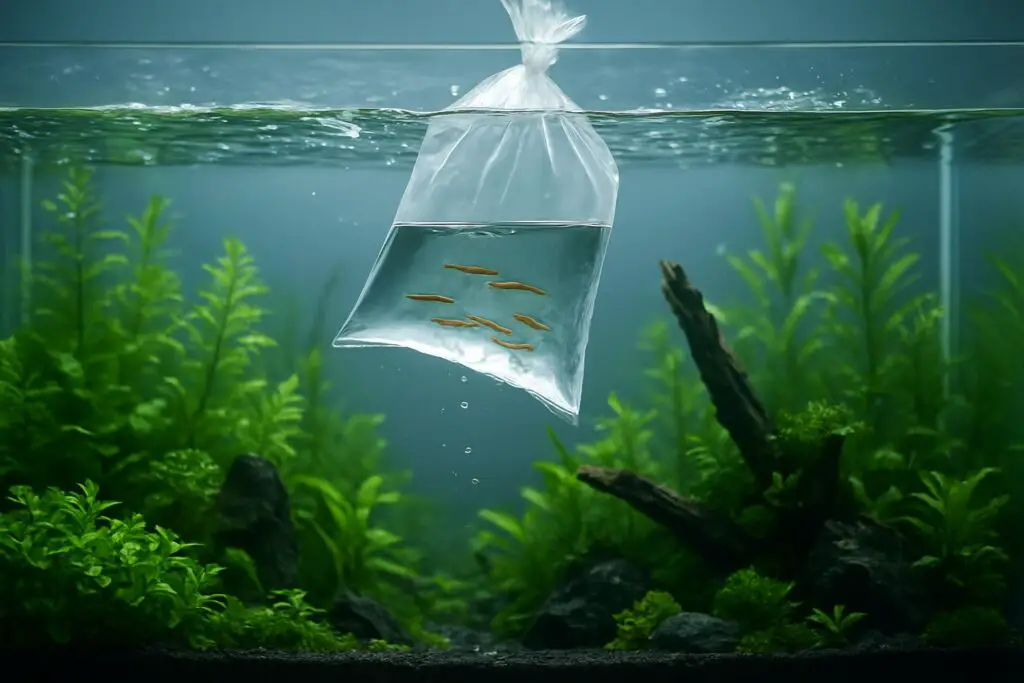
Turn off aquarium lights. Dim the room. Float the sealed bag for 15 to 20 minutes to equalize temperature. Open the bag, discard some water, and secure it in a bucket or container.
Start a siphon from the tank using airline tubing with a valve or tight knot. Aim for 2 to 4 drops per second into the container. When the volume doubles, discard half and repeat once more. Total time should be 30 to 60 minutes for most fish, 60 to 120 minutes for invertebrates or sensitive species.
Net the fish and place it into the tank or quarantine tank. Do not pour store water into your system. Keep lights off for the rest of the day.
Drip acclimation is safest for most fish and invertebrates; for hardy freshwater fish, a slower cup method can work if store and home water are very similar.
Light, feeding, and handling after arrival
Keep lights off for the first day. Offer a very small feeding after several hours if the fish are active. Do not chase or net again. Reduce noise and vibrations near the tank. Stable, quiet time helps fish recover faster than food does.
Disease dynamics that punish new fish
Old immunity versus naive newcomers
Old fish have partial immunity to the pathogens living in your tank. New fish from a different source have no such immunity and carry different pathogens of their own. When mixed, both sides face diseases they have not seen. The result is often an outbreak that only hits the newcomers at first.
Quarantine essentials
Quarantine new fish for 2 to 4 weeks in a separate tank.
The quarantine tank should have a seasoned sponge filter, a heater, hiding places, and simple lighting. Test daily during the first week. Perform small, frequent water changes to keep ammonia and nitrite at zero and nitrate low. Observe appetite, breathing, swimming, and spots or frayed fins. Treat only if you see clear symptoms, and follow label directions exactly.
Cross contamination control
Use separate nets, buckets, and siphons for quarantine and display tanks. Wash and dry your hands between tanks. Disinfect tools with a mild bleach solution, rinse well, and let them fully dry. Many outbreaks start with shared tools, not with fish.
When to treat and when to wait
Do not medicate out of habit. Many shipping issues resolve with clean water, oxygen, and time. If fish show clear symptoms such as visible parasites, rapid breathing, clamped fins, fluffy growths, or ulcers, isolate and treat in quarantine. Keep treatment simple and avoid mixing multiple medicines unless instructions say it is safe.
Stocking and compatibility shape survival
Aggression and territory
Old fish hold territory and will defend it. New fish enter as intruders. Aggression peaks in tight spaces with few line of sight breaks. Rearrange decor before adding new fish, add extra caves or plants, and add more than one new fish when appropriate to spread attention of dominant individuals.
Schooling and social stress
Many species feel secure only in groups. A single schooling fish will hide, skip meals, and decline. Match group size to species. Keep shoalers in groups of six or more when space allows. For territorial species, add in compatible ratios recommended for the species.
Bioload and space
Overstocking turns every small mistake into a big problem. Aim for modest stocking and give fish room to dodge each other. New fish join the bottom of the social ladder and need extra hiding spaces and visual breaks to rest.
Filtration, flow, and maintenance
Filter care without crashes
Filters hold the majority of your beneficial bacteria. Clean media gently in removed tank water, not under the tap. Stagger maintenance so you do not clean all media at once. Replace cartridges only when falling apart, and seed new media alongside old for several weeks.
Aeration and surface agitation
Ensure visible surface movement at all times. Add an airstone or raise filter output to ripple the surface. This improves oxygen, stabilizes pH, and supports your bacteria. Oxygen is the cheapest insurance for new fish.
Water change discipline
Perform regular, moderate water changes weekly. Match temperature closely, dechlorinate properly, and refill slowly. Large, infrequent changes swing parameters and can shock new fish. Smaller, consistent changes are safer.
Food and nutrition during the first month
Transitioning diets
Fish from farms or stores often eat different foods than you plan to feed at home. Start with what they recognize if possible, then blend in your staple food over a week. Use high quality, fresh food that suits the species and mouth size. Avoid overfeeding on the first days.
Feeding schedule for new fish
Feed tiny portions two to three times daily for the first week, removing uneaten food after a few minutes. Watch bellies and waste to gauge digestion. As appetite and confidence improve, move to your normal schedule. Consistent small meals keep ammonia lower and stress down.
Source and selection matter
Picking healthy fish at the store
Choose alert fish with clear eyes, intact fins, full bellies, and smooth breathing. Avoid tanks with dead fish, clamped fins, or flashing. Ask staff to feed the fish so you can confirm appetite. Buy last in your errands and go straight home.
Match store and home parameters
Ask for the store water pH, temperature, and TDS. If your water is far off, plan a longer acclimation or choose species suited to your water. Bringing home fish raised in very different water increases losses even if the species is labeled hardy.
Step by step prevention plan
Before buying
Confirm the tank is fully cycled with zero ammonia and nitrite for several weeks. Keep nitrate modest with weekly changes. Stabilize temperature with a reliable heater. Ensure strong surface agitation. Prepare a quarantine tank with a seeded sponge filter.
Add hardscape and plants to create hides and break lines of sight. Verify your test kit is not expired. Plan stock that fits your water and tank size.
Arrival day
Turn off aquarium lights. Float sealed bags for 15 to 20 minutes. Set up drip acclimation as described earlier. Net fish into quarantine or the display if you are not quarantining. Keep lights off for the rest of the day. Do not feed immediately if fish are still stressed.
The first two weeks
Test daily in quarantine and every few days in the display after adding fish. Keep ammonia and nitrite at zero. Keep nitrate low with small, frequent water changes. Observe appetite, breathing, posture, and interaction. Correct aggression by adding hides or rehoming bullies. Feed small, frequent meals.
After quarantine
If fish eat well, breathe normally, and show no symptoms for two to four weeks, move them to the display. Match temperature and parameters carefully. Introduce during dim light. Rearrange decor to disrupt territories. Continue observation for one more week.
Troubleshooting checklist
Did you test ammonia and nitrite right before and after adding fish. Any value above zero is a stop sign. Fix the cycle and stocking rate first.
Is surface agitation strong. Gas exchange must be visible.
Did you dechlorinate correctly for your water supply. If your city uses chloramine, use a conditioner that handles it.
Did you acclimate slowly. Rushed temperature and parameter changes are common failure points.
Did you quarantine. Many outbreaks start from skipping quarantine.
Are fish compatible and in correct numbers. Social stress kills indirectly.
Is your filter clean but not sterilized. Washing media under the tap or replacing all media at once removes your biofilter.
Is your feeding light and frequent, not heavy. Overfeeding spikes ammonia and lowers oxygen.
Conclusion
New fish die while old ones live when transport stress, unstable parameters, poor acclimation, disease exposure, and social pressure stack up at once. You can prevent this with a mature, well oxygenated tank, careful acclimation, disciplined quarantine, compatible stocking, and steady maintenance. Add new fish only after the tank is fully cycled and stable for at least two weeks with zero ammonia and nitrite. Keep changes small and consistent, give fish time to adapt, and watch their behavior more than your calendar. Losses are not inevitable when you control the variables.
FAQ
Q: Why do new fish die while old ones live
A: New fish die while old ones live because transport stress, unstable parameters, poor acclimation, disease exposure, and social pressure stack up at once, while old fish are already adapted to your water, microbes, and routine.
Q: How long should I quarantine new fish
A: Quarantine new fish for 2 to 4 weeks in a separate tank.
Q: Do I need to drip acclimate every fish
A: Drip acclimation is safest for most fish and invertebrates; for hardy freshwater fish, a slower cup method can work if store and home water are very similar.
Q: What water tests should I run before adding fish
A: Before adding fish, test ammonia, nitrite, nitrate, pH, KH, temperature, and TDS or conductivity if available.
Q: How soon can I add new fish to a new tank
A: Add new fish only after the tank is fully cycled and stable for at least two weeks with zero ammonia and nitrite.