
We are reader supported. When you purchase through links on our site, we may earn an affiliate commission. Also, as an Amazon affiliate, we earn from qualifying purchases.
Your pond looks great until the water turns green and cloudy. This is algae taking over. The good news is that you can fix it and keep it clear. You only need to control a few key factors and follow a simple plan. This guide explains what causes green water, how to diagnose the type of algae, fast fixes that work, and long-term steps that hold the line. Stay with it and your pond will stay clear and healthy.
What Actually Turns Pond Water Green
Two Common Algae Problems
Green water comes from free-floating single-celled algae. It turns the water into pea soup, blocks visibility, and makes the pond look dirty.
String algae, also called filamentous or blanketweed, forms long threads on rocks, waterfalls, and plant stems. It can trap debris and spread fast in sunlit areas.
Both algae types feed on light and nutrients. Once they get a boost, they spread quickly. Your job is to remove the boost.
The Three Drivers of Algae
Algae thrives when three things line up at once. Excess nutrients like nitrate and phosphate. Strong sunlight reaching the water. Weak circulation and low oxygen, especially in warm weather. Break any of these and algae loses its advantage.
Quick Diagnosis Checklist
If the water is green and cloudy across the whole pond, you are dealing with suspended algae. A UV clarifier is the fastest fix, backed by good filtration and more plants.
If you see long green strings on edges and waterfalls, it is string algae. Manual removal, nutrient control, shade, and targeted treatment help most.
Test water for ammonia, nitrite, nitrate, and phosphate. Ammonia and nitrite should be zero. Nitrate should be kept low, ideally under 20 to 40 mg per liter. Phosphate should be as low as possible. High nitrate or phosphate signals overfeeding, heavy fish load, or poor maintenance.
Check sun exposure. Ponds in full sun most of the day will struggle unless you add shade or many plants.
Watch fish behavior. Gasping at the surface or lethargy can mean low oxygen, which often accompanies algae blooms. Increase aeration immediately if you see this.
Root Causes You Can Control
Excess Nutrients
Fish waste and uneaten food break down into ammonia, then nitrite, then nitrate. Leaves, pollen, and dead plant matter add more. Phosphate sneaks in from fish food, soil, and sometimes tap water. Algae consumes these nutrients and multiplies. The fix is to limit input and remove what accumulates.
Too Much Sun
Direct sun fuels algae all day. Warm water supercharges growth. Shading part of the pond and coverage from floating plants reduces the light that algae can use.
Clear, shallow areas heat fast and often grow more algae. Depth variation and plant cover help.
Weak Filtration or Uncycled Biofilter
A filter does two jobs. It traps physical debris and it grows beneficial bacteria that convert toxic ammonia and nitrite into nitrate. A new or undersized biofilter cannot keep up with waste. Until it matures, algae can take advantage of the extra nutrients.
Overstocking and Overfeeding
Too many fish or heavy feeding pushes the system over its limit. Every pellet that goes in becomes waste unless eaten quickly. Overfeeding is the fastest way to spike nutrients.
Stagnant Zones and Low Oxygen
Areas with little water movement collect debris and grow algae mats. Warm water holds less oxygen. Algae blooms can swing oxygen levels between day and night. Good flow and aeration stabilize the pond.
Debris and Sludge
Leaves, dead algae, and fish waste settle into a sludge layer. This becomes a continuous nutrient source. When disturbed, it clouds the pond and feeds more algae. Regular removal matters.
Runoff and Tap Water
Yard runoff can bring fertilizer and soil into the pond. Tap water can add phosphate or destabilize water chemistry if changed in big volumes. Control what reaches the pond and condition all new water.
Immediate Fixes That Work
Use a UV Clarifier for Green Water
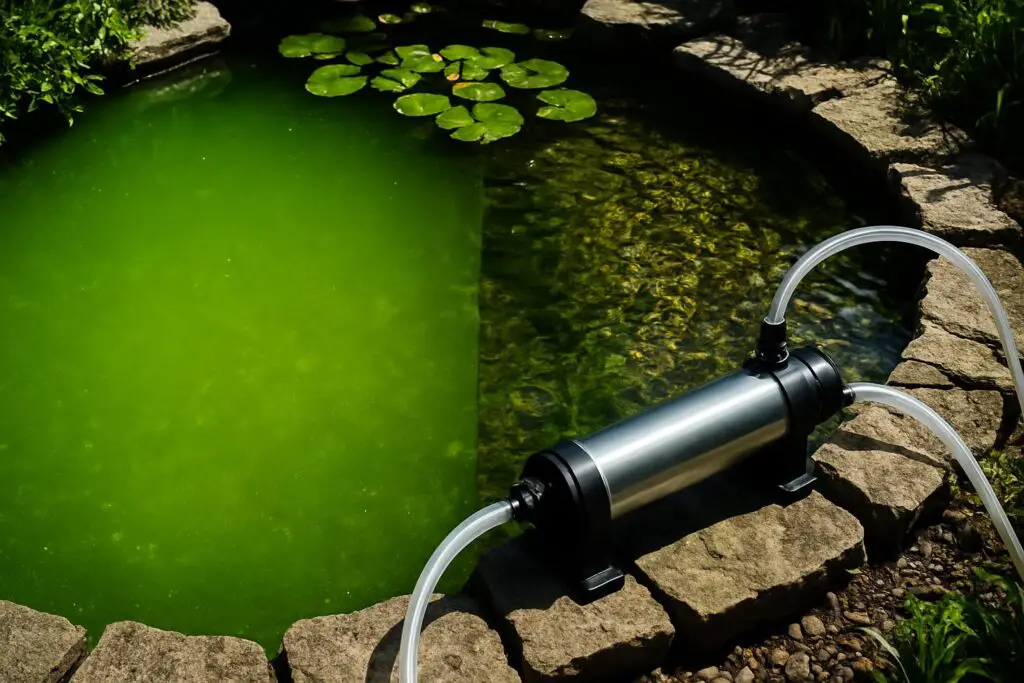
A UV clarifier uses ultraviolet light to clump and kill suspended algae cells as water passes through the unit. It does not remove nutrients, but it restores clarity quickly when sized and installed correctly.
Choose a UV unit rated for your pond volume. Plumb it so all water filters through it and slow the flow enough to allow contact time. Clean the quartz sleeve, replace the bulb on schedule, and run it continuously during the growing season. Expect improvement within days and clear water within one to two weeks in most cases.
Note that UV clarifiers do not remove string algae that grows on surfaces. That needs other steps.
Add Fine Mechanical Filtration and Flocculants
After UV breaks algae cells, you need to catch the clumps. Add fine filter floss or a polishing pad to your filter path and rinse or replace it often. A pond-safe flocculant can bind fine particles so your filter traps them more easily. Use products as directed and avoid overdosing.
Manual Removal for String Algae
Remove as much string algae as you can by hand or with a twirling brush. Pull from the base and lift slowly to avoid breaking it into fragments that reattach. Clean waterfalls, edges, and shallow shelves. This reduces biomass and prevents big oxygen drops when algae dies.
Use Algaecides Carefully
Algaecides can knock back algae fast, but dying algae consumes oxygen and can stress fish. If you choose to use one, follow the label closely, increase aeration before dosing, and remove or filter out dead algae soon after. Treat partial sections of the pond over several days rather than the entire pond at once to reduce risk. Do not rely on algaecides as your only tool. Fix the underlying causes or the algae will return.
Do Water Changes the Right Way
Small, frequent water changes dilute nutrients without shocking the system. Change 10 to 20 percent at a time. Match temperature and dechlorinate tap water to neutralize chlorine or chloramine. Vacuum the bottom as you remove water to export sludge. Avoid very large changes that can destabilize the biofilter and pH.
Build Long-Term Balance
Strengthen Your Biofiltration
Make sure your pump turns the entire pond volume through the filter about once per hour to once every two hours. Keep filter media clean but not sterile. Rinse sponges and pads in pond water during maintenance to preserve bacteria. Do not replace all media at once. If the filter is new, expect four to eight weeks for full cycling. Bottled starter bacteria can help seed the system.
Monitor ammonia and nitrite during this period. Keep feeding light. If either rises above zero, increase aeration and do small water changes.
Plant Your Way to Clear Water
Plants outcompete algae by using the same nutrients. Use a mix of types for best effect. Floating plants like water hyacinth or water lettuce provide fast shade and absorb nutrients from the water column. Submerged oxygenators like hornwort and anacharis use nutrients directly in the water. Marginal plants like irises, cattails, and pickerel rush pull nutrients from water as it passes their roots.
Aim for good plant coverage across the surface during the growing season. Water lilies add shade and reduce light penetration. If koi eat plants, protect roots with baskets or choose tougher species. Fertilize aquatic plants sparingly and only with pond-safe products, as over-fertilization can feed algae.
Improve Circulation and Aeration
Create steady movement from one end of the pond to the other. Use a pump strong enough for your pond volume and head height. Add a waterfall, fountain, or air stones to increase oxygen. Position returns to break up dead zones in corners and behind rockwork. Run aeration overnight when oxygen naturally dips.
Control Feeding and Stocking
Feed small portions that fish finish within one to two minutes. Skip days in cooler weather or when water tests show rising nitrate. Remove uneaten food. Do not add more fish until your filtration and plant growth can handle the current load. Heavily stocked koi ponds need larger filters, stronger pumps, and strict feeding control.
Add Shade and Manage Temperature
Target partial shade during midday. Use floating plants, lilies, pergolas, or shade sails to cut direct sun. In hot climates, avoid shallow wide shelves that overheat. Deeper zones help buffer temperature swings and protect fish during heatwaves.
Control Phosphate With Media
If phosphate tests high, add phosphate-removing media to your filter. Replace or regenerate it per the product instructions. Reducing phosphate starves algae over time. Rinse media before use to remove dust. Do not rely on media alone without addressing feeding and debris removal.
Use Barley Straw as Preventive, Not a Cure
Barley straw in a mesh bag, placed near moving water, can help prevent string algae by releasing compounds as it decomposes slowly in oxygenated water. It is not a fast fix and works best as part of a balanced plan. Replace it as it breaks down and avoid stuffing it in low flow areas where it may rot.
Block Runoff and Keep Edges Clean
Build a small berm or edge of rock around the pond to keep lawn fertilizer, soil, and mulch out during rain. Clean skimmers and pre-filters often. Net the pond during leaf fall to reduce debris load. The less that enters, the less you must remove later.
Maintenance You Can Actually Keep
Weekly
Test ammonia, nitrite, nitrate, and phosphate. Rinse mechanical filter pads in pond water. Skim leaves and net out debris. Do a 10 to 20 percent water change if nutrients or debris are high. Feed only what is eaten quickly.
Monthly
Vacuum sludge from shelves and the bottom. Inspect pump intakes and tubing for clogs. Check aeration and flow patterns. Thin and trim plants to keep coverage balanced and water circulating.
Seasonal
Spring brings nutrient spikes as temperatures rise. Start the UV early, restart filters, and increase plant numbers. Summer needs strong aeration and shade. Autumn needs leaf nets and frequent debris removal. Winter requires keeping a hole open in the ice for gas exchange if you overwinter fish. Adjust feeding and maintenance to the season to stay ahead of algae.
New Pond Green Water
New ponds almost always turn green at first. The biofilter is not mature, and algae absorbs the early nutrient surge. Expect four to eight weeks for the system to stabilize. During this time, feed lightly, seed the filter with bacteria, add fast-growing plants, and consider running a UV clarifier to maintain clarity. Be patient and avoid large cleanouts that reset the cycle.
Common Mistakes That Keep Ponds Green
Adding more fish before the filter can handle the load. Cleaning filters with tap water and killing beneficial bacteria. Overfeeding during warm spells. Skipping water testing and missing rising nutrients. Relying only on chemicals and ignoring root causes. Neglecting debris until sludge becomes a nutrient factory. Any one of these can undo weeks of good work.
When to Worry About Fish Health
If fish gasp at the surface, breathe rapidly, clamp fins, or crowd near the waterfall, oxygen is low. Increase aeration immediately and stop feeding. Test ammonia and nitrite and perform small water changes until both are zero. If water is very green, add UV and shade to reduce the bloom and stabilize oxygen swings.
Watch pH and hardness, especially after rain or large water changes. Stable water chemistry supports fish, plants, and biofilters and makes algae easier to control.
Putting It All Together
Clear ponds do not happen by accident. They happen when light, nutrients, and flow are kept in balance. For fast relief, use a UV clarifier for green water and remove string algae by hand. For lasting results, feed less, grow more plants, upgrade filtration, maintain strong circulation, and keep debris out. Small, regular actions beat occasional big cleanouts. In a few weeks, the water clears. In a few months, the system stabilizes. Stay consistent and your pond will stay clear, healthy, and easy to enjoy.
FAQ
Q: Why does my pond keep turning green even after cleaning?
A: The usual causes are excess nutrients, strong sunlight, and a biofilter that is not keeping up. Heavy cleaning can also reset beneficial bacteria. Reduce feeding, add shade and plants, strengthen filtration, and consider a UV clarifier to clear suspended algae while the system stabilizes.
Q: What is the fastest way to clear green water?
A: Install a properly sized UV clarifier, add fine mechanical filtration to catch clumped algae, and run it continuously. Support this with small water changes and good aeration. Most ponds see a clear improvement within days and clear water within one to two weeks.
Q: How do I stop string algae from taking over?
A: Remove it by hand, reduce nutrients with better filtration and feeding control, add shade and plant coverage, and use a targeted algaecide carefully with strong aeration if needed. Barley straw can help prevent regrowth as part of an overall plan.
Q: How much should I feed pond fish to avoid algae problems?
A: Feed small portions that fish finish within one to two minutes and skip days when needed. Remove uneaten food. Overfeeding is a major source of nitrate and phosphate that fuels algae.
Q: Can I fix a green pond without chemicals?
A: Yes. You can clear and maintain a pond with UV clarification, strong biofiltration, more plants, better circulation, shade, debris control, and small water changes. Algaecides are a last resort and require careful aeration and cleanup.