
We are reader supported. When you purchase through links on our site, we may earn an affiliate commission. Also, as an Amazon affiliate, we earn from qualifying purchases.
Feeding shrimp looks simple. Drop food in, watch them graze. In practice, crumbs float everywhere, filters pull fine powders away, and detritus piles up in the substrate. A shrimp feeding tube solves this by delivering food straight to a dish, keeping the tank clean and the colony focused. If you want consistent growth and fewer waste spikes in 2026, a good tube-and-dish kit is one of the easiest upgrades you can make.
What a shrimp feeding tube does
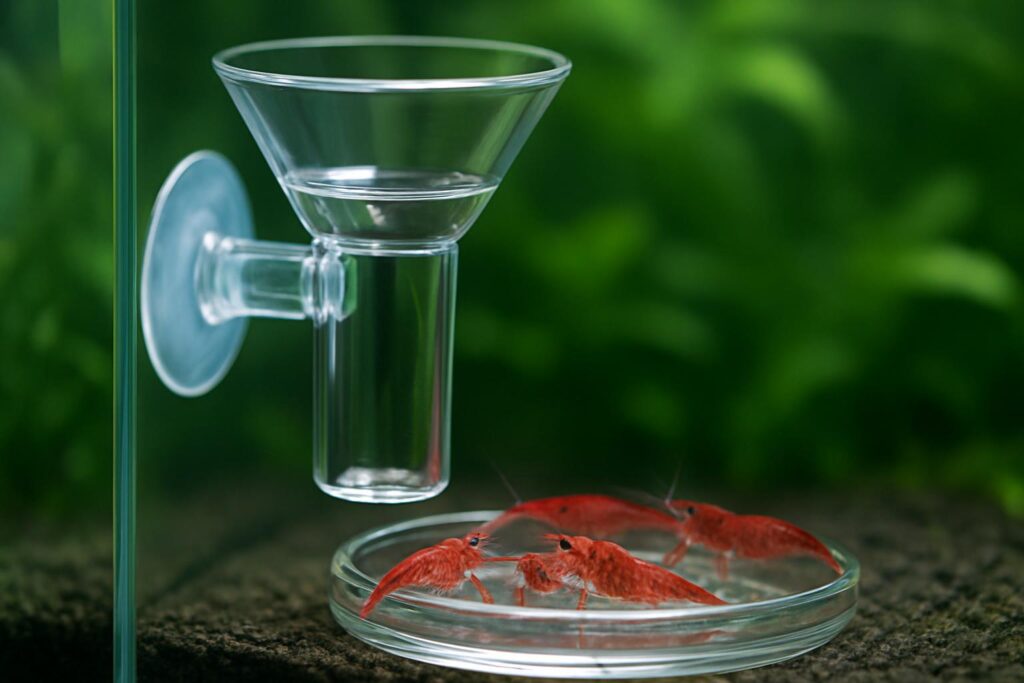
A feeding tube is a clear acrylic or glass tube that guides food directly to a fixed spot. A funnel or wide mouth at the top helps you dose pellets or powdered foods without spills. A dish at the bottom keeps food off the substrate, so shrimp gather in one place and leftover food is easy to remove. The result is better viewing, targeted feeding, and lower risk of overfeeding and planaria blooms.
Buying checklist for 2026
Material quality and clarity
Look for thick, seamless acrylic or borosilicate glass. Clear tubing helps you see clogs and dosing amounts. Avoid cloudy plastics and rough seams that attract biofilm too fast.
Length and diameter
Length should let the top end sit above the rim for easy dosing, while the bottom end reaches near the dish without touching it. For most nano tanks, a mid-length tube works. Wider diameter helps powders slide through and reduces clogging.
Mounting hardware
Secure suction cups or clamps are essential. Wobbly tubes scatter food. A simple bracket or suction cup with a firm grip is ideal for routine feeding.
Feeding dish design
Shallow, wide dishes let shrimp spread out. Glass or polished stainless resists scratches and makes cleaning fast. Slight lips help keep pellets from rolling out.
Ease of cleaning
Straight tubes without bends rinse clean. Modular parts that detach without tools save time. Smooth finishes resist stubborn biofilm.
The 4 best shrimp feeding tubes for 2026
1) hygger Shrimp Feeding Tube Set with Glass Dish
This set balances clarity, secure mounting, and a clean glass dish. The acrylic tube is clear and straight, the funnel is easy to load with powders or micro pellets, and the holder keeps the tube stable during feeding. The dish is wide and shallow, which helps a whole colony feed together without stacking.
Why it helps: Guided feeding reduces scatter and keeps food where you can monitor intake. The dish makes leftover removal straightforward, cutting down on ammonia spikes.
Best for: New keepers who want a reliable, no-fuss kit for small to mid-size shrimp tanks.
Potential downsides: The suction mount needs a clean glass pane to hold at full strength. On textured or old glass it may slip unless you re-seat it after cleaning.
What stands out in 2026: Smooth, clear acrylic that does not cloud quickly, and a dish shape that fits common nano layouts without blocking flow.
Setup tip: Seat the dish on bare glass or on top of a small slate tile. Align the tube tip 1–2 cm above the dish so pellets drop cleanly without splashing.
2) SLSON Acrylic Shrimp Feeding Tube with Food Tray
SLSON’s kit is a simple, effective choice when you want dependable hardware without frills. The acrylic tube is straight and wide enough for powders, the funnel is basic but works, and the included tray is easy to rinse. The mounting cup holds position well if you press out air bubbles during installation.
Why it helps: Consistent feeding to a single tray helps you gauge portion size and track how fast the colony finishes meals.
Best for: Budget-conscious shrimp keepers who still want a clear, stable feed path that saves time on cleanup.
Potential downsides: The acrylic can pick up micro-scratches if scrubbed with rough pads. Use a soft brush only.
What stands out in 2026: Reliable diameter for powdered foods, which many breeders prefer for juveniles. Good fit in standard rimless and rimmed tanks.
Setup tip: When dosing fine powders, tap the tube gently as you pour. This keeps the column moving and prevents clumps near the base.
3) JARDIN Aquarium Feeding Tube and Shrimp Dish Combo
JARDIN’s combo is practical for keepers who want a slightly larger feeding area. The dish has a modest lip that keeps pellets from rolling, and the tube’s opening is generous for mixed particle foods. The overall build feels sturdy for the price.
Why it helps: A bigger dish reduces crowding and makes behavior checks easier. It also slows food loss to curious snails.
Best for: Mixed tanks with shrimp and a few snails, or higher-density shrimp colonies that pile onto pellets quickly.
Potential downsides: The dish footprint takes more floor space, which can be tight in heavy scapes. Position it in a visible but open area.
What stands out in 2026: Consistently smooth edges that do not trap debris. This shortens cleaning time and limits biofilm buildup.
Setup tip: Angle the tube slightly toward the glass so the funnel sits away from the light brace, making refills simpler during weekly feedings.
4) SunGrow Transparent Shrimp Feeding Tube with Funnel and Dish
SunGrow’s set is a long-standing favorite for shrimp keepers who value consistent parts and a clear viewing experience. The tube is transparent with a snug funnel, the dish is low profile, and the holder keeps alignment stable after water changes. It is a direct upgrade over freehand feeding for nano layouts.
Why it helps: Precision feeding limits waste. Lower waste keeps nitrate creep under control and stabilizes molt cycles.
Best for: Nano tanks and breeders who feed several small meals per day and want each portion to reach the same spot.
Potential downsides: The tube opening can be snug with oversized pellets. Break them up or pre-soak to avoid bridging in the tube.
What stands out in 2026: Clear fit-and-finish and a dish profile that does not trap air under it when you set it down.
Setup tip: Pair with a soft-tip feeding pipette for dosing powdered foods into the funnel without creating dust clouds.
How to set up and use a shrimp feeding tube
1) Placement and height
Pick a front corner or mid-foreground spot you can see from your main viewing angle. Keep the dish away from strong direct flow, but not in a dead zone. Place the tube tip slightly above the dish, not touching it. This avoids vibrations that startle shrimp and prevents waste from getting trapped at the lip.
2) Feeding technique by food type
Pellets and granules: Drop a few at a time, watch how quickly they are gathered. In a healthy colony, most pellets should be covered within minutes and gone within a couple of hours.
Powders: Use a small funnel or pipette to add pinches slowly. Tap the tube to keep particles moving. Powders should form a thin layer in the dish, not a mound.
Blanched veggies: Cut small pieces and nudge them down the tube with a feeding stick. Place only what shrimp can finish within a few hours.
3) Portion control
Feed less than you think the first week. Watch how fast food disappears and how many shrimp attend. Add small increments until you find a routine they finish consistently.
4) Maintenance and cleaning
Rinse the tube in dechlorinated water after each use. A soft brush clears biofilm without scratching. Lift the dish after meals and remove leftovers. Weekly, soak the dish in a mild tank-safe solution if you see stubborn film, then rinse well before returning it to the tank.
Tips for different tank setups
Heavily planted nano tanks
Use a shallow dish and a shorter reach so you can place it in a small clearing. Keep the tube path free of overhanging stems to avoid knocking plants during dosing.
Rimmed tanks
Check that the funnel sits above the rim and that the mount clears any brace. Some mounts slide better on vertical panes; try front-right placement for easy access.
Bigger colonies and mixed species
Choose a wider dish to prevent crowding. If snails outcompete shrimp, feed smaller, more frequent portions so shrimp get first access.
Common mistakes to avoid
Letting food sit overnight
Leftover food is a waste spike waiting to happen. Remove what remains after a few hours.
Overfilling the tube
Large clumps push air and can bridge, causing a sudden dump. Dose slowly and tap the tube as you go.
Placing the dish in dead zones
Zero flow leads to stale pockets and film. Aim for gentle circulation that still lets shrimp graze comfortably.
Scratching acrylic during cleaning
Use soft brushes. Avoid abrasive pads. Scratches collect biofilm faster and cloud the view.
Why a feeding tube improves shrimp health and viewing
Targeted feeding cuts waste, stabilizes water quality, and keeps your maintenance routine predictable. Shrimp gather at the same place, so you can spot issues early, such as weak appetite or uneven growth. A clear tube and dish make feeding measurable and repeatable, which is vital if you are raising juveniles or dialing in a new diet.
Conclusion
In 2026, shrimp feeding tubes remain one of the simplest tools for clean, controlled feeding. The hygger set excels for ease of use and clarity. SLSON offers dependable value. JARDIN gives more space for busier colonies. SunGrow stays strong for precise daily routines. Any of these will help you feed cleanly, watch behavior closely, and keep the substrate free of trapped leftovers. Pick the size and dish shape that fits your scape, mount it securely, and keep portions modest. Your shrimp and your filter will both benefit.
FAQ
Q: What does a shrimp feeding tube do that regular feeding does not?
A: It guides food straight to a dish, prevents scatter, keeps the tank cleaner, and makes leftover removal easy.
Q: How high should I position the tube tip above the dish?
A: Place the tube tip slightly above the dish, about 1–2 cm, so pellets drop cleanly without touching the dish.
Q: Can I use powdered foods with these tubes?
A: Yes. Use a small funnel or pipette and tap the tube to keep powders moving so they do not clump.
Q: How often should I clean the feeding tube and dish?
A: Rinse the tube after each use and lift the dish to remove leftovers. Do a deeper clean weekly if you see stubborn biofilm.
Q: What is the most common mistake when using a feeding tube?
A: Overfilling the tube or letting food sit overnight, both of which increase waste and risk water quality issues.