
We are reader supported. When you purchase through links on our site, we may earn an affiliate commission. Also, as an Amazon affiliate, we earn from qualifying purchases.
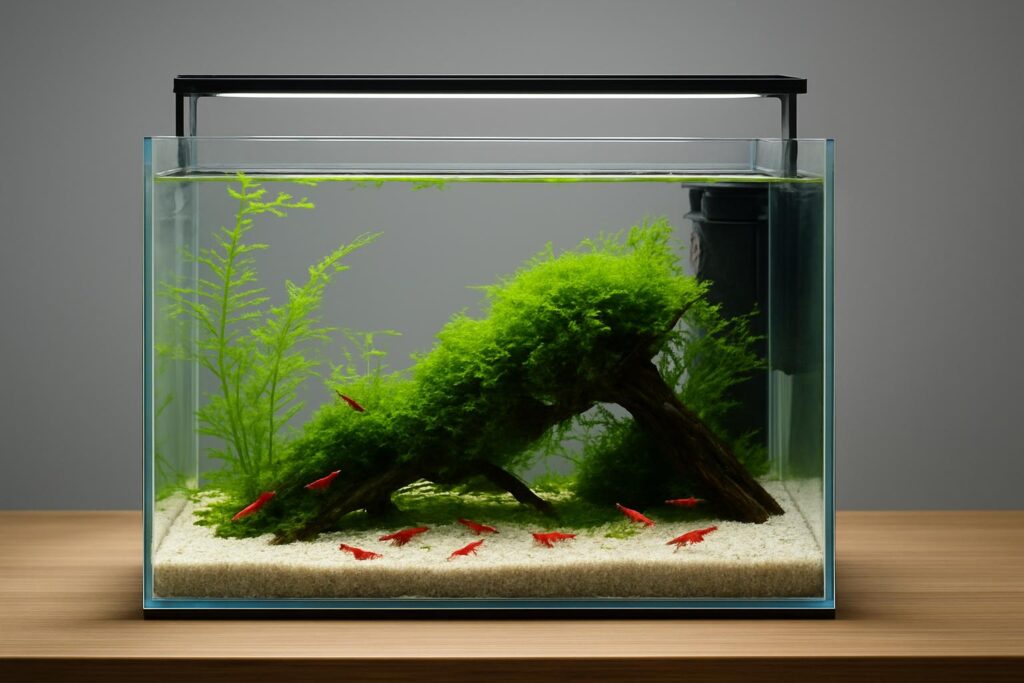
Shrimp keeping exploded in popularity because it is relaxing, colorful, and surprisingly budget friendly. A good starter kit does most of the heavy lifting for you. It handles filtration, lighting, and basic hardware so you can focus on stable water, plants, and a healthy colony. This guide picks five reliable kits for 2026, explains why they work for shrimp, and shows what to add to make them safe for baby shrimp and easy to maintain. The goal is simple setup, a clean look, and steady water parameters that keep shrimp breeding and grazing.
What To Look For In A Shrimp Tank Starter Kit
Right size for stability
For beginners, 5 to 10 gallons is the sweet spot. It gives enough water volume to resist sudden swings in temperature and parameters, yet stays compact for a desk or counter. Smaller than 5 gallons raises the difficulty. Bigger than 10 gallons is great but often costs more and needs stronger furniture.
Gentle, shrimp safe filtration
Shrimp need oxygen and biofiltration but not strong currents. Kits with an internal chamber, a hang on back filter, or a low flow internal filter do fine as long as you add a sponge pre filter on the intake. This is critical to protect baby shrimp. Look for adjustable flow or a way to baffle the output. Sponge media or bio rings help build the bacteria bed that removes ammonia and nitrite.
LED light that plants can use
Shrimp love planted tanks. Moss, ferns, and floaters trap food and give babies cover. A kit light should support low to medium plants and not overheat the water. A clear lid keeps evaporation down and prevents jumpers while still letting light in. Avoid harsh blue only accent lights and aim for a neutral white spectrum.
Heater and temperature stability
Neocaridina varieties like Cherry or Blue Dream do well around 70 to 76 Fahrenheit. If your room floats in that range year round, you can skip a heater. If it dips, a small adjustable heater helps. Caridina types often prefer cooler water and softer parameters, which takes more planning. Start with Neocaridina for the easiest path.
Included parts vs add ons you still need
Starter kits handle the tank, filter, and light. You still need a thermometer, test kit, dechlorinator if you use tap, a pre filter sponge for the intake, substrate, and hardscape. Many keepers use remineralized reverse osmosis water for control, but stable dechlorinated tap can work for Neocaridina if it is not extreme. Always cycle the filter for 4 to 6 weeks before adding shrimp.
5 Best Shrimp Tank Starter Kits for 2026
1. Fluval Spec V 5 Gallon Aquarium Kit
The Fluval Spec V remains a top pick for shrimp because it blends a clean rimless look with a hidden rear filtration chamber. You get three stage filtration in a compact footprint that compliments a simple aquascape of moss, wood, and a few ferns. The narrow media chamber builds a strong bio bed and keeps hardware out of sight.
Why it helps: The rear chamber shields the filter and heater from shrimp. Flow can be dialed down or baffled, which protects babies and keeps them from being pushed around. The light supports low to medium plants, which is perfect for moss dominated layouts that shrimp love to graze on.
Best for: Beginners who want a premium feel, a planted scape, and a calm flow pattern. This is ideal for Neocaridina starter colonies.
Setup tips that matter: Add a sponge pre filter to the intake slots in the rear chamber so baby shrimp cannot slip through. Cycle the filter with the included foam and biomedia for at least 4 weeks. Use fine gravel or sand and a thick pad of moss over wood or rock. Keep flow low so detritus settles where shrimp can graze.
Potential downsides: The pump out of the box can feel lively. Baffle the outlet or reduce the setting to keep current gentle. The rectangular footprint is tall for its length, so scape pieces need extra height to fill the view.
Verdict: A polished, reliable 5 gallon with smart filtration that adapts well to shrimp. Add a pre filter sponge and it becomes both safe and simple to run.
2. Marina 5 Gallon LED Aquarium Kit
The Marina 5 gallon LED kit is a straightforward glass tank with a slim filter and an LED canopy. It aims for quiet operation and minimal fuss, which suits a low tech shrimp setup. The filter uses a cartridge plus bio media, and the LED is bright enough for mosses, Anubias, and beginner stems with measured fertilization.
Why it helps: Shrimp benefit from a gentle hang on back filter when the intake is guarded. The tank proportions give decent surface area for gas exchange. The light is cool running and keeps maintenance predictable.
Best for: New keepers who want a clean glass tank with familiar hang on back filtration and a simple hood. Works well in offices and bedrooms where you want quiet running gear.
Setup tips that matter: Slip a sponge pre filter over the intake tube immediately. Start with low flow and raise it slightly only if film builds on the surface. Plant the back with moss and ferns, add a clump of subwassertang, and float a small mat of Salvinia to soften the light and stabilize pH swings.
Potential downsides: Cartridges cost more over time if you replace them often. Rinse and reuse to preserve bacteria and save money. The hood limits tall emergent plants, so stick to compact species.
Verdict: A no drama 5 gallon with quiet filtration and a practical LED. With a pre filter sponge and patient cycling it becomes a reliable first shrimp tank.
3. Tetra Crescent 5 Gallon Acrylic Aquarium Kit
The Tetra Crescent 5 gallon uses a curved front acrylic body that is light and clear. The low profile LED integrates into the lid, and the internal Whisper style filter tucks against the back wall. The shape creates a wide viewing panel, which makes shrimp watching easy even from across the room.
Why it helps: The internal filter can be tuned for low flow, which suits small shrimp. Acrylic holds heat slightly better than glass, which helps if your room runs a bit cool. Light diffusion from the curved front produces pleasant coverage for moss and low demand plants.
Best for: Small spaces where a lightweight, curved front tank looks good. Kids rooms, kitchen counters, and side tables benefit from the broad viewing angle.
Setup tips that matter: Use a fine sponge over the filter intake and reduce flow during the first month while biofilm establishes. Plant a dense foreground of moss and add a cave or leaf litter zone for baby shelter. Keep cleaning tools non abrasive to avoid acrylic scratches.
Potential downsides: Acrylic scratches if you use rough pads or gravel near the front glass. The internal filter can produce a splash if water level drops, so top off often to protect shrimp from climbing the intake area.
Verdict: Lightweight, bright, and shrimp friendly with the right intake guard. A practical starter that puts viewing first.
4. Aqueon LED MiniBow 5 Gallon Aquarium Kit
The Aqueon LED MiniBow 5 pairs a bow front look with a compact power filter and a simple LED hood. It fits neatly on desks and end tables and remains one of the easiest small tanks to run. The QuietFlow filter is serviceable, and the hood keeps evaporation and dust out of the water.
Why it helps: The footprint gives you good planting depth for wood and ferns, and the bow front expands the viewing area. With an intake sponge and low flow, shrimp can graze without stress. The hood prevents escapes and stabilizes temperature in variable rooms.
Best for: First time shrimp keepers who want a tidy, compact kit that looks finished out of the box. Great for a work from home desk or nightstand.
Setup tips that matter: Add a sponge pre filter and set the outflow to the lowest setting. Cover the intake gap behind the cartridge with sponge to stop baby shrimp from entering the filter box. Plant moss on a small branch, use inert sand, and keep feeding light to encourage grazing.
Potential downsides: The stock light supports low light plants but not demanding carpeting species. If you plan to grow high light plants, choose a stronger lamp or a different kit. The filter media slot is narrow, so trim sponge to fit.
Verdict: Straightforward, compact, and safe with a few small tweaks. A dependable first shrimp home that keeps maintenance short.
5. Hygger Horizon 8 Gallon LED Glass Aquarium Kit
The Hygger Horizon 8 gallon gives extra water volume in the same footprint class. The curved front adds depth to scapes, and the included LED offers adjustable brightness and simple timing. An internal filter provides circulation and biofiltration while keeping the back of the tank tidy.
Why it helps: More water means more stability and a larger shrimp colony long term. The extra space allows driftwood, a carpet of moss, and a background of ferns or stem plants without feeling crowded. Adjustable light intensity helps tune algae and plant growth for a balanced look.
Best for: New keepers who want extra buffer against parameter swings and room to expand the colony. Good for a living room display with a low tech planted layout.
Setup tips that matter: Fit a sponge guard to the intake. Start the light at medium and increase only if plants stall. Place the filter output near the surface for gas exchange while keeping deep water calm. Add a few floating plants to reduce glare and give shrimp overhead cover.
Potential downsides: The internal filter can take space inside the tank. Plan hardscape to hide it and leave flow paths open. The curved front magnifies any algae film, so wipe the glass weekly to keep the view crisp.
Verdict: A roomy starter kit that brings stability and display appeal. With careful intake guarding and patient cycling it becomes a reliable shrimp factory.
Simple Add Ons That Make Any Kit Shrimp Safe
Intake sponge and flow control
Always add a sponge pre filter to protect babies and to boost biofiltration area. Keep flow just high enough to prevent surface film and move debris toward a corner. Too much flow wastes shrimp energy and reduces grazing time.
Cycle timeline and testing
Run the filter for 4 to 6 weeks with a source of ammonia and test weekly. Add plants early so they get established while the bacteria bed grows. Only add shrimp when ammonia and nitrite are zero and nitrates are low.
Substrate and hardscape
For Neocaridina, inert sand or fine gravel keeps things simple. Use wood, rock, and leaf litter to build grazing zones and hideouts. Cover wood and rock with moss or subwassertang to increase surface area for biofilm.
Water choice and mineral balance
If your tap water is stable and not extreme, dechlorinate and use it. If tap is inconsistent, use remineralized reverse osmosis water for control. Aim for steady temperature around 70 to 76 Fahrenheit for Neocaridina and avoid swings.
Light schedule and algae control
Run lights 6 to 8 hours daily at moderate intensity. Add floaters if algae appears. Feed lightly so shrimp rely on grazing rather than heavy pellets, which limits organics that drive algae.
Putting It All Together
Pick one of the five kits based on your space and the look you prefer. Add an intake sponge, a simple thermometer, and basic plants. Cycle patiently, keep the light modest, and feed sparingly. These steps build a stable shrimp tank that provides calm water, clean surfaces, and steady minerals. When you see saddled females and tiny babies grazing on moss, you will know the setup is working.
Conclusion
Starter kits remove guesswork. The Fluval Spec V streamlines rear chamber filtration. The Marina 5 gallon keeps it simple with a quiet glass setup. The Tetra Crescent 5 gives a wide view in a light acrylic shell. The Aqueon MiniBow 5 is compact and tidy for desks. The Hygger Horizon 8 increases volume and display impact. Any of these, paired with a pre filter sponge, careful cycling, and hardy plants, makes an excellent first home for Neocaridina shrimp. Focus on stability, keep maintenance regular, and let the colony grow at its own pace.
FAQ
Q: What is the best tank size to start with for shrimp
A: For beginners, 5 to 10 gallons is the sweet spot because it gives enough water volume to resist sudden swings and stays compact for small spaces.
Q: Do I need a heater for a shrimp tank starter kit
A: If your room floats around 70 to 76 Fahrenheit, you can skip a heater for Neocaridina. If it dips, use a small adjustable heater to keep temperature stable.
Q: How do I make the filter safe for baby shrimp
A: Always add a sponge pre filter to the intake and keep flow gentle so babies are not pulled in or stressed by current.
Q: How long should I cycle the tank before adding shrimp
A: Run the filter for 4 to 6 weeks and only add shrimp when ammonia and nitrite are zero and nitrates are low.
Q: What plants work well in these starter kits
A: Moss, ferns, subwassertang, and a few floaters like Salvinia grow well under kit LEDs and give shrimp cover and grazing surfaces.