
We are reader supported. When you purchase through links on our site, we may earn an affiliate commission. Also, as an Amazon affiliate, we earn from qualifying purchases.
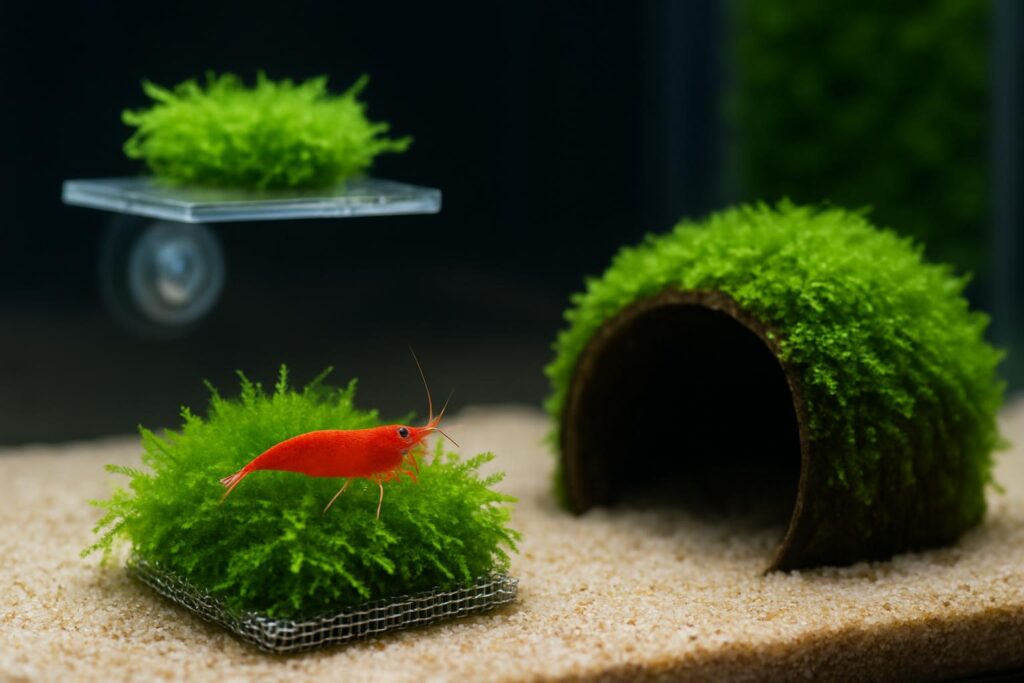
Shrimp thrive in planted tanks because biofilm and microalgae collect on textured surfaces they can graze. Aquatic mosses like Java, Christmas, and Fissidens are the perfect buffet. The problem is keeping moss exactly where you want it and off your filter intake, while allowing it to grow dense and lush. Moss holders solve this neatly. The right holder keeps moss compact, elevates it into light and flow, protects delicate shoots from being uprooted, and creates safe grazing surfaces for shrimplets.
This guide walks you through the four best shrimp moss holders for 2026, how to choose the right style for your setup, and the small tweaks that make a big difference in growth and shrimp safety. Keep reading to dial in a clean, low-maintenance moss scape that your shrimp will use all day.
How to choose a shrimp-safe moss holder in 2026
Material matters
Moss holders should be inert or corrosion resistant. Stainless steel mesh, acrylic ledges, fired ceramic, and natural coconut shells are time-tested. Stainless steel resists rust and grips thread well. Acrylic is clear and clean looking. Ceramic adds weight and shelter. Coconut shell gives a natural look and a rough texture that moss loves. Avoid plated metals, soft metals, and painted items that could leach. Rinse or pre-soak all materials before first use.
Size and footprint for nano tanks
Match holder size to your tank volume. In tanks under 10 gallons, compact 2×2 inch mesh squares or small ledges are easier to place and maintain. Larger caves or moss walls suit tanks with more depth and flow. Oversized pieces shade too much substrate and trap debris.
Attachment method and stability
Common options include suction cups, gravity weight, and simple placement behind hardscape. Suction cups put moss up on the glass for light and viewing but need periodic cleaning. Heavy ceramic or coconut shells sit securely on the substrate. Stainless mesh can be anchored with a small stone or tucked into hardscape seams.
Flow and light access
Moss grows best with gentle, consistent flow and medium light. Holders that lift moss into the water column capture more flow, speeding up new growth and biofilm production. Wall kits and ledges shine here. Dense caves and large mats can block circulation if placed poorly.
Maintenance and longevity
Simple shapes are easier to clean. Mesh and ledges can be lifted and swished in old tank water during water changes. Suction cups eventually fatigue and may need replacing. Ceramic and coconut last for years with basic care. Choose a design you can reach without rescape.
4 Best Shrimp Moss Holders for 2026
AQUANEAT Stainless Steel Mesh, 2×2 inch, 10 Pack
This set of small, rust-resistant stainless mesh squares is the most versatile choice for shrimp keepers. The grid holds thread or moss cotton firmly, allows excellent flow through the clump, and lays flat on substrate or can be tucked between rocks. Shrimp graze both sides and shrimplets hide deep within the growth. The multiple pieces let you spread grazing across the tank and rotate for maintenance.
Key features that stand out
Compact size fits nano tanks, and the mesh spacing anchors fine moss strands without slipping. The steel is rigid enough to stay flat but thin enough to disappear under growth. With several pieces, you can stagger mature and new patches for continuous coverage and stable biofilm production.
Setup tips
Pre-soak the mesh to remove machining dust. Trim moss into short sprigs. Lay a thin, even layer covering about 60 to 70 percent of the mesh surface, then tie in a loose crisscross with cotton thread or fishing line. Do not overpack. Place in moderate light and flow. Rotate pieces front to back every few weeks for even growth.
Why it helps
Open mesh keeps moss aerated so it resists detritus build-up, while the small footprint multiplies safe grazing points that shrimplets can access.
Best for
Nano tanks, breeders wanting multiple small grazing stations, and keepers who prioritize easy, repeatable maintenance.
Potential downsides
Edges on cheaper mesh can be sharp. File corners or add a tiny bead of aquarium-safe silicone along the perimeter if needed. Detritus can collect beneath; lift and swish during water changes.
Check Price Now
PIVBY Acrylic Aquarium Suction Cup Moss Ledge, 4 Pack
Clear acrylic ledges place moss on the glass where light and flow are strongest. Suction cups make height and location simple to adjust, and the platform shape encourages compact mounding. Shrimp congregate on the underside where biofilm collects and dart to the top to graze new tips. The transparent look keeps the scape clean and modern.
Key features that stand out
A flat surface speeds up carpet-like growth and helps new shoots spread evenly. Because the ledge is elevated, detritus falls away rather than packing into the clump. Position two or three along a side panel to create a vertical feeding route shrimp patrol all day.
Setup tips
Clean the glass and the suction cup with warm water. Press firmly, then twist slightly to seat and push out air. Tie moss to the ledge using thread. Start at mid-tank height where flow and light are balanced. Trim lightly every few weeks to prevent shading below.
Why it helps
Elevation improves light and circulation, so moss grows tighter and cleaner, and shrimp have an easy, visible feeding platform.
Best for
Display tanks where you want to watch shrimp feed front and center, and setups that benefit from moving moss off the substrate.
Potential downsides
Suction cups can lose grip over time. Clean both surfaces during water changes and replace cups every 6 to 12 months if they harden. Acrylic can scratch if scrubbed with rough pads.
Check Price Now
SunGrow Coconut Shrimp Tunnel, Natural Moss-Ready Cave
A natural coconut shell tunnel doubles as shelter and a textured moss base. The rough outer surface helps moss attach with minimal tying. Inside, shrimp retreat to rest and molt with less stress. Over time the cave blends into the scape as the moss thickens, creating a natural focal point and constant grazing zone around the entrance.
Key features that stand out
Biologically friendly and heavy enough to stay put, this piece also introduces gentle tannins at first, which shrimp tolerate well. The curve of the shell promotes a dome of moss that catches flow from all sides, producing a healthy mat. The interior cave increases surface area for biofilm beyond what flat holders provide.
Setup tips
Boil and rinse before first use to release excess tannins and remove dust. Allow to cool, then tie moss around the crown and shoulders with loose loops using thread. Set in an open area with mild flow so water passes over the dome and through the cave. Leave some bare shell for shrimp grip and to avoid smothering the piece.
Why it helps
Combines shelter and feeding in one item, stabilizing shrimp behavior while providing a high-value grazing surface with excellent hold for moss.
Best for
Community shrimp tanks, keepers who want a natural look, and anyone building a central moss feature that doubles as cover.
Potential downsides
Initial tannins can tint water. Pre-boiling minimizes this. The footprint is larger than mesh or ledges, so it is less suited to ultra-small tanks.
Check Price Now
Luffy Aquarium Moss Wall Mesh Kit with Suction Cups
This kit creates a living moss wall by sandwiching moss between two meshes and pinning it to the glass with suction cups. As shoots grow through the front mesh, you get a lush backdrop that hides equipment and offers continuous grazing. Walls are especially useful in breeder tanks where shrimplets need dense, safe surface area.
Key features that stand out
Even distribution across the panel keeps growth uniform, while the vertical orientation maximizes light and flow along the entire sheet. Suction cups make it modular, so you can remove sections for trimming without uprooting the scape. Over time, the wall stabilizes water movement by diffusing flow rather than blocking it.
Setup tips
Rinse meshes and cups. Spread a thin, consistent layer of moss between the sheets, again covering about 60 to 70 percent of the surface to allow space for new growth. Mount along the back or a side panel with mild flow. Trim the face with fine scissors once the fronds mat together.
Why it helps
Creates a large, vertical feeding area where shrimp of all sizes can graze safely, while cleaning up the visual clutter of heaters and pipes.
Best for
Breeding setups, larger tanks that need background texture, and keepers who want to mask equipment without hardscape changes.
Potential downsides
Debris can settle behind the wall. Use a turkey baster during water changes to blow behind it. Suction cups may need periodic replacement.
Check Price Now
How to attach moss like a pro
Prep moss for fast take
Rinse moss to remove loose fragments. Trim to short sprigs to encourage branching rather than stringy growth. Lay an even layer rather than clumps for consistent coverage. Press lightly into the holder surface before tying so the initial contact is solid.
Tie versus glue
Both work. For shrimp-first tanks, thread is the safer default since it avoids solvents entirely. Glue is fast but use only tiny dots and let it fully cure in air for a minute before submerging. If you prefer no glue, use cotton thread or fishing line, tie loosely in a crisscross, and avoid strangling new shoots.
Placement that supports growth and grazing
Start where light is moderate and flow is gentle. Near a filter output can be good if the jet is diffused. Avoid placing directly under strong splash or in dead zones. Put ledges at staggered heights to build vertical grazing lanes. Keep a little space around holders so shrimp can approach from multiple angles.
Care and cleaning schedule
Weekly quick care
During water changes, gently fan the moss with your hand or a soft brush to lift debris. For mesh and ledges, lift and swish in removed tank water. For walls, use a turkey baster behind the panel. Lightly trim any overgrowth that shades important areas of the scape.
Monthly deep tune-up
Remove one piece at a time. Rinse in tank water, not tap. Re-tie any loose areas. Rotate the piece to a slightly different spot to even out light exposure across the system. Inspect suction cups and replace if they have hardened or lost elasticity.
Long-term health
Thin dense mats to prevent anaerobic pockets. When trimming, cut small amounts frequently rather than a single heavy cut. Maintain steady nutrients and CO2 if used, since consistent conditions keep moss compact and reduce detritus trapping.
Common mistakes to avoid
Overpacking moss on the holder
Thick initial layers smother the center and slow attachment. Leave gaps for new growth to fill.
Ignoring suction cup care
Algae and biofilm on glass weaken grip. Clean the spot before mounting and re-clean during maintenance. How do I keep suction cups from falling off is a question with a simple answer. Clean the glass and the suction cup, use a light smear of water when attaching, and replace cups every 6 to 12 months when they harden.
Placing in dead zones
Without flow, detritus accumulates and moss yellows. Adjust position until the fronds sway slightly. Use staggered locations to avoid large shaded areas.
Skipping pre-soak of natural materials
Coconut and some ceramics release fine dust and tannins at first. Boil or soak and rinse to protect clarity and shrimp comfort.
Conclusion
Sturdy shrimp moss holders transform a scatter of moss into a clean, productive grazing system. Stainless steel mesh excels in nanos where flexibility and simple upkeep matter. Acrylic ledges put the buffet at viewing height with better circulation. A coconut tunnel pairs feeding with shelter in one natural piece. A wall kit turns the back panel into a living filter and nursery. Pick the format that fits your tank size and scape goals, tie moss with a light touch, and keep up with simple maintenance. Your shrimp will show you the results through brighter color, more confident foraging, and steady population growth.
FAQ
Q: Which holder works best in very small nano tanks?
A: Compact stainless steel 2×2 inch mesh squares are the easiest to place and maintain in nanos while providing multiple grazing points.
Q: Is stainless steel safe for shrimp?
A: Yes, rust-resistant stainless mesh is shrimp safe and holds thread well, making it a reliable long-term base for moss.
Q: How do I attach moss without glue?
A: Use cotton thread or fishing line, tie loosely in a crisscross, and cover about 60 to 70 percent of the holder so new shoots can fill the gaps.
Q: How do I keep suction cups from falling off?
A: Clean the glass and the suction cup, use a light smear of water when attaching, and replace cups every 6 to 12 months when they harden.
Q: How often should I clean a moss holder?
A: Give it a light swish in removed tank water during weekly changes and a deeper rinse and inspection about once a month.