
We are reader supported. When you purchase through links on our site, we may earn an affiliate commission. Also, as an Amazon affiliate, we earn from qualifying purchases.
Shrimp thrive when a tank grows a steady film of microscopic life on hard surfaces. That thin layer, called biofilm, is the most natural food your shrimp can get in captivity. It keeps juveniles alive between feedings, it stabilizes the microbiome, and it reduces stress because shrimp can graze all day. In 2026, the best strategy is still simple: seed the right microbes, feed them, and give them surfaces to colonize. This guide walks you through four proven products that do exactly that, how to use them without crashing your water, and a weekly plan you can follow with confidence.
What biofilm is and why it matters
Biofilm is a living layer made of bacteria, microalgae, fungi, and infusoria embedded in a slimy matrix. It forms on glass, wood, rocks, plant leaves, and filter media. Shrimp rasp it off in tiny bites. A tank rich in biofilm produces steadier molts, faster growth in babies, and fewer deaths during the first weeks after hatching. It also supports water stability by breaking down organics before they rot.
How we chose these four products
To earn a spot in this list for 2026, a product had to meet these standards:
- Proven to boost visible grazing and survival in young shrimp
- Safe for Neocaridina and Caridina when used as directed
- Easy to dose and repeatable for beginners
- Good value per gram or per month of use
- Consistent quality and strong community feedback over several years
The 4 best shrimp biofilm boosters for 2026
1. GlasGarten Bacter AE Micro Powder
This is the gold standard bacteria and amino acid powder for shrimp. It contains live cultures and growth media that seed surfaces, feed filter biofilm, and create a microfood cloud that baby shrimp can catch in the water column. If you only choose one dedicated biofilm booster, start here.
Why it helps: It introduces beneficial bacteria and prebiotics directly to surfaces and water. The result is more grazing within 24 to 72 hours and better survival in the first critical weeks after birth.
Best for: New tanks past the initial nitrogen cycle, breeders raising shrimplets, and any setup that needs a fast biofilm kickstart after a big water change or cleanup.
How to use: Start low. For a 10 gallon tank, dose about one level scoop or a small pinch every other day for the first week, then reduce to two to three times per week. Turn off filters for 10 minutes so powder settles where shrimp graze. Resume normal schedule after you see persistent grazing and clear water.
Potential downsides: Overdosing can cloud the water and lower oxygen at night. It may spike bio activity enough to show a small nitrate rise. Go slow, and increase surface agitation if you notice heavy film on the water surface.
Pro tips:
– Combine with leaf litter and cholla wood for stable long-term colonies.
– In high temperature tanks above 78 F, reduce dose by 25 percent to avoid bloom spikes.
– Store dry and cool to preserve activity.
2. Dennerle Shrimp King Snow Pops
Snow Pops are soybean hull sticks that slowly break down into a grazeable fungal and bacterial mat. They do not foul water when used properly and give both adults and juveniles a steady food field for hours to days. This is a set-and-forget way to feed biofilm rather than trying to dose powders every day.
Why it helps: Soy hull fiber is a natural biofilm substrate. As it expands, it attracts microbial colonizers and holds a matrix shrimp can rasp for a long time. It spreads food access so weaker shrimp still get their share.
Best for: Busy keepers who want low-maintenance, travel weeks, and tanks with mixed sizes where competition can be an issue. Excellent complement to Bacter AE in breeding tanks.
How to use: Drop one small stick for a colony of 10 to 20 shrimp, two sticks for 30 to 50 shrimp. Remove the remainder after 24 to 48 hours if a visible chunk still sits untouched. Repeat two to three times per week or as needed. You can break a stick to fine tune portion size.
Potential downsides: In tiny or very new tanks, feeding too often can stack organics and haze the water. If the stick disappears within one hour, you are underfeeding overall; if a full stick remains after a day, cut the dose.
Pro tips:
– Place sticks on a feeding dish or a flat rock to limit food falling into substrate.
– Alternate Snow Pops and bacteria powder across the week to keep balance.
– Use a turkey baster to lift any leftover chunks after a day.
3. SunGrow Indian Almond Leaves Catappa
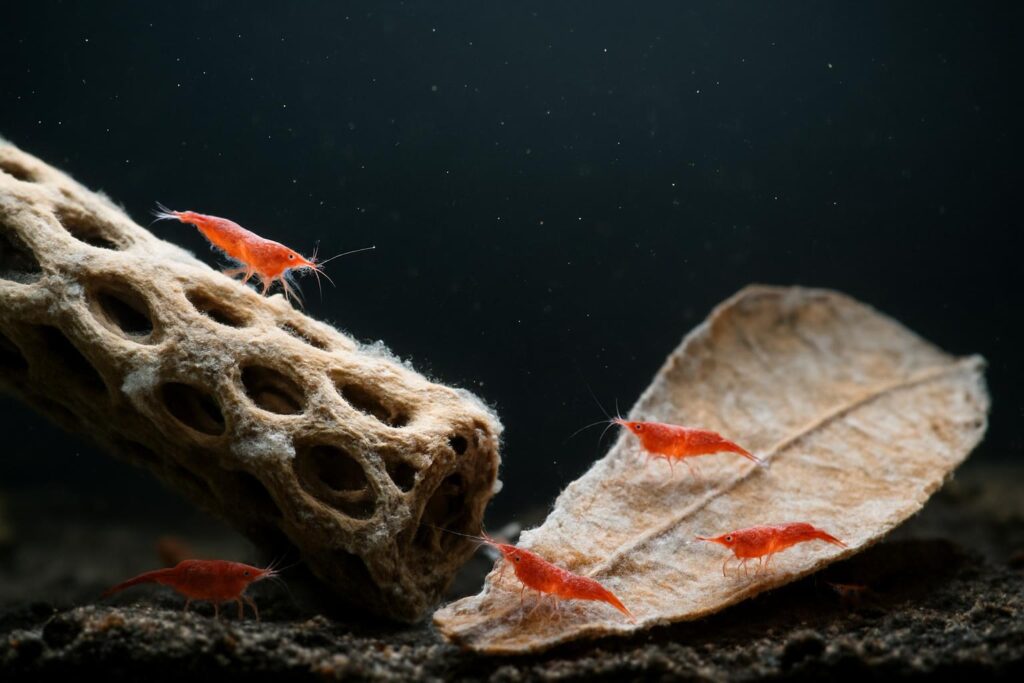
Catappa leaves release tannins, humic substances, and mild acids that support a bioactive environment. As the leaves soften, they grow a white fungal film and host bacteria that shrimp graze constantly. Leaves also add cover, reduce stress, and can slightly buffer pH downward in soft water tanks.
Why it helps: A decomposing leaf is a self-sustaining biofilm farm. It builds a food web from microbes up, while improving water clarity through natural chelation from tannins.
Best for: Caridina tanks that prefer gentler, slightly acidic water and any shrimp keeper who wants a hands-off biofilm source that lasts weeks.
How to use: For a 10 gallon tank, start with one medium leaf. Rinse, then soak in hot water for 10 minutes to help it sink. Replace after three to four weeks or when mostly consumed. If water turns too dark for your taste, remove the leaf and perform a small water change.
Potential downsides: Tannins can tint water tea brown. If you want crystal clear water, use fewer leaves or pre-soak them longer. Very hard water will show less pH movement, so do not rely on leaves for major pH changes.
Pro tips:
– Stack two leaves slightly overlapped to make a grazing shelf for shrimplets.
– Rotate old leaves out as new ones go in to avoid sudden shifts.
– Combine with low light and moss to maximize grazing area.
4. SunGrow Cholla Wood
Cholla wood is a hollow cactus skeleton with lots of pores and tunnels. It sinks easily after a soak, grows biofilm quickly, and gives shrimp shelter during molts. The structure traps fine food particles and supports long-term microbial colonies.
Why it helps: The porous surface has huge area per inch. That means more space for beneficial bacteria and algae to anchor, and more safe grazing tracks for juvenile shrimp.
Best for: All shrimp tanks, especially minimalist scapes that need more grazeable surface and cover without clutter. Great in breeder boxes and nursery tanks.
How to use: Boil for 10 to 15 minutes or soak overnight to sink and remove surface dust. Add one small piece per 5 to 10 gallons. Leave it in place for months. If it gets too slimy, rinse in removed tank water and return it.
Potential downsides: New cholla can briefly tint water and float if not pre-soaked. Very aged pieces slowly soften; replace when they collapse.
Pro tips:
– Slide a tiny clump of moss into the hollow to create a micro nursery.
– Dust the piece with a small pinch of Bacter AE after water changes to re-seed quickly.
– Rotate several pieces so at least one is always in peak biofilm condition.
How to combine these for steady results
Use a layered approach so you do not rely on one product for everything.
- Base structure: Keep two to three pieces of cholla wood and at least one catappa leaf in the tank at all times. This gives constant surfaces and slow-release biofilm.
- Seeding and feeding: Dose Bacter AE lightly two to three times per week to keep fresh microbes arriving and to push growth on all surfaces.
- Extended feeding windows: Offer Snow Pops two to three times per week on non powder days so food availability stays even and all shrimp eat.
A simple weekly plan for a 10 gallon shrimp tank
Adjust portions to your colony size and bio load. If water clouds or films over, reduce doses by 25 to 50 percent and increase surface agitation.
- Monday: 1 pinch Bacter AE. Filters off for 10 minutes. Observe grazing for 15 minutes after.
- Tuesday: 1 small Snow Pop stick. Remove remnants next day if a chunk remains.
- Wednesday: Rest day. Top off evaporated water only.
- Thursday: 1 pinch Bacter AE. Wipe glass with a sponge leaving the back panel untouched for biofilm.
- Friday: 1 small Snow Pop stick.
- Saturday: 15 to 20 percent water change. Dust a very small pinch of Bacter AE on cholla after refilling. Replace or add 1 catappa leaf if the old one is nearly gone.
- Sunday: Rest day. Count juveniles and watch for steady grazing along wood and leaves.
Water parameter notes
Biofilm thrives when the environment is stable. Keep these targets in mind:
- Temperature: 70 to 76 F for Neocaridina, 68 to 74 F for Caridina
- Ammonia and nitrite: zero
- Nitrate: ideally under 20 ppm
- pH: 6.0 to 7.8 depending on species and substrate
- KH and GH: match species needs and keep consistent week to week
Powders and food can raise bioload if overused. Leaves and wood may tint water and shift pH slightly, more so in soft water. Make one change at a time and observe for a few days.
Common mistakes to avoid
- Heavy first doses: Start small. Biofilm is a marathon, not a sprint. It takes days to weeks to mature.
- Scrubbing every surface: Leave the back glass and some wood uncleaned to keep a grazing bank.
- Low oxygen at night: Any bloom consumes oxygen. Add an airstone or raise filter outflow if shrimp congregate at the surface after lights out.
- Ignoring leftovers: Remove uneaten Snow Pop chunks after a day and replace worn leaves on a schedule.
- Stacking new items too fast: Add one product at a time each week so you can track the effect.
How to tell it is working
- More time spent grazing on wood, leaves, and glass instead of only on pellets
- White biofilm on cholla within a week that shrimp keep cropped short
- Visible microfilm on older leaves without foul odor
- Juveniles picking at surfaces all day with steady bellies
- Stable molts and fewer unexplained losses
Troubleshooting quick guide
- Cloudy water after dosing: Pause powders for 3 to 4 days, add air, small water change, resume at half dose.
- No visible grazing: Increase light slightly, add a fresh catappa leaf and one Snow Pop, resume powder at minimal dose.
- Surface scum: Skim with paper towel, increase agitation, avoid feeding fatty or oily foods on powder days.
- Green dust on glass: Normal. Keep one panel for grazing and clean the front for viewing.
Conclusion
A healthy shrimp tank grows its own food between feedings. The fastest path there is to stack structure, gentle botanicals, and targeted microbe food. Bacter AE builds the base microbiome, Snow Pops convert to long-lasting graze fields, catappa leaves turn into living feeding stations, and cholla wood expands surface area while offering cover. Used together with patient, light dosing, these four tools turn any stable tank into a constant buffet that keeps shrimp busy, babies growing, and problems rare. Go slow, watch your colony, and let biofilm do the daily work for you.
FAQ
Q: What is shrimp biofilm and why is it vital
A: Biofilm is a living layer of bacteria, microalgae, fungi, and infusoria on tank surfaces that shrimp graze all day, improving juvenile survival, molts, and overall stability.
Q: How often should I use Bacter AE in a 10 gallon tank
A: Start with one small pinch every other day for the first week, then reduce to two to three times per week, turning off filters for 10 minutes so powder settles.
Q: Can I use Snow Pops, catappa leaves, and Bacter AE together
A: Yes, layer structure and botanicals with light powder dosing and alternate Snow Pops on non powder days to keep food availability steady.
Q: Do catappa leaves and cholla wood change water parameters
A: Leaves and wood can tint water and may slightly shift pH in soft water, so add them gradually and rotate pieces to avoid sudden changes.
Q: How can I tell the boosters are working
A: You will see more grazing on wood and leaves, a cropped white film on cholla, active juveniles with steady bellies, and fewer unexplained losses.