
We are reader supported. When you purchase through links on our site, we may earn an affiliate commission. Also, as an Amazon affiliate, we earn from qualifying purchases.
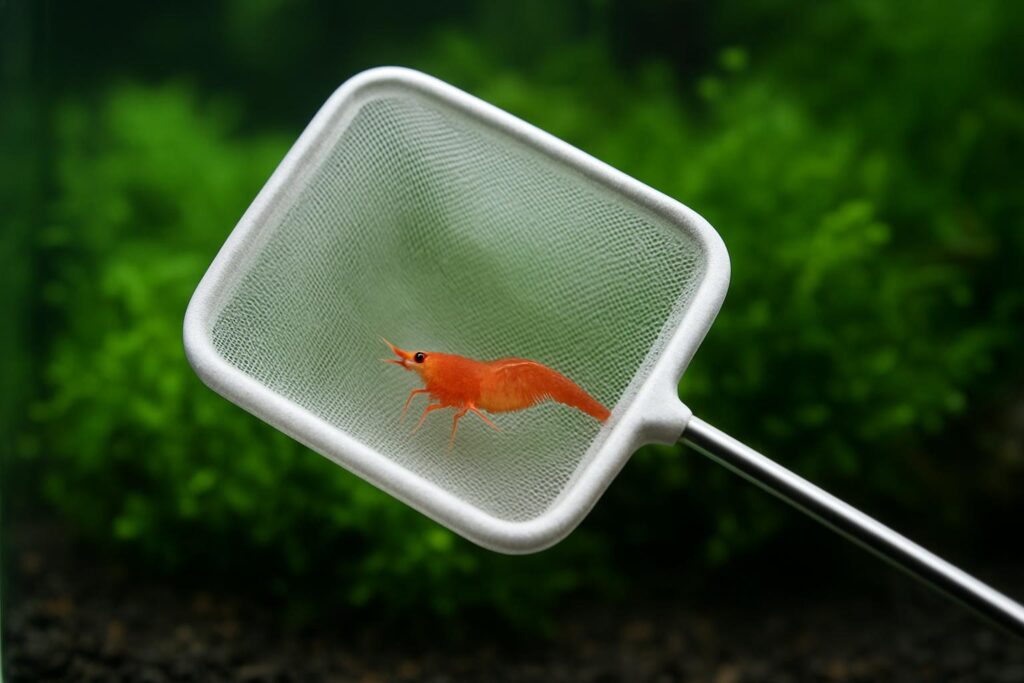
Shrimp breeding rewards patience, precision, and gentle handling. Your net is in your hand for every cull, transfer, or rescue. A net that glides without snagging antennae, keeps shrimplets safe, and reaches tight corners changes your daily routine. In this guide for 2026, you will find exactly what to look for, plus four dependable shrimp nets that help breeders work faster, safer, and with less stress on the colony.
Here is the approach. First, get clear on mesh fineness, frame shape, and reach. Then match products to your tank sizes, stocking, and scape. Finally, practice low-stress capture techniques so your cherry, crystal, or Caridina lines thrive without constant spooking.
Read on for the core buying checklist, detailed reviews of four proven nets, and step-by-step tips that make daily breeding work smoother.
How to choose a shrimp net for breeding work
Mesh fineness and softness
Why it matters: Shrimplets ride currents and get trapped in coarse mesh. Fine, soft netting prevents leg or rostrum injuries and keeps tiny juveniles from slipping through. Aim for ultra-fine nylon or polyester with a smooth weave. If you can see big square openings, it is too coarse for breeders handling babies.
Frame size and shape
Match the scape: Rectangular or slim heads slide between stems, moss, and hardscape better than bulky squares. A slightly shallow pocket helps you herd shrimp along the glass rather than scooping chaotically. For densely planted nano tanks, compact rectangular heads with soft wrapped rims are ideal.
Handle length and control
Balance reach with precision: Telescopic handles let you work in 5 to 30 gallon tanks without dunking your sleeve. Too long and control suffers. Too short and you disturb scape or miss the target. For nano tanks, a short, light handle is precise. For larger tanks or deep aquascapes, a stable telescopic handle pays off.
Color and visibility
See what you are doing: White or translucent mesh shows dark neocaridina well. Dark mesh helps with light-bodied shrimp. Most breeders favor light mesh for clear visibility against substrate and plants. Consistency matters more than color. Use the same net so you develop muscle memory and sightlines.
Depth, stiffness, and edge protection
Gentle edges: Look for a rim that is either fully wrapped or rounded. Avoid unprotected wire seams that can pinch feelers. A slightly flexible frame with a shallow to medium pocket supports herding along glass without folding or flicking water.
Build quality and hygiene
Clean net, healthy colony: Smooth mesh rejects biofilm. Stainless or coated handles resist rust. A net that rinses clean quickly reduces cross-tank contamination. Dedicate a separate net to each tank when breeding multiple lines.
4 best shrimp nets for breeders in 2026
Fluval Shrimp Net
This is a purpose-built shrimp net designed for delicate handling. The mesh is soft and fine enough for juvenile safety, and the head profile stays slim for nano aquascapes. It balances reach and control, making it a steady pick for daily culling and transfers.
Handling and mesh feel
The fine, smooth weave reduces snag risk and keeps small juveniles in the pocket. The head stays compact, so you can guide shrimp along glass or around moss pads without catching stems. The handle has a stable feel with enough reach for low to mid-depth tanks.
Why it helps
Why it helps: Consistent finesse. The mesh softness and head shape let you perform slow herding rather than fast scoops, which is crucial for lowering stress during repeated breeder tasks.
Best for
Best for: Nano to mid-size planted tanks where shrimp weave through ferns, moss, and wood. Daily culling of juvenile neocaridina and crystal shrimp.
Potential downsides
Potential downsides: The compact head is not ideal for wide, sparsely scaped tanks where you want to push more water with each pass. It is tuned for precision, not sweeping coverage.
Breeder tip
Guide the shrimp along the glass with the rim, then pivot and close with a short, calm motion. With this net, gentle angles outperform fast scoops.
Dennerle Nano Shrimp Net
Built for nano aquaria, this net uses an ultra-fine mesh and a telescopic handle tuned for planted layouts. The slim rectangular head reaches tight spaces, and the smooth rim is kind to antennae and swimmerets.
Reach and control
The telescopic handle lets you work deeper cubes and taller nanos without losing precision. The frame remains slim enough to slide between stems and hardscape. Mesh fineness supports safe handling of juveniles and soft-bodied species.
Why it helps
Why it helps: Exceptional corner access. The head shape and low bulk simplify herding shrimp out of dense moss or from behind stones, which is a constant pain point in shrimp breeding tanks.
Best for
Best for: Densely planted nano tanks and breeders who need exact control along front and side glass. Sorting juvenile grades without uprooting plants.
Potential downsides
Potential downsides: The narrow head trades coverage for precision. Moving larger adults in open tanks may require more passes. The telescopic mechanism needs routine rinsing to prevent stiffness from mineral deposits.
Breeder tip
Pre-position a specimen cup. Use the Dennerle head to coax shrimp into a corner, then lift with a slow forward roll rather than a vertical yank. Sediment stays put and shrimp stay calm.
Aquaneat Telescopic Shrimp Net
This is a value-friendly net with very fine mesh and an extendable handle. It earns a spot because it performs well for the price and covers a wide range of tank sizes. Many breeders keep one as a backup or dedicate it to a single line.
Build and daily use
The mesh is fine enough for juveniles, and the pocket has a practical depth for slow herding. The telescopic handle expands reach for 20 to 40 centimeter depths without feeling heavy. It cleans quickly under a faucet.
Why it helps
Why it helps: Affordable precision. If you run multiple breeding tanks, cost adds up. This net offers safe mesh and flexible reach so you can assign one net per tank and minimize cross contamination.
Best for
Best for: Multi-tank breeders who want separate nets per line. General culling, transferring berried females to a breeder box, and moving juveniles during rescapes.
Potential downsides
Potential downsides: Frames on budget nets can flex slightly under water pressure. Avoid forcing it through dense stems. The telescopic joint benefits from a quick dry after use to deter mineral grit.
Breeder tip
Rinse and air-dry after every session. Label each handle with the tank code. This simple routine limits bacterial transfer and keeps breeding lines tidy.
Penn-Plax Fine Mesh Aquarium Net 4 inch
A classic fine-mesh net that is easy to control, especially in shallow tanks. The small head is accurate for targeted catches and quick culls. It is simple, durable, and comfortable for repeated short sessions.
Control in tight quarters
The compact head glides along glass and over substrate with minimal disturbance. The fine mesh is gentle on adults and larger juveniles. A fixed handle keeps the feel consistent, which can improve accuracy in repetitive culling.
Why it helps
Why it helps: Reliable everyday accuracy. When you need to remove a few culls or separate males and females quickly, this net moves where you intend without wobble.
Best for
Best for: Shallow nano tanks and bare-bottom breeder setups. Quick, precise catches in open areas with minimal plants.
Potential downsides
Potential downsides: The mesh is fine, but not as micro-fine as specialty shrimp nets, so it is less ideal for the tiniest shrimplets. The non-telescopic handle reduces reach in deeper tanks.
Breeder tip
Use a slow push toward the glass, pause, then lift. The short pause lets the shrimp settle so you lift with less struggle and lower escape chances.
Side-by-side guidance for breeders
If you focus on shrimplets
Favor the softest, finest mesh possible with a shallow rectangular head for gentle herding. Fluval Shrimp Net and Dennerle Nano Shrimp Net stand out for this job due to mesh finesse and rim protection.
If you run many tanks
Aquaneat Telescopic Shrimp Net offers the cost control to keep one net per tank. Labeling and dedicated use are small changes that reduce cross-tank pathogens.
If you want quick grabs in shallow tanks
The Penn-Plax Fine Mesh Aquarium Net 4 inch keeps control tight with a simple fixed handle and small head size. It excels at fast culls and male-female sorting in open setups.
How to net shrimp like a breeder
Slow the water, reduce escapes
Reduce filter flow before netting. Calm water limits sudden currents that help shrimp rocket past the rim. In tanks with surface skimmers, pause them to prevent surface chase scenes.
Herd, do not chase
Guide shrimp along glass or toward a clean corner. Keep the rim a few millimeters above substrate to avoid sucking in detritus. A shallow pocket helps with this guided movement.
Use the glass as a backstop
Slide the net along the pane, then rotate to close. This avoids plant collisions and keeps the move predictable. Shrimp respond better to smooth, continuous motions than to sudden jabs.
Transfer to a cup, not dry air
Keep a specimen cup or breeder box underwater. Glide the shrimp from the net into the container while both are submerged. Air exposure increases stress and escape risk.
Minimize repeats
Plan the route first. Fewer passes mean less spooking. If you miss, reset and try a new angle rather than speeding up.
Net care and hygiene for breeding systems
Rinse immediately after use
Rinse under tap or tank water to lift biofilm, plant sap, and protein. Fine mesh stays effective longer when debris does not dry into the weave.
Air-dry completely
Dry nets between sessions to deter bacterial growth and mineral buildup in telescopic joints. Hang by the handle for airflow.
Dedicate nets by tank or line
Use one net per breeding line when possible. If you must share, disinfect between tanks and rinse thoroughly. Consistency reduces cross contamination risks.
Inspect the rim and seams
Check for rough edges or bent rims that can snag antennae. If the rim covering loosens, replace the net. Smooth edges keep shrimp safe during frequent handling.
Common mistakes to avoid
Coarse mesh for shrimplets
Even if the net looks fine, test it against a light source. Visible big squares mean juveniles can slip through or snag. Ultra-fine mesh is non-negotiable for active breeding tanks.
Overlength handles in nanos
Long handles look useful, but they can wobble and bump scape. In small tanks, shorter stable control is better than reach.
Rushing the scoop
Fast scoops spray water and startle the colony. Shrimp predict smooth arcs and slow closes. Let them settle, then lift.
Final thoughts
A net you trust shortens every task and reduces colony stress. For 2026, the Fluval and Dennerle nets are outstanding for finesse handling, Aquaneat delivers strong value for multi-tank breeders, and Penn-Plax covers quick, precise work in shallow setups. Pick based on your scape density, tank depth, and the age class you handle most. Then practice calm, repeatable motions and maintain strict net hygiene. Your shrimp will show the difference in steady behavior, clean molts, and reliable breeding cycles.
FAQ
Q: Which net style is best for dense planted nano tanks
A: Slim rectangular heads with ultra-fine, soft mesh work best because they slide between stems and allow gentle herding along the glass.
Q: How do I reduce stress when catching shrimp
A: Lower flow, herd shrimp along the glass, use smooth continuous motions, and transfer into a submerged specimen cup instead of lifting into air.
Q: Should I use different nets for different breeding lines
A: Yes. Dedicating one net per tank or per line helps reduce cross contamination and keeps colonies healthier.
Q: Are telescopic handles necessary for breeders
A: They help in deeper tanks by improving reach, but in small nanos a shorter fixed handle often gives better control.
Q: What mesh is safe for shrimplets
A: Ultra-fine, soft mesh is required so tiny juveniles do not slip through or snag legs and antennae.