
We are reader supported. When you purchase through links on our site, we may earn an affiliate commission. Also, as an Amazon affiliate, we earn from qualifying purchases.
Summer heat and indoor temperature swings push small aquariums past safe limits fast. Fish, shrimp, and corals feel stress long before you do. A full chiller is expensive and bulky for a nano tank. A compact cooling fan is the fast, low-cost fix that works with almost any setup. This guide explains how fan cooling works, what to look for, and the five best aquarium cooling fans for small tanks in 2026. Read on to keep temperature stable, noise low, and evaporation under control.
Why small tanks overheat fast
Small volumes change temperature quickly because they have low thermal mass. Room heat, direct sun, and equipment like lights and pumps add up during the day. At night, the swing can reverse. The result is daily stress that weakens fish and invertebrates. A simple fan can flatten these spikes and keep a steady range.
How fan cooling works
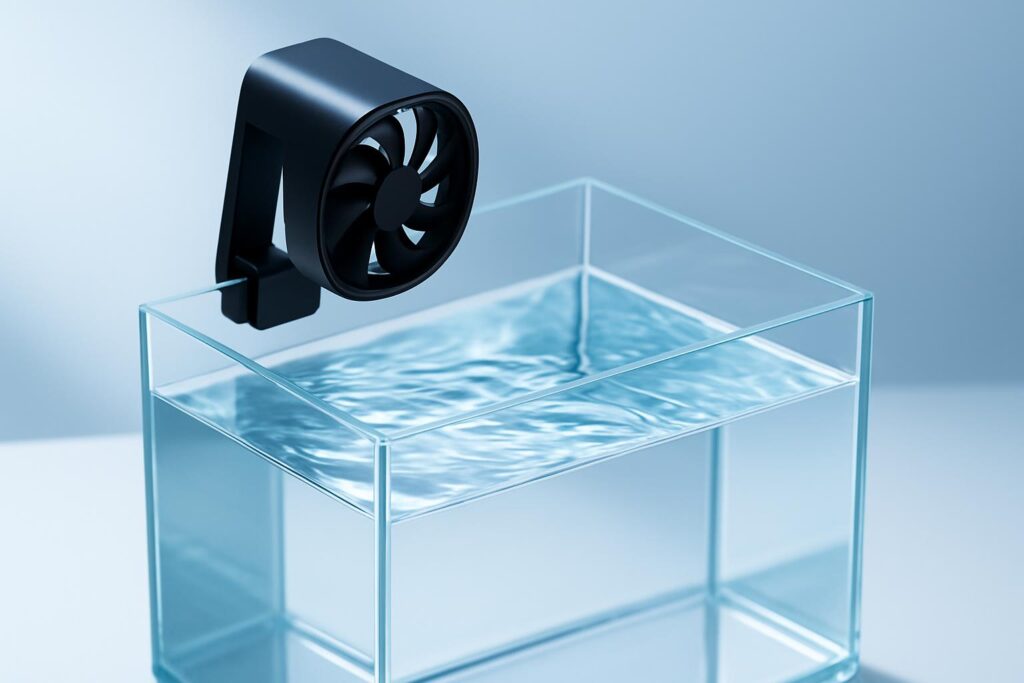
Aquarium fans cool by speeding up evaporation at the water surface. As water evaporates it removes heat. With a steady breeze across the surface, temperature drops without adding any refrigerant or plumbing.
Expect a 1 to 3 C drop in most homes, and up to about 4 C in very dry rooms. Results depend on room humidity, air movement, surface area, and fan speed. The drier the air and the more open the surface, the better the effect.
Fans increase evaporation; plan to top off with fresh water daily, and use an auto top off if swings are large. Top off with fresh water only, not saltwater, to maintain salinity in marine tanks.
How to choose a cooling fan for a small tank
Match fan size to tank size
For 2 to 10 gallons, a single or dual fan is usually enough; for 10 to 20 gallons, look at a 2 to 4 fan bar. A wider fan bar covers more surface and works at lower speed for the same cooling, which reduces noise and spray.
Rimmed, rimless, and glass thickness
Check the mount. Clip and clamp mounts list a maximum glass thickness. Tanks with a plastic rim need a deeper throat clamp. Rimless tanks prefer soft pads and a low profile to protect polished glass. If you have a curved rim or limited space under a lid, pick a compact head that tilts.
Controls and thermostats
Simple two speed switches are reliable and cheap. Variable speed gives finer tuning. A thermostat can switch the fan on and off around a set point. A thermostat is optional; you can run a fan on a timer or smart plug, or add a simple clip on controller for tighter control.
Noise and vibration
Expect a soft hum at low speed and a noticeable whoosh at high speed; vibration against the rim makes more noise than the fan itself. Rubber pads, secure clamps, and smooth fan blades cut noise. Fans that can run slower across a wide surface are often the quietest option.
Build and splash resistance
Look for corrosion resistant screws, sealed switches, and guarded blades. Saltwater and hard water leave deposits. A washable guard and smooth housing make cleaning fast. A tilting head helps you aim airflow while avoiding splash.
Power and safety
Most small fans use low voltage DC power. A brick supply outside the splash zone is safer than mains at the rim. Always use a drip loop and a GFCI outlet. USB powered options are flexible with power banks and smart plugs.
Budget and availability
Price varies by size and features. Budget models start low and work fine for small desktops. Midrange multi fan bars add speed control and better mounts. Premium options add thermostats and quieter motors. Pick the least complex unit that meets your cooling need.
Best aquarium cooling fans for small fish tanks in 2026
The picks below are proven, widely available, and sized for nano to small tanks. All are suitable for freshwater and saltwater with routine care. Each summary explains where the fan excels, tradeoffs to consider, and simple setup tips for the best result.
Hygger Aquarium Cooling Fan
Why it stands out. Hygger focuses on practical features at a fair price. Its compact heads tilt, clamps are sturdy, and multi fan bars spread airflow across more surface area. The design is easy to mount on rimmed or rimless glass within stated thickness. Daily use is simple with accessible speed control.
Best for. Beginners who want reliable cooling on 5 to 20 gallons without extra gadgets. If you need quiet operation at low to mid speed and a neat look, it fits well under most lights.
Strengths. Solid clamp with soft pads. Adjustable angle to avoid splashes. Multiple fan counts to match tank width. Low voltage power. Easy cleaning with a removable guard.
Tradeoffs. High speed can be audible in very quiet rooms. No built in thermostat on basic versions, so pair with a timer or external controller if you want set and forget control.
Setup tip. Angle the heads to skim just over the water line rather than blowing straight down. This gives steady evaporation with less salt creep on LEDs.
NICREW Aquarium Cooling Fan
Why it stands out. NICREW is known for simple, durable aquarium gear. Its cooling fans are straightforward, with secure mounts and consistent airflow. The brand offers sizes that match common nano tank widths, which helps coverage without excess noise.
Best for. Hobbyists who want a no fuss fan for planted nanos and shrimp tanks, and who may add a thermostat or smart plug later.
Strengths. Dependable build. Clean look that fits under light bars. Angle adjustment for precise aim. Generally quiet at low to medium settings. Good value across sizes.
Tradeoffs. Like most budget to midrange fans, the loudest setting can be noticeable. Some versions may not fit very thick rims, so check the mount spec.
Setup tip. If your light sits close to the water, place the fan at the rear corner and angle the flow along the surface to avoid pushing spray onto the light.
Aquaneat Clip on Aquarium Cooling Fan USB
Why it stands out. Aquaneat offers a compact USB powered fan that is ideal for desktop cubes, betta tanks, and pico reefs. USB power gives flexible control with smart plugs and portable power banks during heat events.
Best for. Tanks under 10 gallons where a single head is enough. Great for renters, offices, and dorms due to the light weight and small footprint.
Strengths. USB low voltage power. Small clamp fits thin glass. Lightweight, easy to reposition. Very budget friendly and simple to store in winter.
Tradeoffs. Limited airflow compared to multi fan bars. Small clamps may not suit thick rims. A single head usually needs higher speed, which can add hum in quiet rooms.
Setup tip. Remove tight fitting lids. Use a mesh lid or slide the lid back slightly to open a gap. More open surface area improves cooling.
Petzilla Aquarium Cooling Fan
Why it stands out. Petzilla multi fan bars offer strong airflow across wider tanks while keeping profile low. They are popular for both freshwater and reef nanos where a few degrees of drop make a big difference.
Best for. 10 to 20 gallon tanks that need more surface coverage. Works well in humid rooms where extra airflow is necessary.
Strengths. Multi fan array for broad coverage. Angled brackets to direct flow. Sturdy clamps with reasonable glass thickness capacity. Good cooling per dollar.
Tradeoffs. More fans mean more potential noise on max speed. The bar takes space at the rim, so plan light and feeding access around it.
Setup tip. Run the bar at medium speed for steady cooling and less spray. Medium airflow is often as effective as high once the system stabilizes.
AZOO Cooling Fan
Why it stands out. AZOO has long served the nano reef and planted tank community with compact, purpose built cooling fans. The form factor is slim, with a focus on directed airflow and simple operation.
Best for. Minimalist setups that value a small visual footprint and consistent performance on tanks up to about 15 gallons.
Strengths. Slim design fits under most lights. Focused airflow improves efficiency on open rimless tanks. Simple controls, low power draw.
Tradeoffs. The narrow head works best when positioned well. On wider tanks, results are better with two units or a multi head option.
Setup tip. Place the fan opposite the filter outflow to move air across the calmest part of the surface for more stable evaporation.
Step by step setup and tuning
1. Measure and mount
Measure glass thickness and rim height. Dry fit the clamp and adjust pads. Tighten until secure but do not overtighten. Confirm the fan cannot rock or slide.
2. Open the surface
Remove solid lids or shift them back to create a gap. A mesh top is better than glass for fan cooling. Aim for a clear band of open surface under the fan path.
3. Aim airflow
Tilt the head so air skims across the water, not straight down. Keep the fan high enough to avoid splashes. If droplets reach the housing, reduce angle or speed.
4. Power and safety
Use a drip loop. Keep the power brick away from splashes. Plug into a GFCI outlet. If using USB, choose a rated adapter and a short, tidy cable run.
5. Monitor and adjust
Track temperature with a reliable thermometer for several days. Start at medium speed and adjust once or twice per day. Log room temperature, tank temperature, fan speed, and evaporation so you can dial in a repeatable routine.
6. Automate if needed
If days are predictable, use a timer or smart plug to start the fan before the daily peak and shut it off overnight. Add a basic thermostat controller if the room varies a lot.
Managing evaporation and stability
Fans increase evaporation; plan to top off with fresh water daily, and use an auto top off if swings are large. In freshwater tanks, dechlorinated tap or RO water is fine. In reef tanks, use RO or RO DI to avoid raising nutrients and TDS. Top off slowly to prevent rapid changes in temperature or salinity. Mark a waterline on the glass so you can top off to the same level every time.
If evaporation becomes too high, reduce fan speed, close part of the lid gap, or raise room humidity slightly. A wider fan at a lower speed often evaporates less for the same cooling compared to a small fan on high.
Noise, vibration, and maintenance
Expect a soft hum at low speed and a noticeable whoosh at high speed; vibration against the rim makes more noise than the fan itself. Add a thin foam pad under the clamp if the rim is uneven. Make sure the guard does not touch the blades. Keep cables from touching the stand or canopy, which can resonate.
Clean weekly in saltwater and biweekly in freshwater. Unplug, remove the guard, and wipe dust, salt, and mineral film from blades and housing with a damp cloth. Wipe the clamp pads and bracket, then dry fully before re mounting. Yes, they work for freshwater and saltwater, but wipe the fan body and guard weekly to remove salt spray and extend service life.
When a chiller is the better answer
Fans are excellent for modest drops and dry rooms. If you need more than about 3 C in a humid climate, or if you must hold a very tight range for sensitive species, a compact chiller is the safer long term choice. You can also combine a small fan with a low capacity chiller to reduce run time and noise from both.
Product specific tips and use cases
Hygger on a 10 gallon planted tank
Mount a dual head Hygger at the rear, opposite the filter output. Open a two inch gap in the lid. Run medium during the lighting period. Expect steady 1 to 2 C drop with modest evaporation and quiet operation.
NICREW on a 15 gallon reef nano
Use a three fan bar across the rear. Angle slightly forward. Pair with a smart plug tied to a temperature alert. Keep a weekly wipe schedule to handle salt creep. Stability improves without adding complexity.
Aquaneat on a 5 gallon betta tank
Clip the USB fan on the side near the front. Replace the solid lid with a mesh panel. Use a smart plug to start the fan one hour before lights on. Top off daily to the same mark for steady conditions.
Petzilla on a 20 gallon long
Mount the four fan bar centered on the long edge. Run at half speed most days, step up during heat waves. Medium speed reduces spray and noise while holding temperature in range.
AZOO on a 9 gallon rimless
Place the slim head near the back corner, aimed across the open surface. The minimal look keeps focus on aquascape while keeping a tight daily range.
Common mistakes to avoid
Blowing straight down
Vertical airflow causes splashes and salt on lights. Skim the surface instead.
Closing the lid fully
Solid lids trap humidity over the surface. Open a gap or switch to mesh to let evaporation work.
Ignoring top off
Daily top off is part of fan cooling. Skipping it causes salinity and hardness swings that stress livestock.
Overtightening the clamp
Clamps do not need to be cranked hard. Even pressure with soft pads prevents cracked rims and rattles.
Chasing numbers too fast
Lower temperature in small steps. A stable 1 to 2 C improvement today beats a big swing that could shock fish.
Buying checklist
Confirm glass thickness and rim style before purchase. Pick a fan size that matches tank width. Look for adjustable angle and guarded blades. Choose low voltage DC power with a safe cord length. Decide whether you will use a timer, smart plug, or thermostat. Plan where the unit will sit in relation to your light and feeding access. Set a cleaning reminder on your calendar.
Conclusion
For small aquariums, a well placed cooling fan is the fastest, easiest way to stop heat stress. Expect practical drops of 1 to 3 C with low cost and minimal gear. Pick a fan that fits your glass and surface area, aim it across the water, and commit to regular top off and quick wipe downs. The five options here cover every common nano use case from desktop cubes to 20 gallon longs. With the right match and clean setup, you will hold a safe range all summer without the cost and complexity of a chiller.
FAQ
Q: How much temperature drop can a fan provide on a small tank
A: Expect a 1 to 3 C drop in most homes, and up to about 4 C in very dry rooms.
Q: Will a cooling fan cause too much evaporation
A: Fans increase evaporation; plan to top off with fresh water daily, and use an auto top off if swings are large.
Q: Do these fans work for saltwater tanks
A: Yes, they work for freshwater and saltwater, but wipe the fan body and guard weekly to remove salt spray and extend service life.
Q: How do I size a fan for a nano tank
A: For 2 to 10 gallons, a single or dual fan is usually enough; for 10 to 20 gallons, look at a 2 to 4 fan bar.
Q: Do I need a thermostat controller with a fan
A: A thermostat is optional; you can run a fan on a timer or smart plug, or add a simple clip on controller for tighter control.