
We are reader supported. When you purchase through links on our site, we may earn an affiliate commission. Also, as an Amazon affiliate, we earn from qualifying purchases.
Dragon stone is a staple in modern aquascaping because it adds natural drama without complicating water chemistry. The challenge is choosing a box that has the right mix of centerpiece rocks, accent pieces, and texture for your tank size. This guide focuses on five reliable options for 2026, how they differ, and how to use them to build stable, eye-catching hardscapes. You will also get clear setup steps, sizing rules that prevent underbuying or overbuying, and common mistakes to avoid.
What is dragon stone and why aquascapers use it
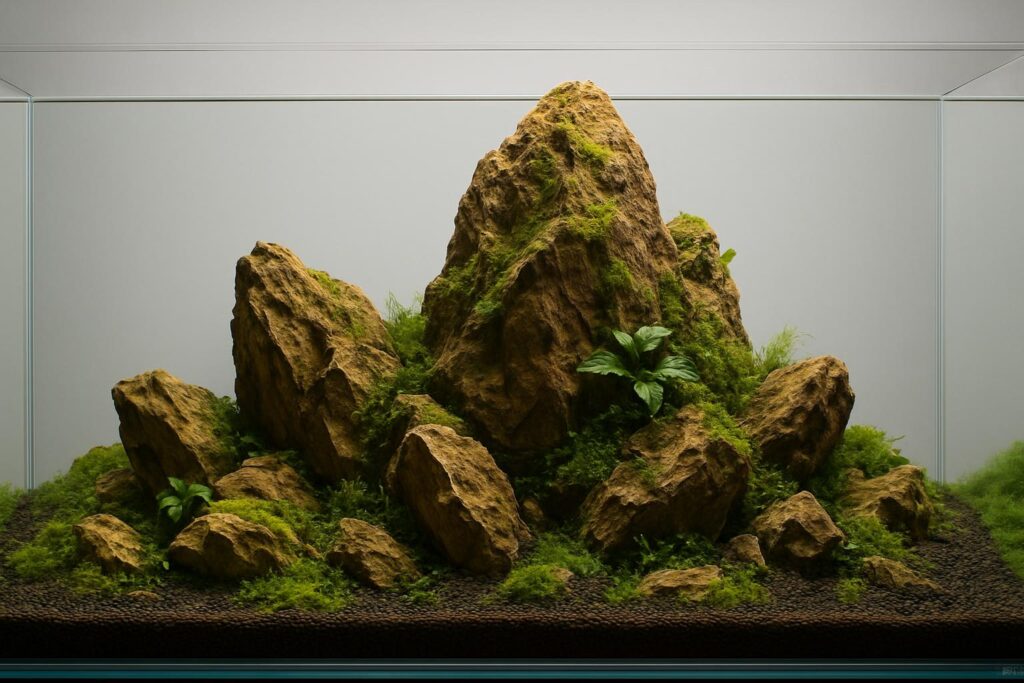
Dragon stone, often labeled as Ohko stone or dragon rock, is a sedimentary rock with craggy texture, warm brown-to-olive tones, and abundant crevices that hold plants and create shadow. Dragon stone is inert for most freshwater setups, so it does not raise pH or GH in any meaningful way. It is lighter than many igneous rocks, which makes large structures easier to build. Its pitted surface accepts moss, epiphytes like Anubias and Bucephalandra, and provides natural micro-shelter for shrimp and fry.
Dragon stone is also easier to shape by hand than very hard stones. You can flake small bits with a flathead screwdriver to improve fit, though most sets today arrive with good variation that needs little adjustment.
How we picked the best for 2026
These five picks were chosen using criteria that matter in real aquascapes:
– Piece variety that includes a focal stone and supporting stones
– Color consistency for a unified look under aquarium lighting
– Texture depth that reads well through water and glass
– Reasonable dust level and packaging that protects the rock
– Clear weight options for different tank sizes
Quick buying guide
Choose the right weight for your tank
Underestimating weight is the most common mistake. Use these simple targets:
– Sparse layout or mixed plant scape: 0.5 to 1 pound per gallon
– Balanced iwagumi: 1 to 1.5 pounds per gallon
– Rock-forward mountain scape: 1.5 to 2 pounds per gallon
For a lean iwagumi in a 10 gallon, 12 to 15 pounds of dragon stone is a reliable starting point.
Size assortment and centerpiece
A useful box includes one standout rock, several mid-size supports, and small wedges for shims. Check that the size range spans at least 3 to 10 inches if you want a convincing scale in 10 to 40 gallons. Large tanks need at least one piece 10 inches or larger to avoid a toy-like look.
Color tone and algae visibility
Dragon stone ranges from tan to olive. Darker tones hide early algae better. Lighter tan shows detail in bright tanks and with white sand. Mix tones only if you want contrast; otherwise keep to one general hue for cohesion.
Pre-cleaning and packaging
All dragon stone arrives with some clay dust. Look for sets that ship wrapped, not loose in a box, to reduce breakage and debris. You will still clean it, but better packaging saves time and keeps edges intact.
The 5 best dragon stone for aquascaping in 2026
1) LANDEN Natural Dragon Stone Ohko Rocks, 15 lb Assorted
Landen delivers consistent aquascaping materials and this 15-pound assortment is a dependable entry point. Expect warm brown-olive tones with clear crevices that catch light and provide anchor points for plants. Most boxes include one taller stone for a focal point and several mid-sized companions, which simplifies layout for new scapers.
Why it helps: Landen assortments balance centerpiece potential with support stones, so you can form a triangle or island composition without hunting for extra pieces.
Best for: 10 to 20 gallon iwagumi or nature-style layouts using a single main stone with two or three supports.
What you get: Typically 6 to 12 pieces spanning about 3 to 10 inches, with moderate porosity and mellow edges.
Setup tips: Dry-fit the scape and angle the dominant stone 10 to 15 degrees away from center for a natural line of flow. Use smaller chips at the base to lock angles before adding substrate.
Potential downsides: Piece count and exact shapes vary by box, and the per-pound cost can be higher than bulk options.
2) Pisces Natural Dragon Stone Aquarium Rock, 20 lb Mixed
This set leans into classic dragon stone texture with visibly weathered grooves. Pisces selections are known for a pleasing olive cast that looks rich under neutral or warm lights. The 20-pound weight is a solid middle ground for 15 to 29 gallon tanks that need a convincing focal formation.
Why it helps: The stronger surface relief reads well through glass, so your scape looks detailed even from the couch.
Best for: Mid-size tanks where a single ridged focal stone plus clustered supports create depth.
What you get: Often includes one taller piece, several mid-size stones, and fill pieces for shims and terraces.
Setup tips: Use the most striated face toward the viewer. If the focal rock stands vertical, backfill with substrate bags or filter media bags to support steep slopes.
Potential downsides: Some boxes trend small on the largest piece, which may limit impact in 29 gallons unless you group stones tighter.
3) Lifegard Aquatics Dragon Rock, 25 lb Box
Lifegard focuses on larger, scaper-grade rocks with more mass per piece. This 25-pound box is a smart value for 20 long to 40 gallon tanks and is one of the better bets when you need a genuine main stone. The colors skew tan to olive, and the texture remains sharp enough to cast micro-shadows that add depth in photos and videos.
Why it helps: Access to a large anchor stone lets you build a composition that scales to bigger tanks without looking cluttered.
Best for: 20 to 40 gallon mountain or canyon layouts with pronounced height and slopes.
What you get: Fewer but larger pieces, often 3 to 6 primary rocks plus chips, with defined ridges and enough flat surfaces for stable stacking.
Setup tips: Place the heaviest stone directly on glass and pour substrate around it to prevent settling. Where two faces meet, use small wedges and a drop of cyanoacrylate gel to prevent micro shifts during maintenance.
Potential downsides: Bulk boxes can arrive dusty and require more cleaning time, and shaping large pieces may need a masonry chisel if you want custom breaks.
4) SR Aquaristik Dark Ohko Dragon Stone, 15 lb
This variant carries a deeper brown tone that hides early algae film and looks striking with bright foreground plants. SR Aquaristik curates for aquascaping use, which generally means better face selection and fewer rubble-only pieces. The darker palette pairs well with white or light sand to create contrast without overwhelming the scene.
Why it helps: Darker stone reduces the visual impact of diatoms and green dust during the first weeks while plants establish.
Best for: High-contrast layouts, blackwater-inspired scapes, and tanks aimed at photography under bright LEDs.
What you get: Mixed sizes with distinct faces and a few naturally flat bases that simplify standing stones.
Setup tips: Position the darkest faces at the front of the composition and consolidate lighter pieces at the rear to create a gentle gradient in tone.
Potential downsides: Availability fluctuates, and some pieces can have slightly sharper ridges that need careful placement around thin-skinned fish.
This curated 10-pound box is tuned for nano and small community tanks. Expect thoughtful piece selection rather than pure bulk. Texture is on the pronounced side for the size, which keeps the scape from looking flat in smaller volumes.
Why it helps: Smaller tanks benefit from carefully matched shapes that stack without gaps or awkward angles.
Best for: 5 to 10 gallon nanos, shrimp tanks, and low-tech layouts that rely on a tight group of stones for structure.
What you get: Several mid-small stones with complementary angles and enough chips to pin them in place.
Setup tips: Place the tallest stone off-center using the rule of thirds. Use micro wedges and plant cushions like moss to soften joints.
Potential downsides: Not enough mass for tanks beyond 10 to 12 gallons unless you combine with a second box, and the per-pound cost is higher due to selection work.
Prep and maintenance
Initial cleaning that actually works
Rinse under running water, scrub with a stiff brush, and optionally soak overnight to release clay dust. A second rinse clears most residue. Do not boil dragon stone because trapped moisture can cause the rock to crack or pop.
Layout stability and safety
– Always set heavy stones directly on glass, then add substrate. This prevents settling and collapses.
– Use small rock chips as shims. Test stability with a gentle nudge before filling.
– For steep slopes, place substrate in mesh or filter media bags to lock contours.
– A dab of cyanoacrylate gel at hidden contact points helps during large water changes.
– Yes, you can combine dragon stone with spider wood or manzanita. Pin wood into rock crevices for hidden support.
Ongoing care
During the first month, brush stones gently with an old toothbrush during water changes to clear early film algae. Once plants fill in, algae often recedes. If you need cleanup help, add a small team of Amano shrimp or nerite snails after the tank is stable.
Common mistakes to avoid
– Underbuying rock mass and ending up with a flat scape without a focal point
– Mixing color tones too widely, which can make the layout look chaotic
– Resting heavy stones on substrate instead of the glass bottom
– Skipping the dry-fit and relying on substrate alone to hold angles
– Aggressive acid cleaning that damages texture and releases fines
Two simple scape recipes
Lean iwagumi for 10 gallons
Target 12 to 15 pounds of stone. Pick one taller piece for the oyaishi and two smaller supporting stones. Angle the main stone slightly away from the center and bury bases to the first ridge for realism. Use a low carpeting plant and a tight path of lighter sand to create depth. For a lean iwagumi in a 10 gallon, 12 to 15 pounds of dragon stone is a reliable starting point.
Island nature scape for 20 long
Use 20 to 25 pounds. Cluster three main rocks to form an asymmetric island slightly off-center, with the tallest stone at the rear. Build a gentle slope from back to front using substrate bags under the rear. Plant epiphytes in crevices and a mixed stem background behind the island. Keep open sand in the foreground for fish movement.
Compatibility and water parameters
Dragon stone is inert for most freshwater setups, so it does not raise pH or GH in any meaningful way. It works in soft to moderately hard water and supports classic community fish, rasboras, tetras, livebearers, and shrimp. Yes, dragon stone has mellow edges compared to many igneous rocks and is shrimp safe when properly cleaned.
How to pick between these five
If you want an easy, balanced starter set
Choose Landen 15 lb. The mix and tones make composition straightforward, especially in 10 to 20 gallons.
If you want pronounced texture under strong lights
Choose Pisces 20 lb. The weathered grooves carry detail across the front glass.
If you need a real centerpiece for a bigger tank
Choose Lifegard 25 lb. Larger main stones prevent clutter and allow bolder height.
If you prefer darker tones and algae camouflage
Choose SR Aquaristik Dark Ohko 15 lb. The palette helps during the first month of cycling.
If you are scaping a nano and want curated shapes
Choose Aquatic Arts 10 lb. The selection helps small layouts look intentional, not random.
Conclusion
Dragon stone brings natural texture, planting options, and reliable chemistry neutrality to freshwater aquascapes. The right box has one strong focal rock, supportive mid pieces, and small wedges for locking angles. Pick your set based on tank size, desired color tone, and how much height you want to build. Clean thoroughly, set heavy stones on glass, and lock slopes before flooding. These five options cover everything from nanos to 40-gallon show tanks with textures that hold up in daily viewing and in photos.
FAQ
Q: Does dragon stone change pH or hardness?
A: Dragon stone is inert for most freshwater setups, so it does not raise pH or GH in any meaningful way.
Q: How much dragon stone do I need for a 10 gallon iwagumi?
A: For a lean iwagumi in a 10 gallon, 12 to 15 pounds of dragon stone is a reliable starting point.
Q: Can I boil dragon stone to sanitize it?
A: Do not boil dragon stone because trapped moisture can cause the rock to crack or pop.
Q: How should I clean dragon stone before aquascaping?
A: Rinse under running water, scrub with a stiff brush, and optionally soak overnight to release clay dust.
Q: Is dragon stone safe for shrimp and delicate fish?
A: Yes, dragon stone has mellow edges compared to many igneous rocks and is shrimp safe when properly cleaned.