
We are reader supported. When you purchase through links on our site, we may earn an affiliate commission. Also, as an Amazon affiliate, we earn from qualifying purchases.
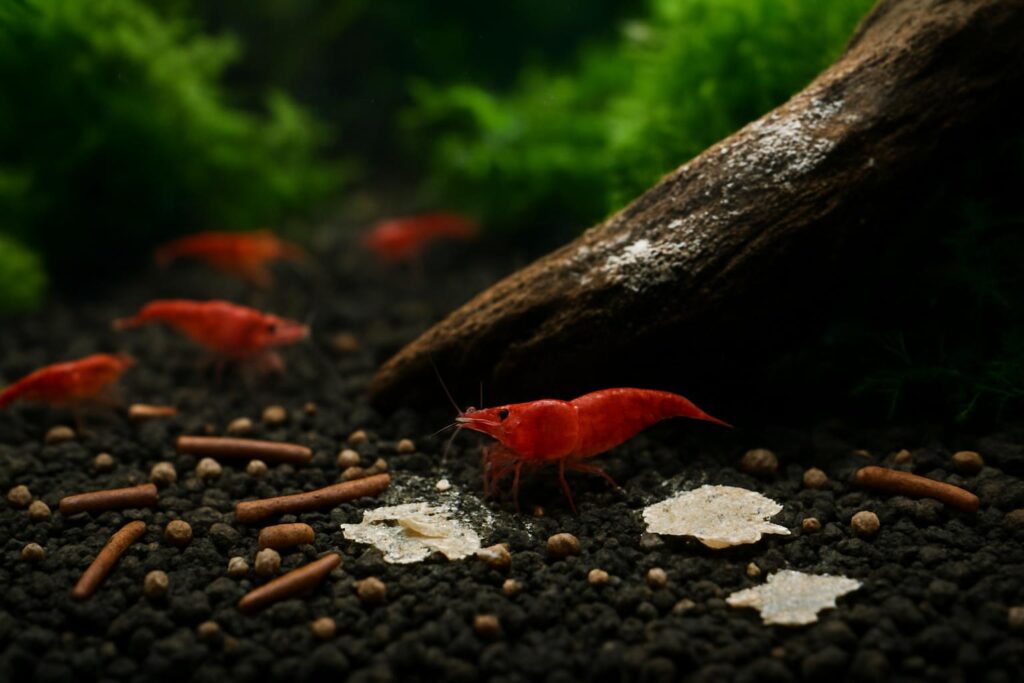
Picking food for Neocaridina shrimp should feel simple, yet the wrong choice can stall growth, dull color, and trigger poor molts. The right mix, on the other hand, builds strong shells, supports constant grazing behavior, and keeps water ultra stable. This guide breaks down exactly what Neocaridina need, how to feed them without polluting your tank, and which five foods deliver the most consistent results in 2026. Each recommendation includes clear use cases, pros and cons, and practical feeding tips, so you can build a stable routine and watch your colony thrive.
What Neocaridina Need From Food in 2026
Core Nutrition Targets
For stable growth, vivid color, and clean molts, focus on these fundamentals:
- Protein: About 28–38 percent for adult Neocaridina. Juveniles benefit from the higher end, up to around 35–45 percent, to power rapid growth.
- Fiber: Supports digestion and steady grazing. Ingredients like soybean hulls, algae, and leaves are helpful.
- Minerals: Calcium and magnesium for exoskeleton strength. Balanced trace elements help consistent molting.
- Carotenoids: Astaxanthin and spirulina support natural coloration without staining water.
- Vitamins and amino acids: Improve immunity, egg viability, and hatch success.
Feeding Frequency and Portion Control
- Small colony: feed light portions 3–5 times per week.
- Established colony: micro portions daily or near-daily, as long as food is fully gone within 2–3 hours.
- Remove uneaten food after 2–3 hours to prevent planaria and hydra.
- Keep one light fasting day weekly to reset biofilm grazing and water quality.
Rotation Strategy That Works
Rotate a high-quality staple with a protein-forward option for juveniles, a mineral-rich item for molting, and a biofilm builder for babies. Add blanched vegetables once or twice weekly for fiber and grazing enrichment. This keeps nutrition broad and behavior natural.
How These Five Foods Were Chosen
- Ingredient quality: Whole proteins, algae, and known shrimp-safe minerals.
- Pellet size and sink behavior: Micro or small sticks that stay on the substrate and do not explode into mush.
- Water stability: Minimal clouding and low waste.
- Colony response: Strong feeding response across juveniles and adults.
- Value and availability: Consistent batches and sizes suitable for hobbyists.
The 5 Best Shrimp Foods for Neocaridina in 2026
1) Hikari Shrimp Cuisine
Hikari Shrimp Cuisine is a classic micro-pellet specifically sized for dwarf shrimp. It emphasizes plant matter with spirulina and seaweed, balanced by essential minerals for exoskeleton health. Pellets sink quickly and hold shape long enough for proper grazing.
- Why it helps: Reliable daily staple that encourages constant picking without overwhelming your filter.
- Best for: All-around nutrition for mixed-age Neocaridina colonies.
- Pellet size and sink rate: Fine micro granules that sink fast and disperse accessibly.
- Feeding style: Small pinches; ensure everything is gone within 2–3 hours.
- Extras: Algal ingredients support color and gut health.
- Potential downsides: Very small pellets can blow around in high flow; reduce current at feeding time.
How to use
Feed a tiny pinch per 10–20 shrimp, 4–6 times per week. For juveniles, offer micro portions daily. Use a feeding dish to contain pellets and make cleanup easy.
2) Dennerle Shrimp King Complete
Dennerle Shrimp King Complete uses a plant-forward recipe with herbs, vegetables, and minerals pressed into sturdy sticks. The sticks soften slowly, keeping food available for longer, controlled grazing without fouling the water.
- Why it helps: Balanced daily staple with consistent texture that prevents overfeeding spikes.
- Best for: Display tanks where you want clean water and steady grazing windows.
- Pellet size and sink rate: Small sticks that sink promptly and soften over time.
- Feeding style: One small stick per 15–20 shrimp; adjust after observing consumption speed.
- Extras: Broad micronutrient profile for shell health and breeding readiness.
- Potential downsides: Sticks can be overfed; cut or break them for smaller colonies.
How to use
Feed 3–5 times a week as the primary staple. Offer smaller pieces in nano tanks. Remove leftovers after 2–3 hours, especially if you notice snails swarming the stick.
3) Fluval Bug Bites Shrimp Formula
Fluval Bug Bites Shrimp Formula leans on black soldier fly larvae with added salmon and minerals. The profile is protein-rich but balanced, making it excellent for growth phases and coloration without muddying the tank.
- Why it helps: Highly digestible insect protein drives growth in juveniles while supporting adults.
- Best for: Growing colonies and post-molt recovery where extra protein and minerals matter.
- Pellet size and sink rate: Small granules that sink quickly; easy for shrimp to carry and graze.
- Feeding style: Use sparingly to prevent protein overload in low-biofilm tanks.
- Extras: Added calcium supports exoskeleton development and consistent molts.
- Potential downsides: Overuse can accelerate waste; pair with fasting days and a biofilm builder.
How to use
Feed micro portions 2–4 times per week, especially after molts or when juveniles are abundant. Rotate with a plant-forward staple to keep balance.
4) GlasGarten Bacter AE
GlasGarten Bacter AE is a biofilm and microfauna booster powder. It is not a conventional pellet; instead, it feeds the bacterial and biofilm layer that baby shrimp rely on. A light dusting coats surfaces, giving 24–48 hours of safe, continuous grazing across the tank.
- Why it helps: Supercharges biofilm for babies and picky grazers that avoid larger pellets.
- Best for: Breeding tanks, shrimp-only setups, and periods with many shrimplets.
- Pellet size and sink rate: Fine powder disperses; use sparingly for targeted dust feeding.
- Feeding style: Dose lightly; turn off filters for a minute to let powder settle.
- Extras: Enzymes and amino acids improve gut health and survival rate of young shrimp.
- Potential downsides: Overdosing can cloud water and raise bio-load; cut back on other foods on dosing days.
How to use
Dust a tiny amount once or twice weekly. Observe water clarity and reduce standard pellet feed on the same day. In low-flow tanks, use a pipette to target hardscape and moss where babies graze.
5) GlasGarten Shrimp Snacks Snow Flakes
Soybean hull-based Snow Flakes promote a controlled fungal biofilm that shrimp love to graze. They do not foul water quickly and can be left in the tank longer than typical pellets, making them ideal for colonies and vacation feeding.
- Why it helps: Creates a slow-release grazing patch that feeds many shrimp at once.
- Best for: Large colonies, community feeding sessions, and travel days.
- Pellet size and sink rate: Flat flakes that sink immediately and hold structure.
- Feeding style: Use a small flake for nano tanks; one standard flake can cover 20–30 shrimp.
- Extras: Long-lasting without heavy water clouding.
- Potential downsides: If overused in small tanks, the fungal mat can outpace consumption.
How to use
Feed 1–2 times per week. Start with a small piece and scale up according to consumption over 12–24 hours. This is a supplement, not a daily staple.
Smart Feeding Routines That Work
Simple Weekly Plan for Most Tanks
- Day 1: Hikari Shrimp Cuisine (light portion)
- Day 2: Dennerle Shrimp King Complete (small stick piece)
- Day 3: Fluval Bug Bites Shrimp Formula (micro portion)
- Day 4: Bacter AE (dust) and skip other food
- Day 5: Hikari Shrimp Cuisine (light portion)
- Day 6: Snow Flakes (small piece) or blanched spinach/zucchini
- Day 7: Fasting day to let shrimp graze biofilm
Adjust quantities so all food disappears within 2–3 hours. In high-density tanks you can shorten the fasting gap, but keep at least one light day to stabilize parameters.
Vegetables and Natural Grazing
Offer blanched zucchini, spinach, or kale once or twice per week for fiber and enrichment. Remove vegetable remnants after 6–8 hours. Maintain a healthy biofilm base with wood, botanicals, and moss to keep shrimp busy between feedings.
Water Quality and Cleanliness
- Use a feeding dish to localize leftovers and ease siphoning.
- Keep sponge pre-filters on intakes to protect shrimplets and biofilm.
- Perform small, regular water changes to export organics from feeding.
Troubleshooting Common Feeding Issues
Overfeeding and Pest Outbreaks
If you see planaria or hydra, reduce portions immediately and remove leftovers within 2 hours. Add a fasting day, increase mechanical filtration, and feed dust foods more sparingly.
Poor Molts or Soft Shells
Boost mineral access via a balanced staple and rotate in a mineral-forward option. Ensure consistent calcium and magnesium in your water and avoid rapid TDS swings. Fluval Bug Bites Shrimp Formula and plant-forward staples like Dennerle support shell development when dosed correctly.
Picky Eaters
Offer a small piece of Snow Flakes to kickstart grazing, then introduce a staple like Hikari Shrimp Cuisine in tiny amounts. In breeding tanks, a light dust of Bacter AE ensures babies feed even if adults ignore pellets at first.
Cloudy Water After Feeding
Use smaller portions, increase contact time with feeding dishes, and stagger meals. Avoid smashing pellets into powder unless feeding shrimplets. On Bacter AE days, skip other foods to avoid compounding organics.
Conclusion
Neocaridina shrimp thrive on steady grazing, clean water, and a rotation that covers protein, fiber, minerals, and biofilm. The five foods above fit those needs with clear roles: daily staples for balance, protein-forward granules for growth, biofilm support for babies, and long-lasting flakes for group feeds. Keep portions small, use a consistent schedule, and watch how quickly food disappears. When in doubt, feed less, observe more, and let biofilm do part of the work. With a simple, disciplined routine, your shrimp will color up, molt on schedule, and expand your colony with minimal fuss.
FAQ
Q: How often should I feed Neocaridina shrimp?
A: Feed light portions 3–5 times per week for small colonies, or micro portions daily for established colonies, ensuring food is gone within 2–3 hours.
Q: What protein percentage is best for Neocaridina?
A: About 28–38 percent for adults, with juveniles benefiting from the higher end up to around 35–45 percent.
Q: Is Bacter AE a regular food or a supplement?
A: Bacter AE is a biofilm and microfauna booster powder; treat it as a supplement and reduce other foods on dosing days.
Q: How do I prevent overfeeding and pests like planaria?
A: Keep portions small, remove leftovers after 2–3 hours, include a weekly fasting day, and avoid compounding multiple foods on Bacter AE days.
Q: Can I use vegetables in the feeding routine?
A: Yes, offer blanched zucchini, spinach, or kale once or twice weekly for fiber and enrichment, and remove remnants after 6–8 hours.