
We are reader supported. When you purchase through links on our site, we may earn an affiliate commission. Also, as an Amazon affiliate, we earn from qualifying purchases.
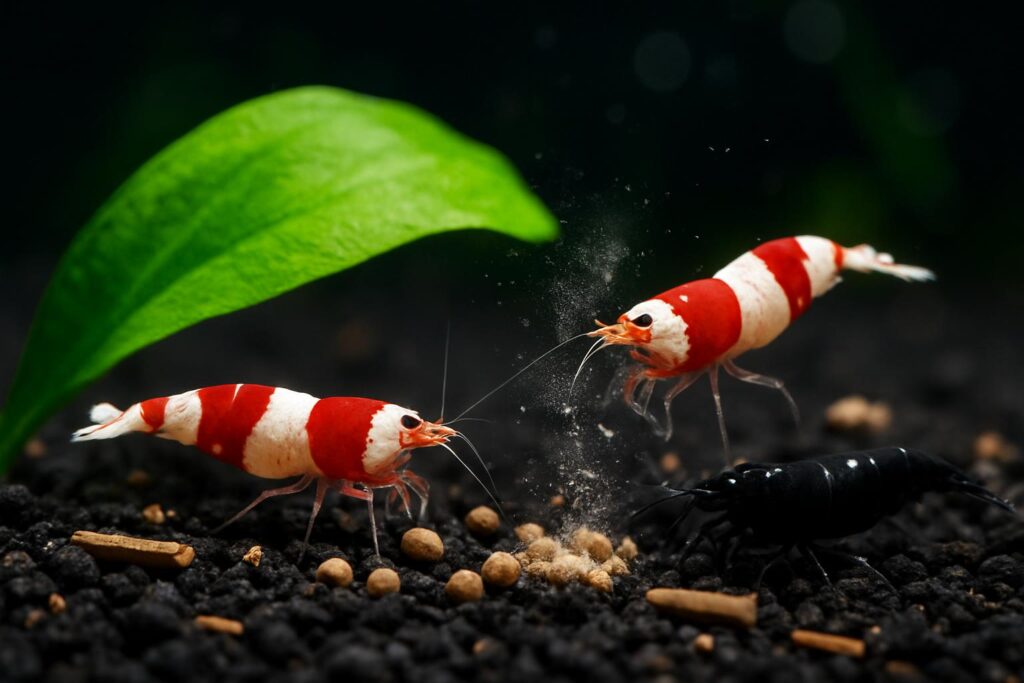
Caridina shrimp are more sensitive than most aquarium invertebrates, so the food you choose directly affects coloration, survival of shrimplets, and long-term breeding success. In 2026, several proven formulas stand out for clean nutrition, stable molting, and strong biofilm support. This guide explains what Caridina truly need, how to feed without polluting soft-water tanks, and the five best foods to anchor your routine.
What Caridina Actually Need From Food
Caridina species such as Crystal Reds, Crystal Blacks, and Taiwan Bees do best with a plant-forward, mineral-rich diet that complements the biofilm and leaf litter in their tank. Focus on:
Biofilm support: Shrimplets survive by grazing on microscopic films. Fine powders and baby granules boost this natural buffet.
Controlled protein: Too much animal protein can stress molt cycles. Steady, moderate protein with strong vegetable content is safer for soft-water Caridina.
Minerals for molting: Calcium, chitin, and trace minerals help form and shed exoskeletons cleanly.
Tiny particle size: Micro pellets and powders ensure shrimplets can eat alongside adults.
Clean water: Foods that sink fast and do not break down into sludge protect your low-TDS environment.
How We Picked the Winners for 2026
To narrow the field, each product needed to meet these criteria:
Proven with Caridina: Long-standing use in soft-water shrimp tanks, not just general aquarium foods.
Clean formulation: Minimal fillers, stable sinking behavior, no oily sheens, low clouding when used correctly.
Complete or complementary role: Either a primary staple or a specialized supplement that fills a real gap, such as biofilm or minerals.
Reliability across life stages: Pellet size or powder form that reaches both adults and shrimplets.
The 5 Best Shrimp Foods for Caridina in 2026
1) GlasGarten Bacter AE Micro Powder
Bacter AE is a micro-powder that increases biofilm, infusoria, and beneficial bacteria on all surfaces. This is not a standalone staple. It is a strategic supplement that raises survival rates of shrimplets and keeps adults grazing naturally between main feedings.
Why it helps: It seeds surfaces with microscopic food and enzymes, so even the smallest shrimplets can feed constantly without competing with adults.
Best for: Breeder tanks, new colonies, and any setup where shrimplet survival is a top priority.
Feeding tips: Start with a dusting 2–3 times per week. Use less than the label suggests in very soft water or small tanks. Disperse the powder in tank water first, then pour it near flow for an even spread.
Potential downsides: Overdosing can cloud water and spike bio-load. Tighten your portions if you see film on the surface or long-lasting haze.
Pair it with: A balanced staple stick or pellet to cover protein and mineral needs.
2) Hikari Shrimp Cuisine
Hikari Shrimp Cuisine is a tiny sinking pellet designed for dwarf shrimp. It emphasizes plant matter like seaweed and spirulina while delivering enough protein for steady growth without pushing molting issues.
Why it helps: The micro size reaches shrimplets, the plant-heavy profile suits soft-water Caridina, and the pellets hold shape long enough for group grazing without disintegrating quickly.
Best for: Daily or near-daily staple feeding for mixed-age Caridina colonies.
Feeding tips: Offer an amount that disappears in 1–2 hours. Feed small portions more frequently rather than a large dump. Use a feeding dish to keep pellets contained and to track intake.
Potential downsides: Overfeeding can leave residue in low-flow corners. If you notice leftovers after 2 hours, reduce the next portion.
Pair it with: Bacter AE for shrimplets and a mineral-forward stick once or twice weekly.
3) Dennerle Shrimp King Complete
Shrimp King Complete is a premium stick formulated specifically for dwarf shrimp. It focuses on vegetables, herbs, and algae, with added minerals and chitin to support exoskeleton health. It avoids fishmeal and keeps a stable structure underwater.
What stands out: Clean ingredient panel, strong mineral profile, and a slow-softening stick that invites group grazing without turning to mush.
Why it helps: It covers daily needs for adults while still breaking down into small enough pieces for juveniles. The blend of herbs and algae supports digestive health and stable coloration.
Best for: Established Caridina tanks where you want a single dependable staple and minimal mess.
Feeding tips: Break sticks into small segments and pre-soak for 10–20 seconds to help them sink and soften evenly. Feed what they can consume in 2–3 hours.
Potential downsides: Pricier than basic pellets. If you drop in too large a segment, it may draw a swarm, but uneaten fragments should be removed after 3 hours to protect water quality.
Pair it with: Bacter AE for shrimplets and a protein bump once per week.
4) SL-Aqua More White Mineral
SL-Aqua More White Mineral is a specialized pellet focused on shell quality, color density, and clean molts. It commonly includes montmorillonite clay, chitin, and calcium, which Caridina use during exoskeleton formation and shedding.
Why it helps: Caridina kept in very soft water need reliable mineral sources. This pellet offers targeted support for shell integrity and clean molts without resorting to heavy animal proteins.
Best for: Crystal and Taiwan Bee lines, especially if you see weak coloration, slow molts, or incomplete shedding.
Feeding tips: Offer 1–2 times per week in small portions. Pre-soak quickly so pellets sink and soften. Use with a feeding dish to watch intake.
Potential downsides: Mineral-based foods can nudge TDS upward. In ultra-soft setups, keep portions tight and monitor TDS stability.
Pair it with: A plant-forward staple such as Shrimp Cuisine or Shrimp King Complete, plus biofilm support.
5) Fluval Bug Bites Shrimp Formula
Fluval Bug Bites Shrimp Formula uses black soldier fly larvae as the first ingredient, delivering highly digestible protein alongside vitamins and minerals. The granules sink quickly and hold shape well.
Why it helps: Caridina benefit from an occasional protein lift for egg production and growth, and insect meal is a clean, digestible source.
Best for: Supplemental feeding 1–2 times per week to support breeding and growth spurts.
Feeding tips: Use sparingly. Caridina do not need heavy daily animal protein. Offer very small amounts and verify everything is gone within 1–2 hours.
Potential downsides: Overuse can push protein too high for soft-water Caridina. Keep it as a supplement rather than a main staple.
Pair it with: A mineral-oriented pellet and routine biofilm support, plus your daily plant-based staple.
Suggested Weekly Feeding Plan for a 20-Gallon Caridina Colony
The safest approach is small, consistent feedings that match your colony size and age mix. For a typical 20-gallon colony with 30–50 adults and shrimplets:
Monday: Hikari Shrimp Cuisine as a light staple. Aim for a portion that is gone in 1–2 hours.
Tuesday: Bacter AE micro-dusting. Keep it light and evenly dispersed.
Wednesday: Dennerle Shrimp King Complete, a small pre-soaked segment.
Thursday: Rest day. Let them graze biofilm and leaf litter.
Friday: SL-Aqua More White Mineral, small pre-soaked portion for shell support.
Saturday: Fluval Bug Bites Shrimp Formula, a very small portion as a protein boost.
Sunday: Rest day. Observe behavior, berried females, and molting.
Adjust portions down if you see any leftovers after 2–3 hours. If your colony is smaller or newer, cut the schedule in half and increase gradually as grazing pressure rises.
Portion Control and Delivery
Use a feeding dish: Keeps food in one place, prevents it from sinking into substrate, and makes it easy to remove leftovers.
Pre-soak sticks and pellets: Ten to twenty seconds in tank water helps them sink and soften evenly so more shrimp can feed simultaneously.
Target time to vanish: Design every feeding to be fully consumed within 1–3 hours. If you see food after that, your portions are too large.
Water Quality Guardrails
Start small, increase slowly: New tanks and small colonies need far less food. Let biofilm take the lead and feed lightly.
Remove leftovers: After 2–3 hours, siphon or net anything remaining.
Watch TDS: Mineral foods can bump TDS. If you keep Caridina at very low TDS, use minimal mineral pellets and track stability.
Keep gentle flow: Light flow and pre-filter sponges prevent micro-foods from being sucked into filters and rotting out of sight.
Common Mistakes to Avoid
Overfeeding powders: Micro foods are powerful. A little goes a long way. If the tank clouds, you are overdoing it.
Relying on one food: Rotation improves nutrition, reduces boredom, and minimizes the chance of waste buildup from a single formula.
Skipping shrimplets: If your main food is too large, shrimplets starve. Always include micro-sized options.
Ignoring leftovers: Even premium foods pollute if ignored. Set a timer and remove anything uneaten after 2–3 hours.
Putting It All Together
A solid Caridina routine is simple. Use a clean, plant-forward staple most days, layer in biofilm support for shrimplets, add a mineral pellet once or twice weekly, and give a light insect-based protein bump once a week. Keep portions tight, use a feeding dish, and watch for complete consumption within hours. Over time you will see stronger molts, better color density, and higher shrimplet survival without sacrificing water stability.
Conclusion
The five foods above cover every base Caridina need in 2026: biofilm boost for shrimplets, a clean daily staple, targeted minerals for shell health, and a lean protein supplement for breeding. Combine them within a measured schedule, control portions to protect water quality, and let natural grazing do the rest. Small, consistent feedings paired with smart rotation is the path to a thriving Caridina colony.
FAQ
Q: How often should I feed Caridina shrimp?
A: Aim for small portions that are eaten within 1–3 hours, with a rotation across the week that includes a daily or near-daily staple, 2–3 light biofilm dustings, one mineral-focused feeding, and one small protein supplement, plus rest days.
Q: Is Bacter AE a complete food?
A: No. Bacter AE is a biofilm booster and micro-food for shrimplets and should be used as a supplement alongside a balanced staple.
Q: Can Fluval Bug Bites Shrimp Formula be a main staple for Caridina?
A: It is best as a supplemental protein boost 1–2 times per week; daily use can push protein too high for soft-water Caridina.
Q: Will mineral pellets like SL-Aqua More White raise TDS?
A: They can nudge TDS upward, so use small portions and monitor TDS if you keep Caridina in very low TDS water.
Q: Do shrimplets need different food than adults?
A: Yes. Shrimplets rely on fine particles and biofilm, so include micro foods like Bacter AE or tiny pellets to ensure they can feed constantly.