
We are reader supported. When you purchase through links on our site, we may earn an affiliate commission. Also, as an Amazon affiliate, we earn from qualifying purchases.
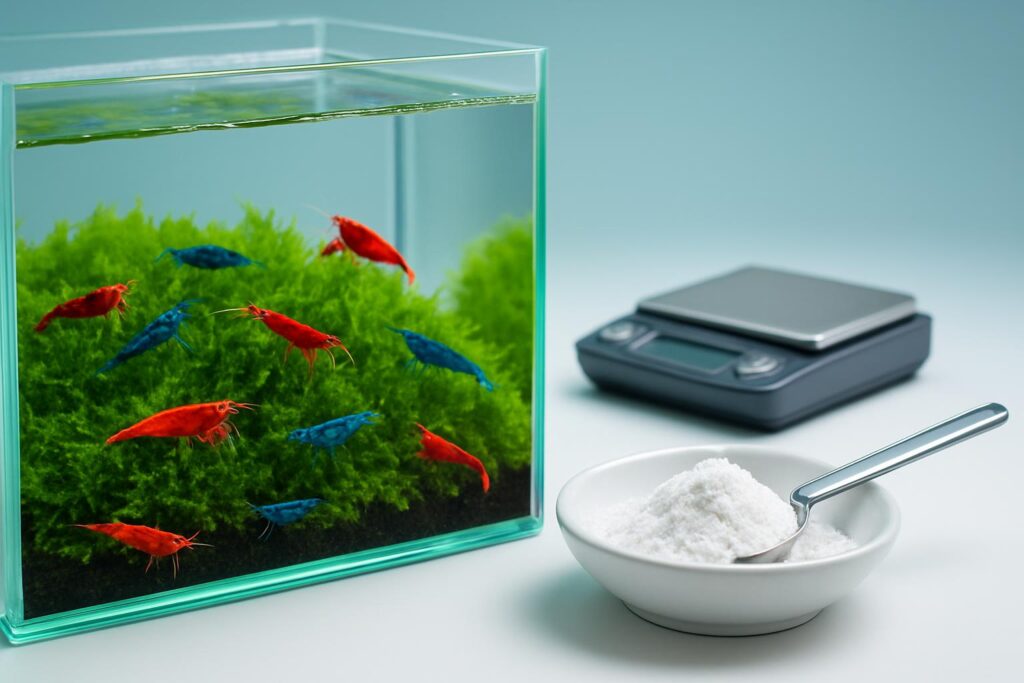
Shrimp thrive when water minerals match their natural needs. Without the right calcium, magnesium, and trace elements, molts fail, colors fade, and colonies stall. This guide breaks down the essentials, then reviews four proven shrimp mineral supplements for 2026 so you can set balanced parameters and keep shrimp stable long term.
Why shrimp mineral balance matters
Minerals drive shell formation, osmoregulation, and stable pH. In soft or filtered water, these minerals drop too low. In hard water, the mix can be unbalanced. A targeted shrimp mineral supplement lets you hit reliable numbers so shrimp grow, molt, and breed predictably.
GH, KH, and TDS in plain terms
GH is general hardness. It tracks calcium and magnesium. Shrimp need GH for exoskeleton building and smooth molts.
KH is carbonate hardness. It buffers pH so it does not swing daily. Some species prefer very low KH, others do better with a bit of buffer.
TDS is total dissolved solids. It is a broad read of salts and minerals. TDS helps you repeat mixes, but GH and KH are the real targets for biology.
Core minerals shrimp use
Calcium supports shell hardening after each molt. Too little and shells stay soft or deformed. Too much without balance can lock shells too hard and cause stuck molts.
Magnesium partners with calcium to regulate muscle and nerve function. It also helps prevent overly brittle shells.
Potassium aids cell function and plant health in planted shrimp tanks. Trace elements like iron, manganese, and iodine may support enzymes and color intensity when kept in safe ranges.
Baseline target ranges
Neocaridina such as Cherry Shrimp often do best around GH 6 to 8, KH 2 to 4, and TDS 180 to 240.
Caridina such as Crystal and Bee Shrimp often do best around GH 4 to 6, KH 0 to 1, and TDS 100 to 140 when using active soil that buffers pH.
These are starting points. Aim for stability first. Fine tune from there based on your soil, plants, and local water.
How to choose the right shrimp mineral supplement
Match the product to your shrimp and substrate
Caridina on active soil want GH without KH. A GH-only formula is best. Neocaridina on inert substrate need both GH and KH. A GH and KH formula works better. If you run RO or DI water, you must remineralize every time. If you use tap water, a supplement can help correct imbalances, but test first.
Powder versus liquid
Powders give precise control, great for breeders and RO users. They are cost efficient and consistent when weighed or spooned carefully. Liquids are convenient for quick top offs and fine adjustments, and they mix fast for small tanks.
Consistency and repeatability
Pick a product that makes it easy to hit the same GH and TDS each time. Clear dosing instructions, stable composition, and a predictable calcium to magnesium ratio make your life easier.
Safety and clarity
Look for shrimp-safe formulations that avoid sodium buildup and excessive bicarbonates when not needed. Good products disclose intended GH or KH effect and typical dose per liter or gallon. Avoid guesswork.
The 4 best shrimp mineral supplements for 2026
1) Salty Shrimp Bee Shrimp Mineral GH+
Best for: Caridina on active soil, especially Crystal, Bee, Taiwan Bee, and similar soft-water species. Also used by breeders who want GH control without adding KH.
What it is: A powder that adds calcium, magnesium, potassium, and trace elements while raising GH only. It leaves KH near zero so active soils can buffer pH into the 5.5 to 6.5 range typical for Bee Shrimp systems.
Why it helps: GH-only reconstitution stops pH creep in buffered tanks and supports clean molts. The balance of calcium and magnesium is tuned for shrimp rather than fish. That balance reduces stuck molts, encourages steady growth, and preserves delicate antennae and limbs during molts.
How to use: Mix with RO or DI water before each water change. Stir until fully dissolved, then test GH and TDS. For Bee Shrimp, target GH 4 to 6 and TDS about 100 to 140. Always remineralize outside the tank when possible so targets stay consistent.
Real-world results: Keepers report stronger survival in juvenile Bee Shrimp, better berried rates, and lower molt failure after switching from tap blends. Active soil lasts longer when KH stays near zero.
Potential downsides: It is a powder, so accuracy depends on careful measuring. Overdosing can push TDS higher than intended. It does not add KH, which is by design for Bee systems but not suitable for Neocaridina on inert substrates.
Pro tips:
- Use a small digital spoon scale for repeatable doses.
- Recheck TDS 12 to 24 hours later to confirm reading after full dissolution.
- Top off evaporated water with plain RO to avoid creeping TDS.
2) Salty Shrimp Shrimp Mineral GH/KH+
Best for: Neocaridina such as Cherry, Bloody Mary, and Yellow, kept on inert substrates. Also helpful for livebearers or mixed tanks where a bit more pH stability is desired.
What it is: A powder that raises both GH and KH to support mineral demand and stabilize pH. It is designed for tanks without active soil or where you want more buffer.
Why it helps: Neocaridina prefer a mild buffer so daily pH swings do not stress them. This blend increases GH for healthy molts and KH for pH stability. It also contributes trace elements needed by invertebrates and biofilm communities.
How to use: Remineralize RO or DI water before water changes. Aim for GH 6 to 8, KH 2 to 4, and TDS 180 to 240. Dose gradually, test, and adjust. If your tap water is close, you can blend a smaller amount to fine tune GH and KH while keeping TDS in check.
Real-world results: Many keepers see brighter coloration in Neocaridina and improved hatch rates once KH stabilizes. Long-term tanks run cleaner biofilm with fewer pH dips at night.
Potential downsides: Not suitable for Bee Shrimp on active soils because added KH can neutralize soil buffering. As with any powder, dosing errors can overshoot TDS.
Pro tips:
- Test pH morning and night for a few days after switching products to confirm improved stability.
- If plant demand is high, monitor KH monthly and adjust to keep your original target.
- Keep a log with GH, KH, TDS, dose amounts, and results so you can repeat success.
3) Dennerle Shrimp King Bee Salt GH+
Best for: Caridina keepers who want a clean, European-formulated GH-only salt for active-soil tanks. Useful when consistency and gentle trace element support are priorities.
What it is: A specialized bee shrimp mineral salt that raises GH without adding KH. It includes a considered mix of calcium, magnesium, potassium, and traces designed around invertebrate physiology.
Why it helps: The formula supports smooth molts and balanced shell density without spiking KH. It pairs well with buffering soils, helping you maintain soft, slightly acidic water with reliable conductivity.
How to use: Dissolve the measured amount in RO or DI water, then verify GH and TDS. For Bee Shrimp, hold GH 4 to 6 and TDS near 100 to 140. Stir until clear before adding to the tank to avoid micro precipitates.
Real-world results: Keepers often report fast settling from imported shrimp and better juvenile survival once parameters stabilize. The product is known for predictable mixes across batches.
Potential downsides: As a premium import, it may cost more per liter mixed than some alternatives. It is not a match for Neocaridina on inert substrates due to the lack of KH support.
Pro tips:
- Pair with a reliable TDS meter and GH test to build your personal mixing chart.
- Keep KH near zero in active soil Bee tanks to extend soil life and avoid pH creep.
- Acclimate new shrimp slowly when switching from a different mineral brand to avoid osmotic stress.
4) Brightwell Aquatics FlorinDelta GH+
Best for: Planted shrimp tanks and keepers who prefer a liquid GH booster with fast mixing and fine control. Good for Neocaridina or Caridina when KH is already dialed in by substrate or a separate buffer.
What it is: A liquid remineralizer that raises GH without adding KH. Formulated for freshwater plants and invertebrates, it focuses on calcium and magnesium in a ratio that avoids brittle molts.
Why it helps: Liquid dosing is simple for nano tanks and weekly top ups. It eliminates clumping and dissolves instantly. The GH-only approach pairs well with active soils for Caridina or with separate KH control for Neocaridina.
How to use: Dose into new RO or DI water according to label directions, then test GH and TDS. For Neocaridina with inert substrate, combine with a KH source if needed. For Bee Shrimp on active soil, use it as your sole mineral addition and keep KH near zero.
Real-world results: Keepers note easier fine tuning in small tanks, steady juvenile growth, and stable plant health. It is helpful when making small parameter nudges between water changes.
Potential downsides: Liquids cost more per degree of hardness than powders. It does not supply KH, so Neocaridina on inert substrates may still need a KH buffer. Overdosing can creep TDS if not tracked.
Pro tips:
- Calibrate droppers or syringes so your milliliter dose is consistent.
- Log GH and TDS before and after each dose to build a reliable dosing chart for your tank size.
- If plants consume minerals quickly, schedule small midweek touch-up doses rather than one big jump.
Setup workflow that keeps shrimp thriving
Start with pure water
RO or DI gives you a blank slate. It removes unknowns from tap such as chloramines, phosphates, and inconsistent minerals. With pure water you can build the exact GH and KH your shrimp need.
Remineralize outside the tank
Mix your chosen mineral in a bucket or container. Stir well, then test GH, KH, and TDS. Adjust before adding to the tank. This prevents sudden shifts in the display and speeds up routine changes.
Dial in slow, then lock it
Ramp parameters gradually over a week if you are changing target ranges. Once shrimp are healthy and breeding, keep the same numbers. Stability is more important than chasing a perfect spot on a chart.
Watch molt cycles and behavior
Healthy shrimp graze constantly and molt cleanly. If you see repeated failed molts, limbs lost during molts, or lethargy, review your GH, KH, and TDS. Adjust in small steps and retest in 24 hours.
Common mistakes to avoid
Do not use a GH-only product in a Neocaridina inert-substrate tank without accounting for KH. Do not stack multiple products blindly. Avoid chasing TDS alone without checking GH and KH because TDS blends can vary. Never add raw powder directly to a display with sensitive shrimp without pre-dissolving.
Quick comparison by scenario
Caridina on active soil
Pick a GH-only powder like Salty Shrimp Bee Shrimp Mineral GH+ or Dennerle Shrimp King Bee Salt GH+. Keep KH near zero. Set GH 4 to 6 and TDS 100 to 140. Let the soil control pH.
Neocaridina on inert substrate
Choose Salty Shrimp Shrimp Mineral GH/KH+ or pair a GH-only product with a KH source. Set GH 6 to 8, KH 2 to 4, and TDS 180 to 240. Aim for steady pH without spikes.
Planted nano shrimp tanks
A liquid like Brightwell FlorinDelta GH+ makes small adjustments simple. Combine with a mild KH source if you keep Neocaridina on inert substrate. Recheck parameters after trimming, fertilizing, or large water changes.
Testing tools that make dosing easier
Use a GH and KH test kit for core hardness numbers. A reliable TDS meter confirms that your mixing routine is repeatable. A small spoon scale or dosing syringe improves accuracy and saves time. Keep records so your future self can repeat what worked.
Conclusion
The right mineral supplement turns guesswork into a repeatable routine that shrimp tolerate and thrive in. Pick GH-only for Bee Shrimp on active soil. Pick GH and KH for Neocaridina on inert substrates. Choose powder for maximum control or liquid for convenience. Then lock parameters and keep them stable. The four products above cover all common shrimp setups and give you clear paths to healthy molts, bright color, and steady breeding.
FAQ
Q: Do I still need a mineral supplement if I use tap water
A: Test first. Tap water can be unbalanced for shrimp. A supplement can help correct GH and KH to target ranges, but RO or DI with remineralization is the most consistent approach.
Q: Which matters more for shrimp health, GH or KH
A: GH drives molting and shell formation, so it is critical. KH controls pH stability. Caridina on active soil want GH without KH, while Neocaridina on inert substrate need both GH and KH.
Q: Should I choose a powder or a liquid supplement
A: Powders offer precise, cost‑effective control for RO users and breeders. Liquids are convenient for nano tanks and small top ups because they dissolve instantly.
Q: What target ranges should I use for Neocaridina and Caridina
A: Neocaridina often do best at GH 6 to 8, KH 2 to 4, and TDS 180 to 240. Caridina often do best at GH 4 to 6, KH 0 to 1, and TDS 100 to 140 on active soil.
Q: Can I mix different mineral products in the same tank
A: Avoid stacking products blindly. Choose one approach, test GH, KH, and TDS, and adjust slowly. Mixing can work if you know exactly what each product changes.