
We are reader supported. When you purchase through links on our site, we may earn an affiliate commission. Also, as an Amazon affiliate, we earn from qualifying purchases.
Breeding shrimp successfully starts with getting them to feel safe. In a crowded community tank or a dedicated shrimp-only setup, secure hides reduce stress, protect molting adults, and give shrimplets the micro-spaces they need to graze and grow. The right breeding cave can quietly lift survival rates, stabilize behavior, and make your colony more active in the open. This guide cuts through the noise and highlights four proven shrimp breeding caves for 2026, plus how to place, clean, and use them for steady results.
Why shrimp benefit from breeding caves
Dwarf shrimp are vulnerable during molts and early life stages. A good cave helps by:
- Lowering stress for berried females and freshly molted adults
- Providing shaded micro-habitats where shrimplets can graze on biofilm
- Breaking line of sight, which reduces minor territorial nudges among males
- Concentrating natural food on rough, porous surfaces
More cover means less time spent hiding in panic and more confident foraging. Over weeks, that steady calm shows up as stronger color, better feeding response, and higher shrimplet survival.
How to choose a shrimp cave in 2026
Material safety comes first
Pick inert, aquarium-safe materials that do not leach metals or dyes.
- Fired ceramic with no toxic paint or metal parts
- Natural coconut shell prepared for aquarium use
- Inert stone or slate assembled without metal staples
Rinse new caves and pre-soak them. If the finish feels chalky or dusty, brush under running water. If a ceramic piece has a glossy glaze, confirm it is aquarium safe. For coconut products, boil and soak before use.
Size, entrances, and texture
- Openings that dwarf shrimp can enter easily while still feeling enclosed
- Multiple entrances so shrimp can move in and out without boxing one another
- Rough, porous texture that holds biofilm and moss
- Smooth edges to prevent damage during quick retreats
Modular or stackable designs add vertical levels without stealing floor space. This helps in nano tanks where every inch counts.
Water flow and biofilm
Shrimp prefer gentle flow. A cave that allows slow water exchange prevents dead spots while keeping the interior calm. Place caves where light current passes around or through them. Biofilm builds best on rough, well-oxygenated surfaces.
Footprint and aquascape fit
Choose a color and shape that blends with your layout. Darker ceramics and natural coco shells hide algae and mulm better. Low-profile pieces tuck under stems and hardscape, while tiered tubes can double as a moss shelf.
Maintenance and longevity
- Ceramic caves last for years and are easy to clean
- Coconut caves are light and natural but can soften over time
- Simple shapes are easier to swish clean versus dense labyrinths
How many caves and where to place them
Plan about one to two caves per 10 gallons. In dense colonies, add an extra piece for every 10 to 15 shrimp, balanced with plants and leaf litter. Avoid placing caves in strong filter output. Tuck them near moss, cholla, or botanicals so shrimplets can graze a continuous buffet. Keep them off bare glass if possible by setting them on substrate for stability and microfauna growth.
4 Best Shrimp Breeding Caves for 2026
AQUANEAT 3-Layer Ceramic Shrimp Cave
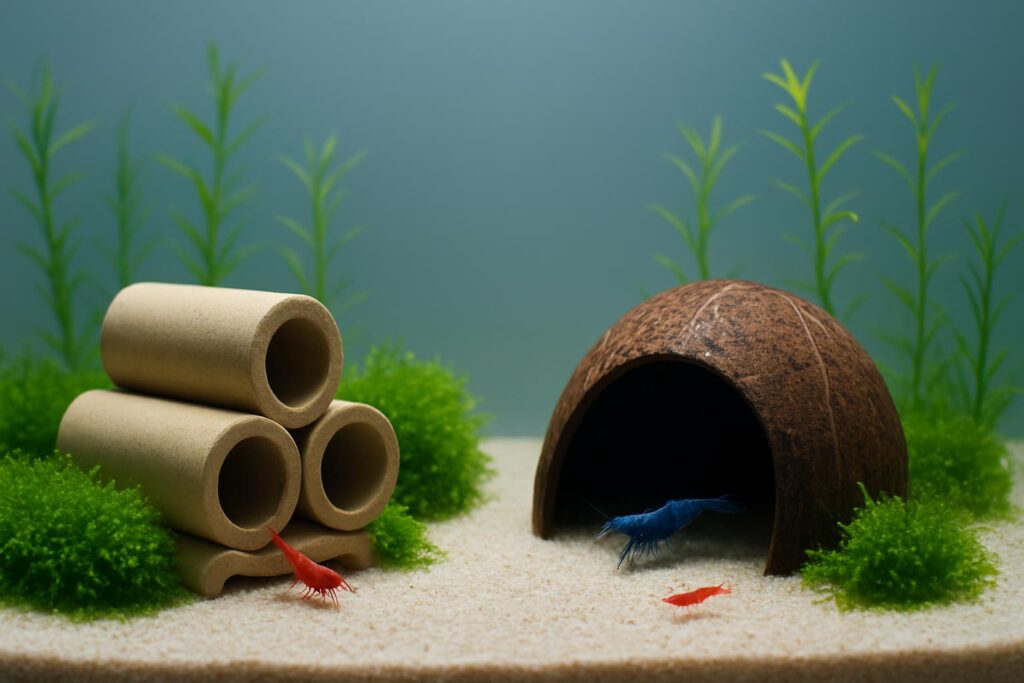
This compact, stack-style ceramic shelter is a staple in shrimp rooms. The three-tube layout creates layered levels so multiple shrimp can occupy the structure without crowding. Its rough, matte surface develops biofilm quickly and anchors moss securely with thread.
- Porous ceramic body with three stacked tunnels
- Stable footprint that resists tipping
- Neutral color that blends into most scapes
- Simple form for easy cleaning
Why it helps The tiered layout offers natural vertical territory, which reduces line-of-sight pressure among males. Rough ceramic collects biofilm, a primary food for shrimplets, and the triple entrances let vulnerable shrimp escape from either side.
Best for Neocaridina and Caridina starter colonies, nano to mid-size tanks, and keepers who want fast biofilm growth without a large footprint.
Potential downsides Debris can collect in the back of the lower tube if placed flat in a dead spot. Angle it slightly or place near gentle flow. Inspect edges and lightly sand any rough lips before use.
Setup tips Pre-soak, tie a thin layer of moss over the top, and position with the bottom tunnel parallel to the substrate for easy access. If you keep soft-water Caridina, seed the surface with a pinch of mature filter mulm for faster biofilm start-up.
SLSON 3-Layer Aquarium Shrimp Hiding Cave
SLSON’s three-tier ceramic cave follows the proven tube-stack format with slightly roomier channels for easy entry. It offers reliable stability and a textured exterior that shrimplets will work over all day.
- Three-layer ceramic design with broad entrances
- Good surface roughness for biofilm and periphyton
- Solid weight that sits firmly on substrate
- Compact size friendly to 5 to 20 gallon tanks
Why it helps Wider passages reduce traffic jams when several juveniles use it at once. This model provides straightforward, low-stress cover for berried females and molting adults while keeping the layout clean and minimal.
Best for Beginner keepers building their first colony, mixed-age shrimp tanks, and planted nanos needing an unobtrusive hide that works immediately.
Potential downsides Surface texture can vary slightly between batches. If you receive a smoother unit, wrap a layer of moss or place a small leaf against one side to boost microfilm area.
Setup tips Position the cave near a sponge filter return for gentle circulation through the tubes. Swish rinse in removed tank water during routine maintenance to clear trapped mulm without stripping biofilm.
COOSPIDER Ceramic Shrimp Shelter
COOSPIDER offers a durable ceramic shelter with multi-tunnel access and a substantial, porous body. It is robust enough to anchor plants and holds position in higher shrimp densities where dozens of juveniles will occupy the structure at once.
- Heavy, fired ceramic with multiple connected tunnels
- Rough exterior that rapidly grows algae and biofilm
- Simple geometry for brushing and swish cleaning
- Neutral tone that masks light mulm between cleanings
Why it helps The added mass and porosity create a stable micro-habitat with consistent film growth. Multiple entrances break up traffic and give juveniles exit paths if a dominant male approaches.
Best for Established colonies, breeders who run bare-bottom racks and want easy cleaning, and keepers who tie moss or Buce on hardscape features.
Potential downsides The heavier body can chip if dropped onto hard substrate. Handle over a towel during setup. In very low flow, inner recesses may trap fines, so plan to position it where water can circulate gently.
Setup tips Set the shelter a few inches from a sponge filter outlet or in a mild cross-current. If you attach moss, keep the center tunnels open so shrimp can pass through unimpeded.
SunGrow Coco Shrimp Cave
This natural coconut shell hide brings a soft, organic look and a gentle grazing surface to shrimp tanks. The fibrous exterior builds biofilm quickly, and the shaded interior is a safe retreat for berried females and fresh molts.
- Natural coconut shell prepared for aquarium use
- Single spacious chamber with a low, wide entrance
- Lightweight and easy to position under stems or wood
- Encourages biofilm growth without harsh lines
Why it helps The curved shape creates a calm, dim space that shrimp adopt immediately. The natural texture supports continuous grazing, which is valuable for shrimplets between feedings.
Best for Planted and blackwater-style scapes, keepers who prefer natural materials, and shrimp that spook under bright light and need darker retreats.
Potential downsides Coconut can release tannins that lightly tint the water at first. Pre-boil and soak before use. Over long periods, the shell may soften and will eventually need replacement.
Setup tips Boil 10 to 15 minutes and soak in dechlorinated water until it sinks easily. Nestle it into the substrate and flank it with moss or leaf litter to build a continuous foraging zone for shrimplets.
Quick buyer matcher
- Best overall utility AQUANEAT 3-Layer Ceramic Shrimp Cave
- Best budget-friendly pick SLSON 3-Layer Aquarium Shrimp Hiding Cave
- Best for high-density colonies COOSPIDER Ceramic Shrimp Shelter
- Best natural look SunGrow Coco Shrimp Cave
Breeding cave setup that actually helps breeding
Caves do not force shrimp to breed. They remove obstacles by lowering stress and expanding safe graze space. Pair caves with stable parameters, gentle filtration, consistent remineralization, and steady feeding. Combine hard hides with soft cover such as moss, floating plants, and leaf litter. Keep total bioload in check so food films recover between cleanings.
Maintenance routine for long-term success
- During water changes, lift each cave and gently swish it in removed tank water
- Use a soft brush on the exterior if mulm mats become thick
- Avoid soap or chemical cleaners
- Rotate deep cleaning so you never strip biofilm from all caves at once
- For coconut caves, recheck integrity every few months and replace if they soften
Common mistakes to avoid
- Stuffing caves directly in front of a strong filter outlet
- Over-cleaning and removing all biofilm at once
- Using painted ornaments with unknown coatings
- Providing one entrance only in crowded tanks with no escape route
- Relying on caves to fix poor water quality or unstable parameters
Conclusion
Safe hides are a small change that delivers steady results over time. The four picks above cover the core needs of most shrimp keepers, from rugged ceramic tiers for busy colonies to a natural coco hut for planted scapes. Start with one to two caves per 10 gallons, place them near gentle flow and moss, and keep cleaning simple. Your shrimp will settle, forage more confidently, and raise more shrimplets with fewer losses.
FAQ
Q How many shrimp caves should I use per tank
A Plan about one to two caves per 10 gallons, and add an extra piece for every 10 to 15 shrimp in dense colonies.
Q Which materials are safest for shrimp caves
A Fired ceramic and natural coconut shell are safe choices, and you should avoid metals and painted ornaments with unknown coatings.
Q Do caves directly increase breeding
A Caves do not force breeding, but they lower stress and improve shrimplet survival by providing safe, biofilm-rich spaces.
Q How should I clean shrimp caves
A Swish them in removed tank water during water changes, brush gently if needed, and avoid soap or chemicals.
Q Where should I place caves in the tank
A Place caves near gentle flow, close to moss or leaf litter, and away from strong filter outlets.