
We are reader supported. When you purchase through links on our site, we may earn an affiliate commission. Also, as an Amazon affiliate, we earn from qualifying purchases.
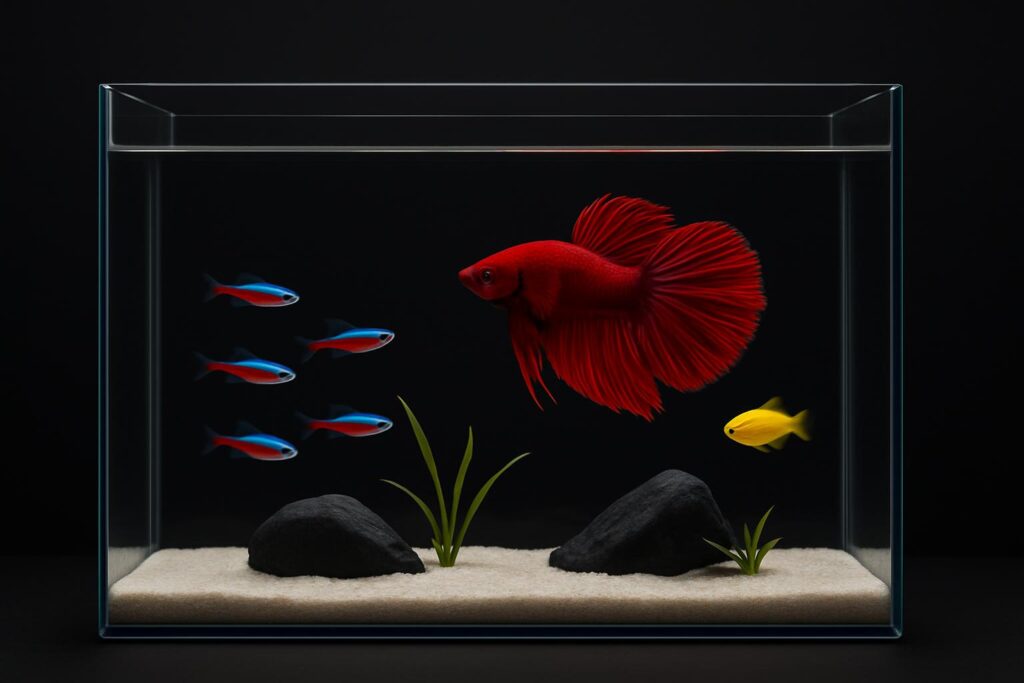
Black backgrounds do one simple job very well. They pull attention to your fish. When you remove visual clutter and bright distractions behind the glass, colors look richer, edges look sharper, and movement looks cleaner. New aquarists often notice immediate improvements in reds, blues, and metallic sheens once a solid black backdrop goes on. This guide explains why black works, how to choose the right type for your tank, and the six best background options that are easy to apply and maintain.
Why a black background instantly improves fish color
Contrast makes colors pop
Fish colors appear more saturated against a dark field. Black increases contrast so red bettas look deeper, neon tetras glow brighter, and yellow or gold fish stand out. Plants also gain definition. The eye perceives higher saturation when the background is neutral and dark.
Less glare, fewer reflections
Room reflections on clear glass compete with the fish for attention. Black absorbs stray light so you see fish, scapes, and subtle details rather than reflections of shelves and windows. Matte finishes push this effect further by minimizing sheen.
Calmer fish behavior
Busy backgrounds and mirror-like reflections can startle fish. A dark, uniform background reduces visual noise and helps skittish species settle. Stable surroundings often mean steadier coloration and better feeding response.
Heaters, wires, and filter intakes blend into black, clearing the canvas for aquascape lines and fish movement. A black back also frames bright hardscape and sand, making the whole layout read more clearly.
How to choose the right black background
Finish: matte vs glossy
Matte is the safest choice for most tanks. It reduces glare, hides minor bubbles or dust behind the film, and gives a deep, even black. Glossy can look sleek but may show window reflections. If the tank faces a light source, choose matte.
Application types compared
Static cling film uses no glue, installs with water, and peels off cleanly. Great for renters or frequent re-scapes. The film is reusable and forgiving.
Adhesive vinyl or contact paper gives a durable, uniform black with strong hold. It takes more care during install and may leave some residue when removed.
Paint is the most permanent and seamless option. It works best for tanks you do not plan to move soon. Always paint the outside glass only and allow proper curing.
Sizing and coverage
Match the height of your background to the tank’s vertical glass. Leave a small margin at the bottom for the trim if your tank has a rim. Oversize rolls are easier because you can trim to fit. For bowfronts and rimless tanks, flexible films work best.
Durability and maintenance
Thicker films resist creasing and last longer. Matte textures hide dust better than gloss. For wet areas or frequent splashes, stronger adhesives or paint are more resilient. Plan for how you will clean glass inside the tank without snagging edges of the background film.
6 best aquarium black backgrounds for better fish colors
1) Marina Double-Sided Aquarium Background, Black and Blue
This is a simple, reliable plastic background with black on one side and blue on the other. It trims easily and slides behind the tank. Apply with clear tape or a background mounting gel for a snug, bubble-free look.
Why it helps: The black side gives immediate contrast for brighter fish color. The reversible blue side is an easy alternative if you want a lighter tone later.
Best for: Beginners who want a fast, low-commitment background and standard tank heights. It is flexible to swap sides if you change the scape mood.
Key notes:
- Reversible black and blue
- Trim to fit with scissors
- Use tape along edges or a background gel for a cleaner seal
Installation tips: Clean the outside glass with alcohol, then dry. Use small tape tabs to hold the sheet in place, align, and add continuous tape along the edges. For a premium finish, use a background gel and a squeegee to expel air.
Potential downsides: Not adhesive on its own, so you must tape or gel it. Gloss level may show some reflections if room lighting is bright.
2) Rabbitgoo Blackout Window Film, Static Cling
A highly opaque static-cling film that creates a deep black backdrop without glue. It installs with water and a squeegee, and peels off in seconds with no residue. Ideal for renters and anyone who wants a clean, matte look.
Why it helps: Static cling lays flat and blocks light, enhancing contrast for vivid fish colors while avoiding adhesive mess. Matte versions control glare extremely well.
Best for: Rimless tanks, bowfront glass, and tanks that might move. It is forgiving and reusable.
Key notes:
- Non-adhesive, reusable
- Opaque privacy film for true black
- Installs wet with soapy water
Installation tips: Spray the outside glass with water plus a drop of dish soap. Apply the film, then squeegee from the center out with firm strokes. Leave a 2 to 3 mm margin around the rim to prevent lifting during cleaning.
Potential downsides: Edge lift can occur if the cling overlaps silicone seams or if the glass is dusty. Press edges well and let it dry for several hours.
3) Con-Tact Brand Adhesive Liner, Black
Classic adhesive contact paper in solid black. It is inexpensive, easy to trim, and provides a consistent look across the entire panel. The adhesive bond holds up well to humidity around aquariums.
Why it helps: Strong, uniform black that hides cords and gives crisp color separation. Adhesive liners resist edge lift better than static cling in damp rooms.
Best for: Budget-friendly permanent installs on rectangular tanks where you want a set-and-forget solution.
Key notes:
- Peel-and-stick application
- Cut to size with a sharp blade
- Works on glass and acrylic
Installation tips: Measure twice and pre-cut slightly oversize. Peel a small section of backing, align at the top edge, and squeegee as you slowly pull the backing down. Use a new utility blade to trim the edges cleanly.
Potential downsides: Removing later may leave adhesive residue. Warm the film with a hair dryer to peel more cleanly, then wipe glass with adhesive remover if needed.
4) VViViD Matte Black Vinyl Wrap
Automotive-grade wrap film with air-release channels for bubble-free application. The matte black finish is deep and non-reflective, which is excellent for color contrast in high-light tanks.
Why it helps: Premium matte finish minimizes reflections and creates a seamless, uniform background. The film is thick, opaque, and durable.
Best for: Large tanks, high-end aquascapes, and scapes photographed frequently. The finish reads clean on camera and in person.
Key notes:
- Adhesive with air-release for easier install
- Conforms well to slight curves
- Removable with heat if you change layouts
Installation tips: Clean glass with alcohol. Use painter’s tape for a dry-fit alignment at the top edge. Peel the liner in stages while squeegeeing in overlapping strokes. Use low heat to relax the film if it bridges a minor curve.
Potential downsides: Higher cost than simple liners. Requires careful technique to avoid micro-scratches during install; use a felt-edge squeegee.
5) Krylon Fusion All-In-One Matte Black Spray Paint
An exterior paint option for a permanent, flawless black. It bonds well to glass and dries quickly. Once cured, it is seamless and immune to humidity and salt creep on the outside.
Why it helps: Paint delivers the most uniform black with zero seams or edges. Matte finishes absorb light and bring out fish and plant color with no visible film texture.
Best for: Permanent setups, tanks that will not be moved soon, and users who want the cleanest possible result.
Key notes:
- Use only on the outside glass
- Mask edges and equipment before spraying
- Allow full cure time before placing tank close to walls or trim
Installation tips: Work in a ventilated area with the tank empty or fully covered. Clean and degrease glass, then apply multiple light coats, waiting the label-recommended time between passes. Remove masking tape carefully for a crisp edge.
Potential downsides: Not easily reversible. Overspray risk if masking is poor. Plan ahead for cable routing and future hardware before painting.
6) Plasti Dip Multi-Purpose Rubber Coating, Black
A peelable spray coating that gives a matte black background with more flexibility than traditional paint. It can be removed later by lifting a corner and peeling off in sheets.
Why it helps: Delivers a deep black similar to paint but with the option to reverse later. Matte finish controls glare and shows fish color clearly.
Best for: Aquarists who want a near-paint look yet plan to move or resell their tank. Good middle ground between film and permanent paint.
Key notes:
- Peelable for easier removal
- Apply in several thin coats
- Works best on clean, dry glass
Installation tips: Mask carefully. Spray light, even coats with proper flash time between them. Thicker final build peels off cleaner later. Do not rush coat thickness to avoid runs.
Potential downsides: Less abrasion-resistant than traditional paint. Can scuff if equipment rubs the back glass. Needs thoughtful handling during moves.
Quick picks by scenario
Fast and flexible: Rabbitgoo Blackout Window Film
Budget permanent: Con-Tact Brand Adhesive Liner
Premium matte finish: VViViD Matte Black Vinyl Wrap
Most seamless: Krylon Fusion Matte Black Paint
Reversible near-paint look: Plasti Dip Black
Beginner friendly and reversible color: Marina Double-Sided Background
Installation and maintenance tips
Prep the glass
Clean the outside glass thoroughly with isopropyl alcohol and a lint-free cloth. Any dust or oil creates weak spots and bubbles. Remove or route cables before installing the background to avoid bumps.
Apply with patience
For static cling, mist glass with water plus a drop of dish soap and squeegee firmly from center outward. For adhesive vinyl, peel backing slowly in stages while pressing out air with overlapping passes. For paint, mask edges, apply several thin coats, and respect drying and curing times.
Avoid common mistakes
- Do not apply film over wet silicone seams or rough plastic trim
- Do not trap debris under films; one speck will telegraph through
- Do not paint inside the tank
- Do not rush heavy coats of paint or Plasti Dip
Cleaning and upkeep
Wipe the outside glass with a soft microfiber cloth. Avoid harsh solvents on adhesive films. When cleaning inside the tank, keep scrapers away from the top edge of films to prevent catching and lifting. For painted backs, avoid abrasive pads on the exterior to prevent scuffs.
Black vs blue background
Black maximizes contrast and reduces reflections, which helps most fish look richer. Blue is a lighter, naturalistic option that can mimic open water. The Marina reversible sheet is a simple way to compare both and pick based on your lighting and livestock. Most planted and high-contrast scapes benefit from black, while some community tanks with pale sand may look airier with blue. If your goal is stronger, deeper colors, black wins in most cases.
Conclusion
A black background is one of the fastest ways to improve the look of any aquarium. It puts fish and scape up front, cuts distracting reflections, and hides hardware. Choose static cling for easy install and removal, adhesive vinyl for a durable set-and-forget surface, or paint for the most seamless finish. Match the solution to your tank size, room lighting, and how often you re-scape. With careful prep and patient application, any of the six options above will give you a clean, deep black backdrop that makes fish colors stand out day and night.
FAQ
Q: Is matte or glossy better for a black aquarium background
A: Matte is best for most tanks because it reduces glare and hides minor imperfections, giving a deeper and more uniform black.
Q: Can I paint the inside of my aquarium to make it black
A: No. Only paint the outside glass and allow proper curing time to achieve a safe, seamless finish.
Q: What is the easiest type of black background to remove later
A: Static cling film is the easiest to remove because it uses no glue and peels off cleanly.
Q: How do I avoid bubbles when applying film backgrounds
A: Clean the glass thoroughly, mist it with soapy water for static cling, then squeegee from the center outward in overlapping strokes.
Q: Which option gives the most seamless black background
A: Paint provides the most uniform, seamless result with no edges or seams.