
We are reader supported. When you purchase through links on our site, we may earn an affiliate commission. Also, as an Amazon affiliate, we earn from qualifying purchases.
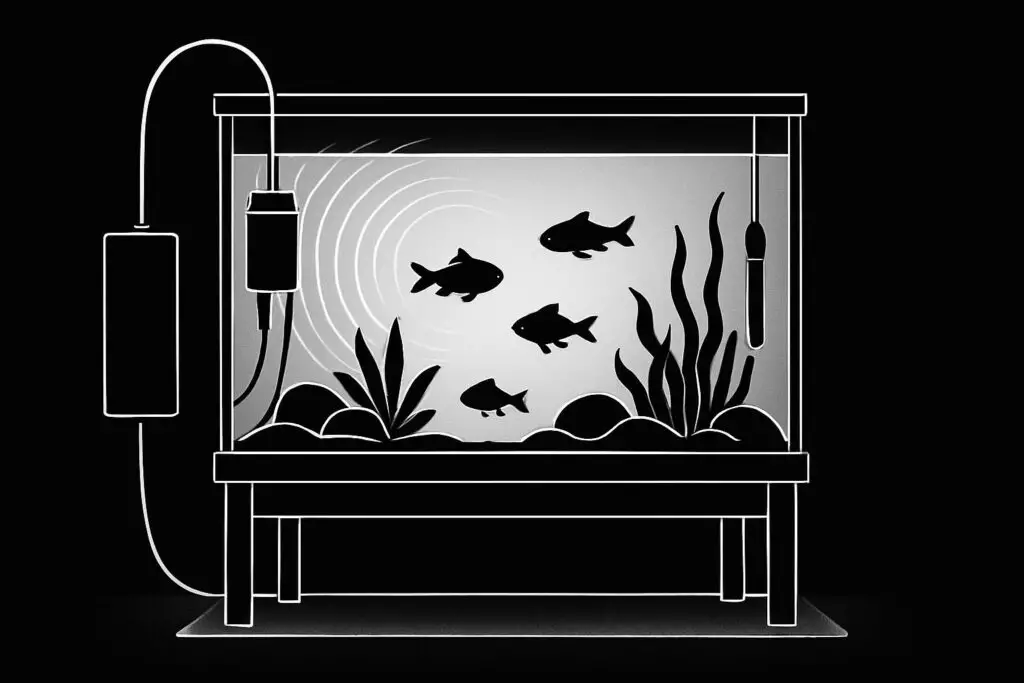
Most aquariums are noisier than we think. Pumps hum, pipes gurgle, lids buzz, and the stand carries vibration into the water. Fish live inside a medium that transmits sound faster and farther than air. Even modest noise and vibration can raise stress hormones, change behavior, and make fish more likely to get sick. The good news is that common fixes reduce noise fast. This guide explains how sound and vibration affect fish, how to find problem sources, and how to quiet your system without sacrificing filtration or flow.
Why Noise and Vibrations Matter in Aquariums
How Fish Sense Sound
Fish detect sound and vibration through inner ear structures and the lateral line along the body. Many species hear best between about 20 and 2000 Hz. Some, like goldfish, hear up to 3000 to 4000 Hz. They also sense very low frequency movement below 20 Hz as vibration. Water carries these signals efficiently, so a small hum from a pump or a stand can feel significant inside the tank.
Most aquarium equipment produces low frequency tones and harmonics. AC pumps often generate a 50 or 60 Hz fundamental with higher partials. Cavitation or rattling creates higher frequency noise. Structure-borne vibration travels through the stand, glass, and water. Airborne sound can also couple into the tank, but solid contact usually matters more.
Stress and Health Impacts
Chronic noise and vibration raise cortisol and other stress hormones. Stress alters breathing, reduces appetite, slows growth, and suppresses immunity. Stressed fish hide more, show duller colors, and may fight or dart. They get sick more easily and recover more slowly. Reproduction can drop. Sensitive species can fail to thrive even when water chemistry is perfect. Reducing noise is not cosmetic. It is part of basic husbandry.
Where the Noise and Vibration Come From
In-Tank Equipment
Filters, powerheads, wavemakers, and internal pumps are common sources. A worn impeller, hard contact with glass, or clogged intake can create a strong hum. Suction cups that have stiffened with age transmit vibration directly to the pane. Many hang-on-back units produce both motor hum and waterfall noise, especially when the tank water level is low.
Lights with cooling fans can buzz, and flimsy mounting arms can transmit it. Heaters can click on and off. Air stones create hiss. Thermometers, skimmers, and reactors may rattle if their lines or bodies touch the glass.
Sumps and Plumbing
Overflow boxes, drains, and returns cause gurgles, slurps, and resonant hums if not tuned. A partial siphon or air ingestion makes a repeating surge pattern that fish find unpredictable. Rigid PVC touching the stand or canopy carries motor vibration. Return pumps that touch the sump bottom without soft isolation turn the entire system into a soundboard.
Air Pumps and Airlines
Air pumps vibrate by design. When set on a hard shelf, they buzz and creep. Airline tubing that is taut or touching the stand acts as a vibration path. Check valves and gang valves can rattle. In fine-bubble setups, the hiss from high flow can be noticeable in a quiet room.
The Tank, Stand, and Room
Aquariums act like resonant boxes. Glass lids and canopies can chatter if not supported. A stand that is not level or lacks internal bracing may amplify vibration. Hard floors reflect and transmit low frequencies. In the room, doors slamming, footsteps, speakers, televisions, and appliances add intermittent spikes. Tapping the glass is a strong startle trigger.
How to Tell if Noise Is Stressing Your Fish
Behavioral Signs
Watch for sudden dashes when you turn on equipment. Notice if fish flinch when an air pump starts. Persistent hiding, staying low near the substrate, or clamping fins can be noise-related. Loss of appetite without water quality issues is a red flag. Schools that used to swim midwater but now crowd corners may be unsettled by vibration near their usual routes.
Sensitive fish show small cues. Bettas stop building bubble nests. Cichlids guard less or abandon pits. Shrimp freeze more often and molt poorly. Marine fish hover near the bottom and show faster gill movement. If behavior improves when you briefly unplug a suspected device, you have a lead.
Simple Ways to Measure Noise
Use a smartphone decibel app to log room levels at the stand. Aim for under 45 dB during the day and under 35 dB at night near the tank. These are general targets for comfort and are easy for most homes. Phone mics under-read bass, so the real low-frequency level in water can be higher than shown.
To check structure-borne vibration, touch the glass, stand, and equipment lightly with the back of your fingers. You can also use a cheap mechanic’s stethoscope. Listen with the probe on the glass near each device. Compare with devices off and on. The loudest change points to your main source.
Rule Out Other Causes
Noise is often one stressor among several. Test ammonia, nitrite, nitrate, and temperature. Check oxygenation. Confirm there is no bullying. If water quality and compatibility are fine and noise reduction improves behavior, you have your answer.
Prevention Starts With Smart Setup
Pick Quiet Equipment
Choose pumps and filters known for low vibration. DC return pumps run smoother than many AC models and allow fine speed control. For hang-on-back filters, select models with quiet motors and flow adjusters. Internal filters with rubber isolators do better than bare plastic feet.
Use air pumps rated for your depth so they do not strain. Oversize slightly and run at lower output. Good valves allow precise tuning, which reduces hiss.
Isolate Vibration Paths
Put soft rubber feet or a silicone mat under pumps and stands. A dense foam pad or yoga mat under the stand can help on hard floors. Between the tank and stand, a neoprene or foam leveling mat reduces contact points and resonance.
Do not allow pumps or accessories to touch the glass directly. Replace hard, old suction cups. Use magnetic mounts with soft pads. Add a small loop of soft silicone tubing on airlines and returns to break rigid contact paths.
Manage Water Movement Sounds
Keep water level high to avoid waterfall noise from hang-on-back filters. Add a coarse sponge to disperse returning water. Use spray bars or diffusers to spread flow without splashing. In sumps, tune drains to a full siphon system to stop gurgle. Cover the sump and use baffles to calm turbulence.
Fixing Common Noise Problems
Filter Hum and Rattle
Unplug the filter and inspect the impeller, shaft, and bushings. Clean slime and debris. Replace worn impellers. Ensure the impeller seats fully. Fill the canister or body completely and purge air; trapped air causes rattles and cavitation.
Check that the filter body is not touching the stand directly. Place it on a soft pad. Ensure the intake and output hoses do not press against the cabinet walls. For hang-on-back filters, level the unit and cushion any plastic lids with thin weatherstripping.
Air Pump Buzz
Place the air pump on a thick foam or silicone mat, not on bare wood or glass. If it migrates, build a small isolation box with ventilation holes and a soft bottom. Keep the pump above the waterline to avoid back-siphon, or use a reliable check valve. Introduce a gentle loop in the airline so it does not transmit vibration to the tank. Balance outputs so the pump does not strain against a closed valve.
At the diffuser, adjust flow to the minimum that accomplishes your gas exchange. An oversized stone or clogged stone hisses more. Replace worn stones and clean sponge filters that whine when clogged.
Plumbing Gurgle and Splashing
In reef or sump systems, convert to a Herbie or BeanAnimal style drain with a primary full siphon and an emergency line. Add a gate valve to tune the siphon. Use a durso or similar only as a fallback; they are often noisier.
Decouple the return pump with soft silicone couplers. Suspend plumbing so rigid PVC does not rest on the stand. Add a short section of soft tubing before bulkheads. Aim returns slightly below the surface to avoid loud splashes while keeping gentle ripple for gas exchange.
Lid, Light, and Accessory Rattles
Glass lids can vibrate. Add thin silicone bumpers or weatherstripping along contact points. Tighten loose light brackets. If the light has fans, clean dust and ensure cables do not buzz against the mount. Secure thermometers, probes, and small devices so they do not tap the glass when flow changes.
Room Habits That Protect Your Fish
Placement and Daily Routines
Place the aquarium away from speakers, subwoofers, washing machines, and doors that slam. Avoid high-traffic hallways and surfaces that flex with footsteps. A load-bearing wall with a solid stand is best. Use a rug or dense mat under the stand on hard floors.
Keep hands off the glass. Teach family and visitors that tapping is not allowed. Close cabinet doors gently. Avoid dragging chairs or dropping items near the stand. During water changes, pour water onto a plate or bag to prevent loud splashes.
Nighttime Quiet and Fish Sleep
Fish need dark, quiet periods. Program lights for a stable photoperiod. Reduce room noise after lights out. If your home is loud at night, move air pumps or noisy equipment to a remote shelf with isolated lines, or schedule the noisiest devices to run daytime if safe for your system. Maintain aeration, but make it quiet.
Species Notes and Sensitivity
Freshwater Species
Discus, wild-caught tetras, certain dwarf cichlids, and labyrinth fish like bettas and gouramis are sensitive. Goldfish hear well and respond to low frequencies. Corydoras and many catfish startle easily. Shrimp and small invertebrates react strongly to vibration spikes and may fail molts if stressed. For these groups, be strict about isolation and avoid sudden changes in flow or noise.
Marine Fish and Invertebrates
Seahorses, pipefish, and certain anthias stress with persistent vibration. Many wrasses bury when startled and can injure themselves in coarse sand if noise triggers startle at night. While corals do not hear, chronic noise can still affect fish behavior around them. Quiet return systems and tuned drains are important in reef tanks.
Aquascape to Lower Stress
Provide cover and broken sightlines. Dense plants, caves, and arches give fish places to retreat when a noise spike occurs. Hardscape can scatter and absorb some vibration. A well-planned scape reduces flight distance and allows fish to feel secure even if a pump hums softly in the background.
Maintenance Checklist for a Quiet Tank
Inspect and clean impellers monthly. Replace worn shafts and bushings on schedule. Purge air from canisters and inline devices after every service. Check that all equipment mounts remain soft and intact. Retire hardened suction cups.
Verify that hoses and cables do not touch the stand or cabinet walls. Re-level the stand if floors settle. Tighten loose screws, lids, and brackets. Confirm that the water level is high enough to prevent waterfall noise. Test air stones and sponge filters for clogging, and adjust flow.
Log baseline room noise with a phone app before and after maintenance. If dB readings climb after a service, re-check for trapped air or a mis-seated impeller.
Frequently Asked Questions
Will fish get used to noise
Fish can habituate to constant, low-level noise, but habituation does not remove all stress. Intermittent and unpredictable sounds remain stressful. Reduce both the level and the variability. Aim for a steady, low background with no sharp spikes.
Is background music okay
Low-volume music in another room is usually fine. Bass-heavy music near the stand is not. Keep speakers away from the aquarium. Avoid placing subwoofers on the same floor section as the tank. If you entertain, move portable speakers far from the stand or reduce bass.
How quiet is quiet enough
As a practical target, keep ambient noise near the tank under 45 dB during the day and under 35 dB at night measured at the stand. Minimize structure-borne vibration through isolation. The true waterborne noise is what fish feel, so focus on soft mounts, tuned plumbing, and gentle, non-splashing returns.
Putting It All Together: A Step-by-Step Plan
First, observe your fish for startle or hiding. Second, switch devices off and on one at a time and listen with your fingers or a stethoscope on the glass. Third, log room noise with a phone app. Fourth, fix the loudest sources with cleaning, isolation pads, and hose management. Fifth, tune water levels and drain systems to remove gurgle and splash. Finally, adjust room habits and aquarium placement to avoid daily spikes.
Work in small steps. Each 10 percent reduction in noise and vibration helps. Most tanks become calm after a few targeted fixes. Keep a maintenance note in your log for noise alongside water tests so issues do not creep back.
Extra Tips for Special Setups
For nano tanks on desks, use USB or DC pumps with soft mounts and avoid placing the tank on a shelf that vibrates when typing. For large tanks, distribute pump load across multiple smaller pumps rather than one large, and isolate each. For racks or fish rooms, mount air pumps on a separate wall with thick isolation and run soft manifolds to each tank. For apartments with thin floors, use a dense stand mat to reduce coupling to neighbors and back to your tank.
Common Mistakes to Avoid
Do not assume a new pump is quiet by default. Many need tuning and isolation. Do not overtighten plumbing to the stand. Rigid mounts transmit vibration. Do not let water levels drop far below filter lips. Waterfall noise grows fast with distance. Do not ignore aged suction cups, stiff tubing, or cracked impeller covers. Small wear parts cause most hums. Do not chase silence by turning off essential aeration. Fix the cause instead.
When to Replace Equipment
If a pump or filter remains loud after cleaning, reseating, and isolation, and spare parts do not help, replacement is reasonable. Choose models with proven quiet operation and available spare impellers. Consider DC options with soft-start and speed control. Budget for replacement of wear parts yearly in heavy-use systems.
Introduction
Noise and vibration are invisible stressors in home aquariums. They affect fish health, behavior, and longevity. New aquarists often focus on water parameters and stocking but leave easy noise fixes on the table. With a few checks and small changes, you can make your tank calmer, your fish more confident, and your maintenance routine easier. Start with the loudest device, reduce vibration paths, and tune water movement. The rest falls into place.
Conclusion
Fish feel your aquarium the way you hear a room. Motors, gurgles, and rattles create a constant backdrop that can keep stress high if left unchecked. By understanding how sound travels in water and how fish sense it, you can target the true sources. Clean and tune impellers. Isolate pumps and plumbing. Keep water levels high and returns gentle. Place the tank away from household noise and set quiet nighttime routines. Provide cover so fish have options when noise spikes happen.
Small, intentional changes bring clear results. Fish feed better, display natural behavior, and show richer colors when the tank is calm. Make noise control part of your regular maintenance. Your aquarium will look better, run smoother, and support healthier animals for the long term.