
We are reader supported. When you purchase through links on our site, we may earn an affiliate commission. Also, as an Amazon affiliate, we earn from qualifying purchases.
Oxidation Reduction Potential, better known as ORP or redox, is one of the cleanest signals of your aquarium’s water quality. It tells you how ready your water is to break down wastes and keep harmful compounds in check. Learn what the numbers really mean, what normal looks like for freshwater and reef tanks, how to measure and improve ORP safely, and which tools make the job easier.
What ORP Means In Plain Terms
ORP measures the tendency of water to oxidize or reduce substances. Higher ORP means stronger oxidizing conditions that can help break down organics and suppress some microbes. Lower ORP suggests reducing conditions, often linked to organic buildup and limited oxygen. ORP is reported in millivolts, abbreviated mV.
Typical Ranges
Freshwater community tanks often sit around 200–300 mV. Planted systems with rich soils or heavy organics may run slightly lower, especially before lights-on when oxygen is lowest.
Reef tanks commonly hold 300–400 mV. A well-skimmed, clean reef with strong gas exchange and low dissolved organics tends toward the higher end.
Do not chase a specific number without context. A stable 280 mV with thriving livestock is better than erratic swings around 350 mV.
Why ORP Matters For Fish And Reefs
ORP is a fast, integrative indicator of water cleanliness. It reacts quickly to changes in dissolved organics, oxygen availability, and microbial load. When ORP moves, something changed in your system.
Key benefits of tracking ORP:
– Early warning of decaying organics after heavy feeding or livestock loss
– Feedback when improving filtration, aeration, or export methods
– Alignment with water clarity and microbe load in reef tanks
– A control variable for safe ozone dosing, if used
Limits of ORP:
– It does not replace ammonia, nitrite, nitrate, and pH testing
– High ORP is not automatically healthy if achieved with aggressive oxidizers
– Probe condition, calibration, and placement strongly affect readings
What Changes ORP Day To Day
– Feeding and fish waste lower ORP as organics rise
– Strong aeration and surface agitation support higher ORP by improving gas exchange
– Protein skimming and activated carbon raise ORP by reducing dissolved organics
– UV sterilization and ozone raise ORP by oxidizing organics and microbes
– Carbon dosing and heavy bacterial growth lower ORP
– Power outages, clogged filters, and dead spots lower ORP fast
How To Measure ORP Accurately
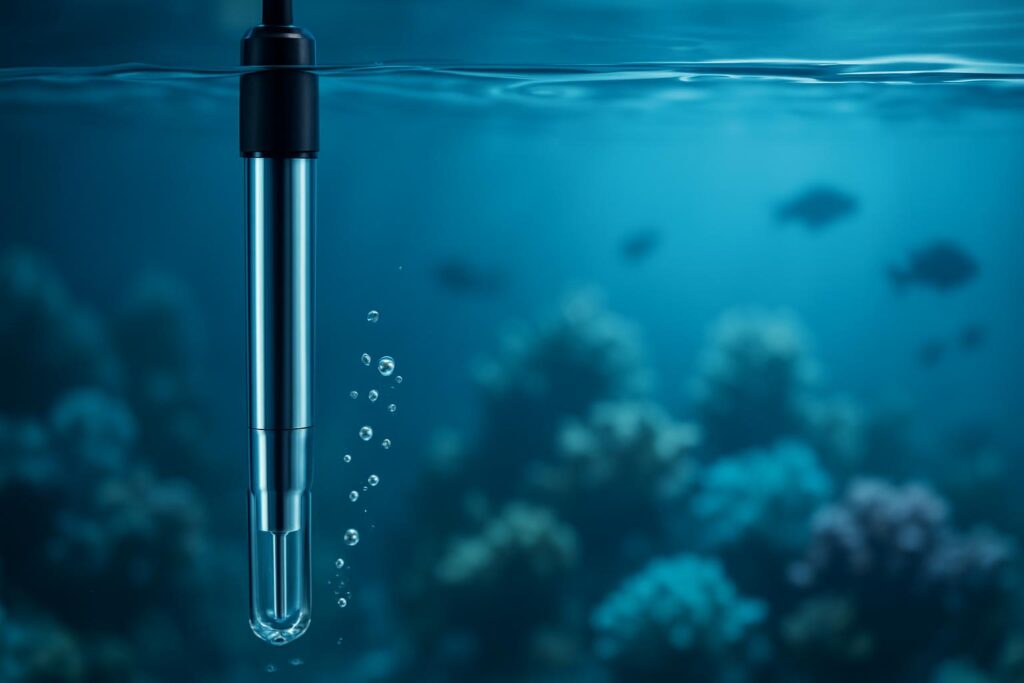
You need an ORP probe connected to a meter, controller, or handheld tester.
Probe Care Basics
– Rinse the probe in tank water after each use; never wipe the platinum tip
– Calibrate with a 400 mV solution every 1–3 months
– Soak in probe cleaner or dilute acid cleaner monthly to remove films
– Replace probes annually or when drift and slow response persist
Place the probe in an area of steady flow, not in a sump dead zone or microbubble storm. Temperature affects readings slightly, so aim for consistent conditions during spot checks.
Target ORP Ranges And How To Use Them
– Freshwater community: 200–300 mV, stable
– Planted: 180–300 mV, with pre-lights dips normal
– Reef: 300–400 mV, stable
Focus on trends. A slow rise after adding carbon or improving skimming is good. A sudden 80 mV drop after a filter clog needs fast attention.
Safe Ways To Improve ORP
Housekeeping First
Increase mechanical filtration and clean filter socks or pads often. Siphon detritus from the sump. Perform steady, moderate water changes. Replace or regenerate chemical media on schedule. For reefs, wet skim for a while after a heavy feeding or disturbance.
Boost Gas Exchange
Enhance surface agitation with return nozzles, wavemakers, or airstones. Keep lids from sealing the surface. In sumps, let water fall through baffles to increase degassing.
Use Activated Carbon
Fresh, high-quality carbon removes tannins and dissolved organics that suppress ORP. Rinse thoroughly to remove fines. Replace regularly to avoid saturation.
Consider UV Sterilization
A properly sized UV unit can reduce free-swimming microbes and lightly increase ORP while improving water clarity. Match flow rate to the manufacturer’s suggested contact times.
Ozone With Control
Ozone can raise ORP and polish water when used through a skimmer with an ORP controller. Always run carbon on the skimmer cup vent and effluent, and never inject ozone without automated control and safety measures. Avoid pushing ORP above 400–425 mV to limit oxidative stress.
Product Picks And Quick Reviews
Milwaukee Instruments MC510 ORP Controller
Why it helps: Reliable set-and-hold ORP control for ozone. You set a target ORP, and the controller powers the ozone generator on and off to maintain it. This reduces risk and smooths day-to-day swings.
Best for: Advanced reef keepers and large fish systems that want crystal clarity and controlled oxidation.
Key features: Continuous display, adjustable setpoint, included ORP probe, and standard power control outlet for the ozone device.
Potential downsides: Requires proper ozone plumbing and carbon safety measures. Probes need periodic calibration and eventual replacement.
Why it helps: Fast spot checks across sump, display, and water change containers. Waterproof body and replaceable probe make it a durable field tool. Great for confirming trends seen on a controller or logging ORP during maintenance.
Best for: Hobbyists who want accurate ORP readings without installing a permanent probe in the sump.
Key features: Large screen, quick response, compatibility with 400 mV calibration fluid, and protective cap that doubles as a sample cup.
Potential downsides: Not a continuous monitor. Handheld testers demand consistent calibration and careful storage to avoid drift.
Coralife Turbo-Twist UV Sterilizer
Why it helps: The spiral design increases contact time, helping to reduce free-floating algae and microbes. Cleaner water with lower organics can nudge ORP higher while improving clarity and light penetration in reefs.
Best for: Mixed reefs and fish-only systems plagued by green water, hazy film, or persistent water column bacteria.
Key features: Twisted flow path, quartz sleeve, and easy inline installation. Multiple sizes to match tank volume and flow rate.
Potential downsides: Bulbs and sleeves need periodic cleaning and replacement. Flow must be tuned for the target, whether clarity or microbial control.
Chemipure Blue
Why it helps: A blend of high-grade carbon and resins that removes dissolved organics and fine particulates. By cutting down on yellowing compounds and waste, ORP often stabilizes and rises to a healthier plateau.
Best for: Reef tanks seeking polished water and stable nutrients without installing a reactor. Also useful in clean freshwater displays sensitive to discoloration.
Key features: Pre-bagged media for simple placement in a high-flow area. Long service life compared to loose carbon alone.
Potential downsides: Can reduce phosphate and nitrate more than desired if left too long in ultra-low-nutrient reefs. Replace on a schedule to avoid exhaustion.
Troubleshooting Low Or High ORP
If ORP Sags
– Check for a dead fish, clogged filter, or detritus buildup
– Increase surface agitation and verify return pumps are at full flow
– Replace or add fresh activated carbon
– Clean the skimmer and wet skim temporarily
– Review feeding amounts and rinse frozen foods
If ORP Spikes
– Confirm with a calibrated meter; probes can drift
– Look for overdosing of oxidizing agents or overzealous ozone control
– Back down ozone setpoints and verify carbon is in place on skimmer exhaust
– Ensure livestock are not showing stress signs like rapid breathing
Simple Weekly Routine
– Log ORP at the same time of day to see patterns
– Rinse mechanical media and skim cup
– Swap or recharge chemical media on schedule
– Verify probe cleanliness and recalibrate if readings drift
Consistent maintenance stabilizes ORP better than any single gadget.
Conclusion
ORP is a powerful window into how clean and oxidizing your water is. Use it to spot changes early, confirm improvements to filtration and aeration, and, if needed, control ozone safely. Aim for steady ranges that match your livestock, correct problems at the source, and let ORP validate that your system is on track. Keep it simple, keep it stable, and let the numbers guide smarter maintenance.
FAQ
Q: What ORP range should I aim for in a reef tank?
A: 300–400 mV is typical for reefs. Prioritize stability over chasing the top of the range.
Q: Does high ORP always mean healthy water?
A: No. ORP does not replace ammonia, nitrite, nitrate, and pH testing, and overly high ORP driven by aggressive oxidation can stress livestock.
Q: How can I raise ORP safely without ozone?
A: Improve mechanical filtration, increase surface agitation, run fresh activated carbon, perform steady water changes, and consider a properly sized UV sterilizer.
Q: How often should I clean or calibrate an ORP probe?
A: Rinse after each use, soak monthly in probe cleaner, calibrate with a 400 mV solution every 1–3 months, and replace the probe annually or when drift persists.
Q: What causes sudden ORP drops?
A: Heavy feeding, a dead fish or hidden decay, clogged filters, carbon dosing, hands in the tank, or a power outage can all push ORP down quickly.