
We are reader supported. When you purchase through links on our site, we may earn an affiliate commission. Also, as an Amazon affiliate, we earn from qualifying purchases.
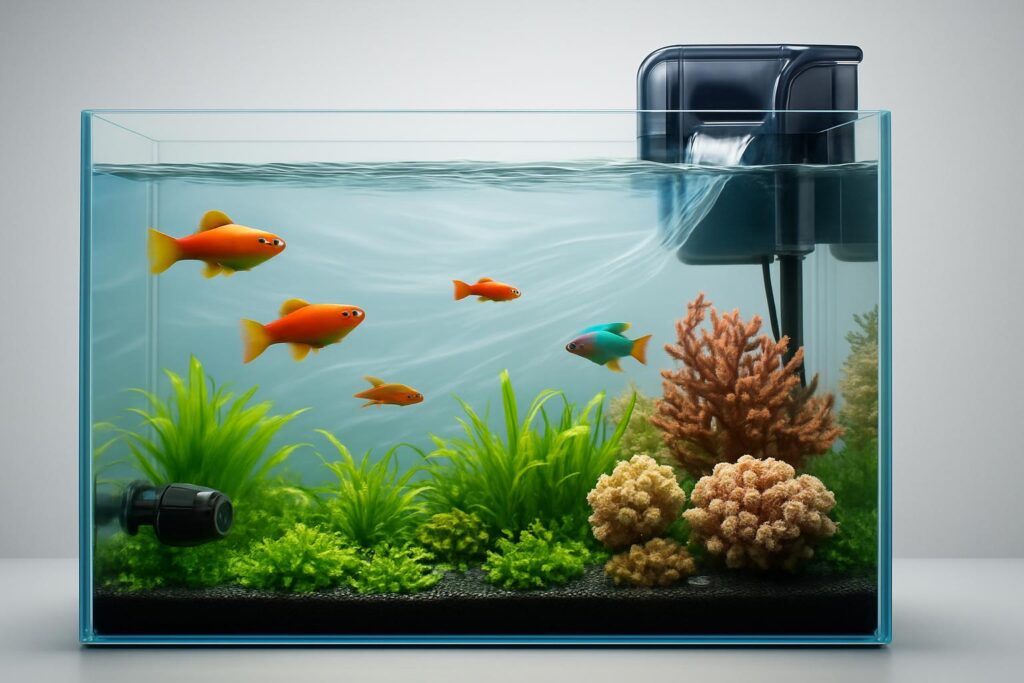
Aquarium turnover rate decides how clean your water stays, how stable your oxygen is, and how healthy your fish, plants, and corals feel. Get the flow right and your tank looks clear, smells fresh, and resists algae and disease. Get it wrong and you fight cloudy water, detritus buildup, and stressed livestock. This guide breaks down what turnover rate means, how to calculate it, target ranges for different tanks, and the gear that makes dialing it in simple.
What is Aquarium Turnover Rate
Turnover rate is how many times per hour your system moves the full volume of your tank. Turnover rate equal total rated flow per hour divided by tank volume in gallons or liters. If a 40 gallon tank runs a filter rated at 400 gallons per hour, the theoretical turnover is 10 times per hour.
Why Flow Matters
Filtration efficiency
More flow pushes more water through mechanical and biological media. That removes particles faster and gives bacteria more oxygen. Result: clear water and stable biofiltration.
Gas exchange and oxygen
Surface agitation drives oxygen in and carbon dioxide out. Low flow leads to sluggish fish, biofilter crashes, and pH swings. Adequate surface ripple keeps oxygen high and stable.
Waste suspension
Proper circulation lifts detritus off the substrate and sends it to your filter. Dead spots trap mulm and fuel algae. Flow pattern is as important as flow rate.
Fish comfort and behavior
Some species enjoy currents, others prefer calm water. Balanced flow avoids pinning fish against intakes or blasting fins.
Plants and corals
Plants need gentle movement to deliver CO2 and nutrients to leaves. Corals need alternating current to deliver food and remove waste. Too little or too much flow can stall growth.
How to Calculate What You Need
1. Find your real tank volume
Use display water volume, not the tank sticker size. Subtract displacement from rocks and substrate. A 55 gallon with heavy rockwork may hold closer to 45 gallons of water.
2. Set a target range
Use these beginner friendly starting points. Adjust based on your livestock and results.
- Freshwater community: target 5 to 7 times per hour
- Planted with CO2: target 4 to 6 times per hour with gentle surface agitation
- Goldfish: target 8 to 10 times per hour with good mechanical filtration
- Betta or nano shrimp: target 3 to 5 times per hour with diffused flow
- African cichlids: target 7 to 10 times per hour
- Saltwater FOWLR: target 10 to 20 times per hour
- Soft coral reefs: target 20 to 30 times per hour
- Mixed or LPS reefs: target 30 to 40 times per hour
- SPS dominant reefs: target 40 to 60 times per hour
3. Account for real world loss
Expect 30 to 50 percent less than the pump box rating once media and head height are added. Every foot of vertical rise and each elbow can knock down flow. Over spec slightly or use multiple sources of flow.
4. Place and aim for even coverage
Use the filter return and at least one powerhead or wavemaker to sweep across the front glass and back around. Avoid direct blasts at sand or single spots. Aim for gentle, tank wide movement.
Freshwater Examples
Community fish
Most tetras, rasboras, livebearers, and gouramis thrive at 5 to 7 times per hour. Use a hang on back or canister plus a small circulation pump to prevent dead zones behind decor.
Planted aquascapes
Plants prefer steady, laminar leaning movement. Target 4 to 6 times per hour. Keep a mild surface ripple to protect CO2 and oxygen. Use lily pipes, spray bars, or diffusers to spread flow and avoid uprooting stems.
Goldfish and messy eaters
They produce more waste, so push 8 to 10 times per hour. Add a prefilter sponge on intakes to catch gunk and keep impellers clean. Rinse sponges weekly.
Betta and shrimp
Gentle, diffuse flow prevents stress and blown fins. Stay at 3 to 5 times per hour and baffle the output with a sponge or spray bar. Create calm zones with plants or wood.
Saltwater Examples
FOWLR tanks
Fish only with live rock needs 10 to 20 times per hour. Two opposing wavemakers timed to alternate prevents detritus mounds and keeps oxygen high.
Softies, LPS, and mixed reefs
Soft corals and LPS like moderate, variable flow at 20 to 40 times per hour. Use gyre or cross flow patterns to avoid direct jets on fleshy polyps.
SPS dominant reefs
SPS corals need strong, random flow at 40 to 60 times per hour. Multiple wavemakers on alternating schedules prevent tissue recession and improve growth.
How to Test and Tune Your Flow
- Use a pinch of food to watch circulation paths. It should travel across the tank, not drop straight down.
- Look for a consistent surface ripple across the whole tank without splashing or microbubbles.
- Check corners and behind rocks for dust piles. Add or re-aim a small pump if you see buildup.
- Watch fish behavior. Gasping at the surface, hiding constantly, or struggling to swim indicates an issue.
- For planted tanks, aim for gentle, even plant sway rather than constant whipping.
Product Picks That Make Flow Easy
Seachem Tidal 75 Hang On Back Filter
Why it helps: High flow for its size, self priming, and a large media basket. The surface skimmer improves gas exchange and keeps films from forming.
Best for: Freshwater community or goldfish up to mid sized tanks needing 5 to 10 times per hour with minimal fuss.
Potential downsides: Can be too brisk for bettas unless you baffle the output with sponge or plants.
Flow notes: Pair with a small circulation pump to eliminate dead spots behind hardscape.
Fluval 407 Canister Filter
Why it helps: Strong, quiet, and holds a lot of media for both mechanical and biofiltration. The included spray bar or nozzle lets you direct flow exactly where you need it.
Best for: Heavily stocked freshwater or planted tanks where you want 5 to 8 times per hour plus polished water.
Potential downsides: Flow drops as the baskets clog. Expect maintenance every 3 to 6 weeks depending on load.
Flow notes: Use a spray bar along the back wall to distribute current evenly and protect stem plants.
Hydor Koralia Nano 240 Circulation Pump
Why it helps: Compact, wide flow pattern that adds circulation without blasting a single spot. Great for breaking up dead zones and improving gas exchange.
Best for: Bettas, shrimp, and planted nanos needing 3 to 5 times per hour with diffuse flow, or as a supplemental pump in larger tanks.
Potential downsides: Suction cup mounts can shift over time. Clean monthly to maintain output.
Flow notes: Aim across the front glass to create a gentle gyre around hardscape.
Sicce Syncra Silent 1.5 Utility Pump
Why it helps: Reliable return pump with strong performance against head pressure. Ideal for sumps where you need predictable turnover.
Best for: Saltwater and freshwater sumps targeting 5 to 10 times per hour on display volume while feeding reactors or UV.
Potential downsides: Hard plumbing with many elbows reduces flow. Use soft tubing or minimize fittings to keep output up.
Flow notes: Measure head height and oversize slightly. Every foot of vertical rise reduces real output.
Common Mistakes to Avoid
- Judging by pump box ratings alone. Expect 30 to 50 percent less in real use.
- Using a single flow source. Two smaller pumps create better coverage than one large jet.
- Ignoring surface agitation. A smooth mirror surface often means low oxygen.
- Blasting fish or corals directly. Use diffusers, spray bars, and alternating patterns.
- Skipping maintenance. Dirty media and calcified impellers slash flow quickly.
Conclusion
Turnover rate is not a guess. Set a target based on your tank type, calculate the real flow you need, and account for losses. Build coverage with smart placement, then test and tune. Aim for steady plant sway, bouncing food from all corners, and a ripple across the whole surface without a washing machine effect. With the right gear and a little adjustment, your tank will look clearer, smell cleaner, and run more stable for the long term.
FAQ
Q: What is aquarium turnover rate
A: Turnover rate is how many times per hour your system moves the full volume of your tank.
Q: How do I calculate turnover rate
A: Turnover rate equal total rated flow per hour divided by tank volume in gallons or liters.
Q: What turnover rate should I target for a freshwater community tank
A: For freshwater community tanks target 5 to 7 times per hour.
Q: How much flow do planted tanks with CO2 need
A: For planted tanks with CO2 target 4 to 6 times per hour with gentle surface agitation.
Q: How much less flow should I expect versus the pump rating
A: Expect 30 to 50 percent less than the pump box rating once media and head height are added.