
We are reader supported. When you purchase through links on our site, we may earn an affiliate commission. Also, as an Amazon affiliate, we earn from qualifying purchases.
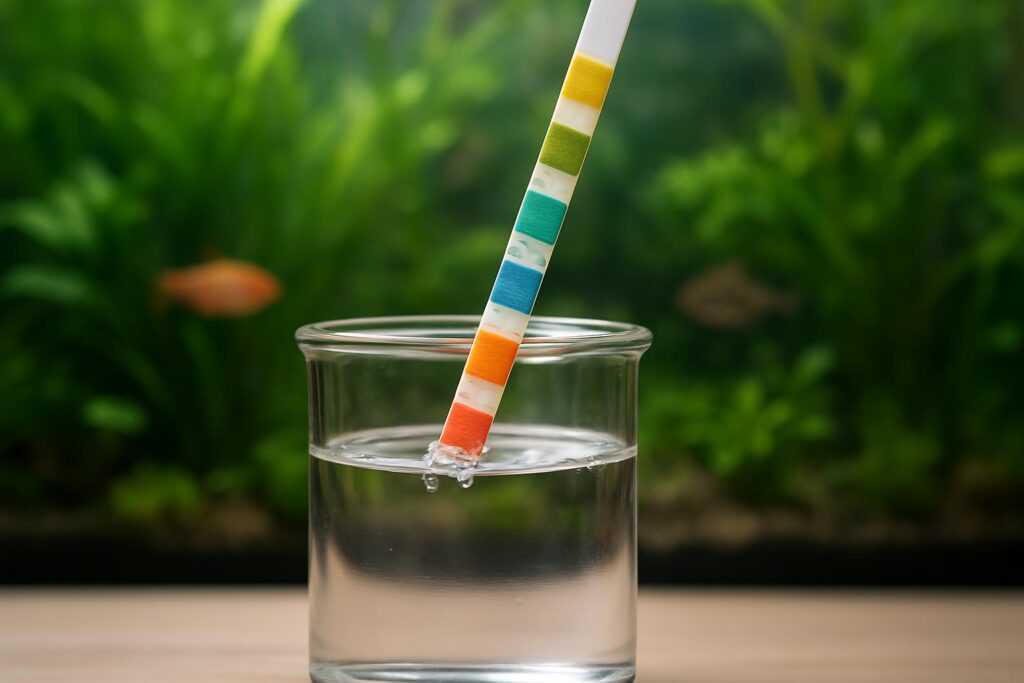
Test strips are fast, cheap, and good enough to keep most home aquariums healthy. The challenge is reading them correctly and knowing what each pad means. This guide breaks down GH, KH, pH, nitrite, and nitrate, then shows you how to read strips accurately and what to do with the results. Follow along step by step and build a simple routine you can trust.
What aquarium test strips measure and why it matters
Most multi-parameter strips include GH, KH, pH, nitrite, and nitrate. These values affect fish health, plant growth, and filter performance. Treat your readings as a dashboard. Catch small problems early to avoid emergencies.

HiTauing Aquarium Heater, Upgraded 300W/500W Fish Tank Heater with Intelligent Leaving Water Automatically Stop Heating and Advanced Temperature Control System, Suitable for Saltwater and Freshwater
View on AmazonGH explained
GH is general hardness, mainly calcium and magnesium. It influences osmoregulation in fish, shell growth in invertebrates, and nutrient availability for plants.
Typical targets
- Community freshwater: 4 to 12 dGH
- Planted tanks: 5 to 10 dGH
- African rift cichlids: 10 to 20 dGH
KH explained
KH is carbonate hardness. It buffers acids and keeps pH stable. Low KH can lead to pH swings. High KH resists pH change.
Typical targets
- Community freshwater: 3 to 8 dKH
- Planted tanks using CO2: 3 to 6 dKH
- African rift cichlids: 8 to 12 dKH
pH explained
pH is how acidic or basic the water is. Most freshwater fish do well in the middle range, with consistency more important than chasing a strict number.
Typical targets
- Community freshwater: 6.5 to 7.5
- Planted tanks: 6.4 to 7.2
- African rift cichlids: 7.8 to 8.6
Nitrite and nitrate explained
Nitrite is toxic. It should always read zero. Nitrate is less toxic but still stressful at high levels. Keep it under 40 ppm, under 20 ppm is better for long term health and plant growth.
How to read aquarium test strips correctly
Preparation and water sampling
- Wash and dry your hands to avoid contamination.
- Use a clean cup or dip in-tank away from the filter outflow.
- Test at the same time of day for consistency.
Dipping and timing
- Dip the strip for the time printed on the package. Do not swirl unless directions say so.
- Hold the strip level and do not shake off drops unless instructed.
- Wait the exact reading time for each pad. Some pads develop slower than others.
Color matching tips
- Use natural daylight or a bright white light.
- Match colors with the chart immediately when the time is up.
- Read nitrite and nitrate at the exact moment listed. These pads often keep darkening.
- Record the closest match rather than splitting hairs. Strips are semi-quantitative.
Record and track results
- Write down date, GH, KH, pH, nitrite, nitrate, and any maintenance done.
- Look for trends. Stability is the goal.
Target ranges for common setups
Community freshwater and planted
- GH 4 to 12 dGH
- KH 3 to 8 dKH
- pH 6.5 to 7.5
- Nitrite 0 ppm
- Nitrate under 40 ppm, ideally under 20 ppm
African rift cichlids
- GH 10 to 20 dGH
- KH 8 to 12 dKH
- pH 7.8 to 8.6
- Nitrite 0 ppm
- Nitrate under 40 ppm
Fixing out of range results
GH too low
- Raise GH with a GH booster or remineralizer.
- Use a mix of tap water and RO or distilled only if you can remineralize reliably.
GH too high
- Blend with RO or distilled to lower mineral content gradually.
- Do not chase numbers fast. Stability first.
KH too low
- Add a small amount of crushed coral or aragonite in the filter.
- Use a measured alkaline buffer product and retest in 24 hours.
KH too high
- Blend with RO or distilled water during water changes.
- Avoid rapid shifts that can stress fish.
pH unstable or off target
- Stabilize KH first. KH drives pH stability.
- Avoid rapid pH adjusters unless correcting an emergency.
- For planted tanks, manage CO2 and surface agitation consistently.
Nitrite above zero
- Change 25 to 50 percent of the water immediately.
- Reduce feeding until nitrite returns to zero.
- Ensure the filter has good flow and media is not over-cleaned.
- Add a bottled bacterial starter to support biofilter recovery if needed.
Nitrate too high
- Do larger or more frequent water changes.
- Vacuum detritus and avoid overfeeding.
- Increase live plant mass to consume nitrate.
How often to test
- New tank cycling: test nitrite and nitrate daily or every other day until stable.
- Established tank: test weekly, and any time fish act off or after big changes.
- Before adding new fish: confirm nitrite zero and nitrate under 40 ppm.
Common mistakes to avoid
- Reading pads too late. Overdeveloped colors mislead results.
- Bad lighting. Yellow and orange shades are easy to misread in dim rooms.
- Touching pads with wet fingers. Oils and soap residue can skew readings.
- Comparing to online charts. Always use the chart that came with your brand.
Recommended test strips and tools
Tetra EasyStrips 6-in-1 Aquarium Test Strips
Why it helps Fast multi-parameter check of GH, KH, pH, nitrite, and nitrate with consistent color blocks that are easy to compare. Good for weekly tracking and quick troubleshooting.
Best for Beginners and busy keepers who want a simple routine across community and planted tanks.
Potential downsides Limited resolution compared to liquid kits and colors can continue to darken if read late. Follow timing closely.
API 5-in-1 Test Strips
Why it helps Reliable brand with clear instructions and a readable chart. Pads develop within a short, well-defined window that reduces guesswork.
Best for Routine weekly testing and verifying that nitrite is zero before new livestock.
Potential downsides Fewer parameters per strip than some competitors. Always log the results to watch trends over time.
API GH and KH Test Kit for confirmation
Why it helps Liquid tests provide finer resolution for GH and KH when you need precise numbers for sensitive species or dialing in buffers.
Best for Double checking strip results, targeting specific KH for pH stability, and setting up planted or hardwater cichlid tanks.
Potential downsides Slower than strips and requires counting drops, but the precision is useful when adjusting minerals.
Simple workflow you can repeat
- Test once a week at the same time of day.
- Match colors at the exact times listed.
- Log GH, KH, pH, nitrite, and nitrate.
- If nitrite is not zero, change water and reduce feeding.
- If nitrate is creeping up, add a larger water change and siphon debris.
- If pH swings, raise KH gradually and retest.
- Recheck after any adjustment before making another change.
Conclusion
Reading test strips well is about timing, lighting, and consistency. Know what each pad means, keep targets realistic for your setup, and track trends. Use strips for speed and add a liquid test for hardness when dialing in exact numbers. With a steady routine, you will prevent problems instead of chasing them.
FAQ
Q: How do I read aquarium test strips accurately
A: Dip for the time on the package, hold level, and match colors at the exact read time under bright white light. Record the closest match and do not read pads late.
Q: What are ideal GH, KH, pH, nitrite, and nitrate ranges for a community freshwater tank
A: Aim for GH 4 to 12 dGH, KH 3 to 8 dKH, pH 6.5 to 7.5, nitrite 0 ppm, and nitrate under 40 ppm with under 20 ppm preferred.
Q: Why does my pH swing and how do I stabilize it
A: Low KH allows pH to swing. Raise KH gradually with a buffer or crushed coral and keep maintenance consistent so pH holds steady.
Q: What should I do if nitrite shows up on my test strip
A: Change 25 to 50 percent of the water, reduce feeding, ensure good filter flow, and consider a bacterial starter until nitrite returns to zero.
Q: How often should I test my aquarium water?
A: During cycling, test daily or every other day for key parameters. Once established, test weekly or according to your tank’s needs. Regular testing is an important part of maintaining stable aquarium water quality.