
We are reader supported. When you purchase through links on our site, we may earn an affiliate commission. Also, as an Amazon affiliate, we earn from qualifying purchases.
TDS is one of the fastest ways to understand what is dissolved in your aquarium water. It does not tell you everything, but it gives a clear signal about mineral load, waste buildup, and how stable your system is. Learn what TDS actually measures, the safe ranges by tank type, and how to use TDS to keep your fish, shrimp, corals, and plants healthy.
What TDS Measures
TDS stands for total dissolved solids. It is the sum of dissolved ions such as calcium, magnesium, sodium, potassium, bicarbonate, carbonate, chloride, sulfate, nitrate, and trace elements. Most hobby meters infer TDS from electrical conductivity using a fixed conversion factor, so think of TDS as a quick proxy for overall dissolved minerals and salts.
TDS does not detect particles, tannins color, or organics that do not ionize. It also does not identify which ions are present. That means a TDS reading of 200 ppm could be mostly calcium and magnesium, or mostly sodium and nitrate. Context matters.
TDS vs GH, KH, pH, and Salinity
Keep these roles clear to avoid chasing the wrong number.
GH measures general hardness, mostly calcium and magnesium. It affects fish osmoregulation and plant growth. It is a subset of TDS.
KH measures carbonate and bicarbonate alkalinity. It buffers pH stability. It is also a subset of TDS.
pH measures acidity. It is not a measure of mineral load.
Salinity measures total salts in marine systems. Use a refractometer or hydrometer for marine and brackish. TDS meters are for source water in reefing, not for tank salinity.
Conductivity is the raw measurement behind many TDS meters. Advanced keepers often track conductivity directly.

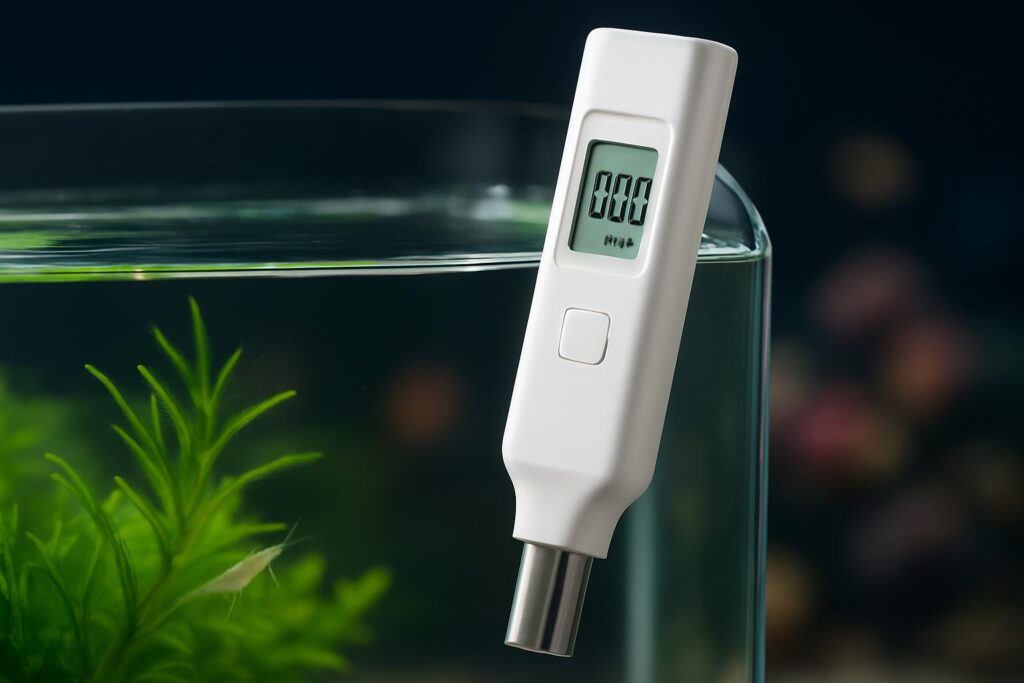
2026 All-New 4 in 1 Tds Meter Digital Water Tester - Accurate and Reliable TDS EC & Temp(°C,°F) Meter - 0-9999ppm - Professional Testing for Drinking Water, RO/DI System, Aquariums etc
View on AmazonWhy TDS Matters
TDS changes reflect mineral additions, evaporation concentration, fertilizer dosing, feeding, and waste accumulation. Stable TDS keeps osmoregulation demands steady. Sudden shifts stress fish and inverts. In planted tanks, consistent TDS helps dosing discipline. In reef tanks, zero TDS source water prevents nuisance algae and contamination.
Safe TDS Ranges by Tank Type
Freshwater Community
Target 150 to 300 ppm. Most livebearers, barbs, danios, rasboras, and tetras adapt well here. Keep it stable within a 30 to 50 ppm swing week to week.
Planted Aquariums
Target 100 to 250 ppm. CO2 injected tanks often run best around 120 to 180 ppm with balanced GH and potassium. Higher TDS from nitrate and phosphate can be fine if algae is controlled and livestock tolerates it.
Betta
Target 80 to 200 ppm. Bettas prefer softer to moderate water. Focus on consistency and clean water rather than ultra low TDS.
Goldfish
Target 150 to 400 ppm. Goldfish are messy. TDS will rise faster between water changes. Use larger or more frequent water changes to keep TDS swings modest.
Softwater Specialists
Discus, wild-caught tetras, and dwarf cichlids often do best at 50 to 120 ppm. Stability is critical, and RO mixing with remineralization helps.
Shrimp
Neocaridina such as cherry shrimp: 150 to 250 ppm with KH 2 to 6 and GH 6 to 10. Caridina bee-type shrimp: 80 to 150 ppm with low KH near zero and GH 4 to 6. Match TDS to your chosen remineralizer recipe and keep swings below 20 to 30 ppm per week.
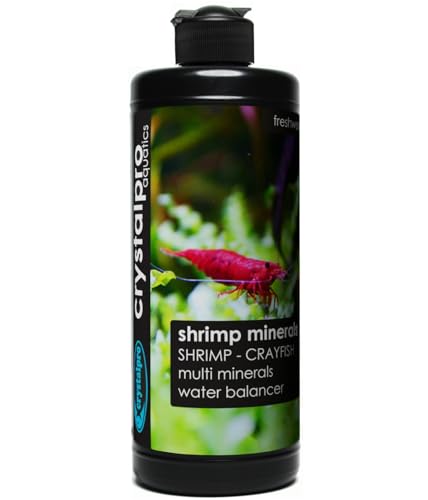
Crystalpro Shrimp Minerals 16.9 Oz – Liquid Aquarium Salt & Trace Elements for Freshwater Shrimp Tanks – Supports Caridina & Neocaridina – Molting & Breeding Additive – Invertebrate Tank Conditioner
View on AmazonAfrican Rift Lake Cichlids
Target 300 to 600 ppm. Lakes Malawi and Tanganyika are mineral rich. Use buffers and aragonite to sustain GH, KH, and pH. Stability beats absolute values.
Brackish
Use a refractometer for salinity. TDS meters are not reliable at higher salinities. For low-end brackish keepers who also track TDS, expect several thousand ppm, but rely on specific gravity as your main guide.
Marine Reef and Fish Only
Use RO or RO DI water at 0 to 5 ppm TDS for top-off and salt mix. For the display tank, track salinity at 35 ppt for reef and around 30 to 35 ppt for FOWLR as preferred. Use TDS only to monitor the quality of your RO DI output and change filters or resin when TDS rises above 1 to 5 ppm.
How to Use TDS Day to Day
Build a Baseline
Measure TDS after a water change at your target parameters. Log this number. Over the week, watch how fast it climbs. That pace reflects feeding, stocking, fertilizing, and evaporation effects.
Use Trends, Not Single Readings
A steady weekly rise suggests normal waste and dosing. A fast or erratic rise flags overfeeding, underfiltration, or dosing imbalances. Sudden drops usually follow large water changes or aggressive dilution.
Keep Swings Small
Most freshwater tanks handle best when weekly TDS change stays within 30 to 50 ppm. Sensitive shrimp and softwater fish benefit from even smaller shifts. For marine, hold zero TDS in source water and stable salinity in the tank.
How to Lower or Raise TDS Safely
To Lower TDS
Perform partial water changes with RO or RO DI mixed to your target TDS. Top off evaporated water with pure RO DI, not with tap, since evaporation concentrates TDS. Reduce overfeeding and review fertilizer dosing.
To Raise TDS
Add remineralizers that supply the ions you actually need. For general freshwater, use GH builders with calcium and magnesium. For shrimp, match the product to your species. For African cichlids, use buffers and aragonite substrates. Avoid random table salt additions unless you have a specific treatment plan.
Testing Routine That Works
– Freshwater community, planted, and shrimp: test weekly and before large water changes
– Softwater or shrimp breeding: test 2 to 3 times per week until stable, then weekly
– African cichlids: test weekly and after buffer additions or substrate changes
– Marine: test RO DI output weekly, after changing filters, and when algae issues appear
Common Causes of TDS Spikes
– Heavy feeding or decaying organics increase nitrate and phosphate
– Fertilizer misdosing in planted tanks
– Evaporation without pure water top-off concentrates TDS
– Buffer or remineralizer overdosing
– RO DI filters exhausted or resin spent
Recommended Tools and Additives
HM Digital TDS 3 Handheld Meter
A dependable and affordable meter that reads TDS and temperature. Ideal for quick tank checks and RO DI output monitoring.
Why it helps: Fast, portable, and simple for weekly logs and trend tracking.
Best for: Freshwater keepers, shrimp breeders, and reefers checking RO DI.
Potential downsides: Not waterproof and needs periodic calibration verification.
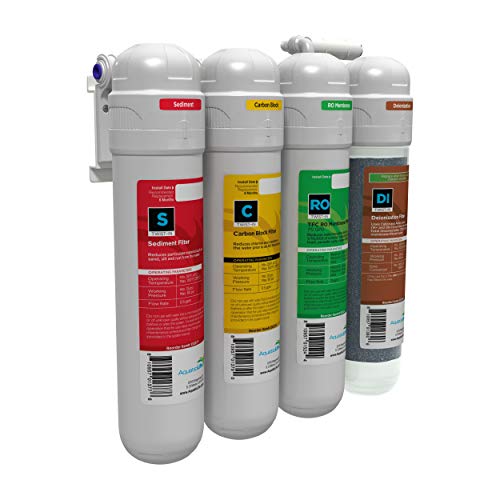
Aquatic Life Twist-in 4-Stage RO/DI Aquarium Filter, 75 GPD | Four filtration stages: sediment, carbon block, 75 GPD RO membrane, and color-changing DI resin
View on AmazonAquatic Life RO Buddie 50 GPD
Compact RO or RO DI unit that produces low to zero TDS water for mixing and top off.
Why it helps: Lets you set exact TDS targets by blending RO with tap or by remineralizing from zero.
Best for: Softwater setups, shrimp, discus, and reef source water.
Potential downsides: Output rate depends on water pressure and temperature; DI resin needs periodic replacement.
Seachem Equilibrium
A balanced GH booster for planted and general freshwater tanks that adds calcium, magnesium, and potassium without sodium.
Why it helps: Raises TDS in a controlled way that supports plant growth and fish health.
Best for: RO mixed planted tanks and soft tap water regions.
Potential downsides: Does not add KH, so pair with a buffer if alkalinity is low.
Salty Shrimp Bee Shrimp Mineral GH Plus
Remineralizer designed for Caridina shrimp that need low KH and precise GH. Dissolves cleanly and yields predictable TDS.
Why it helps: Creates stable, low TDS water tailored to sensitive shrimp.
Best for: Caridina keepers using RO DI.
Potential downsides: Not suited for Neocaridina or general community tanks; measure carefully.
Putting It All Together
Set a clear TDS target for your tank type. Build a baseline after a water change, test weekly, and watch trends. Keep swings small. Use RO or RO DI to control dilution. Remineralize with purpose, not guesswork. Combine TDS with GH, KH, and pH to see the full picture. With consistent habits, TDS becomes a reliable guide for stable, healthy aquariums.
FAQ
Q: What does TDS measure in an aquarium
A: TDS measures the total dissolved ions such as calcium, magnesium, sodium, potassium, bicarbonate, carbonate, chloride, sulfate, nitrate, and trace elements.
Q: What is a good TDS range for a freshwater community tank
A: Aim for 150 to 300 ppm and keep weekly swings within 30 to 50 ppm.
Q: Should I use a TDS meter for reef salinity
A: No, use a refractometer for salinity and use a TDS meter only to confirm RO DI output is 0 to 5 ppm.
Q: How can I lower TDS safely
A: Perform partial water changes with RO or RO DI mixed to your target, top off evaporation with pure RO DI, reduce overfeeding, and review fertilizer dosing.
Q: What TDS should I target for Caridina shrimp
A: Target 80 to 150 ppm with low KH near zero and GH 4 to 6.