
We are reader supported. When you purchase through links on our site, we may earn an affiliate commission. Also, as an Amazon affiliate, we earn from qualifying purchases.
Dissolved oxygen is the silent lifeline of every aquarium. Fish, invertebrates, plants, and beneficial bacteria depend on it. When oxygen runs low, problems escalate fast, but the fixes are often simple if you know what to look for and how to respond. This guide walks you through safe dissolved oxygen levels, clear warning signs, reliable testing methods, and practical gear that keeps oxygen steady day and night.
What Is Dissolved Oxygen and Why It Matters
Dissolved oxygen is the amount of oxygen gas mixed into water, measured in milligrams per liter (mg/L or ppm). It fuels respiration for fish and shrimp and drives biological filtration by supporting nitrifying bacteria. Low oxygen stresses livestock, invites disease, and can trigger ammonia or nitrite spikes when the filter bacteria suffer.
Safe Levels by Aquarium Type
Freshwater community tanks: Aim for 6–8 mg/L. Avoid drops below 5 mg/L.
High-temperature or heavily stocked tanks: Target the upper end of 7–8 mg/L with strong surface agitation.
Reef and marine tanks: Keep oxygen high, ideally 7–8 mg/L, because seawater holds less oxygen than freshwater at the same temperature.
Factors That Reduce Oxygen
Temperature: Warmer water holds less oxygen. Summer heat and high heater settings increase risk.
Salinity: Saltwater saturates at a lower oxygen level than freshwater, so circulation and aeration matter more.
Altitude: Higher elevations mean lower atmospheric pressure and lower saturation. Increase agitation if you live at altitude.
Warning Signs of Low Oxygen
Behavior Clues You Can Spot Quickly
Surface hovering or gasping: Fish linger at the top or near filter returns where oxygen is higher.
Rapid gill movement: Faster-than-usual breathing, even when fish are otherwise still.
Lethargy: Slow response, staying in one place, or sudden night-time stress in planted tanks.
Invertebrate escape attempts: Snails or shrimp crawling toward the surface or out of the water.
Water and Filter Clues
Oily surface film: Biofilm and protein scum block gas exchange.
Cloudy water or rising ammonia/nitrite: Beneficial bacteria can be oxygen-limited, weakening biological filtration.
Testing Dissolved Oxygen: Methods That Work
Liquid Oxygen Test Kits
Good kits are based on the Winkler method and give results in mg/L. They are cost-effective, suitable for weekly checks, and accurate enough for most hobbyists. Follow timing instructions carefully to avoid reading errors.
Digital DO Meters
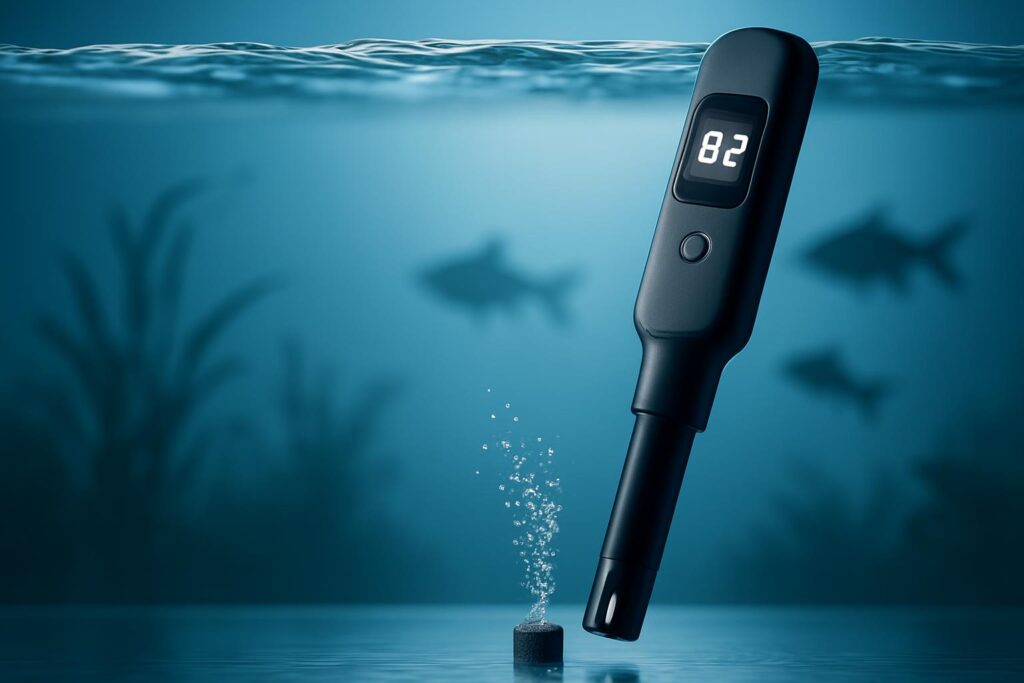
Handheld meters read faster and show trends instantly. They are more expensive but pay off if you run multiple tanks, keep sensitive species, or manage a reef system. Calibrate as the manual recommends for reliable readings.
Cross-Check With Observation
Use test results alongside behavior and surface conditions. If fish pant near the outlet even when the test reads okay, increase agitation and retest. If the surface is covered in film, remove it and boost circulation regardless of the number.
Quick Fixes When Oxygen Drops
Immediate Actions
Increase surface agitation: Point your filter outlet at the surface or add an airstone right away.
Partial water change: Use slightly cooler, well-aerated water to raise oxygen and reduce waste.
Stop CO2 injection: Turn off CO2 until oxygen stabilizes, especially before lights-out in planted tanks.
Remove surface film: Skim with paper towels temporarily and improve flow direction to break it up.
During Power Outages
Battery air pump: Run an airstone to maintain gas exchange.
Temperature control: Prevent overheating with fans or floating sealed ice packs if safe and necessary.
Reduce feeding: Less waste lowers oxygen demand until power returns.
Long-Term Prevention and Stability
Surface Agitation and Flow
Ensure a steady ripple at the surface. Avoid dead zones where detritus collects. Position returns or powerheads to circulate across the entire tank.
Manage Bioload and Maintenance
Stock conservatively, feed lightly, vacuum substrate, and clean prefilters. Excess organics consume oxygen as they break down.
Plants and CO2
Plants add oxygen in the light and consume oxygen at night. Keep lights and CO2 on timers. Provide nighttime aeration if fish show stress after lights-out.
Heat Management
Keep heaters accurate and avoid overheating. Warmer tanks need more agitation. Cover lids should allow air exchange to prevent stale air buildup.
Recommended Gear for Reliable Oxygen
Tetra Whisper Air Pump
This classic air pump delivers steady airflow for airstones, sponge filters, or ornaments. It is easy to set up, runs reliably, and is available in multiple sizes for different tank volumes.
Why it helps: Direct aeration increases gas exchange and supports beneficial bacteria in sponge filters.
Best for: Community freshwater tanks, quarantine tanks, and backup aeration for CO2-injected planted tanks overnight.
Potential downsides: Any air pump adds some noise and vibration; use a check valve and place it above the waterline.
Tip: Pair with a quality airstone and valve to fine-tune bubbles for a gentle surface ripple.
Eheim Skim 350 Surface Skimmer
A compact, reliable surface skimmer that constantly removes biofilm and floating debris. It restores efficient gas exchange and keeps the water surface clear.
Why it helps: Eliminates surface scum that blocks oxygen transfer, especially in planted or heavily fed tanks.
Best for: Aquariums with persistent oily film, high-protein feeding, or minimal surface movement.
Potential downsides: Can collect small fry or floating plants; use a prefilter sponge if needed.
Tip: Run it a few hours daily to prevent film without over-polishing the water.
Salifert Oxygen Profi Test Kit
A liquid dissolved oxygen kit using a proven chemical method. It is straightforward for beginners and provides readings in mg/L suitable for freshwater and marine systems.
Why it helps: Confirms whether your tank is in the safe zone and helps you evaluate changes after adjusting flow or feeding.
Best for: Routine weekly checks or after equipment changes, heat waves, or stocking increases.
Potential downsides: Requires careful timing and following steps; not as instant as a digital meter.
Tip: Test at the same time of day to compare like with like, and log results to spot trends.
Penn-Plax Silent-Air B11 Battery Backup Air Pump
A compact unit that kicks on during power loss or can run on demand. It provides critical aeration when you need it most.
Why it helps: Maintains oxygen and saves livestock during outages when filters and heaters stop.
Best for: Any aquarist in areas prone to storms or unreliable power.
Potential downsides: Limited airflow compared to mains-powered pumps; keep spare batteries ready.
Tip: Preinstall airline and an airstone so you can start aeration instantly.
Inkbird ITC-308 Temperature Controller
An external temperature controller that prevents heater overshoot and stabilizes temperature. Stable, moderate temperatures help preserve oxygen levels.
Why it helps: Avoids overheating that lowers oxygen and stresses fish.
Best for: Tropical aquariums, summer months, and valuable livestock where stability matters.
Potential downsides: Adds another device to manage; proper probe placement is essential.
Tip: Set a safe upper limit and verify with a separate thermometer.
Putting It All Together
Stable dissolved oxygen is a daily habit, not a one-time fix. Keep the surface gently rippling, control heat, feed modestly, and test on a schedule. Watch your fish at different times of day, especially after lights-out in planted tanks. With simple tools and small routine adjustments, your aquarium will stay well oxygenated, your biofilter will thrive, and your livestock will show the active, healthy behavior you want to see.
FAQ
Q: What dissolved oxygen level is safe for most freshwater aquariums?
A: Aim for 6–8 mg/L and avoid dropping below 5 mg/L.
Q: What are the first signs of low oxygen in fish?
A: Fish staying near the surface or filter outflow and faster-than-usual gill movement.
Q: How can I raise oxygen fast during an emergency?
A: Increase surface agitation with an air stone or by pointing your filter outlet at the surface, do a partial water change with cooler, well-aerated water, and stop CO2 injection.
Q: Which test method is best for beginners?
A: A liquid oxygen test kit is affordable and good enough for routine checks; a digital meter is faster and more precise if you test often.
Q: Does warmer water hold less oxygen?
A: Yes. As temperature rises, oxygen solubility drops, so summer tanks and heated tanks need extra surface agitation.