
We are reader supported. When you purchase through links on our site, we may earn an affiliate commission. Also, as an Amazon affiliate, we earn from qualifying purchases.
Tap water is designed to be safe for people, not for aquariums. Disinfectants keep water drinkable, but they can damage fish gills, wipe out beneficial bacteria, and trigger ammonia issues if you do not treat them correctly. These changes can affect the overall water chemistry in your aquarium, especially during water changes. The two main disinfectants you need to understand are chlorine and chloramine. Each behaves differently, and that changes how you prepare water, what products you use, and how you test. This guide breaks it down step by step so you can protect your livestock and keep your cycle stable.
Chlorine vs chloramine at a glance
What chlorine is
Chlorine is a fast-acting disinfectant. It kills pathogens quickly and then dissipates from water through off-gassing. It is reactive, easy to neutralize, and will usually disappear from a bucket within 24 to 48 hours with aeration.
What chloramine is
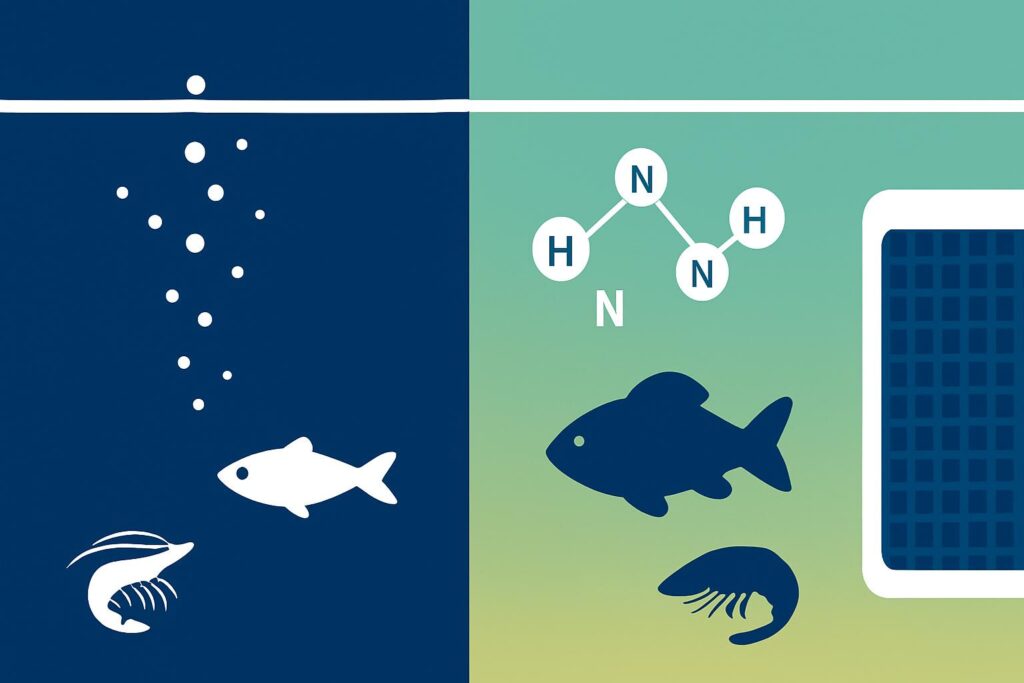
Chloramine is chlorine bonded with ammonia. Utilities use it because it persists for days in pipes, keeping water protected over distance. That stability creates challenges in aquariums because it does not off-gas quickly and it introduces ammonia when neutralized.
Why fishkeepers should care
Impact on fish and invertebrates
Both chlorine and chloramine burn gill tissue, stress immune systems, and can kill fish and shrimp even at low levels. Sensitive species and fry are the first to show distress, but all livestock are at risk.
Impact on the biofilter
Disinfectants are nonselective. They damage nitrifying bacteria in your filter media. With chloramine, neutralization splits the molecule into chloride and ammonia. If your conditioner does not also detoxify ammonia, the free ammonia can spike and stress the biofilter.
How to learn what your utility uses
Check the annual water quality report
Most municipalities publish a Consumer Confidence Report. Look for chlorine, chloramine, or total chlorine. Many cities have switched to chloramine year-round or seasonally.
Test what you have
Use a free chlorine test to check for chlorine and a total chlorine test for combined chlorine including chloramine. If total chlorine is positive while free chlorine is low or zero, you likely have chloramine. You can also treat a small bucket with a standard dechlorinator and test ammonia. A post-treatment ammonia reading suggests chloramine was present.
Removal and neutralization methods
Water conditioners
Conditioners instantly neutralize chlorine. For chloramine, choose products that break the bond and also detoxify the released ammonia into a safer form for 24 to 48 hours. Dose for the entire volume of new water. In emergencies, you can dose for the full tank, but pre-treating new water is safer for sensitive species.
Activated and catalytic carbon
Carbon in filters can remove chlorine readily and reduce chloramine with sufficient contact time. Replace carbon frequently. For reliable chloramine handling, pair carbon with a conditioner rather than relying on carbon alone.
Aging and aeration
Letting water sit with circulation removes chlorine. It does not reliably remove chloramine. If your city uses chloramine, aging alone is not enough.
RO or RO/DI systems
RO membranes do not remove chloramine by themselves. You need a carbon block rated for chloramine before the membrane. Always remineralize RO water for freshwater tanks to ensure stable GH and KH.
What not to rely on
Boiling and standard UV sterilizers are not dependable stand-alone solutions for chloramine. Use proper conditioners or carbon.
Testing after treatment
Ammonia readings explained
When you neutralize chloramine, ammonia is produced. Some conditioners bind it into a less toxic form that many test kits still read as ammonia. Salicylate-based kits are preferable. Expect a temporary reading and focus on livestock behavior, not just the number.
Total vs free chlorine
After proper dosing, both free and total chlorine should read zero. If total chlorine lingers, increase contact time or dose slightly higher within the label range.
Water change workflows that work
If your utility uses chlorine
- Fill a container with tap water.
- Add a standard dechlorinator per the new water volume, or age and aerate for 24 hours.
- Match temperature and add to the tank.
If your utility uses chloramine
- Always pre-treat new water with a conditioner that also detoxifies ammonia.
- Aerate for 15 to 30 minutes for mixing and gas exchange.
- Optionally run fresh carbon in the filter for polish.
- Add to the tank once temperature and parameters match.
For shrimp and sensitive species
- Use a conditioner that handles chloramine and binds ammonia.
- Match temperature, pH, GH, and KH closely.
- Drip in new water slowly to avoid shocks.
Recommended products and how to use them
Seachem Prime
Why it helps: Neutralizes chlorine and chloramine, and binds ammonia, nitrite, and nitrate for up to 48 hours. Highly concentrated, so small doses treat large volumes.
Best for: Cities using chloramine, fish-in cycling, emergency detox when you see a sudden ammonia or nitrite rise.
How to use: Dose per label for the full volume of new water. For chloramine, pre-treat the bucket. In emergencies, you can dose up to the label’s maximum safe level to bind spikes temporarily.
Potential downsides: Strong smell. Can cause ammonia test readings to show bound ammonia. Do not use as a substitute for fixing root causes of chronic spikes.
Kordon AmQuel Plus
Why it helps: Neutralizes chlorine and chloramine and detoxifies ammonia, nitrite, and nitrate. Useful when you need broader detox coverage.
Best for: Heavily stocked tanks, sensitive species, and situations where you want added safety during larger water changes.
How to use: Dose new water per label before it enters the aquarium. Maintain strong aeration after dosing to support gas exchange.
Potential downsides: Some test kits can misread total ammonia even when it is detoxified. Avoid mixing with oxidative treatments.
API Tap Water Conditioner
Why it helps: Removes chlorine and chloramine and detoxifies heavy metals. Simple and cost-effective for routine changes.
Best for: Mature tanks with strong biofilters that can process the small amount of ammonia released when chloramine is broken down.
How to use: Dose accurately per label into new water. Ensure your biological filtration is healthy and avoid overfeeding around water change day.
Potential downsides: Does not bind ammonia. If your biofilter is weak or you keep sensitive stock, prefer a conditioner that also detoxifies ammonia.
API Ammonia Test Kit
Why it helps: Monitors total ammonia after treatment, which is important when dealing with chloramine. Useful for spotting trends during and after water changes.
Best for: Any tank in a chloramine-treated area, especially when using conditioners that bind ammonia.
How to use: Test new water after conditioning and the display tank an hour after the change. Expect to see readings when ammonia is bound; watch livestock behavior and ensure good aeration.
Potential downsides: Reads total ammonia including detoxified forms, so numbers may not drop to zero immediately even when conditions are safe.
Common mistakes to avoid
- Relying on aging alone in a chloramine city.
- Underdosing conditioner for the actual water volume.
- Adding untreated tap water directly to the tank and hoping the filter catches up.
- Assuming a zero reading is required immediately after using a conditioner that binds ammonia.
- Skipping dechlorination because fish looked fine last time. Damage can be cumulative.
Conclusion
Chlorine is quick to neutralize. Chloramine is persistent and adds an ammonia twist. Once you identify which one your utility uses, matching the right workflow is straightforward. Pre-treat new water, favor conditioners that handle chloramine and ammonia when needed, use carbon for polish, and verify with the right tests. Do this consistently and your fish, shrimp, and biofilter will stay protected through every water change.
FAQ
Q: What is the difference between chlorine and chloramine in tap water?
A: Chlorine is a fast-acting disinfectant that off-gasses quickly, while chloramine is chlorine bonded with ammonia, lasts longer in water, and produces ammonia when neutralized.
Q: How can I tell if my utility uses chloramine?
A: Check your city’s water quality report, compare free vs total chlorine test results, or treat a small bucket and test for ammonia afterward.
Q: Does letting water sit remove chloramine?
A: No. Aging and aeration remove chlorine but do not reliably remove chloramine, so use a proper conditioner or carbon alongside a conditioner.
Q: Why does my ammonia test show a reading after using a dechlorinator with chloramine water?
A: Neutralizing chloramine releases ammonia, and some conditioners bind it into a less toxic form that many test kits still read as ammonia.
Q: What is the safest way to prepare water for shrimp in chloramine-treated cities?
A: Pre-treat with a conditioner that binds ammonia, aerate for mixing and gas exchange, match temperature and parameters, and drip the new water in slowly.