
We are reader supported. When you purchase through links on our site, we may earn an affiliate commission. Also, as an Amazon affiliate, we earn from qualifying purchases.
Betta fish are bold, beautiful, and full of personality. They are also sensitive and need proper care to thrive. This guide gives you a clear, step by step plan to keep your betta healthy, active, and stress free. You will learn the right tank size, water setup, heating, filtration, feeding, enrichment, tank mates, health checks, and simple routines that work. Follow the basics, avoid the common mistakes, and your betta will reward you with years of graceful swimming and vivid colors.
Introduction
Many people still keep bettas in bowls or tiny vases. That leads to stress, disease, and premature loss. Bettas need clean, warm, stable water, gentle filtration, and a habitat that matches their behavior. The good news is that setting up a proper betta tank is simpler than you think. Start right and maintenance becomes easy.
Know Your Betta
Species basics
Bettas, Betta splendens, are labyrinth fish that can breathe air at the surface. This helps them survive low oxygen water in nature, but it does not replace the need for a filter or clean water. They prefer warm, calm, planted environments with places to rest near the surface.
Temperament and behavior
Males are territorial and will flare at rivals and reflections. Some are calm, others are intense. Females can be territorial too. Plan your setup around the most defensive fish you might get. Provide cover and avoid constant mirror stress.
Size and lifespan
Adult bettas reach about 2.5 to 3 inches. With good care, they live 3 to 5 years, sometimes longer. Stable heat, clean water, and quality food are the biggest drivers of lifespan.
Tank Size and Setup
Minimum tank size
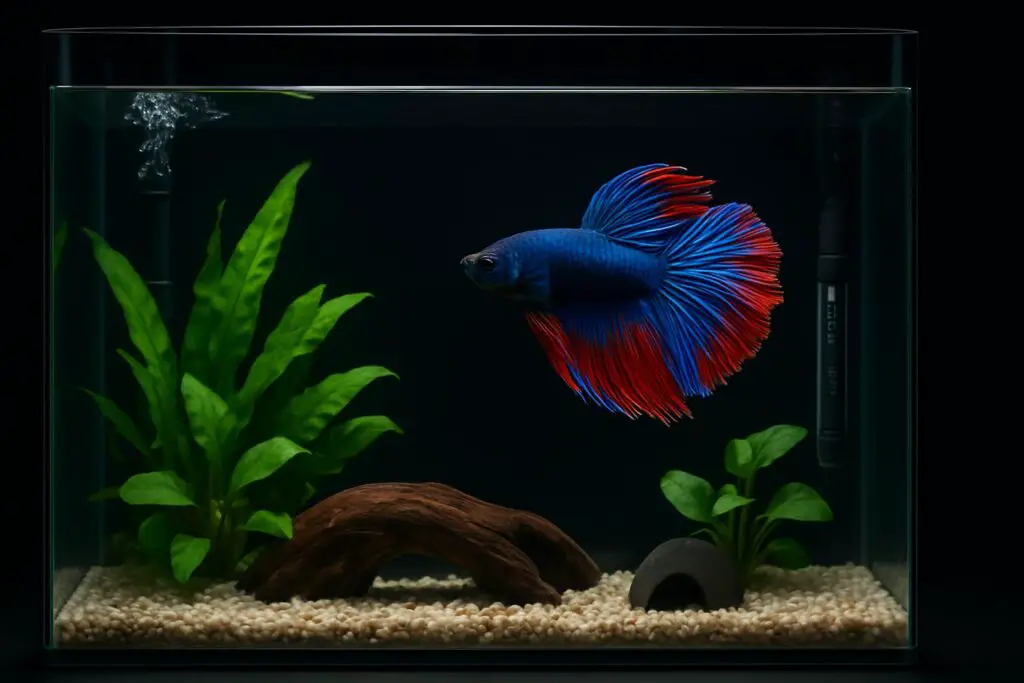
A single betta needs at least a heated, filtered 5 gallon tank with a tight lid and small cable gaps.
More volume makes temperature and water quality easier to keep stable. A 10 gallon tank gives extra comfort and space for plants and decor.
Lid, air space, and safety
Bettas jump. Use a snug lid with small openings for cables and feeding. Keep a small air gap above the water so your fish can breathe warm air. Prevent sudden drafts or cold air at the surface.
Filtration and flow
Bettas prefer gentle flow. Use a sponge filter or a small internal filter with adjustable output. If the current is strong, baffle it with a pre filter sponge or plants. Aim for steady surface movement without pushing the fish around.
Heater and temperature
Use a reliable adjustable heater with a separate thermometer. Place the heater where flow distributes heat evenly. Keep a stable environment with little daily swing.
Keep the water at 26 to 28 C or 79 to 82 F and keep it stable with a reliable adjustable heater.
Substrate and decor
Use smooth gravel or sand that is easy to vacuum. Avoid sharp decor that can tear fins. Choose driftwood, caves, and inert rocks with rounded edges. Give at least two solid hides and several resting spots near mid to upper levels.
Live plants
Plants improve water quality and reduce stress. Easy choices are Anubias, Java fern, Java moss, Cryptocoryne species, and floating plants like Amazon frogbit or water lettuce. Secure rhizome plants to wood or rock rather than burying the rhizome. Create shaded pockets and open swimming lanes.
Water Parameters and Cycling
Why cycling matters
The nitrogen cycle turns toxic ammonia from waste into less harmful nitrate through beneficial bacteria. Cycling builds these bacteria in the filter and substrate. If you skip cycling, ammonia and nitrite spikes can burn gills and kill fish.
How to cycle
Set up the tank with filter, heater, and dechlorinated water. Add a source of ammonia such as pure ammonium solution or fish food. Run the filter 24 or 7. Test for ammonia, nitrite, and nitrate. When ammonia and nitrite read zero within 24 hours of dosing and nitrate is present, the tank is cycled. This often takes 4 to 6 weeks. Bottled bacterial starters can speed things up but still test to confirm.
Water parameters to target
Temperature 26 to 28 C or 79 to 82 F. pH 6.5 to 7.5 is a good range. General hardness around 3 to 12 dGH is typical. Ammonia 0 ppm. Nitrite 0 ppm. Nitrate under 20 ppm is best. Stability is more important than chasing exact numbers.
Dechlorination and water prep
Always use a water conditioner that neutralizes chlorine and chloramine. Match the new water temperature to the tank within 1 C or 2 F. If your tap has high nitrate or very hard water, consider mixing with reverse osmosis water and remineralizing to a stable target. Avoid sudden shifts.
Water change schedule
For a filtered 5 to 10 gallon betta tank, change 25 to 40 percent of the water every week; for smaller or uncycled tanks, change 30 to 50 percent twice a week until the tank is cycled.
Vacuum the substrate gently to remove trapped waste. Wipe algae on glass with a soft pad. Do not replace all filter media at once.
Testing routine
Use a liquid test kit for ammonia, nitrite, nitrate, and pH. Test twice a week during cycling, then weekly. Also check temperature daily and after water changes. Log your results so you can spot trends before problems grow.
Feeding and Nutrition
Staple diet
Use a high quality betta pellet as the main food. Look for fish or krill meal in the first ingredients. Rotate with frozen or live foods such as brine shrimp, daphnia, or bloodworms. Avoid flake foods as a staple because it is harder to control portions.
Frequency and portion size
Feed once or twice a day in portions your fish eats in 1 to 2 minutes, usually 4 to 8 small pellets total per day depending on pellet size, and include one light fasting day each week.
Remove uneaten food within a few minutes to prevent ammonia spikes and cloudy water.
Preventing bloat and constipation
Stick to small meals and varied foods. Daphnia helps digestion. If your fish gulps air when eating floating pellets, you can briefly pre soak pellets in tank water, but do not over soak as nutrients can leach. Keep the temperature stable to support metabolism.
Vitamins and treats
Use frozen foods as treats two to three times per week. Do not rely on dried bloodworms as the only treat. A varied diet builds color and resilience.
Enrichment and Behavior
Hiding and resting
Provide at least two caves or tunnels and broad leaves near the surface for resting. A betta leaf hammock or an Anubias leaf placed high works well. Ensure the fish can reach the surface easily.
Lighting and day night cycle
Give 8 to 10 hours of light daily and full darkness at night. Use a timer. Provide shaded areas with plants to reduce stress and glare.
Flaring and mirror use
Short mirror sessions can be used as exercise and to check fin extension. Limit to 1 to 2 minutes, a few times per week at most, and stop if the fish shows stress or torn fins. Never leave a mirror in place.
Signs of a happy betta
Bright color, smooth breathing, curious interaction at the glass, full fin extension, bubble nest building in males, steady appetite, and relaxed resting with fins open. Watch for stress signs such as clamped fins, glass surfing, hiding all day, pale color, or rapid gill movement.
Tank Mates and Housing Options
Best practice
Housing a betta alone is the most reliable path to long term success. It reduces stress and simplifies maintenance.
Community options
Bettas are best kept alone, but in a 10 gallon or larger tank with heavy planting and good line of sight breaks, possible calm tank mates include small peaceful rasboras, pygmy corydoras, kuhli loaches, nerite snails, and amano shrimp, and you need a backup plan if it does not work.
Choose tank mates that ignore long fins and avoid nipping. Keep the current low and offer many hides for all species.
What to avoid
Do not keep males together. Avoid fin nippers such as many barbs and some tetras, fast boisterous fish, or other flashy anabantoids like gouramis. Avoid shrimp if your betta hunts them. If aggression appears, separate immediately.
Dividers and sororities
Divided tanks can work if the divider blocks most view and flow is gentle. Female groups are advanced and risky. They need larger tanks, heavy planting, and careful selection. Beginners should avoid female groups.
Health and Disease Prevention
Quarantine
Quarantine any new fish or invertebrates for 2 to 4 weeks in a heated, filtered tank. Observe for parasites or disease. This prevents outbreaks in your display tank.
Common issues to watch
Fin rot presents as frayed or receding edges and increased redness at the tips. Ich shows as tiny white dots and flashing. Velvet shows as very fine yellow to rust colored specks with rapid breathing. Bloat shows as a swollen belly and buoyancy trouble. Rapid response improves outcomes.
Prevention first
Keep water warm and stable, feed varied and modest portions, and maintain your schedule. Rinse new decor and plants. Do not share nets between tanks. Limit stress from reflections and strong current.
Treatment basics
At first signs, test water, correct temperature and parameters, and improve water quality. Consider moving the fish to a simple, heated hospital setup if needed. Do not mix medications without a clear plan. Avoid routine use of salt in planted or invertebrate tanks. Use aquarium salt only for short, specific treatments and follow product directions.
When to seek help
If symptoms worsen after water quality is corrected, seek advice from experienced keepers, aquatic veterinarians, or trusted sources. Clear photos and test results help others guide you.
Maintenance Schedule
Daily
Check temperature, observe behavior, and feed. Remove uneaten food. Look for clamped fins, labored breathing, or unusual spots. Verify the filter and heater are running.
Weekly
Do the planned water change and substrate vacuum. Wipe glass if needed. Test ammonia, nitrite, nitrate, and pH. Trim plants and thin floaters to maintain surface access. Clean the lid and maintain clear air space.
Monthly
Rinse filter media in a bucket of removed tank water to preserve beneficial bacteria. Never rinse media under tap water. Squeeze sponges gently until the water runs mostly clear. Replace only part of the media at a time and never all at once.
Buying Tips and Setup Checklist
Choosing a healthy betta
Pick a fish with smooth swimming, open fins without tears, clear eyes, steady appetite in the store, and no white spots, fuzzy patches, or red streaks on the fins. Avoid fish that lie on the bottom, gasp at the surface, or have sunken bellies or curled fins.
Essential gear
5 gallon or larger tank, tight lid, adjustable heater, gentle filter or sponge filter, thermometer, water conditioner, liquid test kit, gravel vacuum, smooth substrate, safe decor and caves, easy live plants, bucket for water changes, and a timer for lights. Have a backup power plan if your area loses power often.
Setting up step by step
Rinse tank and decor without soap. Place substrate, hardscape, and filter. Fill with dechlorinated water, start the heater and filter, and plant. Cycle the tank. When cycled, acclimate the fish by floating its cup or bag to equalize temperature for 15 minutes, then add small amounts of tank water every 5 minutes for 20 to 30 minutes before netting the fish into the tank. Discard bag water.
Troubleshooting Common Problems
Cloudy water in a new tank
This is often a bacterial bloom during cycling. Test ammonia and nitrite, reduce feeding, and do moderate water changes as needed. Do not replace all media or over clean, which resets the cycle.
Lethargy
First check temperature. Cold water slows bettas. Verify ammonia and nitrite are zero and nitrate is under 20 ppm. Reduce flow, add more hides, and ensure the fish can rest near the surface.
Not eating
New bettas may need a few days to settle. Offer a small variety of pellets and frozen foods. Keep water warm and stable. Remove uneaten food, reduce stress, and try smaller meals.
Torn fins
Check for sharp decor. Use the fabric test by gently running soft cloth along decor edges to feel for snags. Keep water clean and warm. Most minor tears heal with good water quality and rest. If fraying worsens, assess for fin rot and respond early.
Jumping or escaping
Close gaps in the lid and lower the water line slightly. Provide plants at the surface for security. Reduce startle events by keeping a steady light schedule.
Conclusion
Great betta care is consistent, not complicated. Use a 5 gallon or larger heated and filtered tank, cycle it, keep the temperature stable, feed a quality diet in small portions, plant the tank, and maintain a simple routine. Watch your fish daily and act early when something changes. With this foundation, your betta will stay active, colorful, and confident for years.
FAQ
Q: What tank size does a single betta need?
A: A single betta needs at least a heated, filtered 5 gallon tank with a tight lid and small cable gaps.
Q: What temperature is best for bettas?
A: Keep the water at 26 to 28 C or 79 to 82 F and keep it stable with a reliable adjustable heater.
Q: How often should I change the water?
A: For a filtered 5 to 10 gallon betta tank, change 25 to 40 percent of the water every week; for smaller or uncycled tanks, change 30 to 50 percent twice a week until the tank is cycled.
Q: How much and how often should I feed my betta?
A: Feed once or twice a day in portions your fish eats in 1 to 2 minutes, usually 4 to 8 small pellets total per day depending on pellet size, and include one light fasting day each week.
Q: Can a betta live with other fish?
A: Bettas are best kept alone, but in a 10 gallon or larger tank with heavy planting and good line of sight breaks, possible calm tank mates include small peaceful rasboras, pygmy corydoras, kuhli loaches, nerite snails, and amano shrimp, and you need a backup plan if it does not work.